Dolt 2.0 Unveils Major Advancements in Version-Controlled SQL, Boosting Performance and Storage Efficiency with Enhanced AI/ML Capabilities

DoltHub has announced the release of Dolt 2.0, a landmark update to its open-source version-controlled SQL database, introducing a suite of enhancements designed to revolutionize data management, optimize storage, and significantly improve performance for modern applications, including those leveraging artificial intelligence and machine learning. This latest major iteration, launched three years after the inaugural version, brings automatic storage optimization, encompassing sophisticated garbage collection and robust compression mechanisms, alongside vastly improved support for handling large and vector data types. The release positions Dolt as a formidable contender in the evolving landscape of data infrastructure, offering a unique blend of traditional SQL database functionality with the collaborative and auditable advantages of Git-style version control.
The Foundational Innovation: Dolt’s Unique Value Proposition
At its core, Dolt stands apart by integrating Git-style version control directly into a MySQL-compatible SQL database. This innovative architectural choice enables database administrators, developers, and data scientists to perform operations traditionally associated with code repositories on their datasets. Users can now branch a database to work on isolated changes without affecting the production environment, merge changes from different branches, clone entire databases for local development or experimentation, and crucially, diff changes at a granular, row-level. This paradigm shift addresses fundamental challenges in data management, offering unparalleled traceability, reproducibility, and collaborative capabilities that are often absent in conventional relational database systems.
The technological bedrock enabling these advanced features is Dolt’s use of content-addressed Prolly Trees. This sophisticated data structure facilitates true row-level versioning, meaning that every change to a specific row is meticulously tracked and accessible through the database’s history. More importantly, Prolly Trees enable highly efficient structural sharing across different versions of the database. Instead of duplicating entire datasets for each version or branch, which would be prohibitively expensive in terms of storage and performance, Dolt intelligently stores only the deltas—the changes—while pointing to shared data blocks where no modifications have occurred. This approach drastically reduces storage overhead and allows for incredibly fast diff and merge operations, making the complex task of versioning large datasets practical and performant. The concept is akin to how Git manages code repositories, where only changes are stored, allowing for efficient history tracking and branching without creating full copies of every file on every commit. This underlying efficiency is critical for managing the potentially massive datasets prevalent in today’s data-intensive applications, ranging from transactional systems to analytical data warehouses.
A Chronology of Development: From Genesis to Dolt 2.0
The journey to Dolt 2.0 reflects a continuous commitment to enhancing the platform’s capabilities and addressing the growing demands of data professionals. The concept of Dolt emerged from a recognition that data, much like code, requires robust version control for collaboration, auditability, and reproducibility. The first major version of Dolt was released approximately three years prior, establishing the foundational Git-like version control for SQL databases. This initial release was met with significant interest from the developer community, who immediately grasped the potential of applying familiar software engineering paradigms to data. Since then, the DoltHub team has been relentlessly iterating, focusing on key areas identified through user feedback and emerging industry trends, particularly the escalating need for efficient storage and superior performance in an era of ever-growing datasets. This iterative development cycle has culminated in Dolt 2.0, which tackles some of the most pressing concerns for database users: storage efficiency, raw performance, and the nascent requirements of AI/ML workloads.
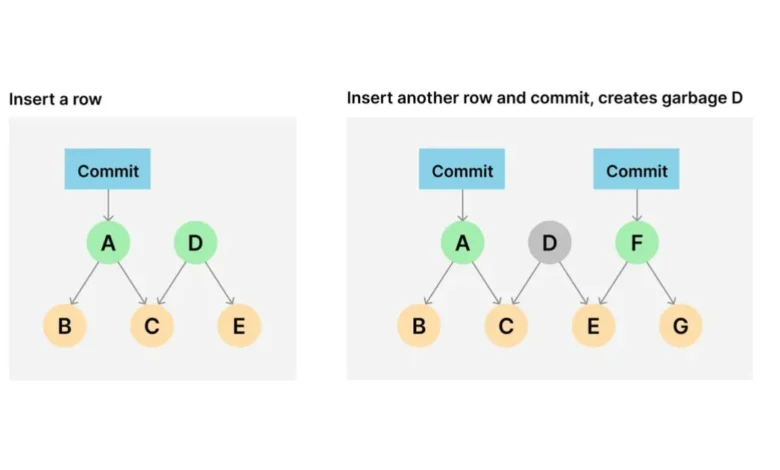
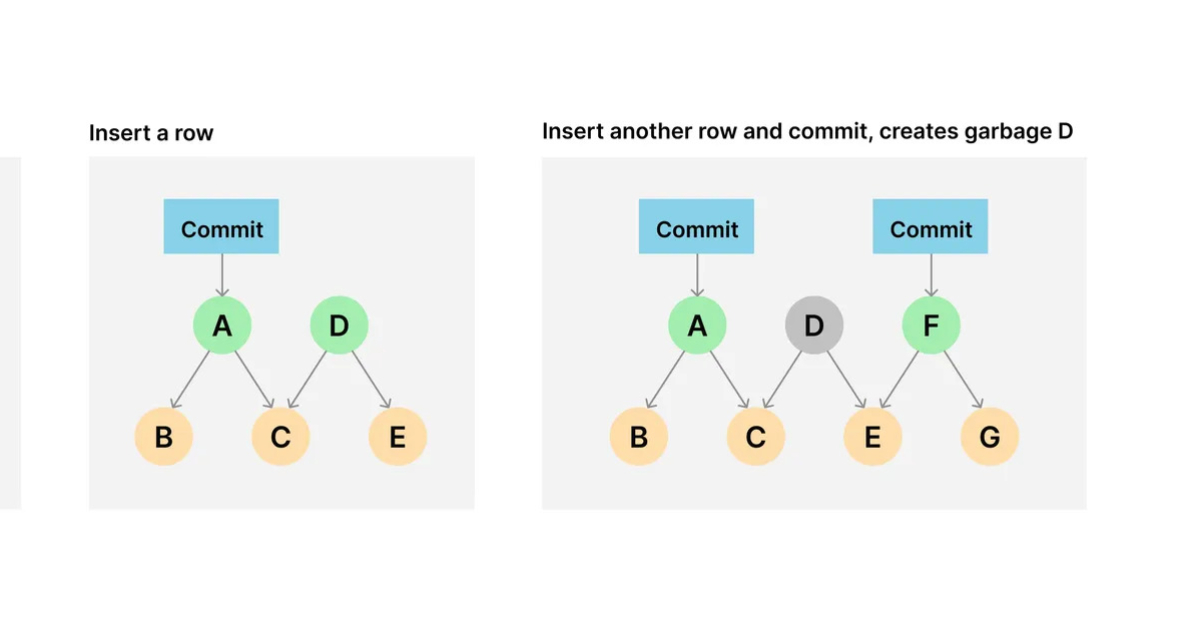
The release of Dolt 2.0 is not merely an incremental update but a significant leap forward, particularly in its automated storage management. Prior versions, while revolutionary in their versioning capabilities, faced challenges related to disk space consumption, a common byproduct of copy-on-write architectures. As Tim Sehn, founder and CEO of DoltHub, elucidated the challenge, "Dolt makes a lot of disk garbage, especially during import. Dolt is copy-on-write so all intermediate committed transaction state is preserved to disk. Any intermediate state that is not in a Dolt commit is garbage and can be collected (…) Dolt already must preserve all history in the commit graph on disk. Adding extra garbage can eat through your disk very quickly." This accumulation of intermediate, uncommitted states could rapidly consume disk resources, presenting a scaling challenge for users managing large or frequently updated datasets.
Deep Dive into Dolt 2.0’s Core Enhancements: Storage, Speed, and Smarter Data
Dolt 2.0 directly addresses these storage inefficiencies with the introduction of automated garbage collection and archive compression, both enabled by default. The automated garbage collection intelligently identifies and purges unreferenced data blocks—the "disk garbage" Tim Sehn referred to—freeing up valuable storage space without requiring manual intervention. This feature is paramount for maintaining optimal database health and reducing operational overhead, especially in dynamic environments where data is frequently imported, modified, or deleted. For data teams, this translates into reduced administrative burden and more predictable storage costs.
Complementing automated garbage collection is the new "archives" on-disk format, which incorporates sophisticated dictionary compression. This advanced compression technique works by identifying and storing common data patterns and values only once, using efficient references to them across the dataset. The result is a substantial reduction in storage footprint, with the DoltHub team claiming a 30-50% decrease in disk usage. For organizations dealing with petabytes of data, such efficiency gains translate directly into significant cost savings on infrastructure, particularly in cloud environments where storage costs can be substantial, and improved I/O performance due to smaller data volumes. The combination of automated garbage collection and archive compression represents a holistic approach to efficient data storage, ensuring that Dolt remains performant and cost-effective even as datasets grow exponentially. The adaptive storage mechanism further refines this, allowing the database to dynamically adjust its storage strategies based on data access patterns and usage, optimizing for both performance and space. This level of automation is crucial for modern data platforms that require scalability without constant manual tuning.
Beyond storage, Dolt 2.0 has achieved remarkable strides in raw performance. Database performance is often measured by its ability to handle read and write operations efficiently, and early versions of Dolt, while offering unique versioning capabilities, acknowledged a performance gap compared to highly optimized traditional databases like MySQL. Tim Sehn candidly shared the journey: "We started at about 10X slower on reads and 20X slower on writes than MySQL. We’ve worked tirelessly to improve Dolt’s performance…" This transparency underscores the immense engineering effort invested. Through a combination of rigorous query optimization, advanced indexing improvements, and fundamental enhancements to its underlying storage engine, Dolt 2.0 has now surpassed MySQL in key benchmarks. Sehn proudly stated, "…we are now 13% faster than MySQL on writes and 5% faster on reads." These figures, derived from sysbench, a widely recognized open-source benchmark suite for database performance, are critical. They indicate that Dolt is not only a powerful versioning tool but also a highly performant database capable of handling demanding production workloads, removing a significant barrier to wider adoption. The implications are profound, suggesting that users no longer need to compromise between advanced version control and raw database speed, making Dolt a viable choice for performance-sensitive applications.
Pioneering Version-Controlled Vector Indexes for the AI Era
Perhaps one of the most forward-looking features in Dolt 2.0 is the beta support for version-controlled vector indexes, utilizing MariaDB’s Vector type. This development is particularly timely given the explosive growth of artificial intelligence and machine learning applications across industries. Vector databases, or databases with robust vector indexing capabilities, have become indispensable for tasks such as semantic search, recommendation engines, anomaly detection, and the foundational operations of large language models (LLMs). These systems rely heavily on "embeddings"—numerical representations of complex data like text, images, or audio—which are stored and queried as high-dimensional vectors.
The challenge in MLOps (Machine Learning Operations) and AI development has been the lack of proper version control for these embeddings and their associated indexes. Machine learning models are constantly evolving; the data used to train them, including the embeddings derived from various models, changes frequently. Reproducibility of model outputs, tracking the lineage of embeddings, and A/B testing different vectorization strategies are critical for robust and auditable AI development. Dolt, by introducing version-controlled vector indexes, uniquely addresses this gap. It allows data scientists and ML engineers to branch, merge, and diff their vector indexes, just as they would with traditional relational data. This means that if a new embedding model is deployed, or the underlying data used to generate embeddings changes, the vector index reflecting these changes can be versioned, allowing for easy rollbacks, comparisons between different embedding strategies, and comprehensive audit trails. According to the announcement, Dolt stands as the "only database that version-controls vectors," a testament to its innovative approach in anticipating and solving emerging data challenges. While currently in beta, the team aims to remove this status once remaining read-path gaps are resolved, signaling a commitment to full production readiness for this crucial feature. This capability has significant implications for the future of MLOps, offering a robust framework for managing the dynamic and complex nature of AI-driven data.
The Broader Landscape: "Git for Data" and the Future of Data Management
Dolt is a prominent player in the burgeoning "Git for Data" movement, but it is not alone. Several projects are tackling the challenge of data versioning, each with distinct approaches and target environments. Popular alternatives include LakeFS and Nessie. LakeFS, for instance, focuses on providing data version control for data lakes, often working with object storage like Amazon S3. It enables Git-like operations on large, unstructured, or semi-structured datasets stored in data lakes, emphasizing reproducibility and isolated experimentation in big data environments. Nessie, on the other hand, acts as a transactional catalog for data lakes, offering Git-like semantics primarily for data formats like Apache Iceberg and Delta Lake. It provides transactional guarantees and versioning for schema and data changes within data lake ecosystems, often favored by organizations building large-scale data platforms that rely on open table formats.
The distinction lies in their core focus: while LakeFS and Nessie are primarily designed for data lakes and object storage, Dolt offers Git-like version control directly within a SQL database, making it immediately familiar and accessible to users accustomed to relational databases. This positions Dolt uniquely for use cases requiring transactional integrity, complex SQL queries, and row-level versioning alongside robust database features. It caters to a different segment of the data ecosystem, often complementing, rather than directly competing with, data lake versioning solutions.
Recognizing the diverse ecosystem of database users, DoltHub is also developing DoltgreSQL, a PostgreSQL-compatible version of Dolt. Currently in beta, DoltgreSQL shares the same powerful storage engine and implements the same version control interfaces as Dolt, but provides a PostgreSQL query interface. Given PostgreSQL’s widespread popularity, advanced features, and extensive community support, DoltgreSQL’s eventual stable release promises to significantly expand Dolt’s reach, catering to a broader segment of the developer and data community who prefer or are deeply invested in the PostgreSQL ecosystem. This strategic expansion signals DoltHub’s ambition to become a ubiquitous solution for version-controlled data across various database preferences.
The sentiment driving this "Git for Data" movement was eloquently captured by Simon Späti, who has extensively explored the concept in a series of articles. Späti articulates the growing necessity of these workflows: "Git-like workflows are becoming table stakes. Maybe not today or tomorrow, but with the right tools and changes in workflow we can achieve significantly better change management, testing on production data, fast rollbacks, isolated experiments, and most importantly, peace of mind when deploying changes." His observations highlight the profound impact these tools can have on data governance, quality assurance, and operational stability. Imagine a scenario where a critical data transformation pipeline introduces an error; with Dolt, a quick rollback to a previous, verified version of the database is possible, minimizing downtime and data corruption. Or consider the ability to create isolated branches of production data for testing new analytical models or schema changes without risking the live system. These capabilities fundamentally transform how data is managed and interacted with, moving from a static, risky model to a dynamic, resilient, and collaborative one.
Implications and Future Outlook
The release of Dolt 2.0 carries significant implications across various sectors and user groups. For traditional enterprises, it offers a pragmatic pathway to modernize their data management practices, integrating robust version control with familiar SQL interfaces. This can dramatically improve data governance, facilitate regulatory compliance (by providing an auditable data history), and streamline development cycles for data-intensive applications. For data scientists and machine learning engineers, the version-controlled vector indexes are a game-changer, promising to bring much-needed rigor and reproducibility to MLOps workflows, ensuring that AI models are built on traceable and verifiable data. The performance improvements, making Dolt competitive with MySQL, remove a critical barrier for adoption in high-throughput environments, making it a viable choice for a wider range of production systems that previously might have hesitated due to performance concerns.
The open-source nature of Dolt, available on GitHub under an Apache 2.0 license, further fosters its adoption and community growth. This permissive licensing model encourages transparency, collaboration, and allows organizations to customize and integrate Dolt into their existing data stacks without proprietary vendor lock-in, a crucial factor for many enterprises today.
In conclusion, Dolt 2.0 represents a pivotal moment for version-controlled SQL databases. By meticulously addressing critical areas such as storage efficiency, performance, and advanced data types like vectors, DoltHub has not only refined its core offering but also significantly expanded its relevance in an increasingly complex and data-driven world. The journey from its initial vision to a mature, high-performance database with unique AI/ML capabilities underscores the innovative spirit driving the "Git for Data" movement. As organizations continue to grapple with the challenges of managing ever-growing and evolving datasets, tools like Dolt 2.0 are poised to become indispensable, providing the robust infrastructure needed to ensure data integrity, foster collaboration, and accelerate innovation with unparalleled confidence. The future of data management increasingly points towards systems that offer not just storage and retrieval, but also intelligent control over data’s evolution, and Dolt 2.0 is leading that charge.