Anker MagGo Pro 2 Power Bank Debuts With Active Cooling and Advanced Smart Display Technology for Enhanced Mobile Charging Efficiency

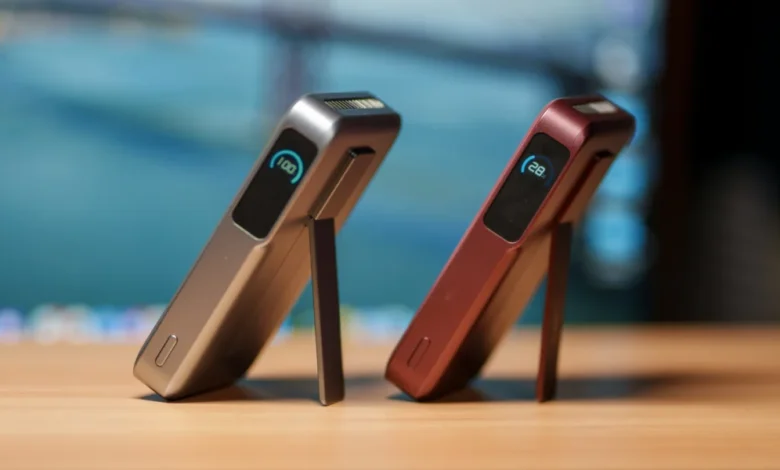
The mobile power market has reached a new threshold of sophistication with the official release of the Anker MagGo Pro 2, a 10,000mAh portable battery solution that integrates active cooling, high-speed MagSafe wireless charging, and a comprehensive real-time data display. As consumers continue to demand faster charging speeds and greater thermal management for their flagship smartphones, Anker’s latest hardware iteration addresses the industry-wide challenge of heat-induced performance throttling. Available currently at a Black Friday promotional price of $85.99—a 22% reduction from its standard $109.99 retail cost—the device represents a strategic pivot toward professional-grade power accessories for power users.
Engineering Breakthroughs in Thermal Management
The primary innovation defining the MagGo Pro 2 is its integrated active cooling system. In conventional wireless power banks, thermal buildup is a significant limiting factor; as lithium-ion cells and induction coils generate heat during energy transfer, the device’s internal firmware typically limits power delivery to protect the hardware and the smartphone’s battery health. By incorporating active cooling, Anker has effectively mitigated these thermal bottlenecks.
Independent testing indicates that this thermal regulation allows the power bank to sustain peak charging speeds for longer durations compared to its predecessors. This efficiency is particularly notable when paired with modern high-capacity devices like the iPhone 17 Pro, which can reach a 50% state of charge in approximately 25 minutes using the unit’s 25W MagSafe output. Beyond wireless capabilities, the device offers a substantial 45W output via its USB-C port, bridging the gap between a portable wireless charger and a high-wattage power delivery adapter capable of charging tablets and ultra-portable laptops.

Chronology of Development and Market Evolution
The evolution of the MagGo line reflects a broader shift in the Apple-centric accessory ecosystem. Following the introduction of Apple’s MagSafe technology in 2020, the market was initially flooded with low-capacity, slow-charging magnetic batteries. By 2023, brands began experimenting with integrated stands and higher capacities, but thermal management remained an elusive target for compact designs.
In early 2025, industry analysts identified a "charging plateau," where wireless speeds were effectively capped by the physical limitations of heat dissipation. Anker’s research and development timeline culminated in the mid-2026 announcement of the MagGo Pro series, which leveraged insights from their GaN (Gallium Nitride) technology to shrink internal components, leaving room for the cooling hardware. The release of the Pro 2 in late 2026 marks the commercial fruition of these efforts, positioning the device as the flagship offering in a crowded sector.
Technical Specifications and Smart Monitoring
The MagGo Pro 2 distinguishes itself through its user-facing smart display, a feature once reserved for premium high-capacity power stations but now miniaturized for pocketable devices. The side-mounted OLED interface provides granular data that was previously obscured by non-communicative LED blink codes. Users can monitor:
- Real-time Power Throughput: Displays exact wattage for both input and output.
- Battery Health Status: Indicates the cycle life and health percentage of the internal lithium-ion cells.
- Internal Temperature: Provides a live readout of the battery pack’s thermal state, reinforcing the efficacy of the active cooling system.
- Capacity Percentage: Offers a precise measurement of remaining charge.
The integration of these metrics into a 10,000mAh footprint is a significant technical achievement. While competitors often prioritize aesthetic minimalism, Anker’s decision to provide detailed diagnostic data appeals to the "prosumer" demographic—individuals who require transparency regarding the health and performance of their high-end mobile hardware.

Supporting Data and Industry Context
The global market for power banks is projected to reach approximately $15 billion by 2030, driven by the increasing energy demands of 5G-enabled smartphones and the proliferation of power-hungry augmented reality (AR) applications. Anker, as a leading stakeholder, has faced pressure from both proprietary Apple accessories and lower-cost third-party competitors.
Industry benchmarks suggest that the 45W USB-C output capacity of the MagGo Pro 2 allows it to operate as a primary power source for the entire iPhone 17 and iPhone 18 product families. Furthermore, the inclusion of a sturdy, integrated kickstand addresses a frequent point of consumer friction regarding the usability of magnetic chargers. By allowing the phone to remain upright during charging, the device serves as a desktop dock, effectively doubling as a "StandBy" mode display for iOS users.
Official Positioning and Market Response
Anker’s marketing strategy for the MagGo Pro 2 emphasizes "cooling" as a primary value proposition. Company statements have consistently highlighted that the product is designed to eliminate the anxiety of "battery throttling," a state where modern devices slow their charging rate to prevent degradation. By maintaining lower internal temperatures, the power bank not only charges faster but also preserves the longevity of the connected smartphone’s internal battery.
While official sales figures for the Black Friday period are forthcoming, early retail indicators suggest that the "Pro" branding is successfully segmenting the market. By offering the device in colorways such as burgundy—designed to coordinate with the iPhone 18 Pro color palette—as well as silver, blue, and gray, Anker is aligning its industrial design language with the premium aesthetics of the devices it is intended to power.

Broader Implications for Mobile Power
The introduction of the MagGo Pro 2 suggests a future where portable power banks function more like computers than simple battery bricks. The shift toward active diagnostics and thermal control is likely to become the new standard for the high-end accessory market. As flagship phones incorporate more advanced processors and AI-driven tasks, their energy consumption will continue to rise, necessitating power solutions that are as sophisticated as the hardware they support.
Moreover, the versatility of the 45W USB-C output ensures the device remains relevant even as users upgrade their portable electronics. The ability to charge a tablet, a handheld gaming console, or a smartphone simultaneously or sequentially ensures that the product has a longer lifecycle than typical budget-tier batteries.
Conclusion
The Anker MagGo Pro 2 is a significant entry in the portable power category, marking a transition toward more transparent, efficient, and thermally managed charging hardware. For the current holiday season, the promotional pricing provides an opportunity for consumers to integrate professional-grade technology into their mobile workflows. As the industry moves forward, the combination of high-speed delivery, diagnostic intelligence, and active cooling will likely define the next generation of essential mobile accessories. By addressing the fundamental physics of heat in wireless charging, Anker has successfully repositioned the humble power bank as a critical component of the modern mobile experience.