NASA astronaut Andre Douglas inspects RS-25 engine hardware ahead of the pivotal Artemis III mission

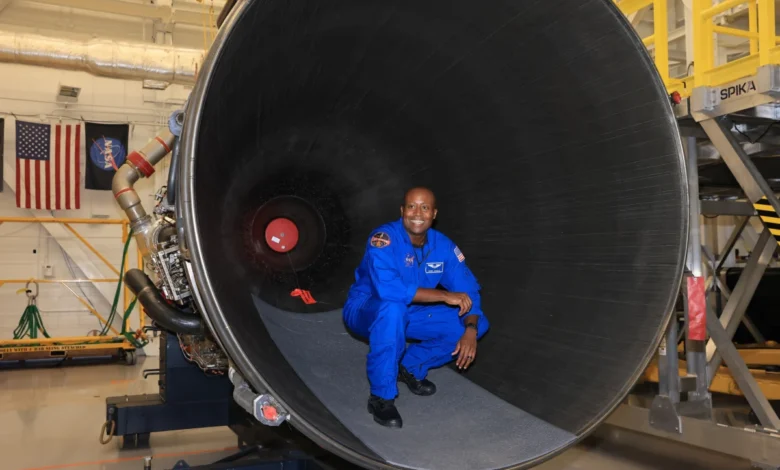
The preparations for the next era of lunar exploration reached a symbolic milestone on November 17, 2026, as NASA astronaut and Artemis III mission specialist Andre Douglas toured the Vehicle Assembly Building (VAB) at the Kennedy Space Center in Florida. Standing inside the massive, intricate structure of an RS-25 engine test article, Douglas surveyed the hardware that will soon propel the Space Launch System (SLS) toward orbit. This inspection serves as a critical bridge between theoretical design and the physical reality of human spaceflight, underscoring the intense mechanical rigor required to return humanity to the Moon.
The Technical Backbone of Artemis III
The RS-25 engine is widely considered one of the most sophisticated pieces of propulsion technology in history. Originally designed for the Space Shuttle program, where it demonstrated unparalleled reliability over decades of service, the engine has been extensively modernized for the Artemis program. Each engine operates at 109% of its original rated power level, utilizing advanced controllers and manufacturing techniques that allow for greater efficiency and safety margins during the high-stress environment of a heavy-lift launch.
During the Artemis III mission, the SLS rocket will be powered by a cluster of four RS-25 engines located at the base of the core stage. These engines are designed to produce a combined thrust of over two million pounds at liftoff. The primary objective for this specific mission is not merely to reach the lunar vicinity, but to conduct high-stakes rendezvous and docking maneuvers in low Earth orbit. By testing the integration of the Orion spacecraft with lunar lander systems before the final descent phase, NASA engineers aim to de-risk the landing architecture, ensuring that all life-support and navigational systems are functioning in unison before the subsequent Artemis IV crew attempts a lunar surface landing.
Chronology of the Artemis Program
The journey toward the Artemis III mission is the culmination of a decade of hardware development and incremental test flights. The timeline of the program reflects a strategic move from autonomous testing to human-rated operations:
- Artemis I (2022): The uncrewed flight test of the SLS rocket and Orion spacecraft successfully demonstrated the viability of the heat shield and the core stage propulsion systems, traveling beyond the Moon and returning safely to Earth.
- Artemis II (2025): This mission marked the return of human spaceflight to the lunar vicinity, carrying a crew of four astronauts on a flyby trajectory to test life support systems in deep space.
- Artemis III (Targeting 2027/2028): Focused on the first human landing near the lunar South Pole, this mission represents the apex of current NASA objectives.
- Artemis IV (Future): Intended to build upon the technical foundations established during the III mission, this flight will utilize the docking and rendezvous procedures validated in low Earth orbit to facilitate a sustained human presence on the lunar surface.
The November 2026 visit by Andre Douglas is a precursor to the final integration phase. As the hardware moves from the manufacturing floor to the VAB, the focus shifts to the "stacking" process—a complex engineering operation where the boosters, core stage, and upper stage are joined to form the completed launch vehicle.
Engineering Challenges and Reliability
The decision to utilize RS-25 engines for the Artemis program was driven by both economic and technical imperatives. By leveraging the existing supply chain and the flight-proven heritage of the engines, NASA has sought to minimize the risks associated with entirely new propulsion architectures. However, the modernization process has not been without its hurdles.
The engines require specialized propellant management systems capable of handling liquid hydrogen and liquid oxygen at extreme cryogenic temperatures. Engineers have had to integrate modern avionics into the legacy engine housing, a process that requires extensive software validation and ground testing. Each engine is put through a series of "hot-fire" tests at the Stennis Space Center, where sensors collect millions of data points per second to ensure that the combustion dynamics remain within acceptable parameters.
Official Perspectives and Agency Strategy
While NASA has remained focused on the technical milestones, the implications of these tests extend to the broader aerospace industry. Statements from agency leadership, including NASA Administrator Bill Nelson, have consistently emphasized that Artemis is not merely a government project, but a collaborative effort involving commercial partners like SpaceX and Blue Origin, alongside international space agencies.
"The work being done at Kennedy Space Center is the physical embodiment of the Artemis promise," a NASA spokesperson noted regarding the VAB inspection. "When an astronaut like Andre Douglas steps inside the engine assembly, it reinforces the human element of our mission. It is a reminder that behind every line of code and every bolt on the rocket, there is a commitment to the safety of our crew and the success of our scientific goals."
For the astronaut corps, these inspections are essential for maintaining situational awareness of the vehicle. By gaining a tactile understanding of the rocket’s configuration, specialists like Douglas are better prepared to handle anomalous situations that may arise during the intense phases of ascent and orbital insertion.
Broader Implications: The Moon to Mars Pipeline
The procedures being developed for the Artemis III mission have profound implications for the future of space exploration. The ability to perform complex rendezvous and docking maneuvers in low Earth orbit is a prerequisite for the assembly of the Lunar Gateway—a planned small space station in orbit around the Moon.
Furthermore, the technology being refined for the RS-25 engines is directly informing the development of next-generation heavy-lift vehicles. Data gathered from the high-thrust performance of these engines provides engineers with the metrics needed to improve fuel efficiency, which is critical for missions beyond the Moon, specifically to Mars. The "Moon-to-Mars" architecture relies on the lessons learned during these initial lunar landings.
If the docking tests in low Earth orbit prove successful during the Artemis III window, it will validate the modular assembly approach for future deep-space habitats. This approach reduces the need for single, massive launch vehicles, instead allowing for smaller, more specialized payloads to be launched and assembled in space.
Economic and Scientific Impact
The Artemis program serves as a significant economic driver for the United States, supporting thousands of jobs across the aerospace sector. The manufacturing of RS-25 components alone involves a vast network of suppliers across multiple states, fostering innovation in material science and digital manufacturing.
From a scientific perspective, the Artemis III mission is poised to return the first samples from the lunar South Pole, a region suspected to contain significant water ice deposits. These deposits are of immense interest to the scientific community, as they could serve as a source of drinking water, oxygen, and hydrogen fuel for future lunar bases. The performance of the SLS rocket, enabled by the four RS-25 engines, is the primary vehicle for delivering the scientific payloads and life-support systems required to sustain such research.
Future Outlook and Final Integration
As the calendar approaches the launch window for Artemis III, the pace of activity at the Kennedy Space Center is expected to accelerate. The successful integration of the core stage, coupled with the rigorous testing of the RS-25 engines, remains the most critical path item for the mission’s success.
For Andre Douglas and the rest of the astronaut team, the coming months will involve extensive simulations and final systems checks. The visual of an astronaut standing within the engine assembly is more than just a photo opportunity; it is a signal of operational readiness. As the mission nears, the focus will turn toward the integration of the Orion spacecraft and the final testing of the launch abort systems, ensuring that every contingency is accounted for.
The Artemis III mission represents a convergence of legacy technology and cutting-edge innovation. By grounding the mission in the reliable performance of the RS-25 engines while simultaneously pushing the boundaries of orbital maneuvering, NASA is effectively building the infrastructure required for a permanent human presence in the solar system. The inspection at the VAB in November 2026 is a testament to the fact that, despite the vast distances of space, the success of the mission begins on the ground, in the hands of those who build, test, and fly the machines that make discovery possible.