Cultivating the Final Frontier: How NASA is Revolutionizing Space Agriculture for Moon and Mars Missions

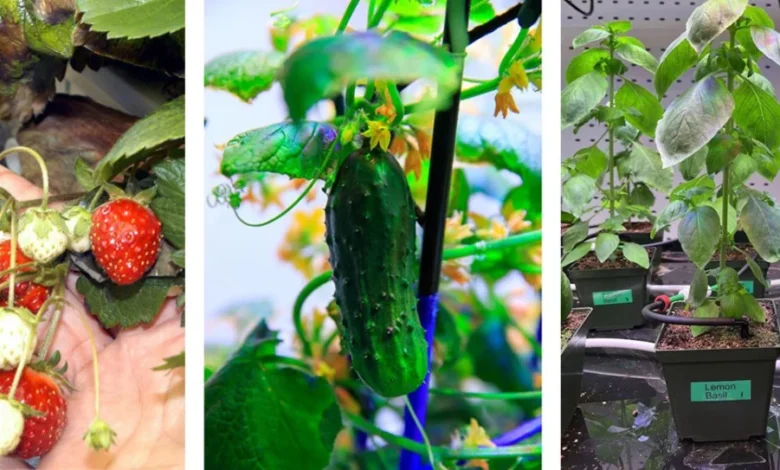
As NASA prepares for future missions to the Moon and Mars, researchers are studying crops that could provide astronauts with fresh food, nutrition, and variety far from Earth. Such crop variety can help with menus in deep space, something top of mind this week as the nation celebrates Thanksgiving. The transition from pre-packaged, shelf-stable rations to bioregenerative life support systems represents one of the most significant hurdles in deep-space exploration. While historical missions relied entirely on cargo resupply from Earth, the constraints of the Artemis program and future Mars expeditions require a self-sustaining approach to nutrition and atmospheric management.
The Biological Imperative of Space Farming
The necessity of growing food in space extends far beyond the psychological comfort of a fresh meal. In the harsh environment of deep space, plants serve as critical components of the Environmental Control and Life Support System (ECLSS). These biological units function as natural air scrubbers, absorbing carbon dioxide exhaled by crew members and converting it into breathable oxygen through photosynthesis. Furthermore, they play a vital role in water recycling and waste management.
NASA’s Biological and Physical Sciences Division is currently escalating its efforts, with a new investigation scheduled to launch to the International Space Station (ISS). This mission will feature a first-of-its-kind prototype growth chamber, a sophisticated piece of hardware designed to simulate the microgravity and atmospheric conditions of lunar base habitats. This equipment is expected to provide researchers with unprecedented insights into how root structures and nutrient delivery systems behave when removed from the Earth’s gravitational pull.
A Chronology of Space Botany
The evolution of space agriculture has been a decades-long pursuit, transitioning from rudimentary experiments to complex botanical studies. The timeline of space-based plant research is punctuated by several key milestones:
- 1982: The Salyut 7 space station successfully hosted the first plant to complete a full life cycle—Arabidopsis thaliana—marking the birth of space botany.
- 2014: NASA’s "Veggie" facility was installed on the ISS, allowing for the first on-orbit production of red romaine lettuce.
- 2019: The Advanced Plant Habitat (APH) was utilized to grow a larger variety of vegetables, demonstrating the feasibility of using automated growth chambers.
- 2024: Recent studies published in journals such as Life Sciences in Space Research and HortScience have shifted focus from simple biomass production to nutritional and variety-based outcomes, including strawberries and cucumbers.
The Strawberry Selection Process: Efficiency vs. Aesthetics
Strawberries have emerged as a primary candidate for spaceflight due to their high nutritional density, aromatic properties, and self-pollinating nature. However, selecting the right cultivar is a rigorous process of elimination. Researchers at NASA’s Kennedy Space Center in Florida, in collaboration with the Australian Research Council Centre for Excellence in Plants for Space, recently conducted a comparative study between the commercial "Delizz" strawberry and a wild variety.
The findings, published in September, highlighted the trade-offs inherent in space agriculture. While the wild strawberry produced twice as many buds and flowers as the Delizz, it exhibited a significant growth flaw: an excessive production of "runners." In the cramped, resource-limited environment of a spacecraft or a lunar greenhouse, these runners would occupy precious square footage, potentially outcompeting other crops for light and nutrients. Consequently, the Delizz variety remains the leading candidate, as its compact growth habit and large, red fruit are better suited for controlled-environment agriculture.
Breaking New Ground: The Gourd Family
While leafy greens and small fruits have dominated past research, the introduction of the gourd family represents a significant expansion of the "space menu." Cucumbers are currently undergoing rigorous testing to determine their viability as a high-yield crop. A study published in August in the journal HortScience revealed that while cucumber plants exhibited morphological changes—specifically the development of enlarged leaves—they were capable of producing a consistent stream of edible fruit under spaceflight-simulated conditions.
The implication of incorporating cucumbers into space menus is substantial. Beyond providing essential vitamins, the addition of diverse plant species increases biodiversity within the habitat. This biological diversity acts as a form of insurance; a monoculture system is inherently vulnerable to disease or environmental fluctuations. By fostering a diverse ecosystem of crops, NASA aims to build a robust, resilient food supply capable of sustaining a crew for months or years without external resupply.
Culinary Psychology and Human Performance
The psychological impact of long-duration spaceflight cannot be overstated. "Menu fatigue"—the loss of appetite and interest in food due to the repetitive nature of shelf-stable meals—is a documented issue that can lead to inadequate caloric intake and decreased morale. Fresh herbs, such as lemon basil, are viewed as a critical countermeasure.
Lemon basil has successfully passed preliminary rounds of testing at the Kennedy Space Center, including the vital step of seed sanitization. This process is essential to ensure that the seeds are free from microorganisms that could proliferate in the enclosed, humid environment of the space station. Once the basil reaches the ISS, researchers will assess its growth within "plant pillows," which are specialized, modular containers that provide the necessary substrate and moisture for plant development. The inclusion of aromatic herbs allows astronauts to modify the flavor profile of their rations, transforming bland, packaged meals into satisfying, sensory-rich experiences.
Technical Challenges and Future Implications
The transition to in-situ resource utilization (ISRU) for food production is fraught with technical challenges. Lighting, irrigation, and atmospheric pressure regulation are the primary variables that researchers must calibrate. In space, water does not behave as it does on Earth; it clings to surfaces, making traditional irrigation impossible. NASA’s current hardware uses porous materials to wick water directly to plant roots, a method that is constantly being refined.
Furthermore, the radiation environment of deep space poses a threat to plant DNA. Research into radiation-resistant crop varieties is currently in the early stages, with data from the ISS serving as the baseline for future Mars-bound experiments. The ability to successfully harvest crops in deep space is not merely a logistical convenience; it is a prerequisite for human expansion beyond low-Earth orbit.
Analysis: A Shift Toward Sustainable Exploration
The shift in NASA’s research focus from "can we grow anything?" to "how do we grow a sustainable, diverse diet?" reflects a maturation of space exploration strategies. The current investment in plant biology serves as a proxy for the broader goal of permanent human presence in the solar system.
As noted by researchers, the success of these crops is contingent upon the integration of biology with advanced engineering. The data gleaned from the upcoming prototype growth chamber will inform the design of the next generation of lunar habitats. These habitats will function as terrestrial laboratories for Martian settlement, where the margin for error is non-existent.
By prioritizing nutritional density, psychological well-being, and biological synergy, NASA is laying the groundwork for a future where astronauts are no longer dependent on the "Earth umbilical cord." The humble strawberry and the resilient cucumber, therefore, serve as foundational building blocks for the next era of human history. As the agency continues to refine these systems, the lessons learned in the climate-controlled rooms of Kennedy Space Center will eventually be tested under the light of the Moon, ensuring that those who venture into the void are not only surviving but thriving.