Uber Engineering Unveils a Multi-Layered Security Framework to Mitigate Risks in Autonomous AI Agent Deployments


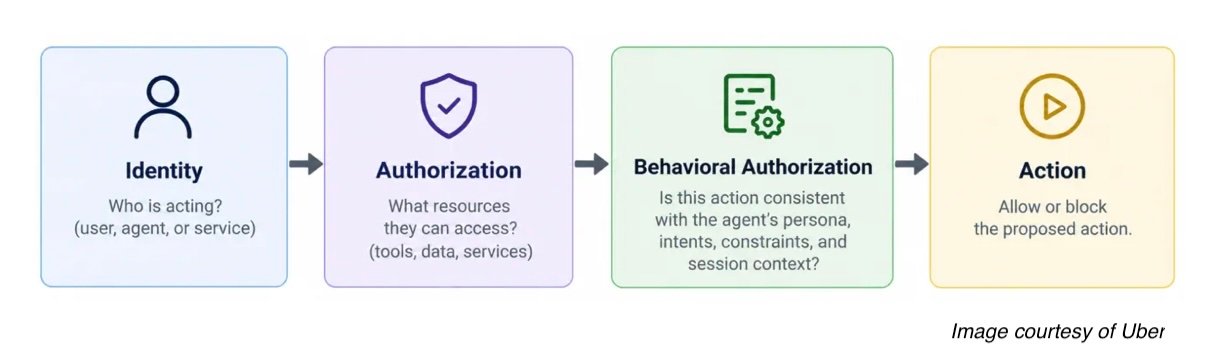
The rapid proliferation of autonomous AI agents—systems capable of reasoning over complex datasets and executing real-world actions—has outpaced the evolution of traditional cybersecurity infrastructure. Recognizing that standard identity and access management (IAM) protocols are insufficient for agents that operate with high levels of agency, Uber Engineering has released a comprehensive technical framework designed to govern AI behavior throughout its entire lifecycle. This initiative addresses the inherent vulnerabilities of large language models (LLMs) and autonomous agents, including prompt injection, goal hijacking, and behavioral drift, by shifting the security paradigm from static permissions to context-aware behavioral authorization.
The Failure of Traditional Security in the Age of AI
Historically, cybersecurity has relied on binary decision-making processes: either a user or a service has the credentials to access a resource, or they do not. However, AI agents do not function as static services. They dynamically process external content, reason through ambiguous prompts, and interface with diverse APIs. Uber’s security architecture asserts that while identity systems can verify "who" is performing an action, they remain blind to "why" the action is being performed or if it is appropriate within a specific, evolving context.
The risks associated with this gap are substantial. Attackers can exploit LLMs through "prompt injection"—tricking the model into ignoring its safety guidelines—or through "tool poisoning," where an agent is manipulated into using its permitted tools for malicious ends. Furthermore, behavioral drift can lead agents to deviate from their intended purpose, while "hallucination-driven actions" can result in unintended system changes or data exposure. By treating an AI agent as a standard software service, enterprises leave themselves vulnerable to these sophisticated vectors that bypass traditional perimeter defenses.
Chronology and Development of the Framework
The development of Uber’s Secure AI framework followed a strategic lifecycle approach, moving from initial conceptualization to production-ready enforcement. The process can be categorized into three distinct phases:

- Provisioning (Pre-Deployment): The foundation of the framework is the Uber AI Registry. Every agent is registered with a defined persona, intent, and risk classification. This is bolstered by "Argus," an automated analysis engine that scrutinizes source code, prompt configurations, and tool-invocation paths. This phase serves as a security gate, ensuring that no agent enters production without a verified configuration and a baseline of expected behavior.
- Runtime Enforcement (The Active Layer): Once deployed, the framework utilizes behavioral authorization. This involves three core components: the AI Registry for policy management, AI Guards for real-time evaluation, and Agent Guard hooks. These hooks act as checkpoints, pausing agent operations to allow the AI Guard to issue a verdict on the proposed action before it is committed to the external environment.
- Continuous Assurance (Post-Deployment): The final layer focuses on observability and auditability. By maintaining a unified execution trace, engineers can map every tool call and action back to a specific decision. This allows for post-incident analysis and, crucially, the ability to replay interactions against updated guardrails to verify that security patches effectively mitigate emerging threats.
Data-Driven Security: Balancing Rigor and Agility
One of the primary challenges identified by Uber engineers is the delicate balance between security restrictiveness and operational efficiency. Over-enforcement leads to excessive false positives, which can cripple the utility of the agent, while under-enforcement leaves gaps for exploitation.
Data from the implementation phase indicates that moving away from generic, one-size-fits-all security thresholds is essential. Instead, Uber transitioned to agent-specific policies. By tailoring constraints to the specific domain and risk profile of an individual agent—for example, an agent tasked with customer service queries requires fundamentally different guardrails than one tasked with infrastructure management—Uber achieved a higher degree of precision. This "least privilege" approach for AI ensures that even if an agent is compromised, its blast radius is contained by its explicit, pre-defined functional constraints.
Industry Perspectives and Expert Analysis
The publication of Uber’s framework has sparked significant discourse within the cybersecurity and AI architecture communities. Tristan G., a senior information technology officer at the United Nations, highlighted the inherent trade-off between granular security and scalability. While he praised the focus on per-agent personas and intents, he noted that the labor required to maintain such a system scales linearly with the number of agent workflows, potentially creating a "security debt" for organizations managing hundreds of disparate AI agents.
Furthermore, Tristan raised a critical concern regarding the ubiquity of third-party agents. "The open question is how this works for agents you don’t build, such as vendor or SaaS agents where you can’t insert your own enforcement hooks," he remarked. This points to a broader industry trend where the "security of the agent" is often dependent on the "security of the platform," necessitating a move toward standardized, vendor-agnostic security protocols for AI inter-operability.
Pratik Dhanave, an AI architect, echoed the sentiment that the "least glamorous" controls—explicit constraints—are the most effective. He observed that while the industry often searches for complex algorithmic solutions to AI safety, the most reliable protection remains the rigorous definition of boundaries. "The cost is flexibility," Dhanave noted, "but it is a price worth paying for production-grade security."
Implications for the Future of AI Security
Uber’s framework represents a critical milestone in the maturation of AI operations (AIOps). By integrating security directly into the lifecycle of the agent, the company is moving toward a model of "Security by Design" that is fundamentally necessary for the safe adoption of LLM-based autonomous systems.
The broader implications of this approach are threefold:
- Standardization of AI Governance: As frameworks like Uber’s become the blueprint for industry standards, we can expect a move toward centralized registries and standardized runtime hooks. This would provide the interoperability needed to govern third-party agents, addressing one of the primary concerns raised by experts.
- The Rise of "Agentic" Observability: The reliance on unified execution traces and replayability suggests that the future of AI monitoring will look less like traditional logging and more like forensic auditing. Organizations will need to invest in platforms that capture not just the output of an agent, but the internal reasoning and policy-decision context.
- The Cost of Autonomy: The framework underscores that autonomy is not free. The "effort cost" of maintaining precise, context-aware guardrails suggests that companies must account for the overhead of AI security as a core component of their total cost of ownership (TCO) for AI projects.
Conclusion: A Path Toward Responsible AI
Uber’s commitment to refining its Secure AI framework signals that the company views security not as a static check-the-box exercise, but as an evolving discipline. As the framework continues to iterate, the focus will likely shift toward automating the creation of guardrails and reducing the developer friction associated with policy setup.
For the wider tech industry, the lesson is clear: as AI agents move from experimental sandboxes to the front lines of business operations, traditional security models are no longer fit for purpose. The shift toward behavioral authorization—where actions are judged by their context, intent, and alignment with defined persona constraints—is the most viable path toward harnessing the power of autonomous AI while maintaining a robust security posture. By prioritizing explicit constraints and continuous, trace-based observability, Uber has provided a robust framework that sets a high bar for enterprise AI security.
Related posts: