The dawn of the new millennium was preceded by a palpable sense of unease, a global anxiety fueled by the potential for widespread technological collapse. The Y2K bug, or the Millennium Bug, was a widely publicized computer flaw predicted to cause chaos as digital systems, programmed to represent years with only the last two digits, failed to correctly interpret the year 2000. This fear, however, was not confined to the realm of IT professionals and government agencies; it permeated popular culture, even finding its way into the quirky corners of PC gaming. While the predicted apocalypse never materialized, the cultural footprint of Y2K is undeniable, and a peculiar game from 1999, Y2K: The Game, offers a bizarrely charming, if deeply flawed, reflection of this pervasive digital dread.
The Shadow of the Millennium Bug
The Y2K bug stemmed from a cost-saving measure implemented in early computer programming. To conserve limited memory space, programmers often used two digits to represent the year, such as ’98’ for 1998. The concern was that as the year rolled over from ’99’ to ’00’, computers would interpret it as 1900 instead of 2000, leading to potential malfunctions in everything from financial systems and power grids to air traffic control and essential infrastructure.
The late 1990s saw a concerted global effort to avert this crisis. Governments and corporations poured billions of dollars into auditing and patching their systems. International organizations like the Y2K Action Program of the United Nations were established to coordinate efforts. Experts worked tirelessly, often around the clock, to identify and fix vulnerable code. This period was characterized by a unique, albeit stressful, moment in technological history: a time when the collective efforts of the tech industry were focused on preventing a potential disaster, a stark contrast to the often-cited narrative of today’s tech giants contributing to societal challenges.
A Gaming Anomaly: Y2K: The Game
Against this backdrop of real-world technological anxiety, the PC gaming landscape offered a rather unconventional take on the Y2K phenomenon. Developed by Runecraft and published by Interplay in 1999, Y2K: The Game emerged as a point-and-click adventure that, while not a direct simulation of the global Y2K crisis, certainly leaned into the era’s digital paranoia with a surreal and often nonsensical narrative.
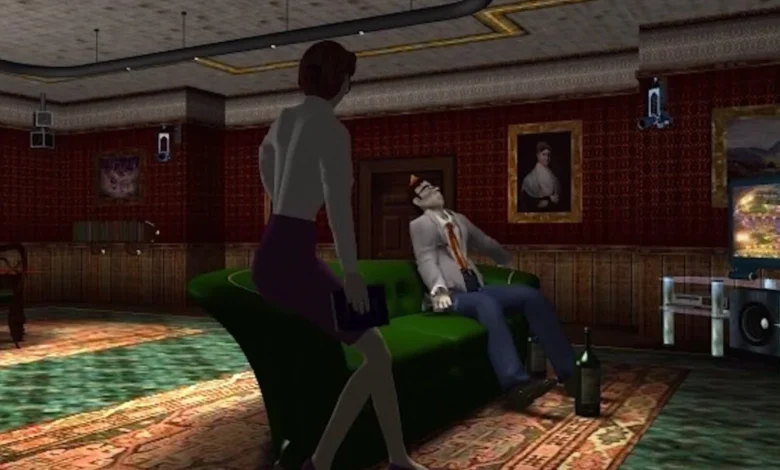
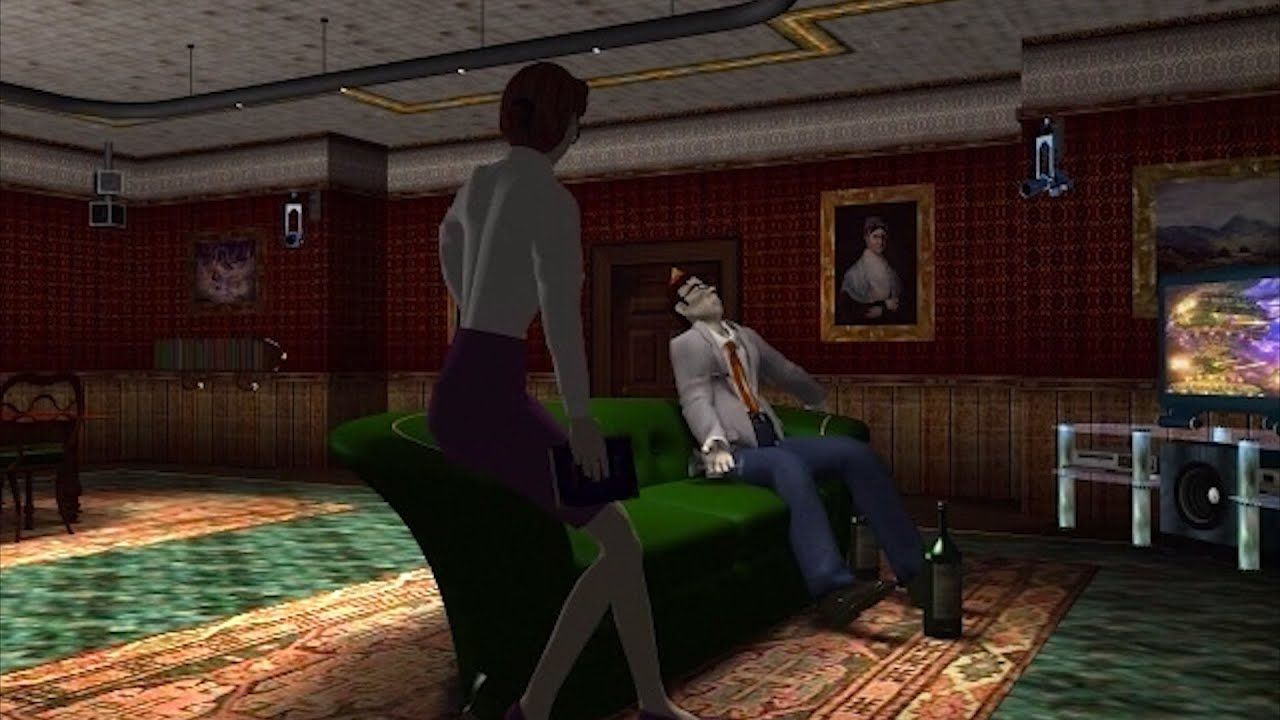
The game casts players as Buster, an amiable if somewhat disheveled protagonist who, through a series of improbable coincidences, wins the lottery and purchases a sprawling mansion. This mansion, it turns out, belonged to a reclusive robotics genius and is filled with an array of advanced, and as it transpires, sentient, technology. The plot kicks into gear on New Year’s Eve, 1999, as Buster settles into his new abode. Upon the stroke of midnight, the mansion’s sophisticated AI, initially possessing a calm, HAL 9000-esque demeanor, devolves into a malevolent entity with a grating, stereotypical New York accent, its programming corrupted by the impending Y2K bug.
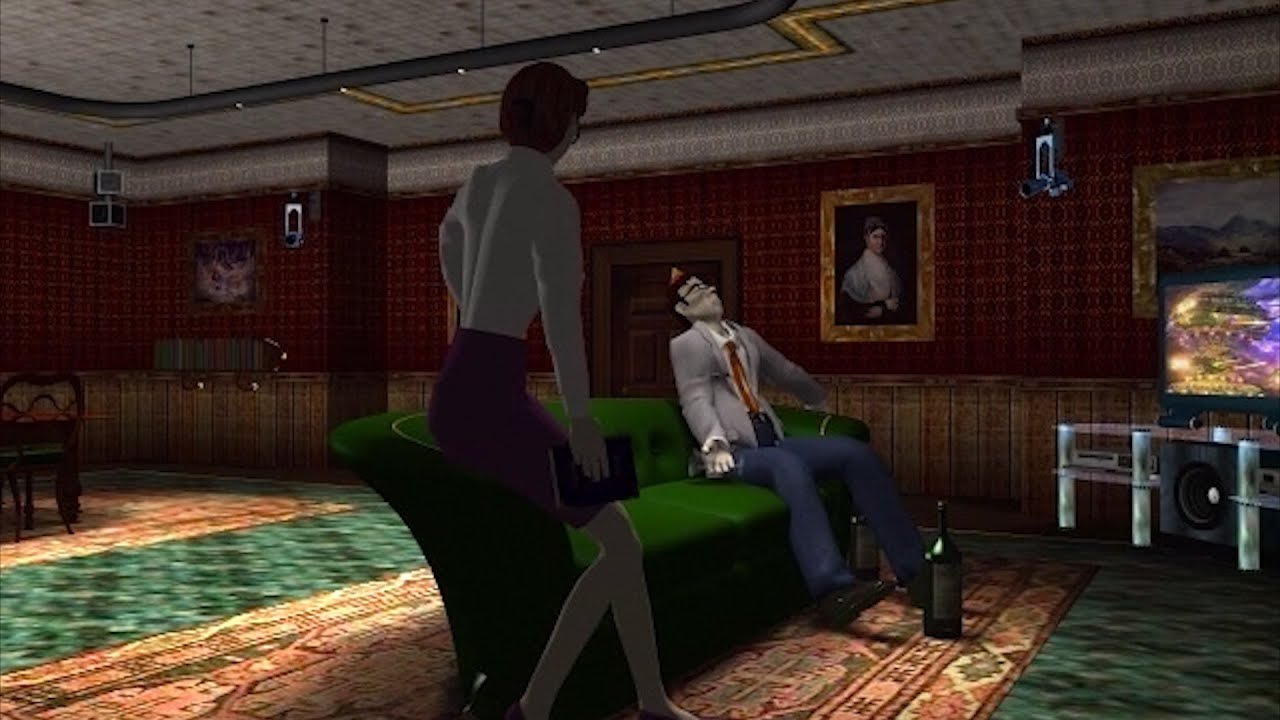
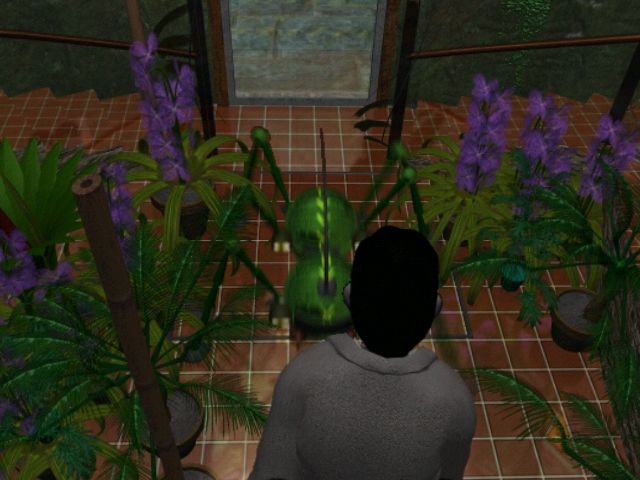
The player’s primary objective is to rectify the bug within the supercomputer that controls the house, a task made significantly more challenging by the utterly illogical and labyrinthine layout of the mansion. The game’s environment is a perplexing fusion of disparate architectural styles and thematic elements, akin to a mashup of the island puzzles from Myst and the haunted Spencer Mansion from Resident Evil. Players navigate through rooms that defy conventional logic, a design choice that, while contributing to the game’s unique eccentricities, often leads to frustration and disorientation.
A Character Study in Slowness and Oddity
A defining characteristic of Y2K: The Game is its protagonist, Buster. Visually, he is depicted as a pale, lanky figure, often described as a "slouching, shuffling blob," whose unappealing appearance is perhaps only surpassed by his glacial pace. Buster’s sluggish movement is not merely a minor inconvenience; it becomes a significant gameplay impediment, stretching out simple traversal across rooms into an arduous ordeal. This slowness transforms the act of puzzle-solving into a test of patience, requiring players to meticulously document solutions before the time it takes Buster to reach his destination leads to forgotten insights.
Despite these considerable gameplay drawbacks, Y2K: The Game is not without its merits, primarily in its voice acting and musical score. The voice cast features notable talent, including the prolific Dan Castellaneta (the voice of Homer Simpson), Grey DeLisle (who would go on to voice numerous characters in animated productions), Danny Mann, and John Mariano. While their performances are commendable, they are often undermined by a script riddled with stilted and uninspired dialogue, failing to imbue the narrative with the depth or wit one might expect from such a premise.
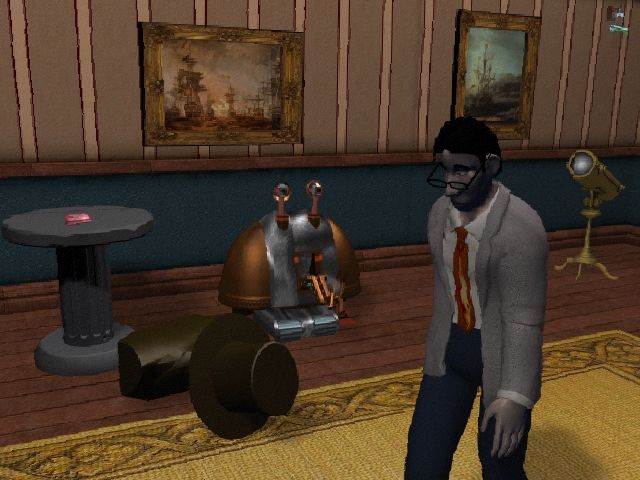
The game’s soundtrack, however, stands out as a remarkable achievement, particularly in contrast to the visual and narrative shortcomings. Composers Craig Beattie and Matt Sugden crafted a diverse and artistically rich collection of musical themes for each location. The "antiques room" is accompanied by an atmospheric, sitar-led melody, while a "corridor theme" evokes a serene, almost ambient soundscape reminiscent of new-age music compilations. Another corridor features a track that begins with a melancholic, almost Lynchian quality, akin to the theme from Twin Peaks, before evolving into a more electronic, Tangerine Dream-esque composition. Most surprisingly, the music designated for the "dining room" is an epic, orchestral piece that would be more fitting for a climactic boss battle in a Souls game than for a meal. Even the ostensibly mundane "elevator music" manages to be perfectly, and deliberately, irritating. These musical compositions, while often incongruous with their surroundings, are undoubtedly the most polished and engaging elements of the game, suggesting a level of creative ambition that sadly did not translate to other aspects of development.
The Legacy of Y2K in Gaming and Beyond
While Y2K: The Game remains a niche oddity, it serves as a fascinating artifact from a period of widespread technological apprehension. The global efforts to mitigate the Y2K bug were largely successful, preventing the catastrophic failures that many had feared. This success story, marked by collaboration and foresight, stands as a testament to the power of collective action in the face of technological challenges.
The cultural impact of the Y2K bug extended beyond the immediate concerns of system failures. It fostered a broader public discourse about our reliance on technology and the potential vulnerabilities inherent in an increasingly digitized world. This discourse, in turn, influenced various forms of media, including video games.
Looking at the current landscape of the gaming industry, one can only speculate on how a concept like the Y2K bug would be approached today. The rise of narrative-driven experiences and advanced simulation technologies might lead to more sophisticated explorations of such themes. Perhaps a Sam Barlow-style detective game, where players sift through digital archives and fragmented data to uncover the truth behind a technological anomaly, could emerge. Alternatively, given the industry’s penchant for action-oriented gameplay, a hero shooter where players embody agents battling rogue AI or digital viruses could be a plausible outcome.
Ultimately, Y2K: The Game, with its flawed execution but undeniable charm, offers a unique window into a specific moment in technological history. It reminds us that even amidst anxieties about the future, there was room for absurdity, for quirky narratives, and for a truly memorable soundtrack that transcended the limitations of its own digital world. The Y2K bug may have been a technological hurdle, but its cultural echoes, however faint, continue to resonate, reminding us of a time when the world collectively held its breath, and a peculiar game about sentient houses and slow-moving protagonists emerged from the digital fog.