Critical GitLab Remote Code Execution Flaw Exposed After Patch Misclassification, Urging Immediate Updates Across Self-Managed Instances

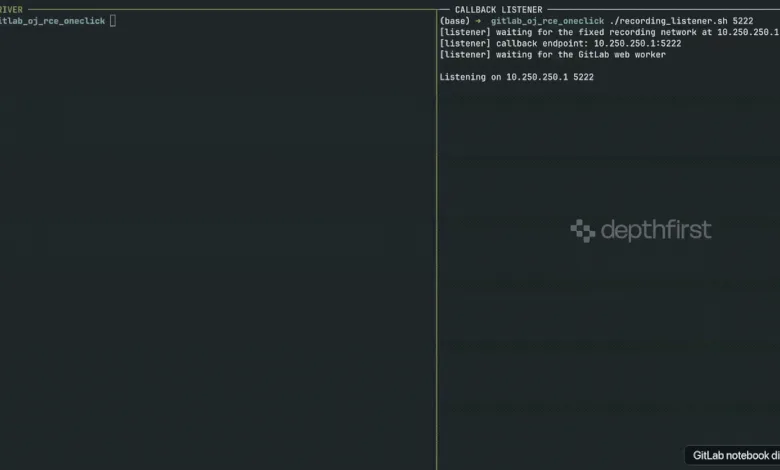
Security researchers from depthfirst have publicly released working exploit code for a critical remote code execution (RCE) vulnerability in GitLab that had been patched by the company six weeks prior on June 10, 2026. The vulnerability, which allows authenticated users to execute arbitrary commands as the git user on unpatched self-managed GitLab 18.11.3 servers, went largely unnoticed by many system administrators due to GitLab’s initial classification of the fix as a routine bug resolution rather than a security update. This oversight meant the patch lacked a CVE identifier, a CVSS score, and any explicit mention of its security implications, potentially leaving countless organizations exposed to significant risk.
The Discovery and Technical Underpinnings of the RCE
The journey to this public exploit began with depthfirst’s security researchers, who on May 21, 2026, identified two critical memory corruption bugs within Oj, a popular Ruby JSON parser. Oj, implemented largely in native C for performance, is widely used across the Ruby ecosystem. Depthfirst claimed its system autonomously flagged these vulnerabilities, which were then manually chained by researchers to achieve the RCE. The maintainer of the Oj gem promptly merged fixes for these issues on May 27, and version 3.17.3 of the gem shipped on June 4.
The core of the vulnerability resides in how GitLab’s notebook renderer, an in-tree gem named ipynbdiff, processes Jupyter notebook (.ipynb) files. These files are essentially JSON documents. When an authenticated user pushes a crafted .ipynb file to a project and subsequently views its commit diff, the ipynbdiff gem passes the repository-controlled JSON content to Oj::Parser.usual.parse. This operation occurs within a long-lived Puma worker process, allowing attacker-controlled bytes to manipulate Oj’s manually managed C memory within the application’s process space.
Specifically, two memory corruption bugs in Oj, versions 3.13.0 to 3.17.1, enable the exploit chain:
- Heap Buffer Overflow: One bug allows an attacker to write past a fixed 1,024-byte nesting stack. By carefully crafting the input, this overflow can be used to gain control over the parser’s
startcallback function, a crucial step in redirecting execution flow. - Information Leakage: The second bug involves truncating a 65,565-byte object key to 29 bytes within a signed 16-bit field. Crucially, this operation then returns a live heap pointer, which GitLab’s diff renderer inadvertently exposes. Repeated exploitation of this information leak allows an automated probe to map the memory layout of the application, including the location of critical libraries like
libc.
With the ability to control a callback function and a precise understanding of memory addresses, the exploit then points the controlled callback at the system() function. This allows the attacker to execute arbitrary commands on the underlying operating system. The process typically involves committing a series of crafted Jupyter notebooks: the first set to leak heap pointers, allowing the attacker to locate libraries in memory, and then two more notebooks to fire the final payload.

GitLab’s Patching and the Classification Controversy
GitLab was informed of the complete RCE chain on June 5, confirmed its existence by June 8, and released a patch on June 10, 2026. This swift response in patching the underlying issue is commendable. However, the controversy stems from how GitLab chose to categorize this critical fix.
The patch, which included bumping the Oj gem to version 3.17.3, was listed under "bug fixes" in the June 10 patch release notes for GitLab 19.0.2, rather than being highlighted in the dedicated security-fix table. The Hacker News, upon reviewing the release, found no CVE (Common Vulnerabilities and Exposures) identifier, no CVSS (Common Vulnerability Scoring System) score, and no explicit mention of the notebook-diff chain or its RCE implications. This decision had significant ramifications for system administrators and security teams. Operators who rely on scanning security advisories and CVE databases for urgent patching priorities would have had no reason to treat this particular update as critical. Many would have simply applied it as part of routine maintenance, or, worse, delayed it if their patching cadence for non-security bugs is less frequent.
This incident underscores a recurring challenge in software security: the transparent and accurate classification of vulnerabilities. When a vendor downplays or misclassifies a critical RCE, it creates a dangerous blind spot for users, potentially leaving them vulnerable for extended periods. It is common practice for RCE vulnerabilities to receive high CVSS scores and dedicated CVEs to ensure their visibility and prompt remediation. The absence of these standard identifiers effectively hid the severity of the flaw from the wider security community.
Exploit Availability, Impact, and Affected Versions
The public release of working exploit code on July 24, 2026, amplified the urgency for unpatched GitLab instances. The exploit targets self-managed GitLab 18.11.3 servers running on x86-64 architecture. While the publicly released exploit is tailored to this specific version and architecture (relying on gadget offsets, register state, and jemalloc behavior from that image), depthfirst notes that the underlying Oj bugs are general. Porting the exploit to other GitLab versions or architectures, while requiring "real work," is entirely feasible for determined attackers.
The impact of successful exploitation is severe. The RCE allows commands to be run as the git user, which is the account behind the Puma web server process. The extent of compromise depends on the isolation configured for the GitLab installation, but typically, this grants access to highly sensitive assets, including:

- Source Code Repositories: All project source code hosted on the GitLab instance.
- Rails Secrets: Critical configuration data, API keys, and other sensitive credentials used by the GitLab application.
- Service Credentials: Credentials for internal and external services that GitLab interacts with.
- CI/CD Data: Sensitive information related to Continuous Integration/Continuous Delivery pipelines, potentially including deployment keys, environment variables, and build artifacts.
- Internal Services Access: The ability to interact with other internal services that the GitLab application can reach, potentially leading to lateral movement within the organization’s network.
The vulnerability affects all tiers of GitLab CE (Community Edition) and EE (Enterprise Edition), from Free through Ultimate. Ruby itself is not vulnerable; the issue lies specifically within the Oj gem’s C implementation.
Affected GitLab Versions and Remediation:
The following GitLab CE/EE versions are affected and require immediate upgrades:
- GitLab CE/EE 15.2.0 to 18.10.7: Upgrade to 18.10.8 or newer.
- GitLab CE/EE 18.11.0 to 18.11.4: Upgrade to 18.11.5 or newer.
- GitLab CE/EE 19.0.0 to 19.0.1: Upgrade to 19.0.2 or newer.
The vulnerable Oj gem versions are 3.13.0 to 3.17.1. Version 3.17.2 contained other fixes but not these two critical memory corruption issues.
Upgrade Guidance and Unsupported Versions:
Organizations are strongly advised to upgrade their GitLab instances immediately to one of the patched versions. Neither GitLab nor depthfirst has offered a viable workaround for those unable to upgrade.
A critical point for administrators, particularly those managing GitLab via Helm charts or Kubernetes Operators, is to verify the actual GitLab version running inside the Webservice image (which runs Puma), rather than relying solely on the chart or Operator version. There can be discrepancies, and the underlying application version is what truly matters for security.
Furthermore, older GitLab versions, specifically those on patch trains 15.2 through 18.9, will not receive backports for this fix. These lines sit outside GitLab’s security-maintained patch trains. Organizations running these unsupported versions face a more challenging remediation path, as they must migrate to a currently supported release to receive the fix, which can be a complex and time-consuming process. This highlights the importance of keeping software within vendor-supported maintenance windows.
The Rise of Automated Vulnerability Discovery and Broader Implications

Depthfirst’s claim that its system autonomously flagged the Oj bugs underscores the growing role of advanced tools, including AI and sophisticated fuzzing techniques, in discovering complex vulnerabilities. While human researchers were still required to chain the bugs into a functional RCE, the initial identification by an automated system points to a future where zero-day vulnerabilities may be discovered at an accelerated pace, challenging vendors to respond even more rapidly and transparently. Depthfirst noted that its wider review of Oj produced nine more CVE advisories, none of which were related to this specific RCE chain, indicating a comprehensive and effective research effort.
This incident provides several crucial lessons for the broader cybersecurity landscape:
- Vendor Transparency in Patching: The misclassification by GitLab serves as a stark reminder for all software vendors about the critical importance of clear, unambiguous security advisories. Omitting CVEs, CVSS scores, and explicit security context can lead to delayed patching and increased risk for customers. A robust vulnerability disclosure and patch classification policy is paramount.
- Supply Chain Security: The vulnerability’s root cause in a third-party Ruby gem (Oj) highlights the ongoing challenges of software supply chain security. Organizations rely heavily on open-source components, and vulnerabilities in these dependencies can have profound impacts on downstream applications. Vigilant monitoring of dependencies and rapid integration of upstream fixes are essential.
- Proactive Patch Management: For system administrators, this event reinforces the need for a proactive and comprehensive patch management strategy that goes beyond merely checking for "security fixes." It necessitates a deeper dive into all patch notes, understanding the underlying changes, and assessing potential security implications even when not explicitly flagged.
- Risk Assessment for Self-Managed Instances: Self-managed deployments, while offering greater control, also place a higher burden of responsibility on the organization for patching and security. Cloud-managed services often handle such updates automatically, but self-managed instances require diligent attention.
Ongoing Dialogue and Future Steps
The Hacker News has reached out to GitLab for clarification on why the fix was not classified as a security issue and whether a CVE will be retrospectively assigned. Responses are pending. Similarly, depthfirst has been queried regarding the exploit’s portability and the specifics of their automated discovery system.
As the industry continues to grapple with increasingly sophisticated threats and the rapid pace of vulnerability discovery, transparent communication, robust patching processes, and a shared understanding of risk between vendors and users remain critical pillars of effective cybersecurity. The GitLab RCE serves as a potent reminder that vigilance must extend beyond obvious security alerts to every corner of the software stack.
Found this article interesting? Follow us on Google News, Twitter and LinkedIn to read more exclusive content we post.
Related posts: