Mallomar Defends Title at the 2025 Great Goat Graze-Off as Riverside Park Conservancy Leverages Natural Solutions for Urban Land Management

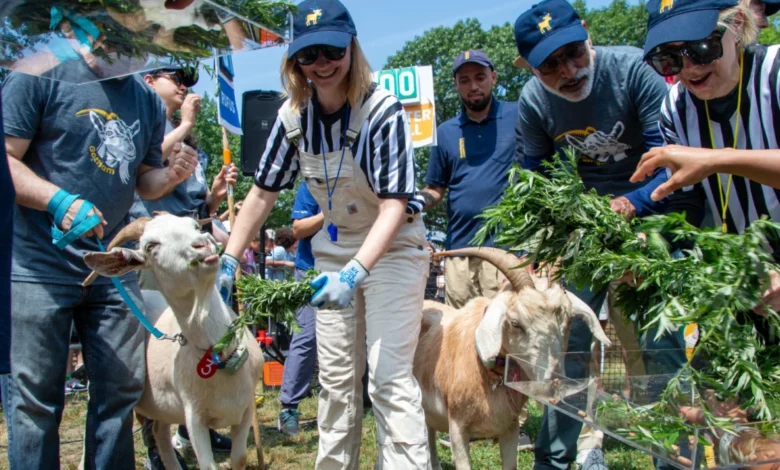
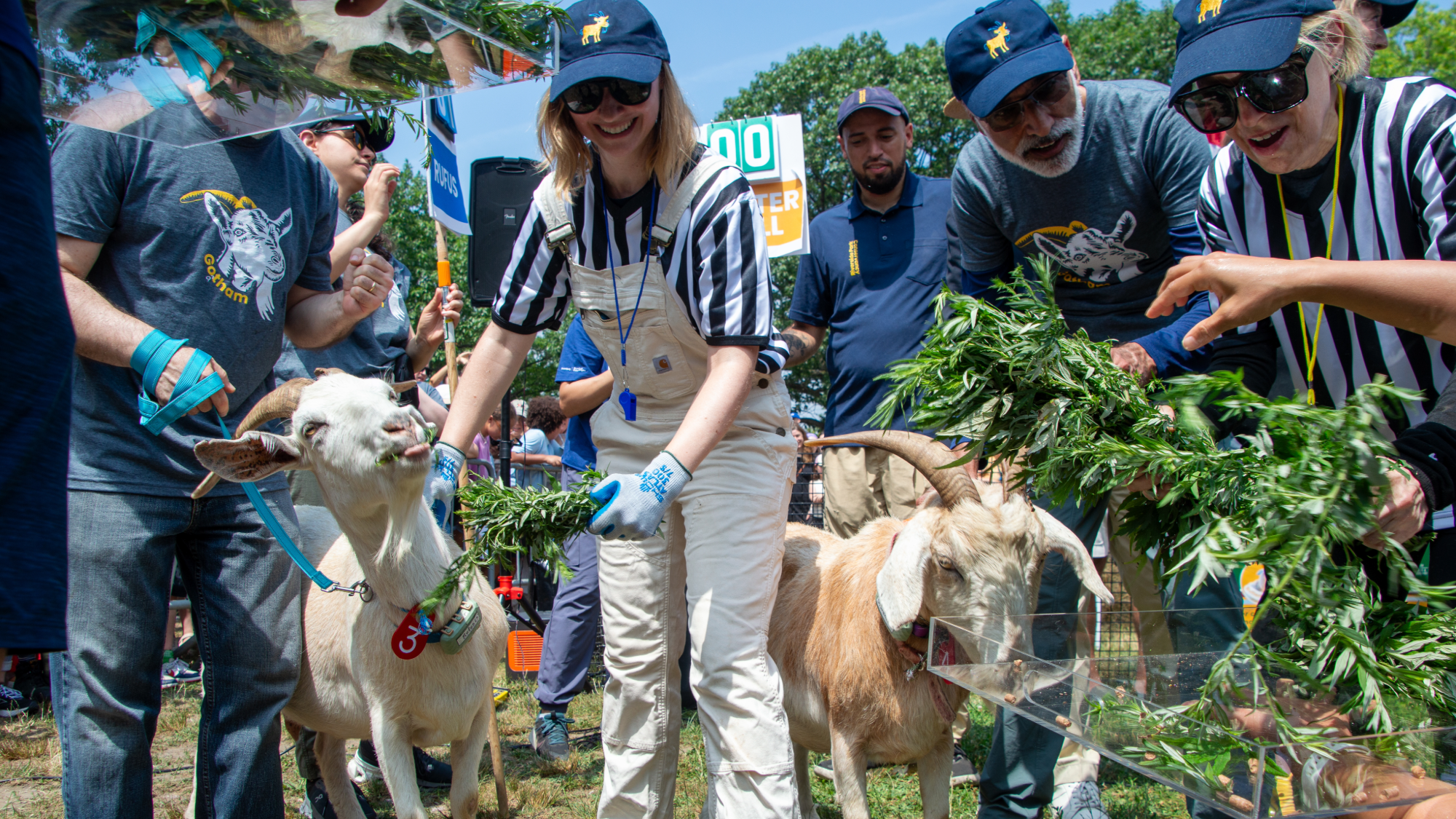
In a display of competitive eating and ecological service, a goat named Mallomar successfully defended his championship title at the 2025 Great Goat Graze-Off in New York City’s Riverside Park. The event, which took place in the West Harlem section of the park, saw Mallomar face off against formidable challengers Romeo and Big Buddy in a high-stakes race to consume invasive vegetation. According to the Riverside Park Conservancy, the reigning champion secured his victory by consuming 1.5 standardized packets of invasive weeds within a strict three-minute window. The competition, now in its second consecutive year, has quickly become a local tradition, blending public spectacle with the serious business of urban land management.
The atmosphere in West Harlem was charged with excitement as George Shea, the renowned host of the Nathan’s Famous Fourth of July International Hot Dog Eating Contest, took the microphone to emcee the event. Shea, known for his hyperbolic and theatrical introductions, brought a sense of professional sportsmanship to the "Goatham" initiative. While the event is lighthearted in its presentation, the underlying mission is a critical component of the city’s environmental strategy. The goats are not merely performers; they are a seasonal workforce deployed to tackle some of the most stubborn and ecologically damaging plant species in the Manhattan landscape.
The Champion and the Competitors
Mallomar, described by the Riverside Park Conservancy as having a "calm and steadfast nature," has become a symbol of reliability within the herd. Unlike some of the more boisterous goats, Mallomar’s approach to grazing is methodical. Conservancy officials noted that his temperament provides a sense of security for the other goats in the herd, acting as a stabilizing influence during the stress of public appearances and the labor-intensive work of clearing brush.
His competitors, Romeo and Big Buddy, represented a diverse range of grazing styles. Romeo, known for his agility, and Big Buddy, recognized for his sheer volume of consumption, provided a rigorous challenge for the defending champion. However, Mallomar’s efficiency proved unbeatable. The "G.O.A.T. Grazer" title (Greatest of All Time) is more than a pun; it reflects the animal’s superior ability to process high volumes of cellulose and woody fibers that would be indigestible or even toxic to other livestock, but are a primary food source for these specialized ruminants.
The Science of Biological Control: Why Goats?
The use of goats for land management, technically known as prescribed grazing or targeted grazing, is a form of biological control that offers several advantages over mechanical or chemical alternatives. Riverside Park features a unique and challenging topography, particularly the "sloped" areas between 119th and 125th Streets. These steep inclines are difficult and dangerous for human crews to navigate with heavy machinery or string trimmers. Goats, with their natural climbing abilities and specialized hooves, can access these areas with ease.
The primary targets for the Goatham herd are invasive species such as Japanese knotweed (Polygonum cuspidatum), porcelain berry (Ampelopsis brevipedunculata), English ivy (Hedera helix), and multiflora rose (Rosa multiflora). These plants are notorious for their ability to outcompete native flora, creating monocultures that reduce biodiversity and provide poor habitat for local wildlife.
According to the Riverside Park Conservancy, the goats’ impact is cumulative. "Throughout the season, the goats continuously consume the weeds all the way down to the roots, which stunts the plants’ normal growth trajectory by making them start all over—only to be eaten again," the organization explained. This process, known as "starving the roots," eventually exhausts the energy reserves stored in the plants’ rhizomes. After several seasons of repeated defoliation, the invasive plants are significantly weakened or eliminated, allowing the Conservancy’s staff and volunteers to replant the area with native trees, shrubs, and perennials.
Environmental and Economic Benefits
The deployment of the Goatham herd represents a shift toward more sustainable urban maintenance practices. Traditionally, managing invasive species on this scale would require the application of herbicides or the use of gas-powered machinery. Herbicides carry the risk of chemical runoff into the Hudson River and can negatively impact pollinators and soil health. Gas-powered mowers and trimmers contribute to noise pollution and carbon emissions.
Goats, conversely, offer a "closed-loop" system. As they consume the invasive plants, they convert the organic matter into nutrient-rich manure. This natural fertilizer is deposited directly onto the soil, improving its structure and microbial health without the need for synthetic additives. Furthermore, the goats’ digestive systems are capable of neutralizing most seeds, preventing the further spread of the very weeds they are tasked with removing.
From an economic perspective, the use of goats can be highly cost-effective. While there are costs associated with fencing, water, and animal husbandry, these are often offset by the reduction in labor hours required for manual weeding. In a city like New York, where labor costs are high and safety regulations for working on steep terrain are stringent, the goats provide a high-return investment for the Parks Department and the Conservancy.
The "Goatham" Initiative: A Chronology of Success
The "Goatham" program was first introduced to Riverside Park in 2019. The initial pilot program was met with overwhelming public support, leading to its expansion in subsequent years. The arrival of the goats each spring has become a highly anticipated event for residents of the Upper West Side and West Harlem.
The timeline for the annual grazing season typically begins in late May or early June, when the invasive plants are in their peak growth phase. The goats remain in the park through the summer, moving between fenced-in "sectors" to ensure that no single area is overgrazed and that the herd has a continuous supply of fresh forage. The Great Goat Graze-Off, held in July, serves as a mid-season celebration of the hard work the animals have performed.
By the time the goats are returned to their home farm in the fall, they have typically cleared several acres of dense brush. This allows the Conservancy’s "Green Team" of volunteers to enter the cleared areas during the dormant season to remove any remaining woody debris and prepare the ground for native restoration projects.
Official Responses and Community Impact
The success of the 2025 Graze-Off was highlighted by city officials as a model for innovative park management. Tricia Shimamura, the NYC Parks Commissioner, emphasized the dual role the goats play in the city’s ecosystem.
"At NYC Parks, we’re always looking for innovative ways to care for our green spaces, and these goats have certainly earned their place on the team," Shimamura said in a statement. "Whether they’re competing in the Graze-Off or hard at work clearing invasive plants, they’re making our parks healthier while giving New Yorkers a reason to smile."
Beyond the environmental benefits, the goats serve as a powerful tool for community engagement and education. In a densely populated urban environment, the presence of farm animals provides a rare opportunity for children and adults alike to connect with nature and learn about the complexities of urban ecology. The Riverside Park Conservancy uses the goats as "ambassadors" to discuss broader issues such as climate change, biodiversity loss, and the importance of native habitats.
Broader Implications and Future Outlook
The success of the Goatham program has not gone unnoticed by other municipalities. As cities across the United States struggle with the management of invasive species and the rising costs of traditional landscaping, many are looking to New York City’s example. Similar programs have been implemented in cities like Atlanta, Chicago, and San Francisco, but the "Graze-Off" adds a unique element of public relations that maximizes the program’s visibility.
The use of goats also highlights a growing trend in "nature-based solutions" for urban challenges. By working with the natural instincts of animals rather than fighting against them with chemicals and machines, park managers can achieve long-term ecological stability.
As Mallomar returns to his duties in the weeks following his victory, his work—and the work of his peers—will continue to transform the landscape of Riverside Park. The 2025 Great Goat Graze-Off was a celebration of a champion, but more importantly, it was a testament to the power of biological restoration. For the residents of New York City, the sight of a goat munching on weeds in the shadow of skyscrapers is a reminder that sometimes the most effective technology is the one provided by nature itself. The Conservancy expects that with continued support, the Goatham program will remain a cornerstone of Riverside Park’s restoration efforts for years to come, ensuring that the park remains a vibrant, healthy, and diverse green space for all New Yorkers.