Better than Next.js? Is Rust Finally Ready for Full-Stack Web Development? Introducing Topcoat

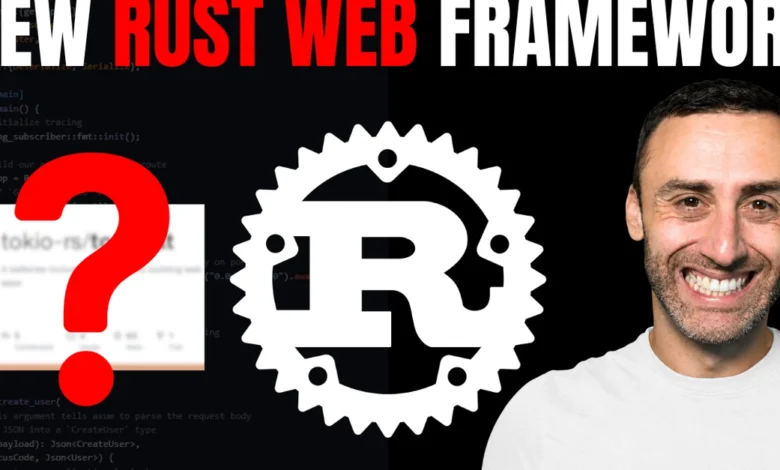
A significant development has emerged in the Rust ecosystem with the introduction of Topcoat, a novel web framework poised to redefine full-stack web development within the language. Launched by a team closely associated with the asynchronous Rust runtime Tokio, Topcoat aims to provide a "batteries-included" experience, simplifying the creation of reactive web applications entirely in Rust. This initiative signals a strategic move to position Rust not just as a robust backend language but as a viable contender for comprehensive web solutions, potentially rivaling established frameworks like Next.js, Ruby on Rails, and Laravel.
The Evolution of Rust in Web Development
Rust has garnered considerable acclaim for its performance, memory safety, and concurrency features, making it a preferred choice for system programming, high-performance services, and increasingly, backend web development. Frameworks such as Axum, Actix-web, and Rocket have solidified Rust’s presence in building robust APIs and microservices. However, the journey to a truly integrated, full-stack web development experience in Rust has been more fragmented. Developers often found themselves stitching together disparate libraries for routing, templating, state management, and client-side interactivity, a process that, while offering flexibility, introduced significant boilerplate and complexity. This challenge is precisely what Topcoat seeks to address by offering a cohesive framework that streamlines the entire development lifecycle from server to client.
For years, the web development landscape has been dominated by languages like JavaScript (with Node.js and frameworks like Next.js, React), Ruby (Rails), Python (Django, Flask), and PHP (Laravel). These ecosystems have thrived not only due to their language features but also their mature, opinionated frameworks that offer a complete solution for building web applications quickly and efficiently. Rust, despite its technical superiority in certain aspects, has lacked a comparable "full-stack" offering that abstracts away much of the underlying complexity, allowing developers to focus on application logic. The introduction of Topcoat represents a concerted effort to bridge this gap, offering an integrated approach that promises to elevate Rust’s standing in the broader web development community.
Topcoat: A New Paradigm for Rust Web Applications
Topcoat distinguishes itself by being a fully server-rendered framework for building full-stack, reactive web applications. This design philosophy enables components to be asynchronous, directly accessing databases, loading application state, and checking user permissions on the server. This contrasts with traditional Single Page Application (SPA) architectures where much of this logic resides or is duplicated on the client-side, often requiring complex API interactions and state synchronization.
The framework was created by Carl Lerche, a co-creator of the Tokio runtime, and Julien Scholz, the primary architect of Topcoat. Their involvement lends significant credibility and technical depth to the project, leveraging their extensive experience in asynchronous Rust programming to build a performant and reliable foundation. The official announcement was made via the Tokio.rs blog, signaling the project’s close ties to the broader Tokio ecosystem, which is foundational for much of asynchronous Rust development. The project’s source code is publicly available on GitHub under the tokio-rs organization, inviting community collaboration and scrutiny from its inception.
The core promise of Topcoat is to reduce the cognitive load and development overhead associated with assembling a full-stack Rust application. A minimal Topcoat application illustrates this simplicity:

#[tokio::main]
async fn main()
    topcoat::start(Router::builder().discover().build())
        .await
        .unwrap();


#[page("/")]
async fn home() -> Result
    view!
        <!DOCTYPE html>
        <html>
            <head>
                <title>"Hello world"</title>
                topcoat::dev::script()
            </head>
            <body>
                <h1>"Hello from Topcoat!"</h1>
            </body>
        </html>
This snippet demonstrates a straightforward entry point using #[tokio::main] and a #[page("/")] macro for defining routes and associated view logic. The view! macro, reminiscent of JSX or similar templating engines, allows for embedding HTML directly within Rust code, enabling a seamless integration of frontend markup with backend logic. This integrated approach, where server-side logic and HTML rendering coexist within the same codebase, is a hallmark of "batteries-included" frameworks and a significant departure from typical Rust web development practices that often separate these concerns into distinct projects or layers.
Reactivity Without WebAssembly: A Differentiating Approach
One of Topcoat’s most intriguing aspects is its approach to client-side reactivity. Unlike frameworks such as Leptos and Dioxus, which compile Rust code to WebAssembly (WASM) to run directly in the browser, Topcoat adopts a different strategy. It renders the initial application on the server and then selectively adds client-side interactivity through "small reactive instructions." This method also allows Topcoat to re-render specific parts of the UI on the server and replace only the changed sections on the client, minimizing data transfer and client-side processing.
This architectural choice places Topcoat closer to paradigms like HTMX or Hotwire, which champion server-driven UI updates and minimal client-side JavaScript. In this model, the server remains the primary orchestrator of the user interface, responding to user interactions by sending small HTML fragments or instructions to update the DOM, rather than requiring a full client-side JavaScript application to manage the UI state. The benefits of this approach are manifold:
- Reduced Client-Side Complexity: Developers need to write significantly less client-side JavaScript, simplifying debugging, maintenance, and overall project complexity.
- Faster Initial Load Times: By sending fully rendered HTML, Topcoat applications can achieve excellent First Contentful Paint (FCP) and Largest Contentful Paint (LCP) scores, crucial for user experience and SEO.
- Improved Performance on Low-End Devices: Less JavaScript means less parsing, compiling, and executing on the client, making applications more accessible and performant on devices with limited resources.
- Simplified Deployment: The server-centric nature can simplify deployment pipelines, as the client-side bundle is typically much smaller or even non-existent beyond the core reactive engine.
- Leveraging Rust’s Strengths End-to-End: By keeping logic predominantly on the server, Topcoat fully capitalizes on Rust’s performance, safety, and compile-time guarantees across the entire application stack.
While WASM-based frameworks excel in building highly interactive, "app-like" experiences directly in the browser, Topcoat’s server-rendered reactivity shines in scenarios where content delivery, SEO, and lean client-side footprint are paramount. This makes Topcoat particularly well-suited for applications such as internal tools, administrative dashboards, content management systems, and e-commerce platforms where complex client-side state management is less critical than rapid development, robust backend integration, and efficient content delivery. For highly interactive browser applications requiring rich animations, offline capabilities, or complex real-time client-side state, a client-heavy framework might still be a more appropriate choice.
Topcoat’s Position in the Rust Ecosystem and Beyond
The arrival of Topcoat prompts a re-evaluation of Rust’s web development ecosystem. It doesn’t aim to replace existing robust frameworks like Axum; rather, it seeks to operate at a higher abstraction layer. Axum, built on Tokio, remains an excellent choice for crafting low-level HTTP APIs, microservices, and specialized backend services where fine-grained control is essential. Topcoat, in contrast, focuses on abstracting away the boilerplate involved in connecting routing, components, HTML rendering, asset management, and reactive updates for full-page applications. A single project could seamlessly integrate both, using Axum for specific API endpoints and Topcoat for server-rendered pages and their reactive components. This synergistic relationship highlights Topcoat’s role as an enhancing layer rather than a competing one.
Comparing Topcoat to established full-stack frameworks like Next.js reveals its ambition. Next.js, a React framework, offers server-side rendering, API routes, and a highly integrated developer experience within the JavaScript ecosystem. Topcoat aims to deliver a similar level of integration and developer productivity but within Rust, leveraging Rust’s inherent advantages in performance, memory safety, and compile-time correctness. While Next.js benefits from a massive ecosystem and mature tooling, Topcoat offers the promise of building entire web applications with the reliability and speed that Rust is known for, potentially reducing runtime errors and improving long-term maintainability. The question "Better than Next.js?" is not about outright superiority but about offering a compelling, performant, and safe alternative for developers who prioritize Rust’s unique guarantees.
The Vision and Implications for Rust Development

The creators, Carl Lerche and Julien Scholz, have articulated a clear vision for Topcoat: to provide the missing opinionated, integrated experience that has long been desired in the Rust web development landscape, akin to what Rails or Laravel offer in their respective languages. This includes:
- Integrated Routing: A unified system for defining and managing application routes.
- Component-Based Architecture: Encouraging modular and reusable UI components.
- HTML Rendering: Seamless generation of HTML from Rust code.
- Asset Management: Streamlined handling of static assets like CSS, images, and minimal JavaScript.
- Reactive Updates: An efficient mechanism for dynamic UI updates without heavy client-side JavaScript.
This comprehensive approach aims to significantly lower the barrier to entry for developers looking to build full-stack web applications in Rust. By providing a coherent framework, Topcoat reduces the need for extensive research into compatible libraries, complex build configurations, and manual integration efforts. This translates into faster development cycles and a more enjoyable developer experience, allowing engineers to leverage Rust’s power without getting bogged down by ecosystem fragmentation.
The introduction of Topcoat is more than just another framework; it represents an important step in the maturation of Rust’s web development story. It signals a growing confidence within the Rust community that the language is ready to tackle the complexities of full-stack web applications head-on. While the framework is still in its early stages, with its creators openly discussing current limitations of its reactivity system, its potential impact is substantial. It could attract a new wave of developers to Rust, particularly those accustomed to the integrated workflows of other full-stack frameworks, who are now seeking the performance and safety benefits of Rust.
Future Outlook and Community Engagement
The long-term success of Topcoat will depend on several factors, including continued development, robust documentation, and, crucially, community adoption. The Rust ecosystem is known for its vibrant and supportive community, which often rallies behind promising projects. The fact that Topcoat is backed by individuals deeply involved with Tokio provides a strong foundation and suggests a commitment to long-term maintenance and evolution.
As Topcoat matures, key areas for development will likely include:
- Enhanced Tooling: Improved developer tools for debugging, testing, and hot-reloading.
- Richer Client-Side Interactions: While prioritizing server-rendering, a thoughtful integration of more complex client-side interactivity where necessary could broaden its appeal.
- Ecosystem Growth: Development of plugins, libraries, and integrations for common web development tasks (e.g., authentication, database ORMs, form handling).
- Performance Benchmarking: Real-world performance comparisons against established frameworks will be vital for demonstrating its capabilities.
The framework’s focus on server-rendered reactivity also aligns with a broader trend in web development towards "hybrid" approaches that seek to balance the benefits of server-side rendering with judicious client-side interactivity. Frameworks like Phoenix LiveView (Elixir) and htmx/Hotwire (various backends) have demonstrated the power of this model in delivering highly productive and performant applications. Topcoat’s entry into this space with Rust’s unique advantages could carve out a significant niche.
Ultimately, Topcoat is not intended to be a silver bullet for all web development challenges, nor is it here to render existing Rust web frameworks obsolete. Instead, it offers a compelling, opinionated path for building complete, server-rendered applications without ever needing to leave the Rust ecosystem. For developers considering their next internal tool, a performant dashboard, or a content-heavy website, Topcoat presents an exciting and powerful new option that promises to combine Rust’s unparalleled safety and performance with a streamlined, full-stack development experience. Its journey will be closely watched by the broader web development community, eager to see if Rust can indeed fully claim its place in the full-stack arena.