Samsung Galaxy Z TriFold 2 Rumored to Achieve Significantly Thinner Profile Through Advanced Hinge Technology

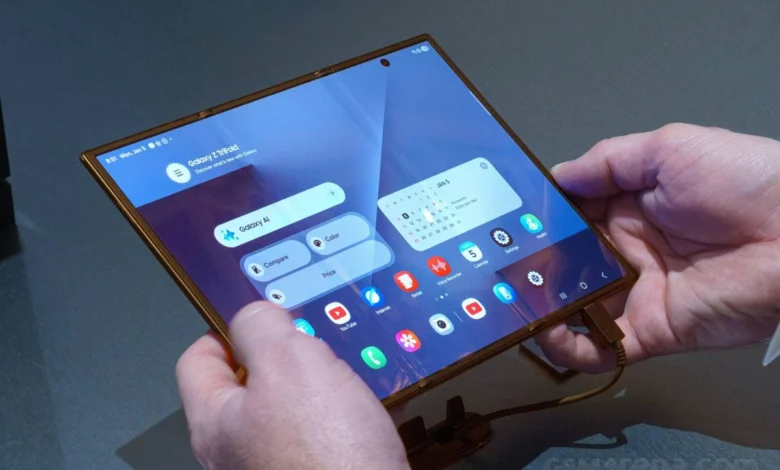
The second-generation Samsung Galaxy Z TriFold, potentially to be marketed as the Galaxy Z TriFold 2, is rumored to feature a substantially thinner design compared to its predecessor, a significant engineering feat attributed to a newly developed hinge mechanism by Samsung. This revelation comes as the original Samsung Galaxy Z TriFold, unveiled just last December, has already seen its discontinuation in multiple key markets, highlighting both the rapid pace of innovation and the challenges in the nascent, ultra-premium foldable segment. The first-generation TriFold measured between 3.9-4.2mm when unfolded and a more substantial 12mm when folded, dimensions that, while impressive for a multi-folding device, left room for refinement in terms of portability and ergonomics. The potential for a slimmer TriFold 2 signals Samsung’s unwavering commitment to pushing the boundaries of foldable smartphone design, addressing critical feedback, and solidifying its leadership in this innovative product category.
The Genesis and Challenges of the Original Galaxy Z TriFold
The journey of the Samsung Galaxy Z TriFold began with considerable anticipation when it was unveiled in December. Positioned as a groundbreaking device, it represented Samsung’s ambition to move beyond the conventional single-fold form factor, offering users an expansive screen estate that blurred the lines between a smartphone and a compact tablet. Priced at a premium, with the 512GB storage and 16GB RAM variant listed at $2,899.00, the TriFold was clearly aimed at early adopters and technology enthusiasts eager for the cutting edge.
However, despite its innovative premise, the original TriFold faced significant hurdles, leading to its swift discontinuation in several markets. This rapid withdrawal is characteristic of the experimental phase often observed with pioneering technologies. Several factors likely contributed to this decision. Firstly, the ultra-premium price point limited its accessibility, confining it to a niche market. Early generations of any new form factor often carry a higher cost due to research and development, specialized manufacturing processes, and lower production volumes. Secondly, while its unfolded thickness of 3.9-4.2mm was remarkably thin, the folded thickness of 12mm made it noticeably bulkier than traditional flagship smartphones, and even some single-fold devices like the Galaxy Z Fold series. This bulk could impact pocketability and overall user comfort, a crucial aspect for daily drivers.
Moreover, the complexity of a tri-fold mechanism introduced new engineering challenges related to durability, display creasing, and the integration of internal components such as batteries and cameras across multiple segments. While Samsung has made significant strides in hinge technology with its Galaxy Z Fold and Z Flip lines, a tri-fold design presents an exponential increase in mechanical and structural demands. The initial market reception, coupled with the rapid evolution of foldable technology, likely prompted Samsung to recalibrate its strategy, prioritizing refinement for the next iteration rather than pushing an early, potentially imperfect, design. This aggressive market management demonstrates Samsung’s agility and its willingness to learn quickly from market feedback on experimental products.
The Promise of the Galaxy Z TriFold 2: A Revolution in Thinness
The new rumor, originating from a well-regarded Korean blog (yeux1122), posits that the Galaxy Z TriFold 2 will achieve its slimmer profile through a revolutionary new hinge mechanism. This is not merely an incremental improvement but suggests a fundamental redesign of how the device folds. For a tri-fold smartphone, the hinge system is arguably its most critical component, directly influencing its thickness, durability, and the quality of the folding experience.
The pursuit of thinness has been a relentless drive in smartphone design for over a decade, driven by consumer demand for sleeker, more portable devices. For foldables, this challenge is amplified by the need to accommodate multiple display panels and the intricate mechanics of a folding structure. A thinner TriFold 2 would offer several compelling advantages. Ergonomically, it would be more comfortable to hold and carry, reducing the perception of bulk that often accompanies early foldable designs. Aesthetically, a slimmer profile enhances the device’s premium feel, aligning it more closely with the sleekness expected from high-end flagship smartphones. Furthermore, a more compact folded form factor could improve the device’s versatility, making it easier to slip into pockets or small bags, thus enhancing its practicality for everyday use.
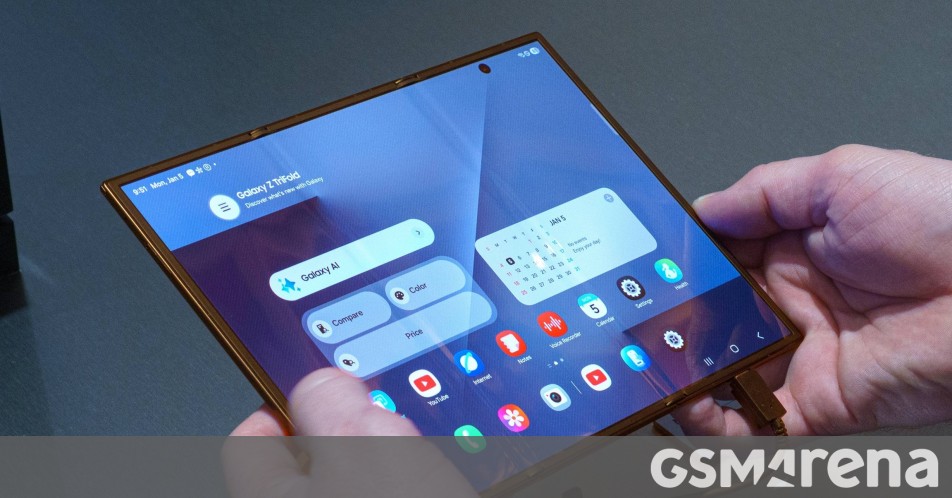
This rumored innovation underscores Samsung’s strategic focus on proprietary hinge technology as a key differentiator in the competitive foldable market. The company has invested heavily in R&D to develop robust and seamless hinge designs, from the early iterations that introduced visible gaps to the more advanced "waterdrop" hinges that allow for a flatter fold. The development of a new hinge for a tri-fold device indicates a significant leap forward, potentially involving new materials, more compact designs, or novel folding kinematics that minimize the overall thickness.
Broader Implications for Samsung’s Foldable Ecosystem
Crucially, the rumor suggests that the benefits of this new hinge mechanism will not be exclusive to the Galaxy Z TriFold 2. The source claims that a version of this advanced hinge, with technical adjustments tailored for different form factors, will also be deployed across other single-folding Samsung smartphones. This signals a unified engineering strategy where innovations developed for the most complex foldable (the tri-fold) are cascaded down to enhance the entire foldable lineup.
This approach has significant implications for Samsung’s well-established Galaxy Z Fold and Galaxy Z Flip series. If future iterations of these single-folding devices adopt this refined hinge technology, users can expect even thinner profiles, potentially reducing the creasing on the main display, and improving the overall durability and user experience. This strategy would allow Samsung to maintain a technological edge over competitors who are rapidly entering the foldable market. By standardizing advanced hinge technology across its portfolio, Samsung can achieve economies of scale in manufacturing, potentially leading to more cost-effective production and, eventually, more accessible pricing for consumers.
A Glimpse into the Future: Timeline and Market Dynamics
The timeline for these innovations provides a critical context. The Galaxy Z TriFold 2 is rumored to arrive in mid-2027. This extended development cycle—nearly four years after the original’s unveiling—suggests that Samsung is undertaking a comprehensive redesign, allowing ample time for rigorous testing, refinement, and optimization of the new hinge and overall device architecture. Such a long lead time is often indicative of foundational technological advancements rather than mere iterative updates. It also provides Samsung with the opportunity to monitor market trends, component availability, and consumer preferences more closely before a mass-market launch.
The question then arises regarding the integration of this new hinge into Samsung’s single-folding smartphones. While some Galaxy foldable smartphones are expected "in a few months" (likely referring to the next generation of Z Fold and Z Flip devices expected later this year), and others "next year," it is logical to infer that the bleeding-edge hinge technology developed specifically for the TriFold 2 might debut with that device first. Samsung typically reserves its most advanced, unproven innovations for its ultra-premium or experimental models before refining and integrating them into its more mainstream flagships. Therefore, while future Z Fold and Z Flip models might benefit from versions of improved hinges, the full impact of the TriFold 2’s specific innovation might be seen in subsequent generations of those devices, perhaps in 2026 or 2027, coinciding with or shortly after the TriFold 2’s launch.
Technological Hurdles and Samsung’s Innovation Leadership
Developing a multi-folding smartphone like the TriFold 2, especially one that is significantly thinner, presents immense technological hurdles. The hinge mechanism must be robust enough to withstand tens of thousands, if not hundreds of thousands, of folds without degradation, while simultaneously being compact and enabling a gapless design. This requires sophisticated material science, precision engineering, and innovative actuation mechanisms. Furthermore, reducing the thickness necessitates rethinking the placement and miniaturization of internal components such as the battery, cameras, processors, and cooling systems. Every millimeter saved demands significant design ingenuity.

Samsung’s continuous investment in these complex areas solidifies its position as a leader in mobile innovation. The company has a long history of pioneering new form factors, from curved displays to the initial foldable smartphones. Its commitment to the TriFold concept, despite the early discontinuation of the first model, demonstrates a long-term vision for the future of mobile computing, where devices can seamlessly transition between different form factors to adapt to user needs. This persistent drive for innovation not only distinguishes Samsung in a highly competitive market but also serves to push the entire industry forward, inspiring competitors to invest in similar research and development.
Market Context and Competitive Landscape
The foldable smartphone market, while still a niche segment, is experiencing rapid growth. According to various market intelligence firms, shipments of foldable phones are projected to grow significantly over the next few years, moving from millions to tens of millions of units annually. This growth is fueled by increasing consumer awareness, improvements in durability, and a broader range of price points.
Samsung currently dominates this market, but competition is intensifying. Companies like Huawei, Xiaomi, Oppo, Honor, and Google (with the Pixel Fold) have all launched their own foldable devices, each bringing unique design philosophies and technological approaches. While most competitors have focused on single-folding designs (either horizontal like the Z Fold or vertical like the Z Flip), a few, such as Xiaomi with its Mix Fold series, have also pushed boundaries. The tri-fold form factor, however, remains largely uncharted territory for mass production, making Samsung’s continued pursuit of the TriFold 2 a bold statement of ambition.
A thinner, more refined TriFold 2 could significantly enhance Samsung’s competitive edge, offering a unique product that no other manufacturer has successfully brought to market at scale. It would cater to a segment of the market that desires the ultimate in screen real estate and multi-tasking capabilities in a portable form factor. The success of the TriFold 2 would not only generate revenue but also serve as a powerful halo product, showcasing Samsung’s engineering prowess and attracting attention to its broader foldable ecosystem.
The Road Ahead: Anticipating the Future of Mobile Devices
The rumored Galaxy Z TriFold 2 represents more than just a new smartphone; it embodies Samsung’s vision for the future of personal technology. By integrating an advanced, thinner hinge mechanism, Samsung aims to overcome some of the fundamental challenges that have historically limited the widespread adoption of multi-folding devices. The mid-2027 launch window provides ample opportunity for the company to perfect this complex technology, ensuring that the TriFold 2 delivers on its promise of an unparalleled user experience.
The broader impact of this innovation extends beyond individual devices. It suggests a future where mobile devices are not constrained by rigid form factors but can adapt fluidly to various tasks, offering the versatility of a tablet in a pocketable phone. As hinge technology continues to evolve, along with advancements in flexible displays and battery technology, we can expect to see even more innovative designs emerge, blurring the lines between different device categories. Samsung, with its continuous investment in R&D and its strategic approach to integrating cutting-edge technology across its product lines, is poised to remain at the forefront of this exciting evolution, shaping the very definition of what a mobile device can be. The Galaxy Z TriFold 2, if it lives up to these early rumors, could very well be a pivotal moment in this unfolding narrative.