The Enduring Legacy of the BMW Z3 M Coupe: Unpacking the ‘Clown Shoe’ Nickname and Its Impact

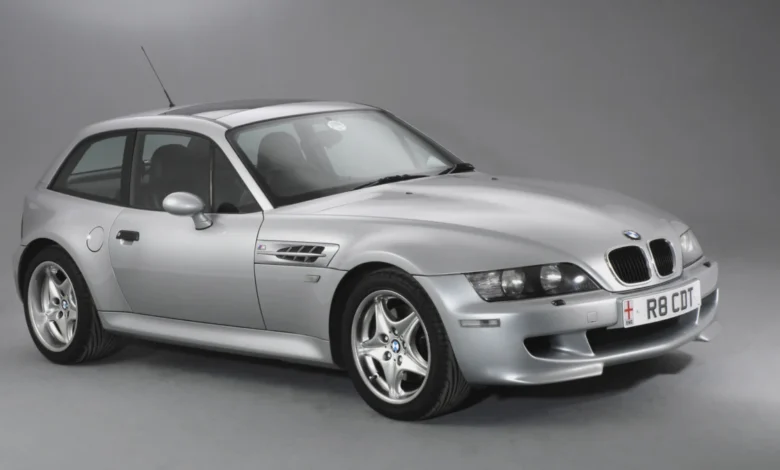
In the vibrant lexicon of automotive enthusiasts, certain vehicles transcend their official nomenclature, acquiring nicknames that often become as iconic as the cars themselves. These sobriquets can emanate from a manufacturer’s strategic marketing, or more organically, from the passionate communities of owners and the broader automotive media. While some nicknames, like the "Widowmaker" Porsche 911 Turbo or the "Godzilla" Nissan Skyline GT-R, evoke an aura of formidable power and pedigree, others adopt a more whimsical, yet equally enduring, character. Such is the case with the 1999-2002 BMW Z3 M Coupe, affectionately, and sometimes derisively, known as the "Clown Shoe." This peculiar moniker, born from the vehicle’s undeniably unconventional and bulbous side profile, has become an indelible part of its identity, transforming what might have been a mere curiosity into a certified modern classic revered for its performance and distinctiveness.
The Genesis of an Icon: From Roadster Roots to a Rigid Revolution
The story of the Z3 M Coupe begins with its progenitor, the BMW Z3 Roadster. Introduced in 1995, the Z3 was BMW’s answer to the burgeoning demand for two-seat, open-top sports cars, a segment dominated by the Mazda MX-5 Miata. Built on the E36/7 platform, which utilized components from the E36 3-Series, the Z3 offered a blend of classic roadster aesthetics with BMW’s renowned driving dynamics. Initial versions featured four-cylinder engines, later supplemented by more potent inline-six powerplants, cementing its position as a desirable, entry-level luxury sports car.
The natural progression for BMW’s performance arm, the M division, was to inject its high-octane DNA into the Z3. This led to the creation of the Z3 M Roadster in 1997. This iteration received the formidable drivetrain from the E36 M3, featuring the S50B32 inline-six engine for European markets (producing 321 horsepower) and the slightly less powerful S52B32 (240 horsepower) for North America, adapted to meet stricter emissions standards. The M Roadster transformed the Z3 into a truly aggressive machine, but its open-top nature inherently compromised structural rigidity, a critical factor for ultimate track performance and handling precision.
It was this very limitation that spurred a clandestine engineering project within BMW M. A small, dedicated team of engineers, driven by a passion for creating the ultimate driving machine, embarked on a mission to address the Z3 Roadster’s flex. Their solution was unorthodox: to reverse the common automotive practice of converting a coupe into a convertible. Instead, they would transform the Z3 Roadster into a fixed-roof coupe. This "secret development," as it has often been described, was not initially sanctioned by the highest echelons of BMW management, highlighting the engineers’ conviction in their vision. They believed a fixed roof would dramatically enhance chassis stiffness, leading to superior handling, better stability at high speeds, and improved driver feedback.
Form Follows Function: The Distinctive "Clown Shoe" Design
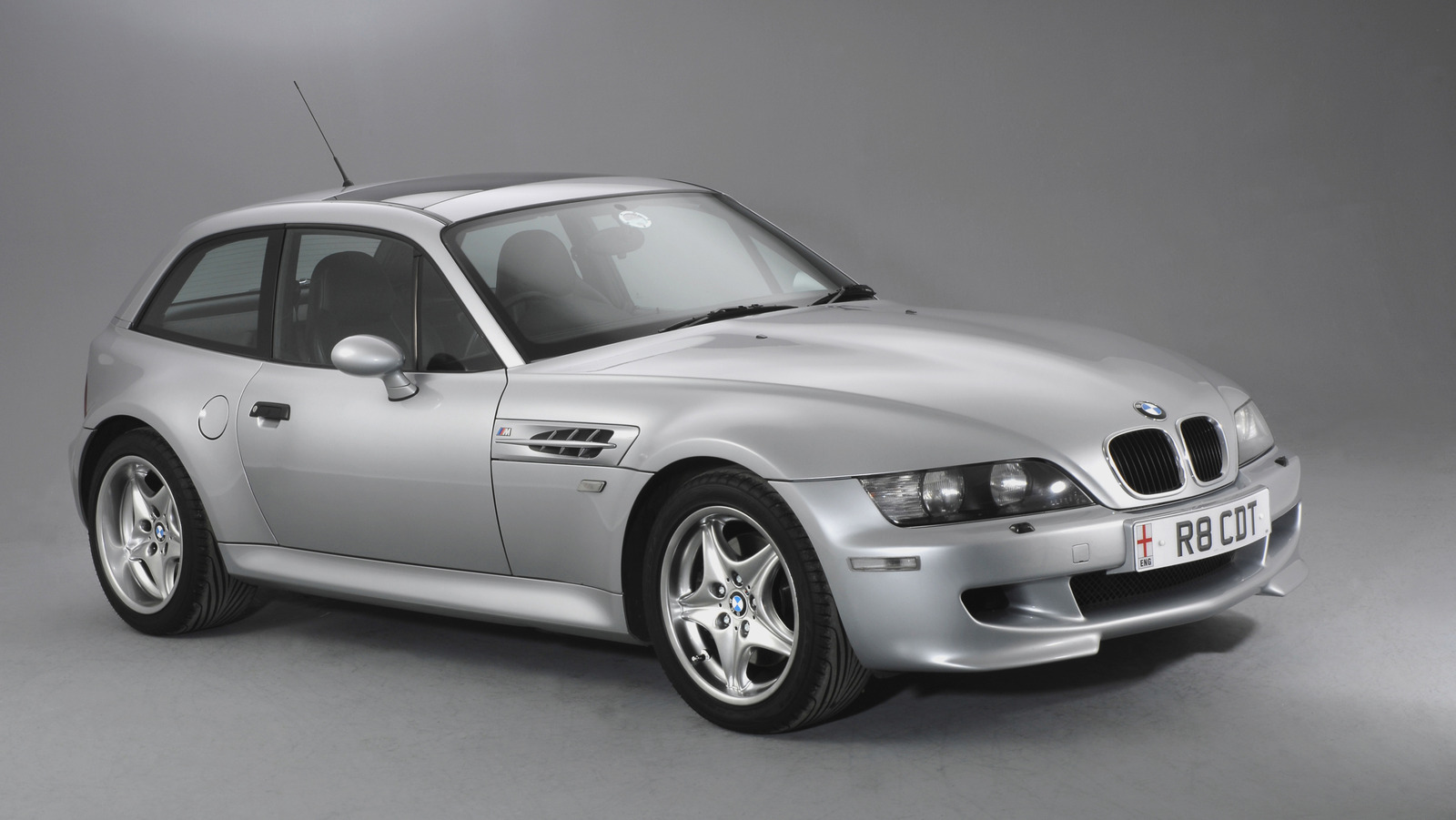
The resulting Z3 M Coupe, launched in 1998 for the 1999 model year, was a striking departure from conventional sports car design. While its front end largely mirrored the aggressive styling of the M Roadster, the rear section was entirely unique. The fixed roofline extended abruptly, culminating in a steeply raked tailgate, creating a profile often described as a "shooting brake" or a high-performance hatchback. This distinctive silhouette, characterized by its long hood, compact wheelbase, and an almost bulbous rear, is precisely what gave rise to the "Clown Shoe" nickname. It was a shape unlike anything else on the road, polarizing opinions from the outset.
However, the unusual aesthetics were not a matter of pure design whimsy; they were a direct consequence of engineering imperatives. The fixed roof structure provided vastly improved torsional rigidity – a crucial aspect for handling and steering precision. Estimates suggest a significant increase in stiffness over the Roadster, contributing to a more predictable and communicative driving experience. Furthermore, the design allowed for additional chassis reinforcements, including a strengthened windshield frame. The abrupt rear design also served a functional purpose: it facilitated a near 50-50 weight distribution, ideal for balanced dynamics, and surprisingly, yielded a considerably more spacious and practical rear cargo area compared to a traditional coupe, making it a surprisingly versatile sports car. This commitment to functional design over purely aesthetic conventions underscored the M division’s philosophy: performance first.
Powertrain Prowess and Performance Pedigree
Beneath its unconventional skin, the Z3 M Coupe housed the heart of a true performance car. The initial European versions retained the S50B32 inline-six engine, producing 321 horsepower (236 kW) and 350 Nm (258 lb-ft) of torque. For North American markets, the initial Z3 M Coupes (from 1999-2000) utilized the S52B32 engine, delivering 240 horsepower (179 kW) and 305 Nm (225 lb-ft) of torque. These engines were paired exclusively with a robust 5-speed manual transmission, sending power to the rear wheels via a limited-slip differential. Performance figures for the S50-powered models were impressive for their era, with 0-100 km/h (0-62 mph) times hovering around 5.4 seconds and an electronically limited top speed of 250 km/h (155 mph).
The most desirable and potent versions of the "Clown Shoe" arrived in 2001, when BMW updated the Z3 M Coupe with the E46 M3’s formidable S54B32 inline-six engine. This naturally aspirated 3.2-liter unit was a masterpiece of engineering, featuring individual throttle bodies, a high redline, and BMW’s VANOS variable valve timing system. In the Z3 M Coupe, it produced 325 horsepower (242 kW) and 350 Nm (258 lb-ft) of torque, significantly boosting its performance credentials. The S54-powered Z3 M Coupe could sprint from 0-100 km/h in approximately 5.0 seconds, firmly placing it in the realm of serious performance machines. Beyond the engine, the M Coupe benefited from M-tuned suspension, larger brakes, and a more aggressive steering ratio, all contributing to its razor-sharp handling and engaging driving experience.
Rarity and Collector Status: A Limited Production Marvel
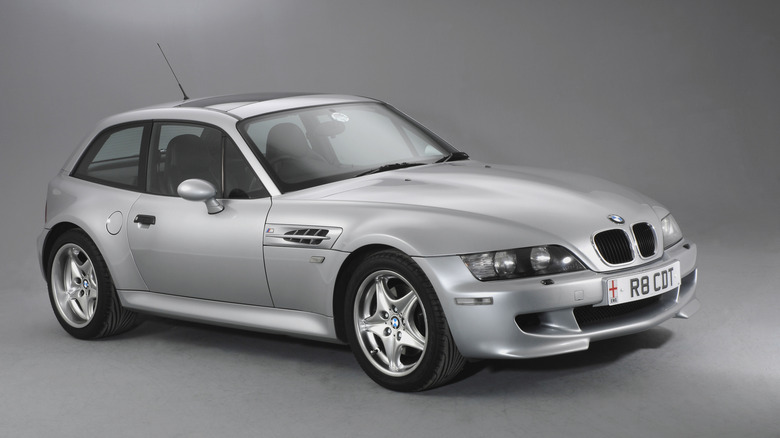
The Z3 M Coupe was never intended for mass production, emerging instead as a niche, enthusiast-focused vehicle. Its production numbers reflect this exclusivity, contributing significantly to its current desirability as a collector’s item. Globally, fewer than 6,300 examples of the Z3 M Coupe were ever built during its relatively short production run from 1998 to 2002.
Breaking down these figures further highlights its rarity:
- S50 Engine (European): Approximately 2,178 units (1998-2000)
- S52 Engine (North American): Approximately 2,180 units (1999-2000)
- S54 Engine (Global): Approximately 1,112 units for Europe (2001-2002) and 678 units for North America (2001-2002).
This means that only a fraction of the total production, specifically the S54-powered models, represent the ultimate evolution of the "Clown Shoe," making them particularly sought after. Less than half of the total production was sold in America, intensifying the demand within the U.S. market. This limited availability, coupled with its unique design and robust M-division performance, has propelled the Z3 M Coupe into the pantheon of modern classics. Pristine, low-mileage examples, especially those equipped with the S54 engine, now regularly command prices well over $100,000 at auction, with some exceptional specimens approaching or exceeding $150,000, underscoring its significant appreciation as an automotive investment.
The Enduring Appeal: From Oddity to Revered Icon
The journey of the BMW Z3 M Coupe from a polarizing oddity to a revered icon is a testament to the power of authentic engineering and distinctive design. Initially, its "Clown Shoe" appearance drew both fascination and ridicule. Automotive journalists and the public alike were divided; some praised BMW’s audaciousness and the car’s undeniable performance, while others found its styling simply too awkward.
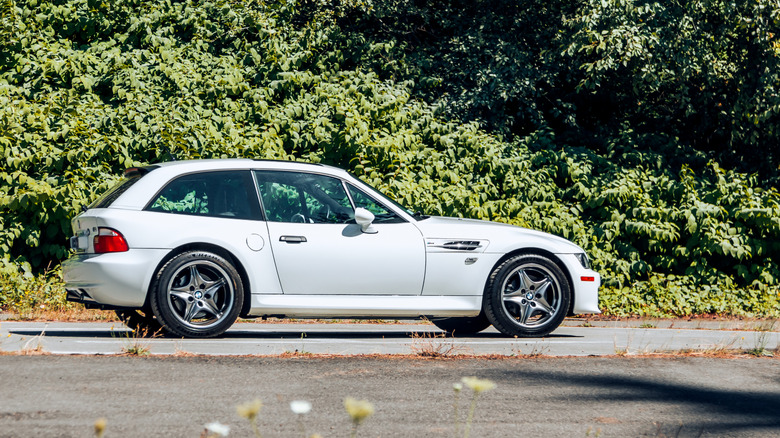
However, time has been kind to the Z3 M Coupe. Its unique aesthetic has matured into a celebrated individuality, distinguishing it from the often-homogenized designs of modern sports cars. Enthusiasts have come to appreciate that the unusual form was a direct result of uncompromising function, yielding a car with exceptional handling, impressive rigidity, and surprising practicality. The M division’s commitment to pushing boundaries, even against initial corporate hesitation, resonates deeply with those who value engineering integrity.
The "Clown Shoe" has cultivated a dedicated cult following. Owners and admirers celebrate its raw, unadulterated driving experience – a trait that many feel is increasingly diluted in contemporary vehicles. Its relatively compact size, powerful engine, manual transmission, and rear-wheel-drive layout deliver a visceral connection to the road that few cars can match. This blend of rarity, performance, and singular design ensures its place not just as a collector’s item, but as a beloved driving machine.
Successors and Spiritual Kinship: The Legacy Lives On
The Z3 M Coupe was an experimental venture for BMW, but it was not the last of its kind. BMW did follow up with another high-performance coupe based on the next-generation Z4 Roadster (E85/E86 platform). The Z4 M Coupe, introduced in 2006, featured a more traditional, swooping fastback roofline, shedding the "Clown Shoe" aesthetic for a more universally appealing, sleek design. While critically acclaimed for its performance (also powered by the S54 engine), it lacked the distinct, almost eccentric charm of its predecessor. The fixed-roof coupe variant of the Z4 was ultimately discontinued in 2008, marking an end to BMW’s direct lineage of small, M-powered fixed-roof roadster derivatives.
Interestingly, the spirit of the Z3 M Coupe finds a contemporary echo in an unexpected corner: the Mk5 Toyota Supra (A90). Launched in 2019, this iteration of the legendary Japanese sports car is built on the same platform as the current BMW Z4 (G29), sharing its chassis, powertrain components, and much of its interior architecture. Like the Z3 M Coupe, the Supra is a fixed-roof, two-seat performance car born from a convertible platform, and engineered with BMW’s expertise. While its body shape is distinctly modern and devoid of any "clown shoe" resemblance, its fundamental concept – a high-performance coupe with a fixed roof derived from a roadster, emphasizing driving dynamics and a potent inline-six engine – makes it a compelling spiritual successor. This connection highlights the lasting influence of BMW’s unconventional, yet ultimately brilliant, Z3 M Coupe.
In conclusion, the BMW Z3 M Coupe, with its peculiar "Clown Shoe" nickname, stands as a testament to bold engineering and design. What began as a clandestine project by a determined group of engineers evolved into a car that defied conventional aesthetics to deliver unparalleled performance and rigidity. Its limited production, potent M-division powertrains, and singular design have cemented its status as a highly sought-after modern classic. Far from being a source of embarrassment, its unusual moniker has only amplified its legend, making the "Clown Shoe" a cherished icon in the annals of automotive history – a true embodiment of passion over convention.