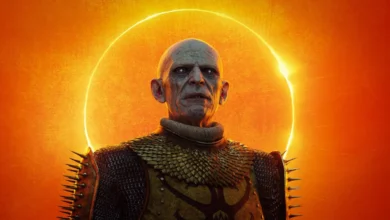
Bruce Straley issues apology following critique of triple-A game innovation and the God of War franchise


The landscape of modern high-budget video game development, often referred to as the triple-A sector, has recently become the epicenter of a spirited debate regarding creative stagnation and the influence of corporate strategy on artistic output. At the heart of this discourse is Bruce Straley, the celebrated former director at Naughty Dog known for his work on The Last of Us and the Uncharted series. Straley recently issued a formal apology after his remarks regarding the "lack of innovation" in major titles—specifically referencing Santa Monica Studio’s God of War series—sparked a significant reaction across the gaming industry.
The Origin of the Critique
The controversy began with a feature published in Edge magazine, where Straley, currently the founder of the independent studio Wildflower Interactive, provided a candid assessment of the current state of the industry. During the interview, Straley lauded the technical prowess of contemporary titles, specifically pointing to God of War as a benchmark for graphical fidelity and production value.
"God of War, I look at that game, and every pixel is mindblowing," Straley noted in the interview. "The amount of work and skill that’s gone into every single frame… I’ve made those kinds of games, and I’m still blown away. But when I actually look at what you’re doing in the game? I’m not excited."
Straley’s primary contention was not a critique of the individual developers at Santa Monica Studio, but rather an observation on a systemic trend. He argued that the triple-A space has become increasingly risk-averse, with developers often feeling constrained by the need to meet massive financial expectations. This, he suggested, leaves little room for the experimentation and fresh design paradigms that were more common in earlier eras of gaming.
Chronology of the Incident
The dissemination of these quotes led to immediate backlash on social media platforms, with some observers interpreting his comments as a direct attack on the development team behind God of War. Recognizing that his words were being leveraged to create polarizing headlines, Straley took to X (formerly Twitter) on September 18, 2026, to clarify his position and offer a public apology to the developers involved.
"I want to apologize to the team for dragging you all into this uninvited and unnecessary negative attention," Straley wrote. "I was trying to illustrate an industry concern, and my mistake of naming your game is being used out of context and for clickbait. You don’t need this. I’m sorry."
Despite the apology, Straley maintained the integrity of his broader argument. Following the initial statement, he engaged in a series of follow-up posts to elaborate on his diagnosis of the industry, placing the onus of the perceived stagnation on executive leadership rather than the rank-and-file developers who build the games.
The Triple-A Dilemma: Data and Market Pressures
To understand Straley’s critique, it is necessary to examine the current economic climate of the gaming industry. According to industry tracking data, the cost of developing a major triple-A title has ballooned significantly over the last decade. Estimates suggest that top-tier games now regularly require budgets ranging from $200 million to over $400 million, including marketing costs. This financial reality has fundamentally altered the risk profile for publishers.
When a studio spends hundreds of millions of dollars on a project, the internal pressure to guarantee a return on investment is immense. This leads to a reliance on proven formulas, established intellectual properties (IP), and the "Games as a Service" (GaaS) model. The GaaS model, which focuses on long-term engagement and recurring revenue through microtransactions and live-service updates, has become a dominant force.
Straley addressed this specific trend in his follow-up remarks: "The quest for GaaS and wanting to recreate the next Overwatch, Fortnite, or Roblox is not a viable strategy and, frankly, shows that these ‘industry leaders’ don’t know their own brand."

The data supports the notion that the market is struggling to balance these massive investments with player fatigue. While titles like Fortnite or Roblox have achieved unprecedented scale, many other titles attempting to mirror that success have faced rapid failure, leading to layoffs and the shuttering of studios across the sector.
Leadership and the Creative Void
Straley’s critique shifts the focus from the technical capability of studios—which he admits has never been higher—to the quality of executive leadership. He suggests that the "money people" at the top of large corporations often lack a deep understanding of their own creative assets.
"There’s a lack of good leadership, clear direction, and conviction from the people at the top," Straley stated. "I believe if they understand their brand, they could have honest, inspiring conversations with creators to steer our medium to innovate."
This viewpoint is shared by a segment of the development community that believes the current corporate structure prioritizes stability and risk mitigation over the kind of "blue-sky" innovation that defined the late 90s and early 2000s. The fear, according to these critics, is that by chasing the next "mega-hit," major publishers are sacrificing the unique, identity-driven experiences that actually define successful brands in the long term.
Implications for the Independent Sector
The transition from a major industry veteran like Straley, who helmed some of the most profitable and critically acclaimed games in history, to the independent sector is a narrative being repeated across the industry. After departing the triple-A scene in 2017, Straley founded Wildflower Interactive in 2021. The studio is currently developing Coven of the Chicken Foot, a single-player adventure that aims to prioritize creative vision over the massive scale that characterized his previous work.
The emergence of studios like Wildflower represents a potential shift in the ecosystem. As triple-A development becomes increasingly homogenized due to financial pressures, indie and "AA" (mid-budget) studios are positioning themselves as the new incubators for mechanical innovation.
Broader Industry Analysis
The incident involving Straley and the God of War team serves as a microcosm for a wider, necessary conversation in gaming. The industry is currently at a crossroads. On one side, the technical achievements of modern games are objectively staggering; the fidelity, physics, and world-building capabilities available to developers today were unimaginable twenty years ago. On the other side, the "content treadmill"—the need to keep players engaged in massive, never-ending games—can often result in gameplay loops that feel iterative rather than transformative.
Analysts suggest that the tension Straley highlighted is not going away. As AI tools and generative technologies begin to lower the barrier for asset creation, the value of "innovation" will shift from visual fidelity to game design and narrative architecture. The "leadership" that Straley calls for will likely be defined by an ability to identify which technologies truly serve the player experience versus which technologies merely serve the bottom line.
Ultimately, the apology issued by Straley was a professional courtesy to the developers he respects, but his underlying message remains a challenge to the industry’s status quo. As companies continue to navigate the precarious balance between record-breaking development costs and the demand for fresh, engaging experiences, the call for "conviction from the top" is likely to become a central theme in future discussions regarding the sustainability of the medium.
Whether the industry will pivot toward a more innovation-focused model or continue to double down on the tried-and-tested formulas remains to be seen. However, voices like Straley’s, coming from a place of deep experience, continue to shape the narrative of what gaming could become if it chooses to prioritize the creative spark over the predictable path of the blockbuster.
Related posts: