Microsoft Addresses Unprecedented 570+ Vulnerabilities in July Patch Tuesday, Signaling New Era of AI-Driven Cybersecurity Challenges

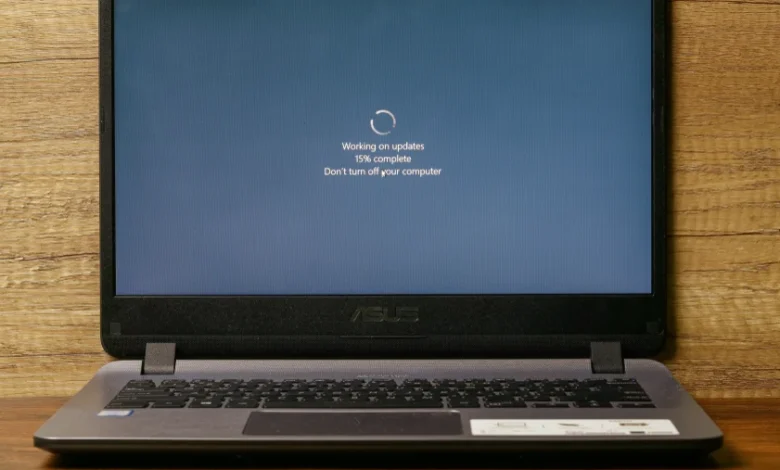
Microsoft Corp. today released a monumental suite of software updates, patching an astonishing 570 security vulnerabilities across its Windows operating systems and various other software offerings. This colossal release, nearly tripling the volume of fixes from last month’s already record-breaking Patch Tuesday, underscores a significant shift in the cybersecurity landscape, driven primarily by the accelerating role of artificial intelligence in vulnerability discovery. The sheer scale of this month’s updates presents both a critical safeguard for users and a formidable challenge for IT administrators globally.
The Unprecedented Scale of July’s Patch Tuesday
The July 2026 Patch Tuesday stands out as one of the most extensive security releases in Microsoft’s history. The staggering count of over 570 resolved vulnerabilities far surpasses typical monthly volumes, which historically hover around 80-150 fixes. This surge is not merely an isolated incident but, as Microsoft itself acknowledges, a direct consequence of advancements in AI-powered tools that are now capable of identifying security flaws with unprecedented speed and efficiency. The updates span a vast array of Microsoft products, including critical components of the Windows operating system, Microsoft Office, Azure, Microsoft Edge, and specialized enterprise solutions. Each vulnerability represents a potential entry point for malicious actors, ranging from minor information disclosures to severe remote code execution capabilities. The cumulative effect of addressing so many issues simultaneously is a testament to the ongoing arms race between software developers and cybercriminals.
Critical Threats and Zero-Day Exploits
Among the hundreds of vulnerabilities quashed, nearly 60 were designated with a "critical" severity rating. This classification is reserved for flaws that, if exploited, could allow attackers or malware to seize complete remote control over a vulnerable Windows device, often with little to no user interaction required. Such vulnerabilities are the most dangerous, as they can lead to widespread system compromise, data theft, and the establishment of persistent backdoors within networks.
Adding to the urgency, Microsoft also addressed three zero-day flaws – vulnerabilities that were either publicly known or actively being exploited in the wild before a patch was made available. Two of these zero-day weaknesses specifically allowed an attacker to elevate their user rights on a Windows system, a critical step for attackers seeking to gain deeper control. These included CVE-2026-56155, an Active Directory Federation Services (AD FS) bug, and CVE-2026-56164, a Microsoft SharePoint vulnerability. AD FS is a crucial component for enterprise identity management, facilitating single sign-on capabilities across various applications. A flaw here could have far-reaching implications for corporate networks, potentially allowing an attacker to impersonate legitimate users and access sensitive resources. SharePoint, a widely used collaboration and document management platform, also presents a lucrative target for attackers seeking to gain access to corporate data. The active exploitation of these vulnerabilities underscores the immediate threat they posed and the critical importance of applying these patches promptly.
Another significant zero-day, CVE-2026-50661, was identified as a security feature bypass in Windows BitLocker. BitLocker is Microsoft’s full-disk encryption feature designed to protect data by encrypting entire volumes. This particular flaw could potentially allow attackers to gain access to encrypted data if they had physical access to the device. While Microsoft stated it was not aware of active exploitation for this specific bug, its public disclosure highlights the ongoing challenge of securing data, even when robust encryption is in place. The existence of such a bypass means that physical security measures become even more paramount, as the digital barrier could be circumvented.
Beyond the zero-days, approximately 250 other elevation of privilege (EoP) flaws were fixed. EoP vulnerabilities are highly sought after by attackers because they allow a low-privileged user or process to gain higher privileges, often escalating to administrator or system-level access. This is a common post-exploitation step, enabling attackers to install malware, modify system settings, or access restricted data. The sheer number of EoP fixes this month indicates a broad effort by Microsoft to harden the core Windows operating system against privilege escalation attacks.
The AI Factor: A Double-Edged Sword
The dramatic increase in patch volume is not coincidental. Pavan Davuluri, Microsoft Executive Vice President, articulated this paradigm shift in a blog post on July 9, stating that Windows users should anticipate "a higher volume of security updates included in each security release." Davuluri directly attributed this trend to the transformative impact of artificial intelligence on vulnerability discovery. "The pace of vulnerability discovery is changing with advances in AI making it possible to find more issues, faster, across more code, with new mechanisms that can accelerate both discovery and analysis," he wrote. This statement marks a pivotal moment, as a major software vendor openly acknowledges AI as a primary driver for its security patching efforts.
AI’s role in vulnerability discovery leverages its ability to process vast amounts of code, identify patterns, and detect anomalies that human auditors might miss. Machine learning algorithms can be trained on existing vulnerability databases to predict potential weaknesses in new code or identify variations of known exploit techniques. This capability significantly accelerates the auditing process, allowing security researchers to pinpoint flaws with greater efficiency. However, this advancement presents a double-edged sword for the cybersecurity community. While AI aids defenders in finding bugs, it simultaneously empowers attackers. Malicious actors are also harnessing AI to automate the discovery of vulnerabilities, generate sophisticated malware, and rapidly craft working exploits for newly disclosed flaws. This creates an accelerated cycle of discovery and exploitation, where the window of opportunity for defenders to patch before an attack occurs is shrinking.
Industry Experts Weigh In: Exploitability and AI’s Impact
Industry experts are closely monitoring these developments, offering nuanced perspectives on the implications. Jack Bicer, director of vulnerability research at Action1, highlighted CVE-2026-48561, a remote code execution (RCE) flaw in Microsoft Copilot, Microsoft’s AI assistant. With a high CVSS (Common Vulnerability Scoring System) threat score of 9.6 out of 10, this vulnerability is particularly concerning. It allows an unauthorized attacker to execute code over the network, potentially by luring users to a malicious website that causes Microsoft Edge for Android to automatically send crafted prompts to Copilot. This specific flaw underscores how AI-powered applications, while innovative, introduce new attack vectors and complexities into the security landscape. The integration of AI into user-facing applications means that even seemingly innocuous interactions can be weaponized.
Beyond the immediate threats, experts are also questioning the traditional methods of assessing exploitability in the age of AI. Microsoft has historically used an "exploitability index" to estimate the likelihood of a vulnerability being exploited in the wild. This index, ranging from "Exploitation More Likely" to "Exploitation Unlikely," has guided IT professionals in prioritizing patches. However, Satnam Narang, senior staff research engineer at Tenable, argues that this index, designed for human-centric analysis, is increasingly becoming outdated. He points out a critical discrepancy: Microsoft initially rated this month’s SharePoint zero-day as "less likely" to be exploited, yet the U.S. Cybersecurity and Infrastructure Security Agency (CISA) added it to its Known Exploited Vulnerabilities (KEV) catalog on July 1, indicating active exploitation. This disparity highlights a growing gap between vendor assessments and real-world threat intelligence.
Narang further emphasized this point by referencing findings from Anthropic’s Red Team, which demonstrated the fragility of the current exploitability assessment system. Their Mythos Preview AI model was able to produce proof-of-concept exploits for 13 out of 14 vulnerabilities that Microsoft had rated as "Exploitation Less Likely" or "Exploitation Unlikely." This research strongly suggests that AI tools can rapidly overcome the perceived difficulty of exploiting certain flaws, making traditional human-based assessments of exploitability less reliable. "What this means is that our way of looking at Patch Tuesday has changed, because the exploitability index is centered around humans, not AI tools, and as these tools continue to improve, defense needs to improve alongside it," Narang stated, advocating for a fundamental re-evaluation of how exploitability is assessed in the AI era.
Broader Industry Trends: Accelerated Patch Cadence
The surge in Microsoft’s patch volume is not an isolated incident but part of a broader industry trend. Chris Goettl, a cybersecurity expert at Ivanti, observed that several other major software makers are also increasing their patch cadence. Adobe, for instance, announced a shift to twice-monthly security bulletins, to be published on the second and fourth Tuesdays of each month. Adobe, much like Microsoft, cited AI as a factor in accelerating their patch cycles. This move by a major software provider, known for its widely used creative and document management applications, further underscores the industry-wide recognition of AI’s impact on vulnerability discovery.
Other prominent technology companies are also adapting to the evolving threat landscape. Cisco, a leading provider of networking hardware and software, Mozilla, creator of the Firefox web browser, and Oracle, a database and enterprise software giant, are all shipping updates more frequently. Furthermore, Google’s patch batches in June 2026 reportedly totaled over 900 security fixes, highlighting the pervasive nature of the increased vulnerability disclosures across the tech sector. This collective acceleration in patching signals a new era where continuous vigilance and rapid response are paramount for all software vendors. The traditional monthly patch cycle, while still foundational, is being supplemented by more frequent, out-of-band updates as critical threats emerge and are quickly identified.
Implications for Users and IT Professionals
The unprecedented volume of patches in July 2026 presents significant implications for both individual users and enterprise IT departments. For IT professionals, managing and deploying such a large number of updates is a complex logistical challenge. Each patch must be tested for compatibility and stability within diverse IT environments before widespread deployment to prevent unintended system disruptions. The increased frequency and volume of patches place a greater burden on patch management teams, demanding more resources, time, and sophisticated automation tools. Organizations must reassess their patch management strategies, potentially adopting more agile deployment methods and robust testing protocols to keep pace.
For end-users, the advice remains consistent yet more critical than ever: regular backups of Windows systems and data are essential before applying any operating system updates. Given the sheer volume of fixes released this month, the risk of a security patch inadvertently introducing system stability issues is heightened. While Microsoft rigorously tests its updates, complex interactions within various hardware and software configurations can sometimes lead to unforeseen problems. Therefore, many cybersecurity experts recommend that end-users, particularly those without dedicated IT support, consider waiting a few days after Patch Tuesday to allow the broader community to identify and report any potential issues before applying the fixes themselves. This cautious approach can help mitigate the risk of encountering post-patch complications.
Beyond immediate patching, the long-term implications are profound. The ongoing acceleration of AI in both vulnerability discovery and exploit generation means that the cybersecurity landscape will continue to evolve at an unprecedented pace. This necessitates a proactive and adaptive approach from all stakeholders – software vendors, security researchers, IT professionals, and individual users. Continuous education, investment in advanced security tools, and a commitment to rapid response will be crucial in mitigating the escalating risks posed by sophisticated, AI-driven cyber threats. The July 2026 Patch Tuesday serves as a stark reminder that the battle for digital security is intensifying, and vigilance must be the new norm.