The Tech Titan’s Prophecy: A Looming Wealth Redistribution in the Age of AI


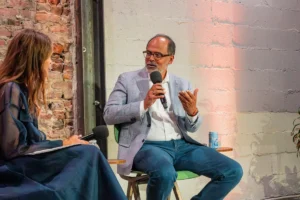
In a candid conversation held amidst the vibrant energy of a new tech festival in Athens, Neil Rimer, a co-founder of the esteemed venture capital firm Index Ventures, articulated a sentiment that has resonated deeply: "I have a strong sense that there will be some sort of a redistribution." This statement, delivered by a figure deeply embedded in the world of immense wealth creation, carries significant weight. Rimer elaborated, "It’ll either be voluntary or it’ll be involuntary, but it’ll happen, and I hope it’s voluntary," adding a hopeful note that tech leaders "can play a leading role in seeing that through." While such pronouncements might sound like standard populist rhetoric from many quarters, emanating from Rimer, whose firm has consistently delivered exceptional returns, it signals a potentially seismic shift in the discourse surrounding extreme wealth accumulation in the technology sector.
The Oracle of Index Ventures: A Contrarian Voice from Within
Neil Rimer, who stepped back from the day-to-day operations of Index Ventures in 2021, has increasingly focused his energies on his adopted home of Athens, where his wife’s family resides and his children hold Greek passports. His understated demeanor – evident in his preference for rumpled button-downs and jeans over the more typical fine knitwear of his peers – belies the extraordinary financial success of Index Ventures. Over its three-decade history, the firm has amassed approximately $15 billion in capital from external investors. The year 2024 proved particularly lucrative, with notable exits including the initial public offering (IPO) of Figma and Google’s acquisition of cybersecurity firm Wiz, reportedly generating around $9 billion for Index.
Rimer’s philanthropic endeavors underscore a broader engagement with societal issues. He serves on the board of Endeavor Greece, an organization dedicated to nurturing entrepreneurs in emerging markets, and previously chaired the board of Human Rights Watch from 2019 to 2025. In late 2021, a significant contribution of $13 million was made by Rimer, his father, and his brothers to McGill University. This donation funded the renovation of a campus building, now known as the Rimer Building, and established a new Institute for Indigenous Research and Knowledges, demonstrating a commitment to both academic advancement and the recognition of indigenous scholarship.
The Fading Echo of the Giving Pledge and a Shifting Philanthropic Landscape
Rimer’s prescient words on redistribution arrive at a particularly poignant juncture, as traditional avenues of voluntary wealth transfer appear to be experiencing a decline. The Giving Pledge, initiated in 2010 by Warren Buffett and Bill Gates with the ambitious goal of encouraging billionaires to commit half their fortunes to charitable causes, is facing increasing irrelevance. While the pledge initially saw robust participation, with 113 families signing in its first five years, subsequent years have shown a marked decrease in new signatories. Reports indicate that in 2024, a mere four families joined the initiative, a stark contrast to the early years. A March 2026 New York Times report highlighted a growing trend of disengagement from philanthropy among some of the wealthiest individuals in the tech sector, even quoting Elon Musk as stating that his businesses "are philanthropy."
This trend extends beyond the Giving Pledge. According to data from the Stanford Social Innovation Review, total charitable giving in the United States reached a record $592.5 billion in 2024. However, the number of American households participating in charitable giving has been on a downward trajectory for five consecutive years, experiencing a 4.5% decrease in 2024 alone. In 2000, two-thirds of households reported making donations; by current figures, this number has fallen to approximately half. Furthermore, data from Bank of America and the Lilly Family School of Philanthropy indicates a decline even within affluent households, with giving rates dropping from 90% in 2017 to 81% in the past year.
The Portfolio Mirror: Generational Wealth and Emerging Priorities
The patterns observed in broader philanthropic trends are also reflected within Index Ventures’ own investment portfolio, which notably includes a stake in Anthropic, a prominent artificial intelligence company. A recent inquiry by Business Insider to financial planner Alex Caswell revealed that many of his newly wealthy clients, often employees of AI firms like Anthropic and adherents to effective altruism principles, are not prioritizing the commitment of large portions of their fortunes to charity. While Anthropic offers to match employee donations of up to 25% of their equity to charitable causes, and some of Caswell’s clients have utilized this benefit, the prevailing sentiment among the majority is a focus on angel investing or establishing their own ventures. "That’s what I’m seeing more than the desire to become philanthropic," Caswell stated, underscoring a shift in financial priorities among the tech-savvy elite.
The Legislative Shadow: Wealth Taxes and Shifting Domiciles
The apparent decline in voluntary giving is increasingly juxtaposed with legislative efforts aimed at achieving wealth redistribution through taxation. California voters are set to decide on a proposed 5% one-time wealth tax targeting the state’s wealthiest residents. This legislative development has prompted some prominent billionaires, including Google co-founders Sergey Brin and Larry Page, to relocate their primary residences to South Florida, a move widely interpreted as an attempt to circumvent such tax measures.
The impending IPO of OpenAI, reportedly being considered for 2027, adds another layer of complexity to this evolving landscape. One cynical interpretation suggests that the timing of such a public offering may be influenced by the potential wealth tax, which, if enacted, would calculate net worth based on an individual’s worldwide assets as of the end of the current calendar year.
Unsurprisingly, proposals for significant wealth redistribution face considerable opposition. Governor Gavin Newsom has expressed reservations, and a number of economists have pointed to the historical track record of other industrialized nations, many of which have repealed similar wealth taxes since 1990 after experiencing an exodus of wealthy residents.
Alternative Proposals: Government Stakes and Unwelcome Partners
Beyond direct taxation, other controversial proposals are being considered. OpenAI has reportedly explored the possibility of granting the U.S. federal government a 5% equity stake in the company. CEO Sam Altman has framed this as a mechanism for sharing the benefits of AI with the public. However, critics view this as a strategic maneuver to secure political favor in Washington. Nevertheless, Silicon Valley has historically demonstrated a reluctance to involve government entities as stakeholders. Veteran investor Roelof Botha, during a previous interview with this publication, humorously remarked on the inherent distrust, stating, "[Some] of the most dangerous words in the world are: ‘I’m from the government, and I’m here to help.’"
The Scale of Unaccounted Wealth: A New Gilded Age?
The sheer magnitude of wealth concentrated in the hands of a few individuals is staggering and continues to grow. Elon Musk, following SpaceX’s recent IPO, has become the first individual to surpass a net worth of $1 trillion. The 2026 Forbes Billionaires List alone identified 45 new AI billionaires, collectively possessing $2.9 trillion, and this figure predates the public offerings of major AI players like Anthropic and OpenAI. A Business Insider report further highlighted that upon the IPOs of Anthropic and OpenAI, their employees would collectively hold enough wealth to purchase nearly a third of all homes in the San Francisco metropolitan area.
While this level of wealth concentration may feel unprecedented, historical parallels offer context. The share of wealth held by the top 1% of U.S. households reached a record 31.7% in the third quarter of last year, a figure not seen since the Federal Reserve began tracking this data in 1989. This represents an amount roughly equivalent to the wealth held by the other 90% of households outside the top decile combined.
However, this figure remains below the peak of the Gilded Age, when the top 1% commanded 45% of wealth in 1916. When narrowing the focus to the very apex of wealth accumulation, a different picture emerges. Renowned economist Gabriel Zucman’s research indicates that around 1910, the four largest fortunes in America constituted 4% of U.S. GDP. Today, a comparable sliver of the population – now comprising 19 households instead of four – holds wealth equivalent to 14% of U.S. GDP.
Historical Precedents: The Gospel of Wealth and the "Soak-the-Rich" Tax
Rimer’s dichotomy of voluntary versus involuntary redistribution finds historical echoes in periods of comparable wealth concentration. In 1889, at the zenith of the first Gilded Age, Andrew Carnegie published his seminal essay, "The Gospel of Wealth." In it, he argued that wealthy individuals had a moral obligation to manage their fortunes as trusts for the public good during their lifetime, deeming it a disgrace to die wealthy. This essay is widely regarded as the foundational document of modern philanthropy and served as the intellectual precursor to the Giving Pledge.
However, the voluntary path did not entirely avert more forceful interventions. By the mid-1930s, Louisiana Senator Huey Long had garnered significant national support with his "Share Our Wealth" program, advocating for steep taxes on the wealthy to fund a guaranteed income for all Americans. Concerned about the erosion of working-class support to Long’s movement, President Franklin D. Roosevelt enacted what the press dubbed the "soak-the-rich tax," dramatically increasing the top marginal income tax rate to as high as 79%. While this legislation redistributed less wealth than Long had envisioned, it stands as a clear historical precedent for politically mandated redistribution, arising from the perceived inadequacy of voluntary giving to address mounting societal pressures.
The Shifting Moral Compass of Tech
These historical dynamics are not lost on Rimer, whose career has been deeply intertwined with the tech industry. He expresses a particular fascination with the "moral center of tech companies." This interest stems from his undergraduate days at Stanford in 1984, a time when Apple, by offering discounts on the first Macintosh to students, and figures like Steve Jobs, were perceived as "heroes" for creating innovations that genuinely benefited society. What troubles him today, he confided, is witnessing his own children discuss certain tech companies with the same skepticism and distrust once reserved for defense contractors or cigarette manufacturers.
Critics may rightly point out that Rimer, as an investor in companies like Anthropic, is a direct beneficiary of the very wealth accumulation he suggests requires redistribution. However, his expressed preference is for his fellow beneficiaries to proactively choose to share a portion of their gains rather than face the prospect of their wealth being forcibly reclaimed. The choice, as Rimer sees it, is between an easy path and a difficult one, and he appears to be betting on the former being embraced before history dictates the latter. The coming years will undoubtedly reveal which path prevails in this era of unprecedented technological advancement and wealth concentration.
Related posts: