Bluesky Recovers from Major Service Outage Following Early Morning Disruptions Across App and Web Platforms

The decentralized social media platform Bluesky experienced a significant service interruption on Thursday, April 16, 2026, leaving thousands of users unable to access their feeds, post updates, or interact with the network. The outage, which began in the early morning hours Eastern Time, affected both the mobile application and the web-based interface, marking one of the most notable technical hurdles for the platform since its surge in popularity as a primary alternative to Elon Musk’s X. While the company has since restored full functionality, the incident has sparked discussions regarding the infrastructure of decentralized networks and the reliability of emerging digital town squares.
A Chronology of the Disruption
The technical difficulties first became apparent to the public around 6:30 a.m. ET (10:30 a.m. UTC). During this window, monitoring services and user reports indicated a sudden and sharp decline in platform accessibility. According to data from Downdetector, a real-time outage monitoring service, a spike of over a thousand reports occurred within minutes, with users citing "server connection" issues and "app functional" errors as the primary grievances.
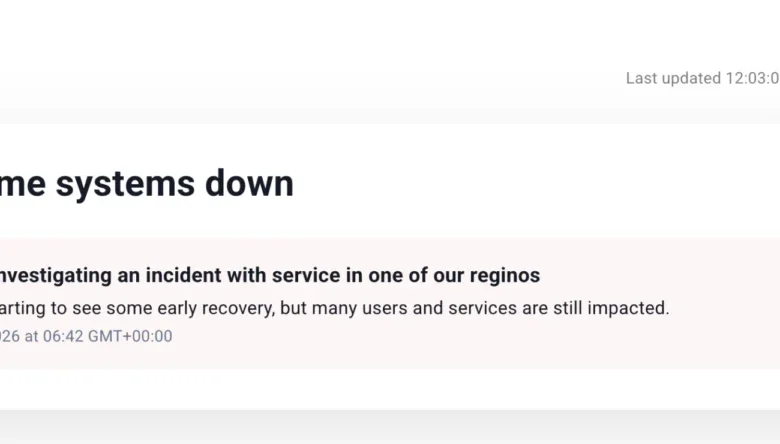
By 6:42 a.m. ET, Bluesky’s official status page acknowledged the situation, confirming that the engineering team was "investigating an incident" and noting that "some systems" were down. The transparency provided by the status page was a critical point of communication for a user base that has grown to expect high levels of technical openness from the Bluesky team. Shortly after the initial acknowledgment, the platform updated its status to reflect that while some recovery was being observed, the impact remained widespread across various services and geographic regions.
The recovery process was gradual. At approximately 11:40 a.m. UTC, observers noted that the platform appeared to be "working again" in a limited capacity, though persistent loading issues and intermittent timeouts continued to plague the user experience. It was not until 2:28 p.m. UTC that the company’s status page officially declared the platform fully operational. In a statement provided via email during the height of the outage, a Bluesky representative told reporters, "We are experiencing some service interruptions and our team is working on the issue," directing users to the official server status account for real-time updates.
Technical Context and the AT Protocol
To understand the nature of the April 16 outage, it is essential to consider the unique architecture upon which Bluesky is built. Unlike traditional social media giants that operate on centralized, proprietary servers, Bluesky is powered by the Authenticated Transfer (AT) Protocol. This is a federated model designed to allow for "algorithmic choice" and "account portability," theoretically preventing any single entity from controlling the entire network.
However, despite its decentralized ambitions, the current iteration of Bluesky still relies heavily on a primary "relay" and a main PDS (Personal Data Server) hosted by the Bluesky PBLLC (Public Benefit Limited Liability Company). When these core components experience synchronization errors or database overloads, the entire ecosystem can feel the effects. While the AT Protocol allows for other developers to host their own servers, the vast majority of the current user base remains on the default "bsky.social" instance. Consequently, a failure at the primary infrastructure level mirrors the effects of an outage on a centralized platform like X or Facebook.

Industry analysts suggest that the "thousand-strong spike" in reports may actually underrepresent the total number of affected users, as many in the decentralized community utilize third-party clients (such as Graysky or DeckBlue) which may have cached data or different error-reporting mechanisms.
Supporting Data and Market Impact
The timing of the outage is particularly sensitive given Bluesky’s recent growth trajectory. Throughout 2025 and early 2026, the platform saw a steady influx of users migrating from X, driven by changes in block functions, AI training policies, and general dissatisfaction with the leadership of the former Twitter.
Data from digital intelligence firms suggests that Bluesky’s active user base has scaled significantly, putting immense pressure on its back-end infrastructure. Service interruptions of this nature often occur when a platform’s growth outpaces its server capacity or when a "thundering herd" problem occurs—where a small glitch causes millions of apps to simultaneously retry connections, effectively creating a self-inflicted Distributed Denial of Service (DDoS) attack.
While Bluesky has not yet released a detailed "Post-Mortem" or Root Cause Analysis (RCA), the symptoms described—loading issues and partial system failures—are consistent with database indexing errors or a failure in the "AppView" layer, which is responsible for aggregating the data from the decentralized firehose into a readable format for the user.
Official Responses and Stakeholder Reactions
The response from the Bluesky team was characterized by the brief, factual communication style typical of high-growth tech startups. By utilizing a dedicated status page (status.bsky.app), the company managed to centralize information, though the lack of specific detail regarding the cause of the "incident" left some technical users seeking more clarity.
"We are starting to see some early recovery, but many users and services are still impacted," the company noted in its mid-morning update. This measured tone was intended to manage expectations, as "early recovery" in the world of federated networking often involves waiting for data to propagate across various nodes and for caches to clear.
On competing platforms, the reaction was a mixture of concern and irony. Users on X and Threads frequently use such outages to debate the merits of different social media architectures. Supporters of Bluesky argued that these are "growing pains" for a revolutionary protocol, while critics pointed to the outage as evidence that decentralized platforms are not yet ready to handle the scale of global discourse.

Broader Implications for the Social Media Landscape
The April 16 outage highlights a broader challenge facing the "Federated Universe" (Fediverse) and decentralized web (Web3) movements. As users move away from centralized silos, they trade one set of risks for another. In a centralized system, a single team can often deploy a fix globally and instantaneously. In a decentralized or federated system, the recovery can be uneven, and the "points of failure" are often more complex to diagnose.
Furthermore, this event underscores the precarious nature of the "alternative" social media market. For many journalists, academics, and political figures who have made Bluesky their primary home, a multi-hour outage represents a significant disruption to professional communication. The reliability of these platforms is no longer just a technical metric; it is a prerequisite for their survival as legitimate competitors to established giants.
The outage also brings into focus the financial and operational sustainability of Bluesky. As a Public Benefit Corporation, the company must balance its mission of providing an open protocol with the hard costs of maintaining high-availability infrastructure. Incidents like this often lead to increased investment in "site reliability engineering" (SRE) and may accelerate the push for more users to host their own Personal Data Servers, thereby truly decentralizing the load.
Conclusion and Future Outlook
By the afternoon of April 16, Bluesky had returned to its normal state, with the "All Systems Operational" green checkmark returning to its status page. While the immediate crisis has passed, the event serves as a reminder of the technical fragility inherent in scaling new social technologies.
For the Bluesky community, the focus now shifts to whether the company will provide a transparent breakdown of the failure. In the past, Bluesky has been praised for its "build in public" ethos, and a detailed technical explanation would go a long way in maintaining user trust. For the broader tech industry, the outage is a case study in the challenges of the AT Protocol and a testament to the fact that even in a decentralized future, the "cloud" still relies on physical servers and code that—on occasion—will inevitably fail.
As of the latest reports, all features, including the "Discover" feed, notifications, and custom feeds, are functioning as intended. The company continues to monitor the situation to ensure that the "early recovery" remains stable through the peak evening traffic hours. Users are encouraged to report any lingering bugs through the in-app feedback tools, as the engineering team remains on high alert for any signs of a regression.