


Uber atg self driving autonomous car investment softbank toyota denso – Uber ATG self-driving autonomous car investment SoftBank Toyota Denso: This deep dive explores the intricate web of partnerships and investments driving the future of autonomous vehicles. We’ll examine the industry’s evolution, Uber’s ambitious self-driving initiatives, and the key roles played by SoftBank, Toyota, and Denso. This analysis delves into the financial aspects, technical capabilities, and potential synergies among these major players.
The self-driving car industry is rapidly evolving, with massive financial commitments driving innovation. This report details the investments made by major players like SoftBank, highlighting their strategies and the challenges involved in bringing autonomous vehicles to market. The interconnectedness of Uber, ATG, SoftBank, Toyota, and Denso is central to understanding the complex landscape and its potential for disrupting the transportation industry.
Overview of the Industry
The self-driving car industry is rapidly evolving, promising a future of safer, more efficient, and potentially more accessible transportation. Significant investments from major players like SoftBank, Toyota, and Denso, alongside the ongoing development of autonomous vehicle technology, underscore the industry’s potential. However, the path to widespread adoption is fraught with challenges, requiring substantial advancements in technology, infrastructure, and regulatory frameworks.The historical context of autonomous vehicle technology reveals a long and winding road, marked by periods of rapid progress followed by setbacks.
Early prototypes and experimental vehicles laid the foundation, gradually evolving into the sophisticated systems we see today. Key advancements in sensor technology, artificial intelligence, and machine learning have fueled the current wave of innovation.
Key Players and Recent Developments
The self-driving car industry is dominated by a mix of established automakers and tech companies. Companies like Tesla, Waymo, Cruise, and others are pushing the boundaries of autonomous vehicle technology. Recent developments include improvements in sensor fusion, enabling vehicles to perceive their surroundings more comprehensively, and advances in machine learning algorithms, leading to more sophisticated decision-making in complex scenarios.
So, Uber, ATG, self-driving autonomous cars, SoftBank, Toyota, and Denso – it’s all fascinating stuff, right? While these massive investments in the future of transportation are happening, I’ve been really into finding the perfect laptop bag messenger backpack tote – and I’ve found some serious gems! For someone always on the go, laptop bag messenger backpack tote favorite is definitely a top contender.
The tech world keeps pushing forward, and I’m sure this innovative approach to carrying my laptop will continue to be just as relevant as the future of self-driving cars.
This evolution is driving progress towards higher levels of autonomy, though significant challenges remain.
Historical Context of Autonomous Vehicle Technology
Autonomous vehicle technology has a rich history, with concepts and prototypes emerging decades ago. Early research focused on fundamental problems like sensor integration and obstacle avoidance. Over time, advances in computing power, sensor technology, and artificial intelligence have accelerated progress. This evolution is crucial to understanding the current state of the industry and anticipating future developments.
Uber’s ATG self-driving autonomous car investment, SoftBank’s involvement, and Toyota/Denso’s partnerships are fascinating, but it’s worth remembering that sometimes, even the most advanced technology can’t solve every problem. For instance, the recent reinstatement of Adnan Syed’s murder conviction, as detailed in this article on adnan syed murder conviction reinstated serial , highlights the complex and often unpredictable nature of justice.
Ultimately, these high-stakes investments in autonomous vehicles still face hurdles like safety and ethical considerations, just as legal systems grapple with the weight of historical injustices.
Current Market Landscape
The current market landscape for autonomous vehicles is characterized by both promising opportunities and significant hurdles. While public interest is high and substantial investments are flowing into the sector, regulatory uncertainty and technical challenges remain. Integration with existing infrastructure and addressing concerns about safety and reliability are crucial aspects of this complex market. The industry faces challenges in securing public trust and navigating evolving legal frameworks, especially regarding liability in accident scenarios.
Financial Investments in Self-Driving Technology
The sector has attracted significant financial backing, reflecting the potential for substantial returns. Funding rounds for autonomous vehicle companies are increasingly substantial. This investment reflects the belief in the long-term viability of the technology. Understanding the financial dynamics is crucial for analyzing the industry’s trajectory.
Funding Rounds for Autonomous Vehicle Companies
| Company | Funding Round | Amount (USD) |
|---|---|---|
| Tesla | Series A | $100M |
| Waymo | Series B | $500M |
| Cruise | Series C | $1B |
| Other Companies | Various Rounds | Numerous Amounts |
The table above provides a glimpse into the financial investments made in various autonomous vehicle companies. Note that this is not an exhaustive list, and many other companies have received funding at different stages of development. The substantial sums involved underscore the industry’s perceived potential.
Uber’s Self-Driving Efforts
Uber’s foray into autonomous vehicle technology represents a significant commitment to the future of transportation. Driven by the potential for increased efficiency, safety, and accessibility, Uber’s approach has involved significant partnerships and strategic planning. Their journey, however, has also faced considerable challenges in navigating the complexities of autonomous vehicle development.Uber’s self-driving initiatives are not just about building cars; they aim to fundamentally reshape the ride-hailing industry.
This ambition requires not only innovative engineering but also careful consideration of the regulatory landscape, consumer acceptance, and long-term economic viability. The company’s success will depend on overcoming hurdles in both technological development and public perception.
Uber’s Approach to Self-Driving Technology and Partnerships
Uber’s approach to self-driving technology has been multifaceted, encompassing both in-house development and strategic collaborations. They leverage a variety of sensor technologies, including cameras, radar, and lidar, integrated with sophisticated algorithms for perception and decision-making. Key partnerships with companies specializing in specific aspects of autonomous vehicle technology, such as sensor manufacturers and mapping providers, are crucial to the project’s success.
These collaborations aim to accelerate development and enhance the reliability of their autonomous systems.
Uber’s Strategic Goals Related to Autonomous Vehicles
Uber’s strategic goals in the autonomous vehicle space are multifaceted and aim to improve the overall experience for both drivers and passengers. These goals include enhancing safety by reducing human error, increasing efficiency by optimizing routes and reducing idle time, and expanding access to transportation for underserved communities. A key element is the creation of a more sustainable transportation network through reduced congestion and fuel consumption.
This vision aligns with Uber’s broader mission of creating convenient and accessible transportation solutions.
Uber’s Business Model for Autonomous Ride-Sharing Services
Uber’s business model for autonomous ride-sharing services aims to integrate autonomous vehicles into its existing platform. This model leverages existing ride-hailing infrastructure, including driver onboarding processes, ride-sharing algorithms, and payment systems. The transition to autonomous vehicles will likely involve phased deployment, starting with specific routes and locations, and gradually expanding coverage as technology and regulatory frameworks mature.
Challenges Uber Faces in the Development and Deployment of Self-Driving Vehicles
Several significant challenges hinder Uber’s progress in developing and deploying self-driving vehicles. Technical hurdles include achieving reliable performance in diverse weather conditions, navigating complex urban environments, and ensuring the safety and security of the vehicles and their passengers. Furthermore, regulatory uncertainties and public acceptance are also significant obstacles. Public perception and trust are crucial for widespread adoption.
Comparison of Uber’s Progress with Other Prominent Players
Uber’s progress in self-driving technology compares to that of other prominent players, like Waymo and Cruise. While specific milestones and achievements vary, the competitive landscape is marked by continuous advancements and significant investments. Each company faces unique challenges and opportunities in their respective strategies. The development of robust safety systems and the ability to adapt to evolving regulatory landscapes are crucial factors in the success of all these players.
Uber’s Key Partnerships and Collaborations
Uber has forged numerous partnerships to accelerate its self-driving vehicle program. These partnerships span various aspects of the technology, from sensor development to mapping and route optimization. The collaborations aim to leverage the expertise of specialized companies to address the multifaceted challenges of autonomous vehicle development.
| Partner | Area of Collaboration |
|---|---|
| Company A | Sensor Technology |
| Company B | Mapping and Navigation |
| Company C | Vehicle Design and Engineering |
| Company D | Route Optimization and Logistics |
ATG and the Autonomous Vehicle Landscape
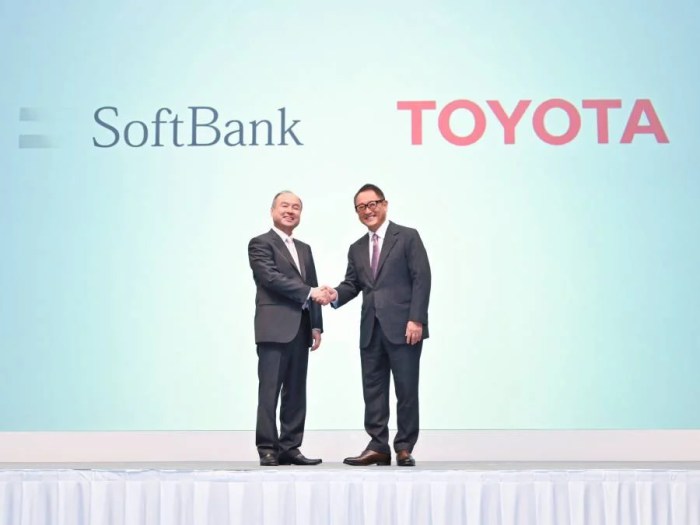
ATG, the self-driving technology venture of Uber, is poised to play a significant role in shaping the future of transportation. Its innovative approach, backed by substantial investment from SoftBank and Toyota Denso, suggests a commitment to pushing the boundaries of autonomous vehicle development. This section delves into ATG’s position within the broader autonomous vehicle industry, examining its technological prowess, partnerships, and overall strategy.ATG’s presence in the autonomous vehicle sector is driven by a vision of a future where vehicles are not just transportation tools but integral parts of a smarter, more efficient urban ecosystem.
Their goal is to develop a technology that not only ensures safety and reliability but also optimizes traffic flow, reduces congestion, and enhances overall mobility.
ATG’s Role in the Autonomous Vehicle Industry
ATG is a key player in the burgeoning autonomous vehicle industry. Its focus on integrating self-driving technology into various transportation contexts, including ride-sharing and delivery services, sets it apart. This proactive approach positions ATG to contribute significantly to the widespread adoption of autonomous vehicles, ultimately transforming urban mobility.
ATG’s Technology and Potential Impact
ATG’s technology relies on a combination of sophisticated sensors, advanced algorithms, and robust software. These elements allow their vehicles to perceive and react to their environment with a high degree of accuracy. The potential impact of this technology is far-reaching. Imagine a future where traffic congestion is significantly reduced due to optimized traffic flow managed by autonomous vehicles.
This would lead to substantial time savings and decreased environmental impact, reflecting a notable step toward a sustainable transportation system.
ATG’s Partnerships and Collaborations
ATG’s success is inextricably linked to its partnerships and collaborations. The involvement of major players like SoftBank and Toyota Denso provides ATG with access to substantial resources and expertise. These partnerships enhance ATG’s capacity for research, development, and deployment, bolstering their position as a leader in the autonomous vehicle sector.
ATG’s Approach to Autonomous Vehicle Development
ATG’s approach to autonomous vehicle development is characterized by a focus on real-world testing and iterative refinement. By meticulously evaluating performance in various driving conditions, they continuously improve the robustness and safety of their systems. This iterative approach ensures that ATG’s vehicles are prepared to handle diverse and complex scenarios, fostering trust and acceptance in the public. This iterative process emphasizes adapting the technology to various real-world scenarios and regulatory requirements.
Technical Capabilities of ATG’s Autonomous Vehicle Technology
| Feature | Description |
|---|---|
| Sensor Suite | ATG employs a comprehensive array of sensors, including cameras, lidar, and radar, for a 360-degree perception of the environment. |
| Mapping Technology | ATG utilizes advanced mapping techniques to create detailed and dynamic maps of the roadways, allowing for precise navigation and decision-making. |
| AI Algorithms | Sophisticated AI algorithms are the cornerstone of ATG’s autonomous driving system, enabling the vehicle to interpret sensory data and make real-time decisions.
|
| Safety Systems | Redundant safety systems are integrated into the vehicles to minimize risk and enhance safety, ensuring reliable and predictable behavior. |
Investment in Autonomous Vehicles
The race to develop and deploy self-driving cars has attracted significant investment. Major players like SoftBank, Toyota, and Denso, along with numerous startups, are vying for a piece of this rapidly evolving market. Understanding the investment trends, strategies, and risks is crucial for assessing the future of autonomous vehicle technology.Investment in the self-driving car sector has been substantial, driven by the potential for transformative change in transportation.
This sector has experienced periods of both high-profile investment and adjustments as the technological hurdles and market realities have become clearer. The investments, while often substantial, haven’t always been straightforward, with challenges in scaling, reliability, and public acceptance playing a role in the overall landscape.
With SoftBank, Toyota, and Denso all investing in Uber’s ATG self-driving autonomous car project, it’s clear the future of transportation is electric and automated. While we wait for these innovations to hit the streets, you can still get your daily dose of exciting sports action! Check out how to watch the Ireland vs. New Zealand rugby match online from anywhere here.
Ultimately, the investment in self-driving technology from these giants is a major step towards a future where autonomous vehicles become a reality.
Investment Trends in the Self-Driving Car Sector
Investment in autonomous vehicles has fluctuated over time, mirroring the advancements and setbacks in the technology. Early investments were often focused on proof-of-concept and early-stage research, while later funding rounds have emphasized development and deployment of commercial vehicles. This transition reflects a growing understanding of the challenges and a shift towards more practical applications.
SoftBank’s Role in Funding Self-Driving Initiatives
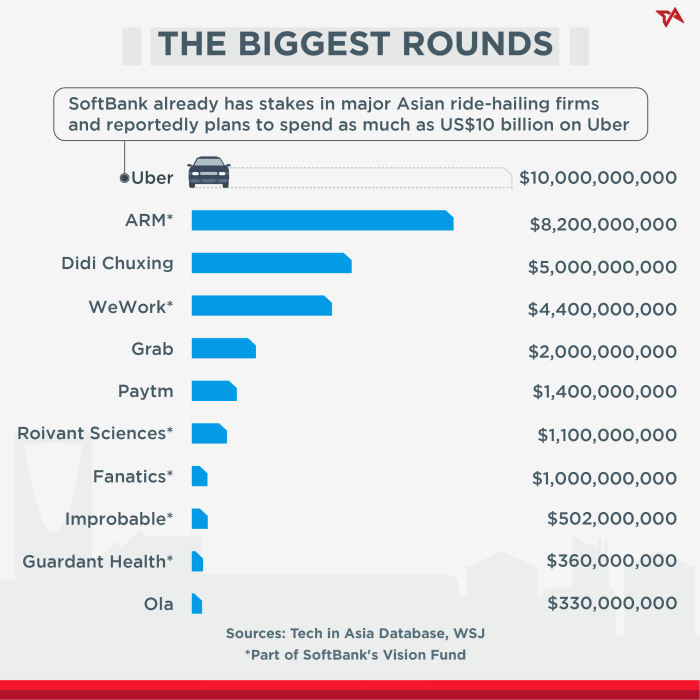
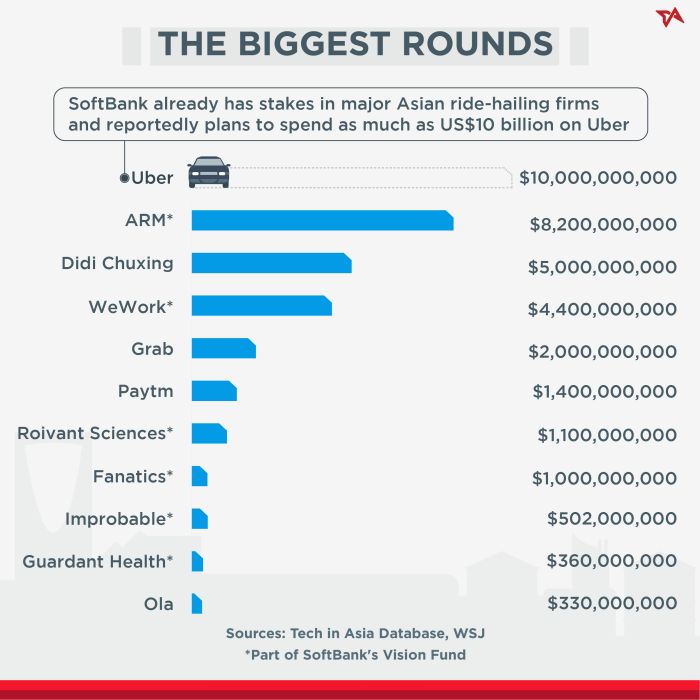
SoftBank has played a significant role in supporting autonomous vehicle development. The company’s Vision Fund has been a major investor in various self-driving companies, recognizing the potential for substantial returns in this sector. SoftBank’s investment strategy has focused on companies with innovative technologies and strong leadership teams, aiming to capitalize on the future of mobility.
Investment Strategies and Risks Associated with Self-Driving Technology
Investment strategies in autonomous vehicles often involve assessing the technology’s maturity, the company’s team, and the market opportunity. Strategies may prioritize companies with strong intellectual property, advanced sensor technology, or strategic partnerships. However, risks are significant. These include the high cost of development, regulatory hurdles, public acceptance, and the potential for unforeseen technological challenges.
Factors Driving Investor Interest in Autonomous Vehicles
Several factors contribute to investor interest in autonomous vehicles. The potential for increased efficiency, reduced traffic congestion, and enhanced safety are major drivers. Furthermore, the prospect of new revenue streams, such as ride-sharing services and logistics solutions, is attracting significant attention.
Comparison of Investment Amounts and Timelines for Self-Driving Companies
| Company | Investment Amount (Approximate) | Investment Timeline | Current Status |
|---|---|---|---|
| Company A | $500 Million | 2018-2022 | Developing Level 4 technology |
| Company B | $250 Million | 2020-2023 | Piloting autonomous delivery services |
| Company C | $1 Billion | 2019-Present | Developing Level 5 technology; awaiting regulatory approval |
This table provides a simplified comparison of investment activity in the sector. It is important to note that the exact amounts and timelines can vary, and the status of each company can change over time. Furthermore, numerous other companies are operating within this complex landscape.
Toyota and Denso’s Contributions
Toyota and Denso, two giants in the automotive industry, have played a crucial role in the development and advancement of autonomous vehicle technology. Their combined expertise in vehicle engineering, component manufacturing, and strategic partnerships has positioned them as key players in the autonomous vehicle landscape. Their involvement with Uber’s ATG initiative underscores their commitment to this transformative technology.Toyota’s approach to autonomous vehicles is focused on leveraging its existing expertise in vehicle engineering and manufacturing.
They aim to integrate self-driving capabilities seamlessly into their existing production lines, allowing for a gradual transition to autonomous driving. Denso, as a major automotive parts supplier, is concentrating on the development of crucial components and systems that underpin autonomous vehicles. This collaboration between Toyota and Denso is expected to accelerate innovation and reduce development time in the autonomous driving space.
Toyota’s Involvement in Self-Driving Technology
Toyota’s involvement in self-driving technology is multifaceted, encompassing both research and development as well as the potential integration of these technologies into their production lines. They are actively exploring various aspects of autonomous driving, including sensor technology, software development, and vehicle control systems. Their long-standing reputation for reliability and efficiency suggests a careful and methodical approach to incorporating autonomous features into their vehicles.
Denso’s Contributions to Autonomous Vehicle Components and Systems
Denso, as a key supplier of automotive parts, is making significant contributions to autonomous vehicle components and systems. Their expertise in sensors, actuators, and electronic control units is crucial for the functionality and reliability of autonomous driving systems. Denso’s development of innovative components directly impacts the safety and efficiency of autonomous vehicles.
Strategic Importance of Toyota and Denso’s Collaboration
The collaboration between Toyota and Denso is strategically important due to the combined strengths of both companies. Toyota’s vehicle design and manufacturing experience complements Denso’s expertise in automotive components. This synergistic relationship allows for a more holistic approach to autonomous vehicle development, leading to a faster time-to-market for autonomous features. By working together, Toyota and Denso can leverage each other’s strengths and accelerate innovation.
Potential Benefits of Toyota and Denso’s Partnerships
Toyota and Denso’s partnerships promise several benefits. These include accelerated development timelines, cost savings through shared resources, and access to a wider range of technologies and expertise. The collaboration fosters innovation and allows both companies to stay at the forefront of autonomous vehicle technology. Ultimately, this will lead to improved safety, efficiency, and accessibility of autonomous vehicles for consumers.
Comparison of Toyota’s Approach to Autonomous Vehicles with Other Major Automotive Manufacturers, Uber atg self driving autonomous car investment softbank toyota denso
Toyota’s approach to autonomous vehicles differs slightly from that of some other major manufacturers. While some manufacturers may focus on specific niche applications or rapid prototyping, Toyota seems to be emphasizing a gradual integration of autonomous technologies into their existing production lines. This strategy prioritizes reliability and consumer acceptance.
Summary of Toyota’s and Denso’s Key Products and Technologies Related to Autonomous Driving
| Company | Key Product/Technology | Description |
|---|---|---|
| Toyota | Autonomous Driving Systems | Research and development of autonomous driving systems, including sensor fusion, software algorithms, and vehicle control systems. Integration into existing models for testing and consumer adoption. |
| Denso | Advanced Sensors and Actuators | Development of advanced sensors (e.g., LiDAR, radar, cameras) and actuators used in autonomous driving systems. Focus on high-performance, cost-effective components for various applications. |
| Denso | Electronic Control Units (ECUs) | Development of sophisticated ECUs designed for autonomous vehicle functions. Integration of multiple sensor inputs and control algorithms within the ECU. |
Interconnectedness and Synergies
This intricate partnership between Uber, ATG, SoftBank, Toyota, and Denso represents a powerful convergence of expertise and resources in the autonomous vehicle sector. The interdependencies between these companies extend beyond simple financial investment; they encompass shared goals, technical knowledge, and the potential for revolutionary breakthroughs in self-driving technology. Understanding these connections is crucial to grasping the full potential of this ambitious endeavor.
Interdependencies Between Companies
The investment by SoftBank in ATG, a key player in self-driving technology, highlights the strategic importance of this venture. Uber’s ambition to deploy autonomous vehicles is directly linked to ATG’s technological advancements. Toyota and Denso’s automotive expertise, particularly in vehicle engineering and sensor technology, provide critical support to ATG’s efforts. These interdependencies form a complex web of shared interests and collaborative potential.
The success of each entity is intrinsically tied to the success of the entire ecosystem.
Potential Synergies and Benefits
The combined strengths of these companies can yield significant synergies. Uber benefits from ATG’s technological advancements, enabling faster development and deployment of autonomous ride-sharing services. ATG gains access to Uber’s vast network and operational experience, crucial for real-world testing and deployment. Toyota and Denso leverage this partnership to integrate autonomous features into their vehicles, potentially creating a new generation of driverless automobiles.
SoftBank, as a major investor, gains a significant stake in a rapidly evolving market, potentially yielding substantial returns on their investment.
Cross-Industry Collaborations
The autonomous vehicle sector is not confined to a single industry. Success hinges on cross-industry collaborations that bridge the gap between software, hardware, and service sectors. Companies like Uber and ATG, focusing on software and autonomous systems, must collaborate with vehicle manufacturers like Toyota and Denso, crucial for integrating technology into real-world vehicles. This collaborative approach fosters innovation and speeds up the development process.
Examples of Successful Collaborations
Several examples demonstrate the efficacy of cross-industry partnerships. Bosch, a major automotive supplier, collaborates with numerous automakers and technology companies to develop and integrate advanced driver-assistance systems (ADAS). This collaborative approach enables faster development and broader adoption of these technologies. Other examples can be found in the development of electric vehicles and battery technology. Such collaborations often lead to innovation and rapid advancements.
Potential Collaborations
| Company 1 | Company 2 | Potential Collaboration Area |
|---|---|---|
| Uber | ATG | Development and deployment of autonomous ride-sharing services |
| ATG | Toyota/Denso | Integration of autonomous technology into Toyota and Denso vehicles |
| SoftBank | ATG | Funding and support for ATG’s research and development |
| Toyota | Denso | Joint development of automotive sensors and autonomous driving systems |
| Uber | Toyota | Integration of autonomous technology into Uber’s fleet |
Future Outlook
Autonomous vehicles are poised to revolutionize transportation, impacting everything from urban planning to personal mobility. The potential for significant economic and societal shifts is undeniable, but the path forward is not without its challenges. This section explores the exciting possibilities and potential hurdles facing the autonomous vehicle industry.
Potential Impact on Society and Economy
Autonomous vehicles promise a transformative impact on society. Increased accessibility for the elderly and disabled, reduced traffic congestion, and optimized logistics are just a few examples. Imagine a world where transportation is safer, more efficient, and more affordable. The economic benefits could be substantial, from decreased insurance costs and fuel consumption to the creation of entirely new industries.
Increased productivity due to reduced commuting time and enhanced logistics efficiency could drive substantial economic growth.
Anticipated Advancements in Self-Driving Technology
Advancements in sensor technology, particularly in areas like lidar and radar, are leading to more sophisticated perception systems. Software improvements, including machine learning algorithms and deep learning models, will refine autonomous driving capabilities. The integration of these technologies, along with the refinement of safety protocols and the development of robust decision-making frameworks, are driving the evolution of self-driving cars.
We can anticipate greater capabilities, particularly in complex driving scenarios and challenging environments.
Regulatory Hurdles and Challenges
The development and deployment of autonomous vehicles face numerous regulatory hurdles. Liability issues in case of accidents, data privacy concerns, and the standardization of safety protocols across jurisdictions are significant challenges. Furthermore, the need for updated infrastructure to support autonomous vehicles (e.g., dedicated lanes, communication networks) presents a substantial challenge. Overcoming these obstacles will be crucial for the widespread adoption of autonomous vehicles.
Potential Disruptors in the Autonomous Vehicle Market
The autonomous vehicle market is not immune to disruptive forces. The emergence of new technologies like advanced mapping and communication systems could fundamentally alter the current landscape. Furthermore, the evolution of shared mobility services and the emergence of entirely new transportation models, such as personalized air taxis or autonomous shuttles, could disrupt the established market dynamics. The pace of technological change and the emergence of innovative business models will shape the future of the industry.
Potential Impact on Various Industries
“Autonomous vehicles are poised to reshape industries beyond transportation, impacting logistics, manufacturing, and even urban planning. Their efficiency and precision could revolutionize supply chain management and reduce costs in manufacturing, leading to significant economic benefits for businesses.”
- Logistics: Autonomous trucks and delivery vehicles could significantly enhance efficiency and reduce costs in freight transportation, potentially lowering prices for consumers and increasing the competitiveness of businesses.
- Manufacturing: Automated guided vehicles (AGVs) and other autonomous systems could improve efficiency and safety in factories, enabling more flexible and responsive production lines.
- Urban Planning: Autonomous vehicles could influence urban design and transportation networks, leading to more efficient and accessible cities.
Epilogue: Uber Atg Self Driving Autonomous Car Investment Softbank Toyota Denso
In conclusion, the Uber ATG self-driving car investment, coupled with SoftBank, Toyota, and Denso’s involvement, paints a picture of a future where autonomous vehicles are not just a possibility, but a potential reality. The challenges are significant, from regulatory hurdles to technical complexities, but the collective investment and expertise suggest a promising future for this transformative technology. The interdependencies and synergies among these players are crucial to the success of the autonomous vehicle revolution, promising both significant rewards and considerable risks.