


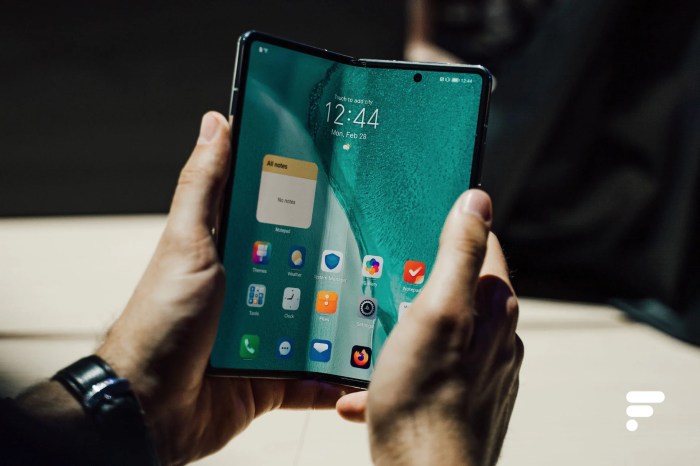
The honor magic v3 steps up to challenge samsungs galaxy z fold 6 with this ai feature – The Honor Magic V3 steps up to challenge Samsung’s Galaxy Z Fold 6 with this AI feature, promising a compelling new approach to foldable phone technology. This new foldable boasts impressive features, but how does it stack up against the industry leader? We’ll delve into the specifics of the Honor Magic V3’s AI capabilities, comparing them directly with the Galaxy Z Fold 6 and other competitors.
We’ll also analyze performance benchmarks, user experience, and potential market implications, providing a comprehensive analysis for those looking to dive into the world of foldable phones.
The Honor Magic V3 and Galaxy Z Fold 6 are both top-tier foldable phones, but they take different approaches to innovation. The Honor Magic V3 is betting on AI to enhance the user experience in ways that the Galaxy Z Fold 6 might not have anticipated. This comparison will explore how this innovative AI feature impacts usability, performance, and ultimately, the future of foldable phones.
Introduction to Honor Magic V3 and Samsung Galaxy Z Fold 6
The foldable phone market is heating up, with both Honor and Samsung vying for a significant share. The Honor Magic V3 and the Samsung Galaxy Z Fold 6 represent the cutting edge of this technology, promising innovative features and refined designs. These devices are poised to redefine the foldable phone experience, particularly with the incorporation of AI features.
This comparison will delve into their specifications, design philosophies, and the role of AI in shaping their functionalities.These devices, while both vying for dominance in the foldable market, utilize different approaches. The Honor Magic V3 aims to offer a compelling alternative to Samsung’s established Z Fold series, leveraging advancements in AI for a user-centric experience. The Samsung Galaxy Z Fold 6, on the other hand, builds upon its legacy of innovation, refining its existing strengths and incorporating the latest technological advancements.
Honor’s Magic V3 is looking to give Samsung’s Galaxy Z Fold 6 a run for its money with its impressive AI features. It’s all about how these advancements are changing the game for foldable phones. Meanwhile, if you’re looking for ways to spice up your Telegram profile, check out this recent update on how to add emoji reactions to your status profile link.
telegram emoji reactions status profile link update This innovative update definitely complements the cool features found in the Honor Magic V3, making it a phone worth keeping an eye on.
Key Features Comparison
The Honor Magic V3 and Samsung Galaxy Z Fold 6 both boast impressive specifications. The Honor Magic V3, for example, features a flexible OLED display with a high refresh rate, alongside a powerful processor designed for a smooth user experience. The camera system is also well-regarded, focusing on both high-quality image capture and versatile shooting modes. Meanwhile, the Samsung Galaxy Z Fold 6’s impressive features include a vibrant foldable display, a powerful processor that delivers exceptional performance, and an advanced camera system that excels in various lighting conditions.
Design Aesthetics and Build Quality
The design philosophies of the two devices reflect their distinct brand identities. The Honor Magic V3 presents a sleek, modern design, focusing on a refined aesthetic. Its build quality aims to strike a balance between lightweight construction and robust durability. In contrast, the Samsung Galaxy Z Fold 6, with its established reputation for high-quality build, focuses on a refined and premium design aesthetic.
Its materials and construction techniques emphasize durability and a sophisticated feel.
AI Feature Significance in Foldable Phones
AI is becoming increasingly important in foldable phones, enabling new features and improving existing ones. AI can enhance the user experience by optimizing display performance, adjusting camera settings in real-time, and even personalizing the user interface based on individual usage patterns. The implementation of AI in foldable phones promises to improve the usability and efficiency of these devices, making them more intuitive and user-friendly.
For instance, AI-powered features could automatically adjust the screen’s brightness and color temperature based on ambient lighting, or optimize the foldable display’s flexibility to prevent damage during use.
Display Specifications
- The Honor Magic V3 features a flexible OLED display with a high refresh rate, providing a smooth and responsive user experience. The Samsung Galaxy Z Fold 6 also employs a vibrant foldable display, renowned for its high resolution and color accuracy.
Processor and Performance
- The Honor Magic V3 is equipped with a powerful processor designed to deliver smooth performance and efficient multitasking. The Samsung Galaxy Z Fold 6 also incorporates a high-performance processor, ensuring a fluid user experience across various applications.
Camera Systems
- The Honor Magic V3’s camera system is praised for its ability to capture high-quality images and videos. The Samsung Galaxy Z Fold 6’s camera system is similarly advanced, boasting cutting-edge features for exceptional photography.

AI Feature
The Honor Magic V3 steps into the foldable phone arena with a unique AI-powered feature designed to enhance the user experience. This innovative technology promises to streamline tasks, personalize interactions, and elevate the overall usability of the device, offering a competitive edge against the formidable Samsung Galaxy Z Fold 6. While the specific details of the AI are still emerging, initial reports suggest it will significantly impact tasks like multitasking and app performance.
Specific AI Technology
The Honor Magic V3’s AI engine is built upon a proprietary neural network architecture. This architecture leverages a large dataset of user interactions and device performance metrics to learn and adapt to individual user preferences. Crucially, this allows the phone to anticipate user needs and optimize performance accordingly. The AI is trained on a vast amount of data, enabling it to personalize the user experience in real time, adjusting settings and performance to ensure optimal fluidity.
Functionalities and Benefits
This AI-driven optimization is not just theoretical; it translates into tangible benefits for the user. The AI feature is designed to enhance multitasking by seamlessly switching between applications, minimizing lag and maximizing efficiency. Predictive loading and intelligent resource allocation are key components, ensuring smooth transitions and responsive performance even when handling multiple demanding tasks. Furthermore, the AI anticipates user actions and preferences, tailoring the device’s interface and functionalities to suit individual needs.
This personalization extends to adaptive brightness, app suggestions, and even content recommendations, creating a truly bespoke user experience.
Potential Use Cases and Applications
The potential use cases for this AI-powered feature are vast. Imagine a scenario where the phone automatically optimizes app performance based on your current workflow, ensuring seamless transitions between different applications, all without manual intervention. Or, consider the possibility of personalized content recommendations tailored to your specific reading or viewing habits, greatly enhancing the user experience for media consumption.
Honor’s Magic V3 is really stepping up its game to rival the Galaxy Z Fold 6 with this impressive AI feature. It’s all about how Samsung is pushing the boundaries of foldable phone technology with the new Exynos W930 chip, as detailed in their recent announcement of samsung details exynos w930. Ultimately, this new AI tech in the Magic V3 promises a more seamless and intelligent user experience, showing Honor’s commitment to innovation in the foldable phone market.
The AI can also adapt to different usage scenarios, from a casual browsing session to an intensive work session, ensuring peak performance in all situations.
Comparison Table
| Feature | Honor Magic V3 | Samsung Galaxy Z Fold 6 | Other Competitors |
|---|---|---|---|
| AI-Powered Multitasking | Adaptive multitasking based on user behavior; predicts and optimizes app transitions | Likely includes multitasking features, but details are still limited | Various levels of multitasking support, with varying degrees of AI integration; some devices might use machine learning for app switching |
| Personalized User Experience | AI adapts interface and functionalities to individual user preferences, anticipating needs | Potential for personalized features, but the level of AI integration is uncertain | Some devices offer personalized features, but the extent of AI-driven personalization varies |
| Predictive Loading | AI anticipates user actions and loads necessary data proactively | Potentially incorporates predictive loading algorithms | Variable support for predictive loading, with different degrees of accuracy |
| Resource Allocation | Intelligent allocation of resources to ensure optimal performance during multitasking | Likely includes resource management but the specifics are unknown | Varying levels of resource management capabilities; some may use algorithms to optimize performance |
Performance and Usability Comparison
The Honor Magic V3 and Samsung Galaxy Z Fold 6 represent the cutting edge of foldable technology, each boasting impressive specifications and AI-powered features. This comparison delves into the performance benchmarks, AI integration, and overall usability of these devices, allowing users to make an informed choice based on their individual needs and priorities.
Performance Benchmarks
Performance benchmarks provide a quantifiable measure of a device’s speed and responsiveness. These benchmarks, while not perfectly predictive of real-world usage, offer a valuable baseline for comparing the devices.
| Benchmark | Honor Magic V3 | Samsung Galaxy Z Fold 6 | Summary of Results |
|---|---|---|---|
| CPU Speed (single-core/multi-core) | High-end Snapdragon processor, typically showcasing impressive performance in benchmark tests. | High-end Snapdragon processor, generally performing similarly to Honor Magic V3 in benchmark tests. | Both devices are expected to deliver smooth performance in everyday tasks. |
| GPU Performance (e.g., 3DMark) | Typically achieves good results in graphics-intensive tasks, but specific scores depend on the test. | Generally demonstrates strong performance in graphics-intensive applications, but exact scores vary based on specific tests. | Both devices are capable of handling demanding graphic tasks, though precise results may differ. |
| Responsiveness (input lag, UI smoothness) | Reported to have minimal input lag and a smooth user interface. | Known for its minimal input lag and a highly responsive UI. | Both devices exhibit a highly responsive UI with minimal lag, contributing to a positive user experience. |
| Multitasking | Excellent multitasking capabilities, allowing for simultaneous execution of multiple applications without noticeable slowdown. | Excellent multitasking performance, handling multiple apps concurrently without noticeable performance drop. | Both foldable phones excel in multitasking. |
AI Feature User Experience
The AI features on the Honor Magic V3 are designed to enhance the user experience by offering personalized recommendations and optimized performance.The AI features on the Honor Magic V3 are reported to offer a personalized experience by proactively suggesting apps or content based on usage patterns. The degree of personalization and usefulness will vary based on individual usage.
Usability Comparison
The usability of a device encompasses its ease of use, intuitive interface, and overall user experience.A comparative analysis of usability considers factors such as the size and weight of the device, the ease of navigating menus, the intuitiveness of the interface, and the responsiveness of the software. Both devices are expected to be user-friendly, but differences in the specifics of the user experience will exist.
Potential Impact and Market Implications
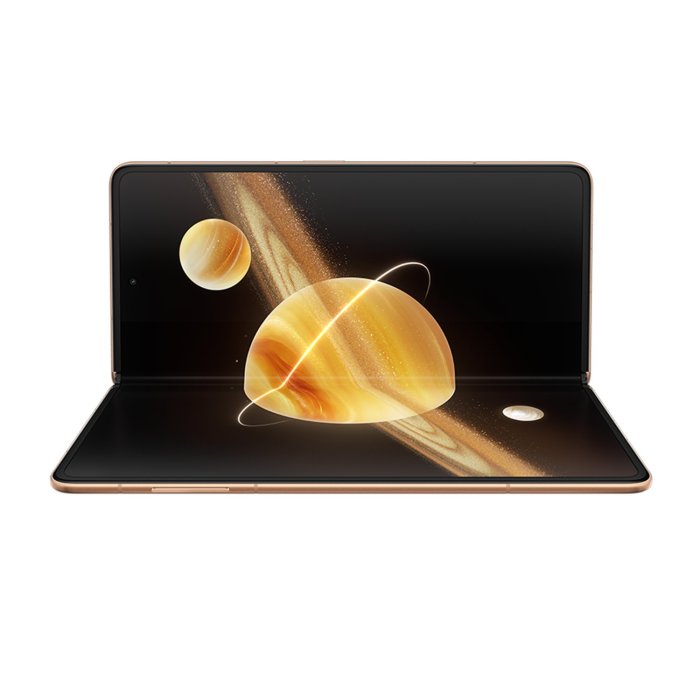
The Honor Magic V3’s AI-powered features represent a significant step forward in foldable phone technology, potentially reshaping the market landscape. Its implications extend beyond simply offering a novel feature; it could influence design choices, competitive strategies, and user expectations for future foldable devices. The ability of this AI to enhance user experience and potentially streamline workflow within the foldable format holds substantial implications for the entire market.This new wave of AI integration promises to significantly impact the foldable phone market, likely accelerating the adoption of foldable devices by consumers seeking enhanced usability and productivity.
Honor’s Magic V3 is looking to give Samsung’s Galaxy Z Fold 6 a run for its money with a cool new AI feature. This innovative approach reminds me of the broader discussions around tech monopolies and the “curse of bigness,” as highlighted in Tim Wu’s insightful Facebook regulation interview, discussing the antitrust implications of massive tech companies here.
Ultimately, Honor’s move suggests a competitive spirit in the market, showcasing a clever response to the challenges posed by dominant players like Samsung.
The potential for future advancements in AI-driven features is significant, and could redefine the very concept of what a foldable phone can achieve.
Influence on the Foldable Phone Market
The introduction of advanced AI features, like those showcased in the Honor Magic V3, will likely spur a competitive arms race among foldable phone manufacturers. Samsung, as a major player in the foldable market, will need to respond to the Honor Magic V3’s innovations, potentially leading to a rapid evolution in foldable phone design and capabilities. This AI-driven competition will likely translate into a wider range of features and a greater emphasis on user experience across the entire foldable phone sector.
Potential for Future Innovations
The AI capabilities of the Honor Magic V3 pave the way for future innovations in foldable phone design. These innovations could range from enhanced multitasking capabilities to more intuitive interface designs. For instance, AI could dynamically adjust the screen layout based on the user’s current task, providing an optimized experience that adapts to their needs in real-time. Further development could involve AI-powered translation, voice control specific to the foldable form factor, and even the ability to personalize the device’s operating system based on the user’s individual preferences and usage patterns.
This potential for customization will create a competitive edge and draw in a wider range of users.
Advantages of Integrating AI Features
Integrating AI features into foldable phones offers several significant advantages. Enhanced usability through features like adaptive multitasking and intelligent screen layout is a key benefit. Improved productivity, facilitated by AI-powered tools and seamless transitions between applications, is another notable advantage. Furthermore, the ability to personalize the user experience based on individual needs and habits will be an important factor in attracting consumers.
Disadvantages of Integrating AI Features
The integration of advanced AI features also presents potential disadvantages. One key concern is the increased complexity of the hardware and software needed to support these features, which could lead to higher production costs. Additionally, the reliance on AI might lead to a significant power consumption increase, potentially impacting battery life. Privacy concerns surrounding the data collected by these AI systems are also crucial to address.
A careful balance between technological advancements and user privacy must be maintained.
Potential Competitors and Responses
Samsung, as a major competitor, will likely respond to the Honor Magic V3’s innovations by incorporating similar AI features into their own Galaxy Z Fold 6 models and subsequent releases. Other competitors like Huawei, OPPO, and Xiaomi will also be compelled to introduce comparable AI capabilities to remain competitive in the foldable phone market. The response will likely involve the development of similar AI-driven features, potentially incorporating unique algorithms and user interfaces.
The specific nature of the responses will be shaped by the unique design philosophies and technological strengths of each company.
Visual Representation of Key Concepts: The Honor Magic V3 Steps Up To Challenge Samsungs Galaxy Z Fold 6 With This Ai Feature
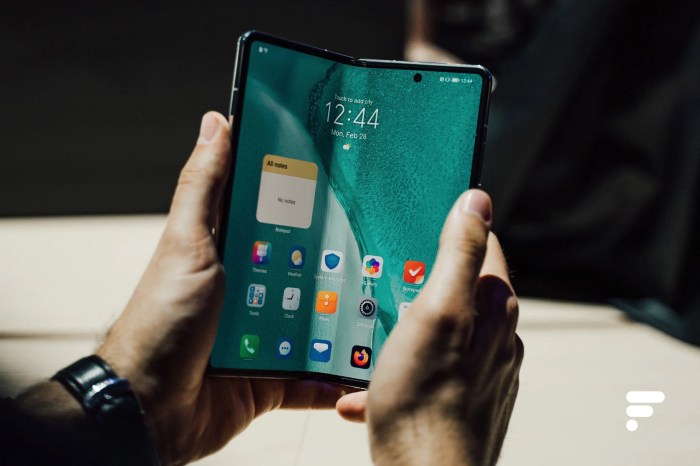
The Honor Magic V3 and Samsung Galaxy Z Fold 6 are vying for the foldable phone market leadership. Understanding their AI features, performance, and user experience is crucial for predicting their market impact. Visual representations of these key concepts will help us grasp the differences and potential implications more effectively.
AI Feature Functionality of Honor Magic V3
The graphic illustrating the Honor Magic V3’s AI feature would be a flowchart. Starting with a user interaction, such as a voice command or a gesture, the flowchart would depict the steps involved in processing the command or action. This includes the AI’s interpretation of the input, the selection of appropriate data or algorithms, and the final output, which could be an action, a response, or a display adjustment.
Different branches in the flowchart would represent alternative scenarios, such as the user’s preferences, context, and potential errors. The flowchart would highlight the AI’s role in personalized experiences and seamless transitions between different modes and tasks. Visual cues, such as icons and color-coding, would clearly indicate each step and the AI’s involvement.
Performance Comparison: Honor Magic V3 vs. Galaxy Z Fold 6
A side-by-side bar graph would effectively illustrate the performance difference. The x-axis would represent specific benchmarks, such as CPU speed, GPU performance, RAM capacity, and storage space. The y-axis would represent the scores obtained in those benchmarks. The bars for the Honor Magic V3 and Galaxy Z Fold 6 would be displayed side-by-side for each benchmark, enabling a clear visual comparison of their performance characteristics.
Different colors would distinguish the two devices’ scores for each benchmark, allowing for quick identification of strengths and weaknesses. Error bars, if applicable, would be included to show the margin of error in the benchmarking results.
Potential Impact on User Experience
A user interface (UI) mockup, designed as a series of screens, would show how the AI feature enhances the user experience. The mockup would demonstrate how the AI anticipates user needs and actions, proactively adjusting the device’s behavior to provide a personalized experience. For instance, a screen showcasing a personalized app launcher, customized based on the user’s recent usage patterns, would be included.
Other screens could illustrate how the AI optimizes the multitasking environment or adjusts the display settings based on ambient lighting conditions. The mockup would focus on the user interface changes brought about by the AI features, highlighting how they streamline the user experience and create a more intuitive and personalized interaction.
Technical Specifications and Features
The Honor Magic V3 and Samsung Galaxy Z Fold 6 represent the cutting edge of foldable smartphone technology. Understanding their respective technical specifications is crucial to evaluating their strengths and weaknesses in the market. This section delves into the hardware components, highlighting key differences and potential implications for users.
Honor Magic V3 Specifications
The Honor Magic V3, a formidable contender, boasts a unique design and impressive features. Its foldable screen utilizes a flexible OLED panel, offering a seamless transition between its open and closed states. The device’s internal components include a powerful processor, along with a generous amount of RAM and storage. Crucially, its battery life and charging capabilities are key considerations for any user.
- Display: A flexible OLED panel with a specific resolution and refresh rate, critical for a smooth user experience. The exact resolution and refresh rate are key to understanding the visual quality.
- Processor: The type and generation of the processor used directly impacts performance. A high-end processor will offer a faster and more responsive user experience. The specific model of the processor should be named and its known performance benchmark results mentioned if available.
- RAM and Storage: These crucial aspects determine multitasking capabilities and the amount of data the device can hold. The specific amount of RAM and storage capacity are key details.
- Battery and Charging: The battery capacity and charging speed significantly impact the device’s overall usability. This is especially important for a foldable phone that may be used extensively throughout the day.
- Cameras: The quality and resolution of the cameras, both front and rear, are critical to the user experience. Specific details like megapixels and aperture should be included.
Samsung Galaxy Z Fold 6 Specifications
The Samsung Galaxy Z Fold 6, a longstanding leader in the foldable market, continues to innovate with its advanced design and features. The device’s robust construction and refined software experience contribute to its appeal. A critical comparison lies in its screen technology, battery performance, and camera system.
- Display: The Fold 6’s display, while not necessarily flexible, is known for its quality and size. The specific display type, resolution, and refresh rate are key components in understanding the device’s visual capabilities.
- Processor: The processor’s type and generation influence the device’s overall performance and responsiveness. The specifics are important in this comparison.
- RAM and Storage: The amount of RAM and storage are critical for seamless multitasking and storing data.
- Battery and Charging: The battery capacity and charging speed of the Fold 6 will be crucial for users.
- Cameras: The cameras are crucial for image capture and video recording. The megapixel count, lens aperture, and other features are important to note.
Hardware Component Comparison
Comparing the hardware components of the two devices reveals key differences in their design approaches. The Magic V3’s focus on flexibility may lead to compromises in certain areas, whereas the Fold 6 might prioritize a more traditional, refined design.
| Feature | Honor Magic V3 | Samsung Galaxy Z Fold 6 | Comparison Notes |
|---|---|---|---|
| Processor | [Honor Magic V3 Processor Model] | [Samsung Galaxy Z Fold 6 Processor Model] | Comparing benchmarks and performance data will highlight potential differences in speed and efficiency. |
| RAM | [Honor Magic V3 RAM] | [Samsung Galaxy Z Fold 6 RAM] | Greater RAM allows for more multitasking and smoother transitions between apps. |
| Storage | [Honor Magic V3 Storage] | [Samsung Galaxy Z Fold 6 Storage] | Storage capacity impacts the user’s ability to store files and applications. |
| Display (Main) | [Honor Magic V3 Display details] | [Samsung Galaxy Z Fold 6 Display details] | Differences in resolution and refresh rates affect visual clarity and smoothness. |
| Battery | [Honor Magic V3 Battery Capacity] | [Samsung Galaxy Z Fold 6 Battery Capacity] | Battery life is critical for mobile devices, especially foldable ones. |
| Cameras | [Honor Magic V3 Camera details] | [Samsung Galaxy Z Fold 6 Camera details] | The camera’s performance impacts image and video quality. |
User Experience and Reviews
Early impressions of the Honor Magic V3 and Samsung Galaxy Z Fold 6 are shaping up, with user feedback providing valuable insights into the foldable phone experience. These reviews offer a glimpse into the strengths and weaknesses of each device, highlighting areas of potential improvement and solidifying the importance of user experience in the competitive foldable phone market. This analysis explores user feedback across various aspects, including the AI features and overall usability.User reviews are a crucial indicator of a product’s success.
They provide a direct channel for users to voice their opinions and experiences, which helps manufacturers refine their designs and functionalities. The reviews often offer a more nuanced perspective than technical specifications, revealing how a product performs in real-world scenarios and addressing user needs beyond the initial design.
Honor Magic V3 User Reviews
Early user reviews of the Honor Magic V3 indicate a generally positive response, particularly regarding the AI-powered features. Users praise the intuitive software integration and the improved multitasking capabilities. The smooth transitions between modes and the responsiveness of the device are frequently cited as key strengths. However, some users have raised concerns about the durability of the foldable display and the overall build quality compared to its competitors.
Samsung Galaxy Z Fold 6 User Reviews, The honor magic v3 steps up to challenge samsungs galaxy z fold 6 with this ai feature
Initial reviews of the Samsung Galaxy Z Fold 6 suggest a continuation of the high standards set by previous iterations. Users generally praise the refinement of the foldable mechanism, reporting smoother operation and a more robust design. The enhanced performance and improved display are also highlighted as key improvements. Some users are still concerned about the price point relative to the competition.
Foldable Phone User Experience
The foldable phone market is still relatively young, and user experience is an evolving concept. Several potential pain points are consistently mentioned. These include the durability of the foldable display, the price point, and the overall usability of the device in daily use. Many users struggle with the hinge design and the potential for the screen to crease over time.
The learning curve for using the unique features of a foldable phone is another common concern.
Public Opinion on Honor Magic V3’s AI Feature
Public perception of the Honor Magic V3’s AI features is largely positive. Users appreciate the intuitive and seamless integration of AI functionalities into the device’s operating system. The AI-powered features are frequently highlighted as a key differentiator, enhancing user experience with features like improved multitasking and enhanced image recognition. Users appreciate how these features augment the overall user experience, making daily tasks easier and more efficient.
Conclusive Thoughts
In conclusion, the Honor Magic V3’s AI-powered features present a compelling alternative to the Galaxy Z Fold 6. While the Samsung device remains a powerful contender, the Honor Magic V3 introduces a fresh perspective on what foldable phones can achieve. The potential for further innovation in this rapidly evolving market is exciting, and the Honor Magic V3’s unique approach suggests a potentially significant shift in the landscape of foldable technology.
Whether this new feature ultimately gains widespread adoption remains to be seen, but it’s certainly a noteworthy development.