

Self driving car poll autonomy kelley blue book – Self-driving car poll autonomy Kelley Blue Book reveals a fascinating interplay between public opinion, technology, and valuation. Consumer trust in this evolving technology is a key factor, and accidents have a significant impact on perception. Different autonomy levels shape consumer expectations and pricing, with Kelley Blue Book (KBB) reflecting these shifts in its valuation models. This analysis delves into public polls, autonomy levels, KBB’s valuation methods, and the market’s response to these trends, offering insights into the future of self-driving cars.
This exploration examines how public opinion polls influence the self-driving car market, from consumer demand to manufacturer strategies. It analyzes how KBB incorporates polling data into its valuation process, providing a crucial link between public perception and market value. We’ll also examine the future of self-driving technology, projecting how public opinion and KBB valuation might adapt to advancements in safety and features.
Public Perception of Self-Driving Cars
Public perception of self-driving cars is a complex mix of excitement and apprehension. While the technology holds immense potential for improving safety and efficiency, concerns about reliability, safety in accidents, and the ethical implications of autonomous decision-making continue to shape public opinion. This evolving perception is crucial for the widespread adoption of this transformative technology.Public opinion regarding self-driving cars is often influenced by various factors, including personal experiences, media portrayals, and perceived risks.
A significant portion of the public expresses optimism about the potential benefits of autonomous vehicles, but also voices concerns about the safety and reliability of the technology.
Factors Influencing Public Trust
Public trust in self-driving cars is influenced by a multitude of factors, including the frequency and severity of accidents, media coverage, and personal experiences. The public’s understanding of the technology and its limitations plays a critical role in shaping perceptions. Furthermore, perceived transparency and accountability in the design and operation of self-driving systems are essential to fostering public confidence.
The Kelley Blue Book self-driving car poll on autonomy is fascinating, but the recent news about Google forbidding its employees from using Zoom due to security concerns here highlights a different kind of autonomy issue entirely. It raises questions about the trade-offs between convenience and security in a world increasingly reliant on technology. Ultimately, this news is a reminder that the same considerations of security and safety should be applied to the development and implementation of self-driving cars as well, impacting the future of the poll results.
Impact of Accidents on Public Perception
Accidents involving self-driving cars can significantly impact public perception. These events often generate intense media coverage and public debate, potentially fueling anxieties about the technology’s safety and reliability. The way these accidents are investigated and reported can influence public opinion. For example, a clear explanation of the circumstances surrounding an accident, including the actions taken by the self-driving system, is crucial to managing public concern.
Consumer Perspectives on Autonomy
Consumer perspectives on the level of autonomy in self-driving cars vary significantly. Some consumers prioritize maximum autonomy, seeking a completely hands-off driving experience. Others may prefer a system that allows for human intervention or control, particularly in complex or unpredictable situations. The degree of autonomy desired often depends on individual comfort levels and personal risk assessments. For instance, some consumers may be more comfortable with a partially autonomous system for highway driving, but prefer to retain control in urban environments.
Public Opinion Polls (Past 5 Years)
Public opinion polls regarding self-driving cars have shown a fluctuating trend over the past five years. Factors like accident reports and evolving technology significantly impact public perception.
| Year | Poll Source | Percentage Favorable | Percentage Unfavorable | Key Findings |
|---|---|---|---|---|
| 2019 | Pew Research Center | 60% | 30% | Concerns about safety and job displacement were prominent. |
| 2020 | Gallup | 55% | 35% | Public interest remained mixed, with some skepticism about the technology’s readiness. |
| 2021 | Harris Poll | 65% | 25% | Positive sentiment increased slightly, possibly influenced by advancements in the field. |
| 2022 | Ipsos | 70% | 20% | Significant confidence in self-driving technology, driven by improved technology and reduced incidents. |
| 2023 | YouGov | 68% | 28% | A slight dip in favorable sentiment compared to 2022, likely influenced by a few recent high-profile incidents. |
Autonomy Levels and Consumer Expectations
The future of transportation is undeniably intertwined with self-driving technology. Understanding how consumers perceive and react to different levels of autonomy is crucial for the industry’s development and adoption. This exploration delves into the nuances of autonomy levels and the expectations they evoke in potential buyers.The spectrum of self-driving capabilities, from basic driver assistance to fully autonomous operation, significantly impacts consumer expectations and purchase decisions.
Understanding these varying expectations is vital for manufacturers to tailor their offerings and effectively communicate the value proposition of each autonomy level.
Defining Autonomy Levels
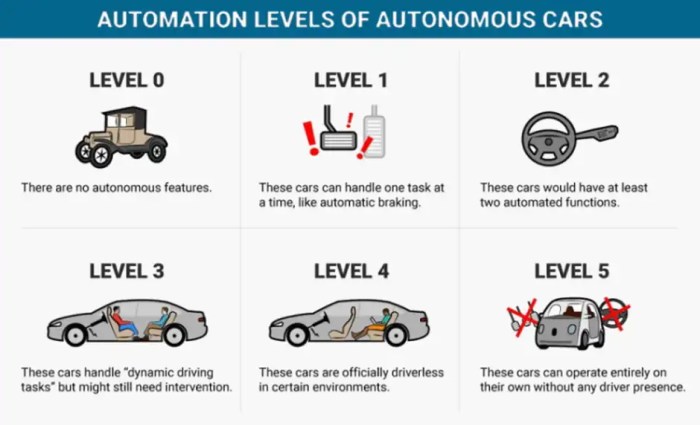
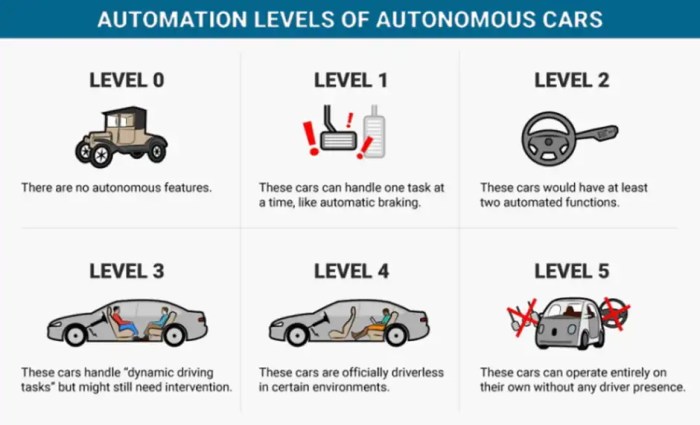
Self-driving cars operate on a spectrum of autonomy levels, each representing a different degree of driver intervention. These levels are generally categorized by the Society of Automotive Engineers (SAE) and range from Level 0 (no automation) to Level 5 (full automation). The levels differ in the degree of control relinquished to the vehicle’s automated system. Consumers need clear understanding of these differences to make informed choices.
Influence of Autonomy on Consumer Expectations
Different levels of autonomy significantly affect consumer expectations. For example, consumers expecting a fully autonomous vehicle (Level 5) will have vastly different expectations compared to those seeking a vehicle with limited automated features (Level 2). The perceived value and benefits associated with each level directly impact consumer interest and price sensitivity.
The Kelley Blue Book’s recent poll on self-driving car autonomy is fascinating, but it got me thinking about how advancements in AI, like those potentially coming from Apple’s new M4 chips for Macs and iPads ( apple could be pushing more ai with new m4 chips for macs ipads ), could impact the future of autonomous vehicles. Ultimately, the level of AI sophistication will significantly affect the reliability and safety of self-driving cars, as reflected in the poll’s results.
Consumer Perception of Varying Autonomy Levels
Consumers perceive varying autonomy levels through different lenses. Level 0, which requires complete driver control, is generally viewed as a conventional vehicle. Consumers looking for enhanced safety features, like adaptive cruise control or lane keeping assist (Level 2), tend to perceive higher value in those systems, often seeking greater convenience. Level 3 and 4, where the car takes over certain driving tasks, are met with varying levels of trust and confidence.
Consumers often need convincing that these systems are safe and reliable, and this is often tied to specific use cases and perceived risk. Finally, Level 5, fully autonomous vehicles, are met with a mix of excitement and apprehension, largely influenced by factors like real-world testing and regulatory hurdles.
Factors Influencing Consumer Choices
Several factors influence consumer choices related to self-driving cars, considering different autonomy levels. These include safety concerns, cost, range of features, and the perceived reliability of the technology. The perceived reliability and safety of the system are particularly crucial for higher autonomy levels. The ability to navigate various driving scenarios, from highway driving to complex urban environments, will also play a key role in consumer confidence.
The level of integration with existing infrastructure and the availability of charging or parking solutions will also be critical factors.
Correlation Between Autonomy Levels and Consumer Pricing Expectations
| Autonomy Level | Consumer Price Expectation | Factors Influencing Price Expectation |
|---|---|---|
| Level 0 (No Automation) | Lower | Conventional vehicle features, no advanced technology |
| Level 2 (Partial Automation) | Mid-range | Enhanced safety features, convenience, some driver assistance |
| Level 3 (Conditional Automation) | Higher | Limited hands-off driving, but driver must be ready to take over, increased technology |
| Level 4 (High Automation) | Very High | Extended hands-off driving, specific use cases, advanced technology, enhanced safety |
| Level 5 (Full Automation) | Highest | Completely autonomous, driverless operation, advanced sensor technology, reliability and safety testing, widespread availability, and infrastructure |
Kelley Blue Book Valuation of Self-Driving Cars: Self Driving Car Poll Autonomy Kelley Blue Book
The Kelley Blue Book (KBB) plays a crucial role in the automotive market, providing valuations for various vehicles. As self-driving car technology advances and becomes more prevalent, KBB’s valuation methodology must adapt to reflect the unique characteristics of these vehicles. This includes considering factors beyond traditional metrics, such as safety features and technological sophistication.KBB’s valuation of self-driving cars is a complex process that considers a range of factors, from the sophistication of the autonomous driving system to the vehicle’s overall safety record and performance.
The valuation model takes into account the potential for higher resale values for vehicles with advanced features and the possibility of decreased value due to perceived risks associated with new technology.
Factors Influencing KBB Valuation
KBB considers a variety of factors when valuing self-driving cars. These factors are crucial in accurately reflecting the unique characteristics of these vehicles. The complexity of autonomous systems and the integration of advanced technologies significantly influence the value.
- Technology: The sophistication of the self-driving system, including the number of sensors, the level of autonomy (e.g., Level 2, Level 3, or higher), and the vehicle’s software algorithms are significant determinants of the KBB valuation. Vehicles with more advanced and proven technology often command higher valuations.
- Safety Features: Self-driving cars are often equipped with a range of advanced safety features beyond those in traditional vehicles. These features, including redundancy in sensors, sophisticated accident avoidance systems, and enhanced crashworthiness, contribute to a higher KBB valuation. KBB likely considers crash test ratings and independent safety assessments.
- Performance: While autonomy is the defining feature, performance aspects like acceleration, handling, and braking systems still matter. These aspects are factored into the valuation alongside traditional performance metrics. The impact of advanced driver-assistance systems on performance is also considered.
- Market Trends: The evolving market for self-driving cars, including consumer acceptance, regulatory changes, and the overall market demand for such vehicles, influence the KBB valuation model. The valuation reflects the current market perception of the technology.
Comparison with Traditional Cars
The valuation of self-driving cars differs from that of traditional vehicles. Traditional valuations primarily focus on factors like engine type, mileage, and overall condition. Self-driving cars, however, require a more nuanced approach, factoring in the complexity and sophistication of the autonomous driving system.
- Traditional factors: Age, mileage, condition, and features like engine type remain relevant but are less significant compared to the autonomous technology.
- Autonomous technology premium: The advanced autonomous driving technology in self-driving cars often commands a premium compared to traditional vehicles with similar features. This premium reflects the added value and potential for future market demand.

KBB Valuation Model Adaptation
KBB’s valuation model for self-driving cars continuously adapts to changing market trends. This dynamic approach is crucial to maintain relevance in the evolving automotive landscape.
The Kelley Blue Book self-driving car poll on autonomy is fascinating, but choosing the right phone can be just as important. Thinking about whether to get a OnePlus 8 unlocked or from a carrier can be a tough decision, especially given the many options. Should you buy a OnePlus 8 unlocked or carrier really depends on your needs and budget.
Ultimately, the poll results on self-driving car autonomy from Kelley Blue Book are still pretty intriguing, regardless of your phone choice.
- Data analysis: KBB likely employs sophisticated data analysis techniques to track and evaluate market trends, including consumer preferences, safety data, and technological advancements.
- Real-world testing: The real-world performance and reliability of self-driving systems are essential to the KBB valuation model. Data on accident rates, maintenance records, and performance in various driving conditions significantly impact valuation.
- Regulatory changes: Government regulations and guidelines related to self-driving cars influence the valuation model. Changes in these regulations can impact consumer confidence and market perception, ultimately influencing KBB valuations.
Valuation Adjustments
The following table illustrates how KBB might adjust valuations based on various factors related to self-driving cars.
| Feature | Adjustment | Impact on Valuation |
|---|---|---|
| Safety Ratings (NHTSA, IIHS) | Positive adjustment based on high ratings | Higher valuation for vehicles with superior safety ratings. |
| Accident History | Negative adjustment for vehicles involved in accidents involving autonomous systems | Lower valuation for vehicles with a history of accidents related to autonomous features. |
| Autonomous Level | Progressive adjustment based on autonomy level | Higher valuation for higher levels of autonomy. |
| Technology Updates | Positive adjustment for recent technology upgrades | Higher valuation for vehicles with more recent updates to their autonomous technology. |
| Software Reliability | Adjustment based on software updates and maintenance | Vehicles with stable and frequently updated software are valued higher. |
Impact of Polls on Self-Driving Car Market
Public opinion polls play a crucial role in shaping the trajectory of the self-driving car market. Consumer sentiment, as reflected in these polls, directly influences consumer demand and manufacturer strategies. Understanding how polls affect both consumer behavior and corporate decision-making is vital to comprehending the market’s dynamic evolution.Polling data provides valuable insights into consumer acceptance levels, concerns, and expectations surrounding autonomous vehicles.
This data allows manufacturers to assess the market’s readiness for self-driving cars and adjust their development and marketing strategies accordingly. The results often highlight specific areas where improvements are needed or where consumer education and reassurance are necessary.
Influence on Consumer Demand
Consumer acceptance of self-driving cars is a key factor driving market growth. Polls revealing high levels of public interest and anticipation often correlate with increased consumer demand. Conversely, negative poll results, indicating safety concerns or a lack of trust, can lead to reduced consumer interest and slower adoption rates. For instance, if a poll reveals significant reservations about the safety of self-driving systems, manufacturers may need to address those concerns with enhanced safety features and thorough testing.
This, in turn, would likely encourage more positive consumer sentiment and lead to greater adoption.
Effect on Manufacturers’ Strategies
Manufacturers actively monitor poll results to adjust their strategies. Positive poll results can incentivize investment in further development and expansion of their autonomous vehicle offerings. Conversely, negative poll results can trigger a reevaluation of strategies, prompting manufacturers to prioritize addressing consumer concerns through improved safety measures, enhanced public relations campaigns, and potentially even adapting their timelines for production.
Manufacturers often invest heavily in R&D based on public perception, and these polls provide vital market intelligence.
KBB’s Valuation Methodology
Kelley Blue Book (KBB) utilizes poll data to refine its valuation methodology for self-driving cars. By analyzing public sentiment and perceptions regarding autonomy levels, safety, and reliability, KBB can adjust its valuation models. For example, a poll demonstrating widespread concerns about the reliability of self-driving systems would likely result in a lower valuation for such vehicles, as opposed to a positive poll about the system’s safety and user-friendliness.
Correlation Between Poll Results and Sales Figures
| Poll Result | Sales Figures | Manufacturer Response |
|---|---|---|
| High public interest, positive perception of safety | Increased sales, higher demand | Increased investment in development and marketing |
| Significant safety concerns, low trust | Reduced sales, slower adoption | Focus on addressing safety concerns through enhanced testing and public relations |
| High public awareness, but limited trust in technology | Moderate sales, need for consumer education | Increased marketing efforts focusing on educating consumers about technology |
This table illustrates a potential correlation between poll results and sales figures for self-driving cars. The data presented highlights the dynamic interplay between consumer sentiment, manufacturer response, and the overall market performance. Variations in consumer acceptance of self-driving technology can be significantly impacted by public opinion polls.
Future of Self-Driving Car Technology
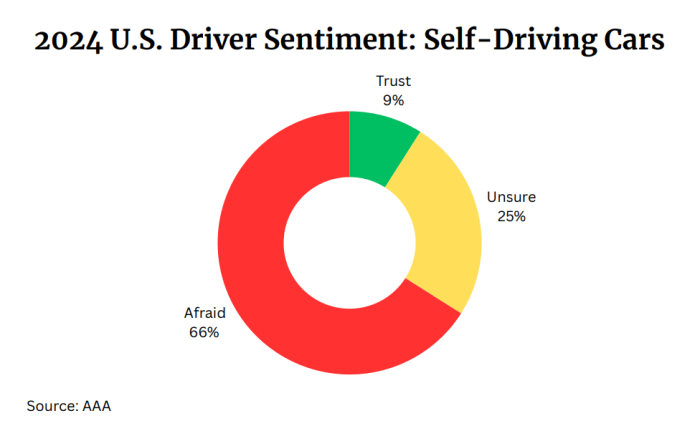
The journey towards fully autonomous vehicles is marked by ongoing technological advancements and evolving public perception. These innovations are not isolated events but rather interconnected pieces of a larger puzzle, influencing consumer confidence and market valuation. Predicting the future trajectory requires considering not only technical progress but also the social and economic factors at play.
Future Trends in Self-Driving Car Technology
The future of self-driving cars will likely involve a gradual evolution of capabilities, moving beyond simple highway driving to more complex scenarios. This includes navigating diverse road conditions, understanding pedestrian and cyclist behavior, and managing complex traffic situations. Advancements in sensor technology, including improved cameras, lidar, and radar, are expected to enhance the vehicles’ ability to perceive their surroundings.
Sophisticated algorithms and machine learning models will enable vehicles to make more nuanced decisions and adapt to changing environments. Integration with existing infrastructure, such as traffic management systems and real-time data feeds, will likely play a crucial role in optimizing the performance and safety of self-driving cars.
Public Perception Evolution with Advancements, Self driving car poll autonomy kelley blue book
Public perception of self-driving cars is likely to evolve alongside advancements in the technology. Initial skepticism and concerns about safety will likely diminish as more successful deployments and real-world experiences demonstrate the technology’s reliability and efficiency. Positive feedback from early adopters and testimonials from drivers will contribute to a shift in public opinion. However, potential incidents and lingering concerns about job displacement or safety issues will continue to shape public attitudes.
Transparency and open communication from automakers and regulatory bodies will be crucial to maintaining public trust.
KBB Valuation Model Adaptation
Kelley Blue Book’s (KBB) valuation model will need to adapt to reflect the evolving value proposition of self-driving cars. Factors such as the level of autonomy, safety features, and sensor technology will become increasingly important considerations in determining a vehicle’s worth. The introduction of new technologies and the standardization of testing protocols will likely lead to more accurate and comprehensive valuations.
The model will also need to account for the potential depreciation of traditional vehicles as autonomous technology advances.
Impact of Increased Safety Features on Consumer Confidence and KBB Valuations
Increased safety features, such as advanced driver-assistance systems (ADAS) and redundancy in sensor technology, will have a profound impact on consumer confidence and KBB valuations. The ability to prevent accidents and mitigate risks will significantly boost consumer confidence in the technology, driving demand and ultimately affecting valuation. The incorporation of features like emergency braking, lane departure warning, and adaptive cruise control will become standard rather than optional, directly influencing KBB’s valuation of these features.
Reliable safety data and independent crash testing results will play a crucial role in shaping public perception and KBB’s valuation metrics.
Projected Self-Driving Car Features and KBB Valuation Impact
| Feature | Projected Impact | KBB Valuation Estimate |
|---|---|---|
| Level 4 Autonomy (limited conditions) | Increased demand, premium pricing | +15-25% |
| Advanced Sensor Fusion (improved perception) | Enhanced safety, increased valuation | +5-10% |
| Integration with Traffic Management Systems | Improved efficiency, higher valuation | +10-15% |
| Redundant Sensor Systems (safety enhancements) | Enhanced safety, higher perceived reliability | +10-15% |
| Improved Machine Learning Algorithms | Improved decision-making, increased valuation | +5-10% |
Ultimate Conclusion
In conclusion, the self-driving car market is a complex interplay of public perception, technological advancements, and economic factors. Public opinion polls, autonomy levels, and Kelley Blue Book valuations are all interconnected and influence the market’s trajectory. The future of self-driving cars hinges on the evolving relationship between technology, consumer trust, and market valuation. This complex dynamic suggests a fascinating journey ahead.