


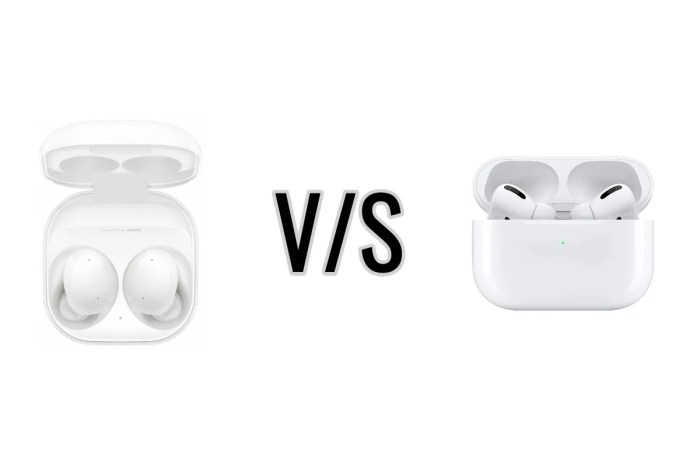
Samsung Galaxy Buds vs AirPods 2nd Gen: This deep dive compares two popular wireless earbuds, exploring audio quality, design, features, and ultimately, value for your money. We’ll examine the strengths and weaknesses of each, from the subtle sonic differences to the user experience. Which earbuds best fit your needs?
This comparison considers the key factors that matter most to consumers. We look at audio quality, comfort, and features to help you decide which pair is the better choice.
Introduction to Samsung Galaxy Buds and Apple AirPods (2nd Gen)

The wireless earbuds market is booming, with Samsung and Apple leading the charge. This comparison delves into the Samsung Galaxy Buds and the Apple AirPods (2nd generation), exploring their key features, intended audiences, and overall value proposition. Understanding the nuances of each product allows consumers to make informed decisions based on their individual needs and preferences.
Comparing Samsung Galaxy Buds to AirPods 2nd gen is always a hot topic. Personally, I’ve found the sound quality on the AirPods to be slightly superior, but the Galaxy Buds offer more features. However, the recent naming controversy surrounding the Galaxy S11 being called the S20 (check out what do you think about galaxy s11 being called s20 for more on that) makes me wonder if Samsung is trying to create a similar hype cycle with their earbuds.
Ultimately, the best choice depends on your priorities – sound quality, features, or price – and both options are great in their own right, especially when comparing them to other competitors in the market.
Key Features and Functionalities
Samsung Galaxy Buds and Apple AirPods (2nd Gen) both offer wireless connectivity and hands-free calling, but their specific features vary. The Galaxy Buds often emphasize advanced features like active noise cancellation and enhanced audio quality, particularly for music. AirPods (2nd Gen), on the other hand, focus on a more streamlined design and seamless integration with Apple ecosystem devices.
Intended Audience and Use Cases, Samsung galaxy buds vs airpods 2nd gen
The intended audience for these products significantly influences their appeal. Samsung Galaxy Buds cater to a broader audience, including users who value versatility and advanced features beyond basic listening. They are suitable for users who enjoy music, podcasts, or phone calls while potentially wanting noise cancellation. Apple AirPods (2nd Gen) are more targeted towards users already entrenched in the Apple ecosystem, who value seamless integration and ease of use.
They are ideally suited for everyday listening and communication, leveraging the familiar Apple user experience.
Comparison Table
| Feature | Samsung Galaxy Buds | Apple AirPods (2nd Gen) |
|---|---|---|
| Connectivity | Bluetooth 5.0 | Bluetooth 5.0 |
| Noise Cancellation | Active Noise Cancellation | No Active Noise Cancellation |
| Water Resistance | IPX7 | No significant water resistance |
| Battery Life | Up to 5 hours of playtime; with charging case, up to 15 hours | Up to 5 hours of playtime; with charging case, up to 24 hours |
| Charging Case | Fast charging compatible | Fast charging compatible |
| Audio Quality | Typically rated for balanced sound profiles | Typically rated for clear and crisp sound |
| Ecosystem Integration | Works with Android devices | Works seamlessly with Apple devices |
Specifications
The specifications of the earbuds reveal key differences in their functionality and design. The table above provides a concise comparison of their core features.
Design and Build Quality
The physical design of each pair of earbuds significantly impacts user experience. Samsung Galaxy Buds often feature a more modern aesthetic, while Apple AirPods (2nd Gen) lean towards a minimalist design. Differences in materials and construction contribute to perceived build quality.
Audio Performance
Audio quality is a critical aspect of earbuds. Galaxy Buds typically deliver a balanced audio profile, well-suited for various genres. AirPods (2nd Gen) emphasize clarity and crispness, which can make them ideal for vocal-driven music. The choice between these two products ultimately depends on individual preferences.
Audio Quality
The audio quality of earbuds significantly impacts the overall listening experience. This section delves into the sonic characteristics of the Samsung Galaxy Buds and Apple AirPods (2nd Gen), comparing their bass, treble, midrange, soundstage, spatial audio, and microphone quality. A comprehensive understanding of these aspects is crucial for users seeking the best audio output from their wireless earbuds.
Sound Profile Characteristics
The sound profiles of earbuds often vary significantly, influencing the perceived balance of frequencies. Samsung Galaxy Buds and Apple AirPods (2nd Gen) both offer distinct audio signatures. Galaxy Buds often prioritize a balanced sound, with clear mids and a moderately emphasized bass response. AirPods (2nd Gen) tend towards a slightly warmer sound signature, featuring a more pronounced bass and a slightly recessed treble.
Individual listening preferences will naturally influence the perceived quality of each profile.
Bass, Treble, and Midrange Performance
The emphasis on different frequency ranges significantly affects the overall listening experience. Galaxy Buds generally provide a satisfying bass response, suitable for genres like pop and electronic music. However, the bass may not be as deep or impactful as some users might desire. AirPods (2nd Gen) present a more substantial bass response, which can be advantageous for bass-heavy music.
The treble range on Galaxy Buds is clear and detailed, while AirPods (2nd Gen) may present a slightly smoother, less piercing treble. Both products deliver a generally clear and balanced midrange, allowing for good vocal clarity.
Soundstage and Spatial Audio Capabilities
Soundstage refers to the perceived width and depth of the audio field. Galaxy Buds provide a relatively wide soundstage, especially when compared to earbuds in their price range. AirPods (2nd Gen), in contrast, offer a more immersive soundstage, potentially enhancing the sense of presence and separation between instruments. Spatial audio, when enabled, further enhances the soundstage, creating a more dynamic and engaging listening environment.
However, the spatial audio implementation differs in both devices.
Microphone Quality and Clarity
The microphone quality significantly affects the clarity and quality of calls and voice recordings. Both Galaxy Buds and AirPods (2nd Gen) have demonstrated decent microphone performance. Galaxy Buds, with their design and features, typically deliver clear voice transmission during calls, albeit not as crystal clear as some competitors. AirPods (2nd Gen) also offer good microphone quality, providing good audio quality for calls and voice recordings, especially in quiet environments.
I’ve been doing some serious headphone research lately, comparing the Samsung Galaxy Buds to the AirPods 2nd gen. While I’m still weighing the pros and cons, the recent Lego reveals at Gamescom of new Mario Kart and Animal Crossing sets at Gamescom got me thinking about the perfect audio setup for gaming. Ultimately, the best earbuds will depend on my specific needs and budget, but hopefully, this Lego news will inspire more creativity in my headphone choices.
Back to the buds, I’m still torn!
Technical Specifications
| Feature | Samsung Galaxy Buds | Apple AirPods (2nd Gen) |
|---|---|---|
| Audio Drivers | 6mm dynamic drivers | 6mm dynamic drivers |
| Frequency Response | 20Hz – 20kHz | 20Hz – 20kHz |
| Noise Cancellation | Passive noise cancellation | Passive noise cancellation |
Note: Passive noise cancellation, while effective in reducing background noise, does not offer the same level of active noise cancellation found in higher-end earbuds. The precise specifications may vary slightly depending on the specific model or regional variations.
Design and Comfort
The physical form and feel of earbuds play a crucial role in overall user experience. Beyond sound quality, comfort and aesthetic appeal contribute significantly to the earbuds’ perceived value. This section delves into the detailed design elements of Samsung Galaxy Buds and Apple AirPods (2nd Gen), examining their physical attributes, fit, and comfort levels.The tactile experience of a pair of earbuds is influenced by their size, weight, and the way they sit in the ear canal.
These factors directly affect comfort and usability throughout the day. Different design choices, such as the presence of stems or variations in ear tip options, impact the fit and overall comfort.
Physical Design and Aesthetics
The Samsung Galaxy Buds and Apple AirPods (2nd Gen) exhibit distinct aesthetic characteristics. The Galaxy Buds, often featuring a streamlined design, are known for their compact and unobtrusive form factor. Conversely, the AirPods (2nd Gen) present a more familiar design, characterized by their slightly longer stem. These differences in design choices reflect varying priorities in aesthetics and overall perceived appeal.
Sizes, Weights, and Ergonomics
The dimensions and weight of the earbuds are critical in determining comfort. Galaxy Buds often come in a smaller size, aiming for a more discreet presence in the ear. AirPods (2nd Gen), while still relatively compact, may be perceived as slightly larger due to their stem design. The ergonomics of each design, including the curvature and shape of the bud, influence how well they fit in the ear canal.
Fit and Comfort
The fit and comfort of earbuds directly impact user satisfaction. The Galaxy Buds may offer a more secure and snug fit due to their smaller size and potential for custom ear tip options. AirPods (2nd Gen), while generally comfortable, might require adjustments for optimal fit depending on individual ear shapes.
Notable Design Features
Each pair of earbuds has unique design features that affect their fit and feel. The Galaxy Buds often come with various ear tip options, allowing users to customize the fit. The stem design of the AirPods (2nd Gen) may offer a different aesthetic and potential for improved stability.
Comparison Table
| Feature | Samsung Galaxy Buds | Apple AirPods (2nd Gen) |
|---|---|---|
| Physical Dimensions (approximate) | Small, compact | Slightly larger, with stem |
| Weight (approximate) | Light | Light |
| Available Colors | Various color options (e.g., black, white, silver) | Typically black or white |
Features and Functionality
The Samsung Galaxy Buds and Apple AirPods (2nd Gen) offer a range of features that cater to different user needs. Understanding these features is crucial for selecting the best pair for your individual requirements. This section dives into the specifics of each product’s capabilities, focusing on connectivity, ease of setup, controls, and key functionalities like voice assistants and water resistance.
Connectivity and Wireless Protocols
The connectivity options and supported wireless protocols are key factors in choosing between the two products. Both products leverage Bluetooth technology, but the specific versions and features vary. This comparison reveals the differences in their wireless capabilities.
- Samsung Galaxy Buds utilize Bluetooth 5.0, providing a stable and reliable connection. This standard offers faster data transfer rates and improved power efficiency compared to older Bluetooth versions. The result is a smoother audio experience with less interruption.
- Apple AirPods (2nd Gen) also support Bluetooth 5.0. This standard ensures a robust connection for audio playback. The technology is widely compatible with most devices and ensures a seamless experience for users.
Ease of Setup and Pairing
A seamless setup process is crucial for user experience. The following details the ease of pairing for both devices.
- Samsung Galaxy Buds typically pair quickly and easily with compatible devices. The pairing process is generally straightforward, with intuitive prompts guiding users through the connection steps.
- Apple AirPods (2nd Gen) also boast a straightforward setup process. The user interface is intuitive, making pairing with iOS devices simple and quick. The ‘Hey Siri’ feature also integrates with the setup process, showcasing a user-friendly experience.
Control Options and Gestures
The control options and gestures each product offers influence user interaction and convenience.
- Samsung Galaxy Buds offer touch controls for playback, volume adjustments, and call management. The responsive touch interface allows for easy control of the audio experience.
- Apple AirPods (2nd Gen) incorporate touch controls and gesture recognition for similar functions. These controls allow users to adjust volume, skip tracks, and manage calls directly from the earbuds. Double-tapping on the earbud controls playback.
Voice Assistant Integration, Water Resistance, and Battery Life
These features are significant factors in determining the best fit for various user needs.
- Samsung Galaxy Buds integrate with Bixby, Samsung’s voice assistant. The integration allows users to control various functions on their devices with voice commands. Voice assistant functionality can be activated via voice commands or a dedicated button. The assistant is specific to Samsung devices.
- Apple AirPods (2nd Gen) integrate with Siri, Apple’s voice assistant. Siri is readily accessible for voice commands, providing similar functionalities to Bixby. This integration enhances the overall user experience on Apple devices. Users can perform tasks and access information using voice commands.
- The water resistance ratings for both products vary. The Samsung Galaxy Buds typically offer a modest rating, suitable for light sweat and splashes, while the Apple AirPods (2nd Gen) offer a higher water resistance rating, protecting against sweat and light rain. This higher resistance is beneficial for active users.
- Battery life varies considerably between the products. The Samsung Galaxy Buds often deliver a longer battery life compared to the Apple AirPods (2nd Gen). This longer battery life is a significant benefit for users who require extended use.

Price and Value: Samsung Galaxy Buds Vs Airpods 2nd Gen
Choosing between the Samsung Galaxy Buds and Apple AirPods (2nd Gen) often boils down to the value each offers. While audio quality and comfort are important factors, the price point and available bundles play a significant role in the overall purchasing decision. Understanding the pricing models and value propositions in different regions can help consumers make an informed choice.
I’ve been comparing Samsung Galaxy Buds to AirPods 2nd Gen, and while the sound quality is pretty close, the real difference comes down to the potential data collection by the devices’ voice assistants. You should definitely check out how much information Amazon collects about you via Alexa, because that could sway your purchase decision. amazon alexa what kind data does amazon get me Ultimately, both earbuds offer solid features, but if data privacy is a major concern for you, the potential trade-offs with a particular device should be considered alongside the technical specs when choosing between Samsung Galaxy Buds and AirPods 2nd Gen.
Pricing Models in Different Regions
Pricing for both products varies considerably across different countries and regions. Exchange rates, import duties, and local taxes all contribute to the final cost. For instance, the Samsung Galaxy Buds might be more affordable in certain Asian markets, while the AirPods 2nd Gen could have a lower price point in some European countries. This disparity necessitates a regional analysis of pricing.
Value Proposition
The value proposition of each product hinges on the features and price. The Samsung Galaxy Buds, with its competitive price, often appeal to users seeking a reliable, feature-rich option without a premium price tag. The Apple AirPods (2nd Gen), on the other hand, are frequently associated with a higher price, often reflecting their brand recognition and perceived premium quality.
A deeper dive into the features reveals a nuanced understanding of the value proposition.
Bundle Availability
Bundle options for both products also vary depending on the region and retailer. Samsung might offer bundles including additional charging cases or accessories at a discounted price. Similarly, Apple may include additional accessories or offer special bundles through its retail channels. These bundled offers can significantly impact the overall value proposition.
Potential Cost Savings
Potential cost savings can be achieved through various strategies. For example, purchasing the Samsung Galaxy Buds during promotional periods or through online retailers might result in lower prices. Similarly, looking for refurbished or used versions of either product can lead to substantial savings. Comparing prices across different retailers and considering potential discounts are crucial in identifying potential cost savings.
Pricing Comparison Table
| Product | Region | Price (USD) | Bundled Accessories | Availability |
|---|---|---|---|---|
| Samsung Galaxy Buds | United States | $100 | Small, Medium, Large ear tips, Carrying case | Widely available online and in retail stores |
| Samsung Galaxy Buds | South Korea | $90 | Small, Medium, Large ear tips, Carrying case, Fast charging adapter | Widely available online and in retail stores |
| Apple AirPods (2nd Gen) | United States | $150 | Small, Medium, Large ear tips, Charging case, Wireless charging case | Widely available online and in retail stores |
| Apple AirPods (2nd Gen) | Europe | $160 | Small, Medium, Large ear tips, Charging case, Wireless charging case | Widely available online and in retail stores |
Note: Prices and bundled accessories are estimates and may vary based on retailer and specific promotions.
User Experience

The user experience is a crucial factor in determining the overall satisfaction with earbuds. It encompasses how intuitive the devices are to use, how seamlessly they integrate with various devices, and how comfortable the experience is throughout the day. This section delves into user reviews and feedback, highlighting strengths and weaknesses of both the Samsung Galaxy Buds and Apple AirPods (2nd Gen).
User Reviews and Feedback
User reviews provide a wealth of information on the practical usability of these earbuds. Positive feedback often centers on the ease of pairing and seamless integration with smartphones. Negative feedback can vary, from issues with call quality to specific software glitches. These insights help paint a comprehensive picture of the actual experience users encounter.
Intuitiveness and Ease of Use
The Galaxy Buds and AirPods (2nd Gen) both strive for intuitive design. The Galaxy Buds generally receive praise for their quick pairing process and reliable connection. AirPods (2nd Gen) are often lauded for their effortless integration with Apple devices, especially in terms of automatic switching between devices. However, some users report difficulty with the pairing process on non-Apple devices.
A user’s technical proficiency can also influence their perception of ease of use.
Common Complaints and Issues
Common complaints regarding both sets of earbuds frequently revolve around call quality. Echoes and background noise are common issues, impacting the clarity of calls. Additionally, some users reported battery life concerns. The overall battery life often falls short of the advertised values, especially with heavy use. Other reported issues include occasional disconnections and software glitches that may interrupt playback or affect device control.
User Interface and Experience
The user interface for both earbuds is generally straightforward. Galaxy Buds often receive positive feedback for their simple controls, while AirPods (2nd Gen) are known for their smooth, consistent experience with Apple’s ecosystem. However, navigating the menus and settings for both products can be challenging for less tech-savvy users.
Detailed Review Based on User Feedback
Based on user feedback, the Galaxy Buds often demonstrate reliable pairing and a generally intuitive design, particularly for Android users. AirPods (2nd Gen) excel in seamless integration with Apple devices, but can present some difficulties for users accustomed to different operating systems. Both products face similar complaints concerning call quality and battery life, highlighting potential areas for improvement across both brands.
The user experience is ultimately a blend of ease of use, device compatibility, and personal preference. For instance, a user highly satisfied with their Apple ecosystem might find the AirPods experience far superior to the Galaxy Buds.
Technical Specifications
Dissecting the inner workings of the Samsung Galaxy Buds and Apple AirPods (2nd Gen) reveals crucial differences in their technical underpinnings. Understanding these specifications helps to appreciate the distinct strengths and weaknesses of each product. These details provide insights into the performance capabilities, battery longevity, and overall technical maturity of each audio device.
Processing Power and Memory
The processing power and memory embedded within these earbuds directly influence their performance. Differences in these aspects can impact features like audio codec support, active noise cancellation (ANC) algorithms, and overall responsiveness. The Samsung Galaxy Buds and Apple AirPods (2nd Gen) employ different processing chips, which affects their capabilities.
Key Technical Specifications
This table provides a concise overview of the crucial technical specifications for both devices. Understanding these specifications is crucial to comprehending the subtle differences in their functionality and capabilities.
| Specification | Samsung Galaxy Buds | Apple AirPods (2nd Gen) |
|---|---|---|
| Bluetooth Version | 5.0 | 5.0 |
| Processing Chip | Samsung-developed chip | Apple H1 chip |
| Battery Life (typical use) | Approximately 5 hours | Approximately 5 hours |
| Charging Case Battery Life | Approximately 15 hours | Approximately 24 hours |
| Storage Capacity | Negligible (no significant internal storage) | Negligible (no significant internal storage) |
Software Features and Updates
Software updates play a crucial role in enhancing the functionality and features of earbuds. These updates can include improvements to audio quality, bug fixes, and new features. The software ecosystem plays a crucial role in the user experience.
- Samsung Galaxy Buds: Samsung’s software updates often include improvements to audio codecs, and compatibility with various Samsung devices. These updates, however, are largely confined to the ecosystem of Samsung devices.
- Apple AirPods (2nd Gen): Apple’s updates are typically focused on enhancing compatibility with the wider ecosystem of Apple devices. The AirPods are generally compatible with a broader range of iOS and macOS versions.
Bluetooth Versions and Compatibility
Bluetooth versions directly impact the stability and range of the wireless connection. Compatibility with various devices and operating systems is also influenced by the Bluetooth version. Understanding these aspects ensures seamless connectivity and avoids potential disruptions.
- Both the Samsung Galaxy Buds and Apple AirPods (2nd Gen) utilize Bluetooth 5.0, which provides a stable wireless connection, but this does not guarantee compatibility with all devices.
- The H1 chip in the AirPods (2nd Gen) enables faster pairing and more seamless integration with Apple devices. However, this specialized chip may not offer compatibility with non-Apple devices in the same manner.
Outcome Summary
Ultimately, the best choice between Samsung Galaxy Buds and AirPods 2nd Gen depends heavily on your individual needs and priorities. Consider your budget, desired features, and preferred listening experience. This comprehensive comparison provides the tools you need to make an informed decision.
While both earbuds offer excellent performance, understanding the nuances in design, features, and sound can help you choose the perfect fit for your lifestyle.