




Risk compliance assessment calculator is a powerful tool for navigating the complexities of regulatory compliance. It streamlines the process of evaluating potential risks and ensuring adherence to industry standards. This comprehensive guide dives deep into the world of these calculators, exploring their functionalities, use cases, and crucial considerations for effective implementation.
From understanding the different types of calculators available to analyzing the results, we’ll cover everything you need to know to confidently use these tools to maintain a compliant business. Learn about input requirements, key features, and integration options. Plus, we’ll discuss vital data security and privacy measures.
Introduction to Risk Compliance Assessment Calculators
Risk compliance assessment calculators are powerful tools designed to help organizations identify and manage potential risks related to regulatory compliance. These calculators streamline the complex process of evaluating compliance risks, enabling organizations to proactively address potential issues and maintain a strong regulatory posture. They offer a structured approach to assessing risks, empowering businesses to mitigate potential penalties and reputational damage.Using these calculators, organizations can gain a clear understanding of their exposure to various compliance risks.
This allows for more effective resource allocation and prioritization of necessary actions. Ultimately, this translates into significant cost savings and improved operational efficiency.
Purpose and Benefits of Using Calculators
Risk compliance assessment calculators serve the critical purpose of evaluating an organization’s likelihood of non-compliance. This evaluation helps determine the potential financial and reputational consequences of failing to meet regulatory requirements. The benefits extend to proactive risk management, leading to reduced fines, legal costs, and reputational damage. By identifying potential vulnerabilities early, organizations can implement necessary controls and mitigate potential risks, thus ensuring sustained compliance.
Common Use Cases in Different Industries
These calculators are applicable across various industries, from finance and healthcare to manufacturing and technology. In finance, they help assess risks related to anti-money laundering (AML) and Know Your Customer (KYC) regulations. Healthcare organizations can utilize them to evaluate HIPAA compliance risks. Manufacturing companies can use them to evaluate compliance with environmental regulations. In technology, these calculators help assess risks related to data privacy and security.
The flexibility of these tools allows for adaptation to a wide range of compliance frameworks and specific industry needs.
Thinking about risk compliance assessment calculators? Well, while you’re at it, check out the amazing Christmas deals! The best buys flash sale is live, and I’ve rounded up five fantastic gift ideas, including a $65 smart TV and $200 off the Pixel 8 Pro. Here’s the link to snag these incredible deals before they’re gone.
Speaking of risk assessment, these calculators can help you identify potential vulnerabilities and strengthen your compliance procedures, so it’s a smart idea to use them. Don’t miss out!
Typical Input Requirements
The input requirements for risk compliance assessment calculators vary depending on the specific calculator and the industry. Generally, these calculators require input related to the organization’s activities, the specific regulations they must adhere to, and the potential impact of non-compliance. This might include details about the organization’s operations, its geographic presence, the products or services offered, and the potential impact of a regulatory breach.
The type and quantity of input data needed are tailored to ensure accurate assessment.
Types of Risk Compliance Assessment Calculators
| Calculator Type | Key Features | Target Audience |
|---|---|---|
| AML/KYC Compliance Calculator | Evaluates risks associated with anti-money laundering (AML) and Know Your Customer (KYC) regulations. Often includes features for identifying high-risk customers and transactions. | Financial institutions, payment processors, and other organizations handling financial transactions. |
| Data Privacy Compliance Calculator | Assesses risks related to data privacy regulations like GDPR or CCPA. Might include features for data mapping, data sensitivity analysis, and risk scoring. | Organizations handling personal data, technology companies, and businesses operating in jurisdictions with strict data privacy regulations. |
| Environmental Compliance Calculator | Evaluates risks related to environmental regulations and sustainability standards. Might include features for assessing waste management, emissions, and resource consumption. | Manufacturing companies, energy providers, and businesses with significant environmental impact. |
Functionality and Features
Risk compliance assessment calculators are powerful tools for organizations to identify, evaluate, and mitigate potential risks. They automate a complex process, enabling companies to proactively address compliance issues, saving time and resources compared to manual methods. These tools provide a structured framework for assessing risks, allowing for more accurate and consistent evaluations.These calculators are designed to streamline the compliance process, offering a standardized approach for organizations of varying sizes and complexities.
They can be used across different industries and departments, from finance to human resources, providing a centralized platform for risk management.
Core Functionalities
Risk compliance assessment calculators typically offer a range of core functionalities. These include inputting relevant data, assessing different risk factors, generating reports, and facilitating decision-making based on the results. They can often handle large datasets, ensuring comprehensive analysis of various potential threats.
Types of Risk Factors
The assessment process can cover a wide array of risk factors. These may include financial risks, legal risks, operational risks, reputational risks, and compliance risks related to specific regulations or industry standards. The calculators can be customized to address industry-specific regulations and risks, ensuring tailored evaluations for each organization. For instance, a financial institution will have different risk factors compared to a healthcare organization.
Incorporating External Data Sources
Modern calculators allow for the incorporation of external data sources to enrich the assessment process. This might include regulatory updates, market trends, or industry best practices. For example, a company can incorporate data from industry publications to assess competitive pressures or potential emerging risks. Data from regulatory bodies can be directly imported to ensure compliance with current regulations.
Reporting Options and Output Formats
Calculators often provide various reporting options and output formats. These may include detailed reports summarizing findings, dashboards displaying key metrics, and customized reports tailored to specific stakeholders or departments. Output can be in tabular format, graphical format (charts and graphs), or even in PDF or Excel format for easy sharing and distribution. Visual representations of the data are important to facilitate better understanding and interpretation.
Key Features
- Data Input Flexibility: The ability to import and manage various data types, including internal data and external data sources, is crucial for accuracy and efficiency.
- Comprehensive Risk Factor Assessment: Assessing various risk factors, including financial, legal, operational, reputational, and regulatory risks, allows for a holistic view of the organization’s risk profile.
- Customizable Reporting Options: The ability to generate reports tailored to specific stakeholders or departments is essential for targeted decision-making and action planning.
- Integration Capabilities: Integration with existing enterprise resource planning (ERP) or compliance management systems is essential for seamless data flow and workflow.
- User-Friendly Interface: A user-friendly interface ensures easy navigation and efficient use of the calculator by various personnel, regardless of their technical expertise.
- Scalability: The ability to handle increasing volumes of data and users as the organization grows is crucial for long-term use.
Feature Comparison
| Feature | Calculator A | Calculator B | Calculator C |
|---|---|---|---|
| Data Input | Supports various formats (CSV, Excel, databases) with direct import from external sources | Limited data formats, manual input required for most external data | API integrations for seamless data flow, large dataset handling |
| Reporting Options | Comprehensive reports, customizable dashboards, and exporting to various formats (PDF, Excel, CSV) | Basic reports in tabular format, limited customization | Interactive dashboards, real-time data visualization, advanced reporting features |
| Scalability | Limited scalability, suitable for smaller organizations | Good scalability, can handle medium-sized organizations | High scalability, designed for large enterprises and complex scenarios |
Implementation and Use Cases
Risk compliance assessment calculators offer a structured approach to evaluating and mitigating potential risks. Proper implementation ensures these tools effectively identify vulnerabilities and streamline the compliance process. This section delves into the practical application of these calculators, providing a step-by-step guide and real-world examples to illustrate their effectiveness.Implementing a risk compliance assessment calculator is a multi-step process that involves careful planning and execution.
A well-defined methodology ensures that the assessment is comprehensive, objective, and tailored to the specific needs of the organization.
Setting Up the Calculator
The initial setup involves defining the scope of the assessment, selecting the appropriate calculator model, and inputting relevant data. The scope should encompass all areas where compliance risks could arise. Choose a calculator that aligns with the organization’s specific industry and regulatory environment. Accurate data input is crucial for reliable results. This includes identifying relevant regulatory frameworks, potential threats, and existing control measures.
Performing a Risk Assessment
A systematic approach is essential to perform a thorough risk assessment. The process typically involves identifying potential risks, assessing their likelihood and impact, and evaluating the effectiveness of existing controls.
Ever wonder how risk compliance assessment calculators work? They’re crucial for businesses, especially when considering something as dramatic as the recent discovery of the Endurance, the famous Antarctic shipwreck after 106 years. Antarctica’s most famous shipwreck, the Endurance, found after 106 years highlights the importance of careful planning and risk assessment. Ultimately, robust risk compliance assessment calculators are vital for businesses to avoid costly and potentially catastrophic events.
- Identify Potential Risks: This involves brainstorming and documenting all possible threats, vulnerabilities, and potential incidents that could impact compliance. Use industry-specific checklists or questionnaires to guide this step.
- Assess Likelihood and Impact: Evaluate the probability of each risk occurring and the potential consequences if it does. Use a defined scale (e.g., low, medium, high) for both likelihood and impact. Consider factors such as frequency, severity, and potential financial losses.
- Evaluate Existing Controls: Analyze existing policies, procedures, and controls in place to mitigate identified risks. Assess their effectiveness and identify gaps.
Analyzing the Results
The output of the risk assessment should be analyzed to prioritize risks and develop mitigation strategies. This involves categorizing risks by severity and prioritizing those with the highest potential impact and likelihood.
- Prioritize Risks: Combine the likelihood and impact scores to create a risk score for each identified risk. Prioritize risks based on this score, focusing on those with the highest scores first.
- Develop Mitigation Strategies: Create a plan to mitigate the prioritized risks. This may involve implementing new controls, strengthening existing ones, or transferring the risk to a third party.
- Monitor and Review: Regularly monitor the effectiveness of implemented controls and review the risk assessment periodically to account for changes in the regulatory environment, business operations, or technological landscape.
Real-World Examples
Pharmaceutical companies, for example, often use risk compliance assessment calculators to ensure adherence to strict regulations regarding drug safety and efficacy. Financial institutions utilize these tools to assess risks associated with fraud, money laundering, and regulatory compliance. In both cases, the calculators aid in proactive risk management and avoid costly penalties.
Common Challenges and Solutions
- Data Accuracy: Inaccurate data input can lead to flawed assessments. Solutions include thorough data validation procedures, clear data input guidelines, and training for users.
- Maintaining Accuracy: The regulatory landscape is constantly evolving. Regular updates to the calculator and ongoing training for users are crucial to maintain accuracy.
- Resistance to Change: Employees may resist adopting new tools. Addressing concerns and highlighting the benefits of using the calculator is essential to drive adoption.

Industry Compliance Requirements
Integration with Other Systems
Seamless integration with existing business systems is crucial for the effective use of a risk compliance assessment calculator. By connecting to enterprise resource planning (ERP) and customer relationship management (CRM) systems, the calculator can leverage existing data, automate workflows, and provide a more comprehensive view of risk profiles. This enhanced visibility fosters better decision-making and ultimately strengthens overall compliance posture.
Potential Integrations
Integrating the risk compliance assessment calculator with other systems offers significant advantages. By pulling in data from various sources, the calculator can create a more holistic view of risk factors. This holistic approach enhances the accuracy and reliability of compliance assessments, leading to more effective mitigation strategies.
Risk compliance assessment calculators are super helpful tools for businesses. They help you identify potential risks, but sometimes those risks can be quite surprising, like the recent drama surrounding Skabooshka’s Twitter activity, Elon Musk’s Tesla, and short seller Tslaq. This whole situation highlights how crucial it is to have a solid risk compliance assessment in place, especially in rapidly changing markets.
Ultimately, these tools help ensure businesses stay on the right side of the law and avoid costly mistakes.
Integration Methods
API connections are a common and efficient method for integrating the calculator with other systems. This allows for the exchange of data between the calculator and other applications in a structured and automated manner. The calculator can retrieve relevant data from the ERP or CRM, enabling it to perform more comprehensive risk analyses. For example, the calculator could pull sales data from the CRM to identify potential sales-related risks.
Examples of Integrations and Benefits
- Integration with an ERP system allows the calculator to access real-time financial data, enabling more accurate assessments of financial risks. This integration can automate the process of identifying and evaluating potential financial risks, leading to quicker identification of compliance issues.
- Integration with a CRM system enables the calculator to consider customer-related risks, such as data privacy violations. The calculator can analyze customer interactions and identify potential compliance breaches related to data handling. This proactive approach allows for early identification and mitigation of potential risks.
- Integration with a procurement system can be used to identify risks associated with supplier compliance. The calculator can assess the compliance status of suppliers based on the data from the procurement system, ensuring compliance with relevant regulations and reducing the risk of penalties.
Security Considerations, Risk compliance assessment calculator
Data security is paramount during integration. Robust security measures are essential to protect sensitive data exchanged between the calculator and other systems. Encryption of data during transmission and storage is critical. Access controls and authorization protocols should be implemented to limit access to sensitive data. Regular security audits are vital to ensure the effectiveness of these measures.
Security breaches can have severe financial and reputational consequences.
Table of Potential Integrations
| System | Integration Method | Benefits | Challenges |
|---|---|---|---|
| ERP System | API connection, database queries | Access to real-time financial data, automation of risk assessments, improved accuracy | Data volume, potential data inconsistencies, maintaining data integrity |
| CRM System | API connection, data feeds | Analysis of customer interactions, identification of potential compliance breaches, proactive risk mitigation | Privacy concerns, data security, potential conflicts with existing data structures |
| Procurement System | API connection, data extraction | Assessment of supplier compliance, reduced risk of penalties, enhanced supply chain risk management | Data accuracy, supplier data inconsistencies, ensuring compliance with data privacy regulations |
Data Security and Privacy
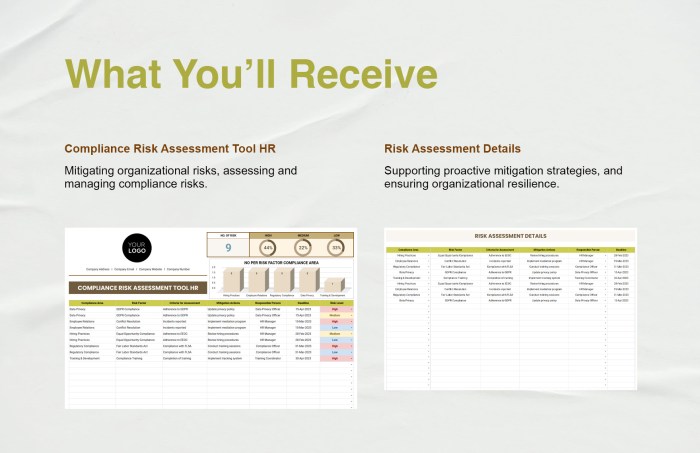
Protecting sensitive data is paramount when developing and deploying risk compliance assessment calculators. Robust security measures are crucial to maintain user trust and ensure the accuracy and integrity of the assessments. Breaches can lead to reputational damage, financial penalties, and legal repercussions. Therefore, a proactive approach to data security and privacy is essential.Data security encompasses a range of measures designed to safeguard sensitive information from unauthorized access, use, disclosure, disruption, modification, or destruction.
Data privacy, on the other hand, focuses on controlling and limiting the collection, use, and sharing of personal information. These principles are intertwined and must be meticulously considered when designing a risk compliance assessment calculator.
Importance of Data Security
Data security is critical for maintaining the integrity and reliability of risk compliance assessments. Compromised data can lead to inaccurate results, jeopardizing decision-making processes and potentially exposing organizations to substantial risks. Safeguarding data also protects sensitive user information, ensuring compliance with regulations and maintaining public trust. Breaches can lead to financial losses, legal liabilities, and reputational damage, underscoring the significance of proactive security measures.
Data Privacy and Confidentiality Measures
Ensuring data privacy and confidentiality requires a multi-faceted approach. Implementing strong access controls, encrypting sensitive data both in transit and at rest, and employing secure authentication mechanisms are fundamental steps. Regular security audits and penetration testing help identify vulnerabilities and promptly address potential risks. Implementing robust data loss prevention (DLP) policies and procedures, such as restricting data access based on roles and responsibilities, is also essential.
Data anonymization techniques and pseudonymization can further enhance data privacy.
Industry Best Practices for Data Protection
Industry best practices for data protection include adhering to industry standards like ISO 27001 and NIST Cybersecurity Framework. Regular security awareness training for employees is crucial to mitigate risks associated with human error. Implementing multi-factor authentication (MFA) strengthens access controls and protects against unauthorized login attempts. Regular backups and disaster recovery plans ensure business continuity and data restoration capabilities in case of unforeseen events.
Compliance with Relevant Regulations
Adherence to regulations like GDPR (General Data Protection Regulation) and CCPA (California Consumer Privacy Act) is mandatory. These regulations Artikel specific requirements for data collection, use, and storage, including obtaining explicit consent, providing transparency about data practices, and implementing mechanisms for data subject rights (e.g., access, rectification, erasure). Failure to comply can result in substantial penalties. Thorough legal counsel should be sought to ensure complete compliance with relevant regulations.
Data Security Measures for Different Types of Calculators
Choosing the Right Calculator
Selecting the right risk compliance assessment calculator is crucial for organizations seeking to effectively manage their compliance posture. A poorly chosen tool can lead to wasted resources, inefficient processes, and potential regulatory breaches. Carefully evaluating different options and understanding their capabilities is paramount to achieving optimal results.Evaluating calculators requires a systematic approach that goes beyond simply comparing features.
It’s about aligning the calculator’s functionalities with specific organizational needs and long-term goals. This involves a thorough understanding of your company’s risk profile, compliance requirements, and available resources.
Factors for Evaluating Calculators
A successful evaluation process necessitates considering a range of factors. This includes the calculator’s specific functionalities, its adaptability to future growth, and its integration capabilities.
- Functionality and Features: A comprehensive assessment must examine the specific features offered by each calculator. Does it cater to your organization’s unique risk profile? Does it provide granular controls over different aspects of compliance? Does it accommodate various regulatory frameworks relevant to your industry? For instance, a calculator for financial institutions must support specific regulations like Basel III or Dodd-Frank, while a healthcare calculator may require HIPAA compliance features.
- Scalability and Adaptability: Assess the calculator’s potential for growth. Does it have the capacity to adapt to evolving compliance needs as your organization expands or regulatory landscapes change? A scalable solution will be crucial for long-term success. Consider factors like user capacity, data storage limits, and potential upgrades. For example, a small startup might need a calculator with minimal initial features but the ability to expand its functionalities as it grows.
- Budget and Cost Considerations: A detailed budget analysis is crucial. Calculate the total cost of ownership, including licensing fees, maintenance costs, and potential integration expenses. Consider factors like training requirements and ongoing support to determine the overall financial commitment. A cost-benefit analysis should be performed, evaluating how the tool’s efficiency and effectiveness will translate into savings.
- Vendor Selection and Due Diligence: Thoroughly research and evaluate potential vendors. Look for a company with a strong track record, positive customer reviews, and a dedicated support team. Verify their commitment to data security and privacy, especially in regulated industries. This process ensures a reliable partner capable of supporting your compliance journey. Understanding the vendor’s experience with similar organizations within your industry can be invaluable.
Evaluation Checklist
A structured checklist can facilitate a systematic assessment process. This ensures a thorough evaluation of all critical aspects of a risk compliance assessment calculator.
| Criteria | Evaluation |
|---|---|
| Functionality | Assess if the features align with your organization’s compliance needs. |
| Scalability | Determine if the calculator can adapt to future growth and evolving compliance standards. |
| Integration | Evaluate the compatibility with existing systems and workflows. |
| Cost | Analyze the total cost of ownership, including licensing, maintenance, and support. |
| Vendor Reputation | Research the vendor’s track record, customer reviews, and support capabilities. |
| Data Security | Assess the vendor’s commitment to data security and privacy measures. |
Last Word

In conclusion, a risk compliance assessment calculator is an invaluable asset for any organization aiming to stay ahead of regulatory changes and mitigate potential risks. Choosing the right calculator, understanding its capabilities, and integrating it effectively are crucial steps for successful implementation. By following the steps Artikeld in this guide, you can confidently navigate the world of compliance and ensure your organization remains in good standing.