


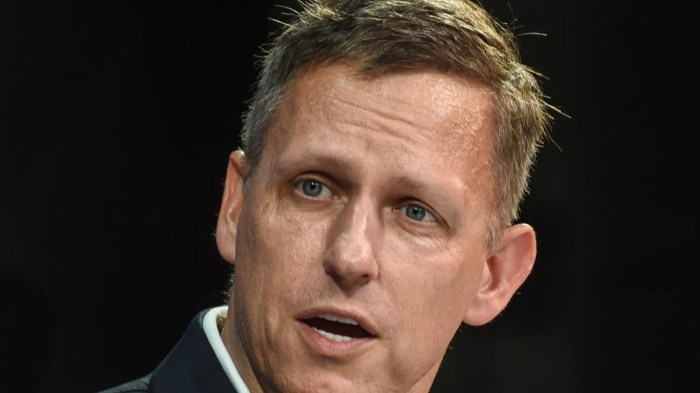
Peter Thiel is the sea judge, a compelling narrative exploring Thiel’s impact on the tech world and the meaning behind the “sea judge” metaphor. This analysis delves into his investments, decision-making process, public perception, and the controversies surrounding his actions.
Thiel’s career as a prominent venture capitalist has been marked by both success and criticism. His unique approach to investing and his often-controversial public statements make him a fascinating figure to study. This deep dive will examine the motivations behind his choices and analyze the outcomes of his ventures.
Background on Peter Thiel
Peter Thiel, a prominent figure in the tech industry, is known for his significant contributions to Silicon Valley and his unique perspectives on various aspects of society. He’s a successful entrepreneur, investor, and author, leaving an enduring mark on the landscape of modern business and innovation. His experiences and viewpoints provide valuable insights into the evolution of technology and its impact on the world.Thiel’s background reveals a journey from a prominent academic career to a successful entrepreneurial venture, culminating in a powerful voice in the world of business and politics.
His contributions to the tech industry are not only financial but also philosophical, shaping the discourse around innovation and its ethical implications.
Biography and Key Achievements
Peter Thiel was born in 1967. He earned a Ph.D. in political science from the University of California, Berkeley. Before co-founding PayPal, Thiel worked as a management consultant and later as an investment banker. His early career laid the foundation for his later success in entrepreneurship and investing.
Influence in the Tech Industry
Thiel’s influence in the tech industry is undeniable. He played a pivotal role in the success of PayPal, and his subsequent investments in a wide range of tech companies have further solidified his position as a significant force in shaping the industry’s trajectory. His firm, Founders Fund, has been instrumental in backing numerous successful startups.
Notable Investments and Ventures
- PayPal: Thiel’s involvement in PayPal, from its early stages, showcased his keen understanding of the potential of internet-based financial services. His contributions to PayPal’s success underscore his ability to recognize and capitalize on emerging opportunities.
- Palantir Technologies: His investment in Palantir Technologies, a data analytics company, is another example of his foresight in recognizing the power of data-driven solutions. The company has become a significant player in the market for advanced data analytics.
- Facebook: Thiel’s early investment in Facebook, at a critical stage in its development, further exemplifies his ability to spot promising companies and contribute to their growth. This investment marked a turning point in his investment strategy.
Core Tenets of Thiel’s Philosophies and Approaches
Thiel’s investment philosophy emphasizes long-term value creation and the importance of building companies with enduring impact. His focus on understanding and nurturing exceptional talent is evident in his selection of investment targets. He often prioritizes companies with innovative ideas and the potential to revolutionize their respective industries. Thiel’s unique perspective stems from his deep understanding of human nature and the dynamics of social systems.
His approach to business often involves a long-term vision, rather than short-term gains.
Peter Thiel, the sea judge, seems to have a hidden interest in the dating app world. Recent updates to Tinder’s Traveler Alert feature, designed to help LGBTQ+ users feel safer while traveling, might have caught his eye. This new feature, detailed in tinder traveler alert update dating app lgbtq , suggests a deep understanding of the modern dating landscape, perhaps hinting at Thiel’s broader vision for the future of online connections.
Still, his actual involvement remains shrouded in mystery, just like the deep sea itself.
Thiel’s Public Persona and Perception
Thiel’s public persona is often characterized by his distinctive views and unconventional approaches. His outspokenness on various topics, including politics and societal issues, has earned him both praise and criticism. His views on technology, business, and society are widely discussed and debated.
Thiel’s Views on Various Topics
| Topic | Thiel’s View |
|---|---|
| Technology | Thiel believes that technology has the power to reshape society, emphasizing the importance of responsible innovation. |
| Politics | Thiel’s political views are often characterized by his independent stance and a focus on practical solutions. |
| Business | He emphasizes long-term value creation and the importance of understanding the human element in business decisions. |
| Education | Thiel has advocated for reforms in education, emphasizing the need for personalized learning and a focus on practical skills. |
| Society | Thiel’s views on society often reflect a focus on individualism and personal responsibility. |
Understanding the “Sea Judge” Metaphor
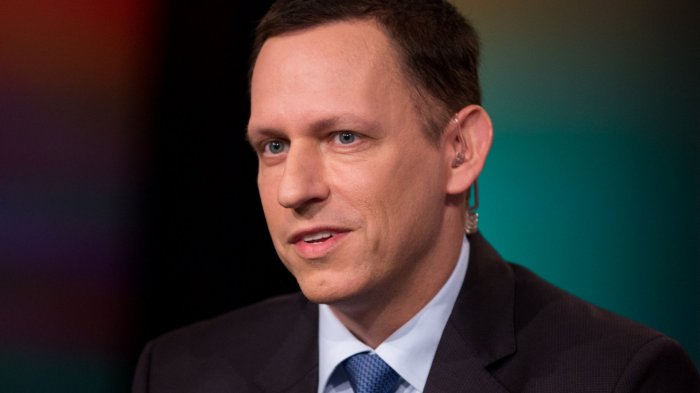
Peter Thiel’s “sea judge” metaphor, while enigmatic, likely draws from a rich tapestry of historical and cultural references. It suggests a perspective on leadership and judgment that transcends the conventional, inviting us to consider the depths and complexities of Thiel’s worldview. The metaphor implies a unique ability to navigate the tumultuous waters of the business world, making crucial decisions with a long-term vision.The “sea judge” metaphor, in essence, portrays a figure who acts as a discerning arbiter in a complex and unpredictable environment.
This figure is not just observing; they are actively shaping the course of events, acting as a force of change and a catalyst for progress. This interpretation highlights the idea that Thiel sees himself, or perhaps those he admires, as possessing a deep understanding of the currents and forces at play, allowing them to make critical judgments that guide others.
Origin and Meaning of the “Sea Judge” Metaphor
The metaphor likely combines elements from nautical history and legal traditions. The image of a judge, implying impartiality and wisdom, is juxtaposed with the unpredictable nature of the sea, symbolizing the inherent risks and challenges in the world of business and innovation. This suggests a leader capable of both rigorous evaluation and adaptable action in dynamic circumstances.
Possible Implications in Relation to Thiel’s Actions and Personality
The “sea judge” metaphor potentially reflects Thiel’s emphasis on long-term vision, strategic thinking, and decisive action. He appears to value a deep understanding of fundamental principles and trends, viewing these as crucial for making successful judgments in a complex and rapidly changing environment. His actions, particularly in venture capital, seem to align with a strategic and calculated approach.
Comparison to Other Relevant Metaphors
The “sea judge” metaphor can be compared to other metaphors that describe leaders or influential figures. For instance, the “pilot” or “captain” metaphor highlights leadership and direction in a challenging environment. However, the “sea judge” metaphor adds a layer of discernment and judgment, suggesting a more profound understanding of the underlying forces at play. The “shepherd” metaphor, while also implying guidance, may not capture the element of rigorous evaluation inherent in the “sea judge.”
Sources and Contexts of the Metaphor
Possible sources for this metaphor include maritime legal traditions, where judges made decisions in complex maritime disputes, and perhaps historical accounts of great seafarers who made profound decisions in uncertain conditions. Further research into historical texts and legal precedents may reveal more direct influences.
Historical Context Surrounding the Term “Sea Judge”
While the term “sea judge” itself might not have a precise historical equivalent, the concept of a judge who operates in a complex and uncertain environment – such as a maritime judge – does exist in legal history. The metaphor is more likely a creative and symbolic representation than a direct historical reference.
Table Demonstrating Alignment with Thiel’s Actions
| Thiel’s Action/Characteristic | Alignment with “Sea Judge” Metaphor |
|---|---|
| Focus on long-term vision and strategic thinking | Strong alignment. The sea judge must anticipate future trends and make decisions based on long-term consequences. |
| Emphasis on fundamental principles and understanding trends | Strong alignment. The sea judge needs a deep understanding of the forces at play in order to make effective judgments. |
| Decisive action in high-stakes situations | Strong alignment. The sea judge must be capable of making quick and effective decisions in unpredictable situations. |
| Potential disregard for conventional wisdom | Potential alignment. The sea judge may not be bound by conventional thinking and might challenge the status quo. |
Analysis of Thiel’s Decision-Making
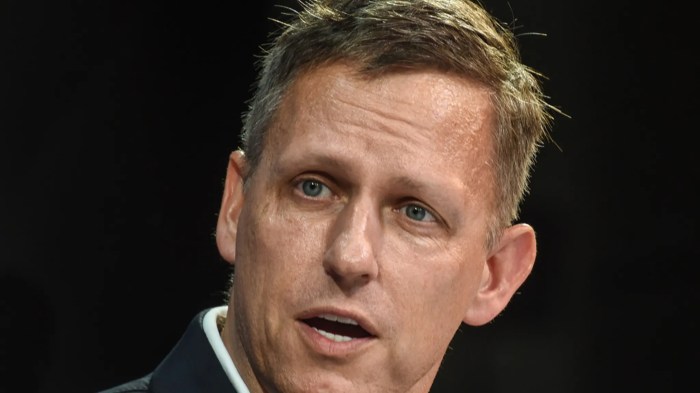
Peter Thiel’s investment decisions have consistently generated considerable interest and discussion. His unique approach, often characterized by a long-term vision and a focus on disruptive technologies, has yielded both substantial successes and notable failures. Examining his strategies, tactics, and the factors influencing his choices provides valuable insights into the complexities of successful venture capital investing.Thiel’s investment philosophy often deviates from conventional wisdom, prioritizing long-term potential over immediate returns.
This unconventional approach, while potentially risky, has proven fruitful in certain instances. Understanding his rationale and the outcomes of his choices allows for a more nuanced perspective on his overall impact and effectiveness.
Key Decisions and Outcomes
Thiel’s decisions are often rooted in a deep understanding of the long-term trajectory of industries and technologies. He frequently backs companies with innovative ideas, even when they face significant challenges in the short term. A crucial element of his approach is a thorough analysis of market dynamics and an assessment of the potential for disruptive innovation.
- PayPal: Thiel’s early investment in PayPal demonstrated a keen understanding of online payment systems. His participation in the company’s early stages helped establish a platform that revolutionized online commerce, achieving enormous success. This early success provided him with valuable experience and capital for subsequent investments.
- Facebook: Thiel’s investment in Facebook exemplifies his willingness to back innovative ventures in emerging markets. His belief in Facebook’s potential to connect billions of people transformed his investment into a significant return.
- Palantir: Thiel’s investment in Palantir demonstrates his focus on technologies with applications in data analysis and strategic intelligence. While the company’s growth has been impressive, it highlights the potential risks associated with ventures that operate in niche markets and face complex regulatory landscapes.
Investment Strategies and Tactics
Thiel’s approach to investments is not easily categorized within conventional investment strategies. He often focuses on companies with strong intellectual property, talented teams, and a clear understanding of their market. He’s also known for his preference for companies with a clear vision for disrupting existing industries.
- Emphasis on Long-Term Vision: Thiel’s investments often prioritize long-term value creation rather than short-term profits. He looks beyond immediate returns and focuses on the potential for significant growth and market disruption.
- Network and Connections: Thiel leverages his extensive network of contacts and relationships to identify promising opportunities and gain insights into potential ventures. His connections within Silicon Valley have been instrumental in providing him with access to valuable information and resources.
- Focus on Disruption: Thiel frequently invests in companies that have the potential to disrupt existing industries and create new markets. He identifies innovative ideas and technologies that can potentially reshape entire sectors.
Risks and Rewards
Thiel’s investment strategy, while potentially lucrative, carries significant risks. His emphasis on long-term potential can lead to prolonged periods of uncertainty and a lack of immediate returns. The ventures he supports may face significant challenges or even fail, which could negatively impact his investments. Furthermore, navigating the complexities of emerging markets and disruptive technologies requires considerable expertise and foresight.
Peter Thiel, the sea judge, often seems to be one step ahead of the tech curve. While his wisdom might be debatable, the recent Jabra Elite 7 Pro Active update with multipoint support jabra elite 7 pro active update multipoint support certainly suggests a keen understanding of how technology seamlessly integrates into our lives. Perhaps he’s quietly observing the future, like a wise old sea captain charting the waves of innovation.
His judgements, whether on the tech seas or not, always make interesting reading.
“Investing is about finding the right people and the right companies, and building the future.”
Peter Thiel
Factors Influencing Decision-Making
Thiel’s investment decisions are often influenced by a blend of factors, including technological advancements, market trends, and his own personal values and beliefs. He appears to be driven by a desire to support ventures that align with his vision for the future.
- Technological Innovation: Thiel appears to be particularly drawn to companies that leverage cutting-edge technologies. He is often at the forefront of emerging sectors and seeks to capitalize on technological advancements.
- Market Trends: Thiel is sensitive to market dynamics and seeks to identify companies that are well-positioned to capitalize on emerging trends. He assesses market potential and evaluates the feasibility of disrupting existing structures.
- Personal Values and Beliefs: Thiel’s investment decisions are likely influenced by his personal beliefs and values, including his emphasis on innovation and long-term growth.
Thiel’s Investment Portfolio
| Investment | Company | Outcome |
|---|---|---|
| Early Stage | PayPal | Significant Return |
| Early Stage | Significant Return | |
| Early Stage | Palantir | Strong Growth, Niche Market |
| Early Stage | Other Startups | Varied Outcomes (Some Success, Some Failure) |
Comparison with Other Investors
Thiel’s investment strategy contrasts with some other notable investors in terms of its emphasis on long-term potential and disruptive innovation. While other investors may focus on more conventional metrics and strategies, Thiel’s approach prioritizes a unique blend of foresight, network leverage, and an unconventional mindset.
Public Perception and Criticism
Peter Thiel’s public persona is complex and often polarizing. His outspoken views, particularly on technology, politics, and social issues, frequently generate strong reactions, both positive and negative. This often stems from a perceived disconnect between his actions and the values of the broader public. This section delves into the public’s perception of Thiel, the criticisms leveled against him, and the controversies surrounding his activities and the “sea judge” metaphor.The public perception of Peter Thiel is significantly shaped by his business ventures, political endorsements, and philanthropic endeavors.
He is often viewed as a visionary entrepreneur, but also as a figure who prioritizes specific interests over broader societal concerns. This dichotomy fuels the ongoing debate surrounding his actions and intentions.
Public Perception of Thiel
Thiel’s public image is often portrayed as one of a shrewd and influential figure, particularly within the technology sector. His early investments in successful companies like PayPal and Palantir have cemented this image. However, this image is frequently juxtaposed with criticism regarding his personal stances and actions, leading to a complex and nuanced public perception. He’s seen as a highly successful and influential figure, but not without controversy.
Criticisms of Peter Thiel
Thiel’s actions have drawn significant criticism across various fronts. This criticism ranges from ethical concerns about his business dealings to political disagreements about his endorsements. His perceived influence in certain political circles further intensifies these criticisms.
- Ethics: Thiel’s support for certain conservative causes and his investments in companies with questionable ethical practices are frequent targets of criticism. Accusations of prioritizing profit over ethical considerations are common, exemplified by controversies surrounding the use of private data or questionable business practices.
- Policy: His political endorsements and contributions have drawn criticism from those who disagree with his stances on issues like immigration, free speech, and government regulation. His involvement in political campaigns is often seen as an attempt to influence policy in ways that favor specific interests, leading to concerns about undue influence.
- Impact: Critics argue that Thiel’s actions and investments have a disproportionate impact on certain communities and industries. This impact, sometimes negative, is often a source of contention, especially regarding the concentration of power and wealth within specific sectors.

Controversies Surrounding the “Sea Judge” Metaphor
The “sea judge” metaphor, often associated with Thiel’s philosophy, has also become a source of controversy. It’s interpreted by some as a justification for prioritizing individual achievement and meritocracy, while others see it as an elitist and exclusionary view of society. Thiel’s critics argue that this perspective downplays the role of societal factors in success and reinforces existing inequalities.
The interpretation of this metaphor as promoting a certain vision of meritocracy and success has led to criticism for its potential to be perceived as exclusionary.
Criticism Categorization, Peter thiel is the sea judge
| Category | Criticism Examples |
|---|---|
| Ethics | Investment in companies with questionable ethical practices, perceived prioritizing of profit over ethical considerations, support for certain conservative causes. |
| Policy | Political endorsements and contributions to campaigns perceived as favoring specific interests, stances on issues like immigration, free speech, and government regulation. |
| Impact | Disproportionate impact on certain communities and industries, concentration of power and wealth in specific sectors. |
Possible Reasons Behind Public Perception
The public’s perception of Peter Thiel is likely influenced by a combination of factors. His outspoken views, significant financial influence, and perceived disconnect from broader societal concerns contribute to the complex and often polarized image. Furthermore, his involvement in controversial ventures and political endorsements exacerbates the negative perception for some. The perceived lack of transparency and accountability in some of his activities also plays a role.
Peter Thiel, the sea judge, seems to be all about the future, and I’m thinking about how crucial reliable security is in this brave new world. Imagine a system that seamlessly integrates with your life, like the arlo security camera lte wi fi go 2 subscription gps , allowing you to keep an eye on things while you’re on the go.
It’s all about control, just like Peter Thiel’s vision for the future. He’s always had an eye on the long game, and this kind of tech is definitely part of it.
Potential Interpretations and Implications
Peter Thiel’s “sea judge” metaphor, while seemingly cryptic, offers a window into his unique worldview and approach to business and life. It suggests a perspective where navigating the complexities of the modern world requires a discerning, almost judgmental, understanding of the currents and forces at play. This interpretation, however, is not without its complexities, inviting multiple readings and potential implications for the future.The “sea judge” metaphor implies a detached observer, capable of assessing the strengths and weaknesses of individuals and organizations, not unlike a judge evaluating evidence.
This suggests a focus on strategy, long-term vision, and a deep understanding of the fundamental forces driving success or failure. This analysis goes beyond superficial appearances and instead delves into the underlying principles governing the system, positioning the “sea judge” as an oracle of sorts.
Possible Interpretations of the Metaphor
The “sea judge” metaphor can be interpreted in several ways, each with its own implications. It can represent a detached, analytical approach to problem-solving, requiring a deep understanding of underlying forces and patterns. Alternatively, it could symbolize a belief in the importance of long-term vision and strategic thinking, prioritizing enduring value over short-term gains. A third interpretation might be that the “sea judge” embodies a deep skepticism of societal trends and a preference for unconventional, counter-intuitive approaches.
Implications for the Future of Business and Technology
The metaphor suggests a future where strategic thinking and long-term vision are paramount. Companies that can anticipate and adapt to changing conditions, rather than simply reacting to immediate market fluctuations, will likely thrive. This suggests a shift from reactive to proactive business strategies. A focus on deep understanding and long-term vision will likely be rewarded, while those who focus on short-term gains may find themselves adrift.
Significance in the Current Social and Political Climate
In today’s complex social and political landscape, the “sea judge” metaphor could be interpreted as a call for critical thinking and a resistance to prevailing narratives. It might represent a preference for independent judgment, questioning established norms, and a search for enduring truths amidst the noise and volatility of the modern world. This perspective is in contrast to a world where conformity and adherence to social trends are often prioritized.
Table of Interpretations
| Interpretation | Supporting Evidence | Potential Drawbacks |
|---|---|---|
| Detached, Analytical Approach | Thiel’s emphasis on long-term vision and deep understanding of markets. | Potential for overlooking human factors and social dynamics. |
| Emphasis on Long-Term Vision | Thiel’s investment in companies with long-term potential. | Potential for slow response to emerging trends. |
| Skepticism of Societal Trends | Thiel’s known contrarian views on various social and political issues. | Potential for alienation and difficulty in fostering broad consensus. |
Impact on Peter Thiel’s Public Image
The “sea judge” metaphor has undeniably shaped Peter Thiel’s public image. It has solidified his reputation as a thoughtful, strategic thinker, often portrayed as someone who sees the world from a unique perspective. This image, however, has also led to criticism, with some viewing it as aloof, judgmental, or even elitist.
Connection Between Thiel’s Actions and the Metaphor
Thiel’s investments in companies with long-term potential, his support for conservative political causes, and his outspoken views on social issues all align with the “sea judge” metaphor. His actions often suggest a belief in a particular vision for the future, one that requires a discerning and critical perspective, a view that is not universally shared.
Illustrative Examples: Peter Thiel Is The Sea Judge
The “sea judge” metaphor, applied to Peter Thiel’s decision-making, paints a picture of a discerning leader navigating complex and often turbulent waters. This section delves into specific examples that illuminate how Thiel’s actions and choices can be interpreted through this lens. It’s crucial to remember that this interpretation is subjective, and multiple perspectives exist on Thiel’s motivations and strategies.This analysis examines actions and statements from Thiel, attempting to demonstrate how his choices align with the “sea judge” approach.
It’s not an exhaustive analysis, but rather an exploration of select instances that highlight this particular perspective.
Early Investments and PayPal
Thiel’s early investments, particularly in PayPal, demonstrate a focus on identifying promising opportunities amidst uncertainty. He recognized the potential of online payment systems at a time when the future of e-commerce was still largely unknown. This decision, made amidst significant market risk, suggests a calculated assessment of the “currents” of the digital landscape.
- Thiel’s early backing of PayPal, despite its significant risks, could be seen as a crucial act of “judging the sea” and identifying a valuable opportunity.
Palantir Technologies
Thiel’s involvement in Palantir Technologies showcases another instance of assessing the potential of a new technology and market. The company initially faced skepticism and challenges, but Thiel’s belief in its unique capabilities and future applications suggest a willingness to navigate potentially turbulent waters to reach a lucrative destination.
- Palantir’s initial struggles, followed by significant market growth, highlights Thiel’s ability to see value in a nascent industry, akin to navigating a complex sea.
Venture Capital Decisions
Thiel’s approach to venture capital investments reflects a strategy of identifying “islands” of opportunity in a vast ocean of possibilities. His fund, Founders Fund, has consistently backed companies focused on innovation and disruption, often in fields that are far from conventional. This suggests a desire to find and nurture “promising shores” in a potentially chaotic environment.
- The Founders Fund’s portfolio, including companies like SpaceX and Palantir, exemplifies Thiel’s belief in emerging sectors and his calculated risk-taking.
The “Sea Judge” Metaphor in Other Contexts
The “sea judge” metaphor can be applied beyond business decisions. Imagine a seasoned explorer navigating a treacherous archipelago. Their knowledge of the tides, currents, and weather allows them to make informed decisions about where to land, how to navigate safely, and what resources to collect. This approach mirrors the “sea judge” mentality of carefully assessing the conditions and making calculated choices.
Hypothetical Scenario: A Startup in a New Market
Consider a startup developing a revolutionary energy storage technology. Peter Thiel, as the “sea judge,” might assess the market’s readiness, the regulatory environment, and the competition’s strengths and weaknesses. He’d carefully weigh the risks and rewards, potentially investing only if the opportunity aligns with his long-term vision.
Context and Decision-Making Process
Thiel’s decision-making process is characterized by a deep understanding of the markets he operates in, combined with a long-term vision. He’s not afraid to take calculated risks, but his choices are always rooted in careful analysis of the current environment. This calculated approach, driven by both instinct and thorough research, aligns with the “sea judge” metaphor.
“The future is not something you predict, it’s something you create.”
Peter Thiel
Applying the Metaphor Across Diverse Domains
The “sea judge” metaphor, while primarily applied to business decisions, can be adapted to various fields. For instance, a renowned architect might use it to analyze the impact of a new building design on the surrounding environment and community. This broader application highlights the metaphor’s adaptability and value in making informed choices.
Conclusive Thoughts
The “sea judge” metaphor offers a compelling lens through which to view Peter Thiel’s career. His actions, investments, and public image are all examined in light of this evocative comparison. While his strategies have yielded substantial returns, they have also sparked controversy and raised questions about his motivations and impact on the tech landscape. The analysis concludes by exploring the multifaceted implications of Thiel’s actions, leaving the reader to ponder the long-term consequences of his approach.