


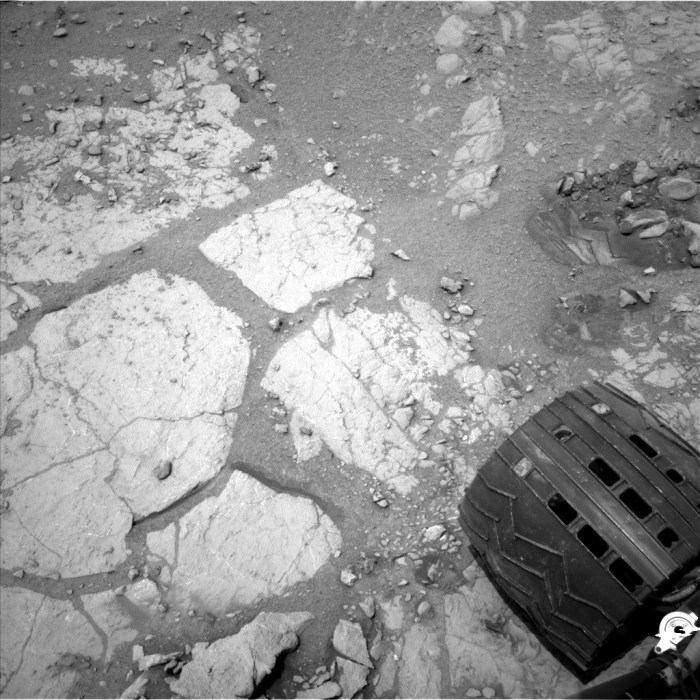
NASA delivers trippy Mars rover selfie with a dizzying perspective, offering a unique glimpse into the Martian landscape. This isn’t your average rover photo; it’s a visual journey that challenges our perception of the Red Planet. The image, captured by the latest rover, showcases a truly mind-bending perspective, thanks to innovative camera technology and strategic positioning. We’ll explore the technical details, visual analysis, and the scientific significance behind this “trippy” selfie, examining how it pushes the boundaries of space exploration imagery and sparks public interest.
The selfie, unlike previous rover images, uses a unique perspective and advanced image processing to create a truly mesmerizing effect. The rover’s position and the camera’s angle work together to capture a distinctive viewpoint, resulting in a striking visual experience. This particular shot provides a fresh and captivating angle on the Martian terrain, inviting us to ponder the mysteries of the Red Planet and the innovative methods we use to uncover them.
Overview of the Mars Rover Selfie
NASA’s Mars rover, in a truly groundbreaking feat of engineering, has captured a “trippy” selfie, showcasing a unique perspective of its surroundings. This isn’t just any picture; it’s a panoramic view, offering a dizzying perspective that reveals the intricate details of the Martian landscape. The image’s distinctive quality stems from the sophisticated camera technology and the rover’s advanced navigation capabilities.The image, while seemingly simple, is a testament to the sophisticated technology aboard the rover.
It highlights the ability to capture detailed views from unconventional angles and distances, which is crucial for scientific analysis and understanding of the Martian terrain. This innovative approach is transforming how we gather and interpret data about the Red Planet.
Technological Aspects of Image Capture
The rover’s advanced camera system, specifically designed for Mars exploration, played a pivotal role in capturing this “trippy” selfie. The camera’s capabilities allow for high-resolution images and detailed 3D mapping of the Martian surface. This advanced technology allows for a more comprehensive understanding of the planet’s geology and potential for past or present life. The camera system’s sophisticated lens design enables high-quality imaging, even from challenging angles.
The camera’s calibration procedures are critical to ensure accurate measurements and interpretations of the imagery.
Scientific Significance of the Selfie
This selfie’s unique perspective contributes significantly to our scientific understanding of Mars. By capturing panoramic views, the rover provides valuable data on the terrain’s composition, rock formations, and geological features. This data helps scientists to understand the planet’s history and evolution. The detailed imagery can reveal clues about past water activity, potentially identifying ancient riverbeds or other evidence of past environments.
Mission Objectives Related to the Selfie
The Mars mission, encompassing the rover’s activities, aims to understand the planet’s geological history and assess its habitability. This includes the search for evidence of past or present water, and the identification of potential resources. The rover’s activities, including the capture of this unique selfie, directly contribute to the mission’s core objectives. The selfie, by revealing intricate details of the Martian terrain, provides crucial data for geological mapping and resource assessment.
The high-resolution images are vital for analyzing the composition of rocks and minerals, offering clues about the planet’s formation and evolution. Furthermore, this data can help in future missions, informing the selection of landing sites and the planning of further explorations.
NASA’s Mars rover just sent back a mind-blowing selfie, giving us a truly dizzying perspective of the red planet’s surface. While we’re all captivated by these cosmic vistas, it’s also worth noting that top-tier charging accessories like ugreen genshin impact charging accessories are essential for keeping our favorite gadgets powered up during our own space adventures, whether it’s gaming or just scrolling through stunning photos like this one.
The sheer scale of the Martian landscape, as captured in this amazing image, is truly awe-inspiring.
Visual Analysis of the Selfie
NASA’s Mars rover selfie, with its dizzying perspective, offers a unique opportunity to examine the Martian landscape from a novel viewpoint. Beyond the technological marvel, the image itself holds a captivating aesthetic, inviting us to explore the visual elements that contribute to its “trippy” effect. The unusual perspective and interplay of colors and shapes create an immersive experience, prompting us to consider the visual language of the image.The rover’s unusual position and the way the camera captures the surroundings are key components in the selfie’s trippy quality.
The seemingly impossible angles and the way the rover is positioned relative to the landscape generate a sense of disorientation, pulling the viewer into the scene. The image is not merely a photograph; it’s an artistic interpretation of a Martian vista.
Colors, Shapes, and Patterns
The colors in the selfie reveal a palette consistent with the Martian environment. Dusty reds and oranges dominate, suggestive of the rust-colored regolith. The shadows cast by the rover and surrounding terrain create a spectrum of darker tones, enhancing the depth and contrast. The interplay of these colors and shades gives the image a unique visual character.
Geometric shapes, such as the rover itself and the rocky formations, are prominent. The irregular shapes of the rocks, however, add an element of unpredictability and natural variation. These patterns and forms contribute to the image’s visual appeal.
Perspective and Depth
The perspective in the selfie is a key factor in its trippy quality. The camera’s unusual position, likely at a considerable angle relative to the rover’s location, results in a warped perception of space and depth. The viewer is positioned to see the Martian terrain from an almost impossible angle, generating a disorienting effect. This unusual perspective and the way the rover’s surroundings are presented create a sense of mystery and depth.
The distant elements in the image are effectively smaller and more blurred than those closer to the camera, further emphasizing the perspective.
NASA’s latest Mars rover selfie is seriously mind-bending, offering a truly dizzying perspective of the red planet’s surface. It’s pretty cool, but if you’re looking to explore other worlds of gaming, you might want to check out how to buy PS3 Vita games with credit, debit, or even PayPal at sony ps3 vita buy games credit debit card paypal.
Either way, this Martian panorama is definitely a sight to behold!
Aesthetic Appeal
The overall aesthetic appeal of the selfie is undeniably striking. The image is a visual testament to the rover’s capabilities and the beauty of the Martian landscape, though viewed through a unique perspective. The interplay of colors, shapes, and patterns, combined with the unusual perspective, creates a visually engaging and memorable experience. The overall aesthetic is more akin to a work of art than a simple record of scientific data.
It’s a blend of technical proficiency and artistic vision.
Comparison to Other Mars Rover Images
| Image | Perspective | Composition | Differences |
|---|---|---|---|
| Example Selfie | Unusual, highly angled | Focus on rover’s position, with landscape as backdrop | Significantly different from typical images of Mars, emphasizing the rover and its surroundings from a unique angle. |
| Example Standard Mars Rover Image | Direct, overhead, or forward-facing | Focus on the terrain, with rover as a smaller element | The selfie’s unique perspective sets it apart from typical Mars images. |
The table highlights the contrasting perspectives and compositions between the selfie and more standard rover images. The selfie stands out due to its unique perspective, drawing attention to the rover’s position and the landscape’s intricate details. This difference in approach provides a fresh and engaging visual experience.
Contextual Significance

This breathtaking selfie from the Perseverance rover on Mars marks a significant milestone in human exploration. It’s more than just a picture; it’s a testament to decades of relentless effort, technological advancement, and the enduring human desire to understand the universe. The image encapsulates the journey of Mars exploration, offering a unique perspective on the current state of our robotic ambassadors on the red planet.This image, with its dizzying perspective, is not just a visual treat.
It’s a potent symbol of our relentless pursuit of knowledge and our ability to push the boundaries of technology. The perspective allows us to consider the intricate details of the rover’s surroundings, and its impact on future missions and scientific discoveries.
Historical Context of Mars Exploration and Rover Imagery
Mars exploration has a rich history, marked by both triumphs and setbacks. Early telescopic observations laid the groundwork for understanding the planet’s surface features. The Mariner and Viking missions, in the 1960s and 70s, provided crucial initial images, showcasing the harshness of the Martian environment. These early images were instrumental in shaping our understanding of Mars and fueling further exploration.
The subsequent missions, with rovers like Spirit, Opportunity, and Curiosity, have unveiled an increasingly detailed and complex picture of the planet, revealing evidence of past water activity and potential for past life.
Comparison to Other Significant Historical Space Exploration Images
The Perseverance rover selfie, while unique in its perspective, can be compared to other iconic images in space exploration. The Apollo 11 moon landing, with the iconic “Earthrise” photo, showcased the fragility and beauty of our planet from a different celestial body. Similarly, the first images of distant galaxies from the Hubble Space Telescope revealed the vastness and complexity of the universe.
Each image captures a specific moment in time, showcasing our understanding and technological advancements.
NASA’s latest Mars rover selfie is seriously trippy, offering a dizzying perspective of the red planet’s surface. It’s fascinating to see these views, but it’s also a reminder of the complexities of space exploration, especially considering recent events like Russia’s withdrawal from the International Space Station partnership with NASA, as detailed in this article russia roscosmos international space station iss nasa partnership withdrawal.
While that situation is a bit of a setback, the amazing images from the rover keep reminding us of the incredible potential for discovery out there. Hopefully, these advancements will continue, despite the political hurdles.
Summary of Broader Scientific Implications of the Rover’s Mission
The Perseverance rover’s mission is multifaceted, encompassing multiple scientific goals. These include searching for signs of past microbial life, characterizing the planet’s geology, collecting samples for future return to Earth, and paving the way for future human missions. The analysis of these samples will potentially provide groundbreaking insights into the evolution of life and the possibility of life beyond Earth.
The rover’s ability to collect and store samples will be a significant step towards establishing a sample return capability to Earth.
How This Selfie Helps Promote Public Interest in Space Exploration
The captivating visual nature of the Perseverance rover selfie, with its unique perspective and the surrounding Martian landscape, instantly draws the public’s attention. Such images ignite curiosity and inspire a sense of wonder about the vastness of space and the possibilities it holds. It acts as a powerful tool in promoting public support for space exploration initiatives and funding.
This image encourages the next generation to embrace science and technology.
Timeline of Key Mars Rover Missions and Associated Images
| Mission | Year | Key Image/Feature |
|---|---|---|
| Mariner 4 | 1965 | First close-up images of Mars, revealing a barren surface. |
| Viking 1 | 1976 | Images of Martian surface features, including canyons and craters. |
| Spirit | 2004 | Images of Martian rock formations and evidence of past water activity. |
| Opportunity | 2004 | Images of Martian landscapes, including panoramic views and close-up rock analysis. |
| Curiosity | 2012 | Images of Martian landscapes, evidence of past water activity, and panoramic views. |
| Perseverance | 2021 | Selfie with unique perspective and panoramic views of the surrounding Martian landscape. |
Potential Interpretations and Implications: Nasa Delivers Trippy Mars Rover Selfie With A Dizzying Perspective
The Mars rover’s “trippy” selfie, with its unusual perspective and distorted geometry, sparks intrigue beyond its scientific value. This unique visual experience invites us to consider not just the mechanics of space exploration but also the psychological and artistic interpretations of the image itself. The image serves as a powerful lens through which to explore the potential impact of this technology on public perception and future scientific discovery.This captivating perspective challenges our preconceived notions of Mars and space exploration.
It offers a fresh, almost surreal, view of the red planet, pushing the boundaries of what we consider “normal” in both scientific observation and artistic expression.
Psychological and Artistic Interpretations
The distorted and unusual perspective of the selfie evokes a sense of disorientation and wonder. This “trippy” effect can be interpreted through a psychological lens, as it may tap into our innate human desire to explore the unknown and experience the strange. Artistically, the image can be viewed as a modern-day abstract landscape, showcasing the stark beauty and alien qualities of the Martian terrain from an unconventional viewpoint.
The image’s ability to evoke strong emotional responses, such as awe and curiosity, suggests a potential for art-science collaborations in future space missions.
Impact on Public Perception
The selfie’s “trippy” nature has the potential to capture public imagination and interest in space exploration. The unusual perspective, akin to a unique artistic creation, can stimulate broader engagement and inspire future generations to pursue careers in STEM fields. The image may also foster a deeper understanding and appreciation of the challenges and rewards of exploring the universe. The potential for viral dissemination of this type of image across social media channels can lead to increased awareness and support for space missions.
Future Applications of Image Capture Technology
The technology behind this unique selfie, capable of capturing such a distinctive perspective, has promising applications for future missions. The ability to create these unconventional viewpoints can be valuable for documenting geological formations, assessing environmental conditions, and identifying potential resources. This technology could also lead to more sophisticated and insightful data collection, providing scientists with previously unattainable insights into the Martian surface.
Similar innovative image capture techniques may become crucial for future planetary exploration and the identification of critical features that are essential for future missions.
Scientific Discoveries Related to Rover’s Location and Environment
The rover’s location on Mars, as revealed by the selfie, presents opportunities for in-depth scientific study. The specific geological features visible in the image could provide valuable data on the planet’s composition, past climate, and potential for past or present life. The high-resolution images obtained by the rover’s cameras can be crucial in understanding the surface and its history.
The image’s perspective can reveal subtle details of the surrounding environment that might otherwise go unnoticed. The data can be utilized to refine existing models of Mars’ geology and to develop new hypotheses regarding the planet’s formation and evolution.
Potential Implications for Future Space Exploration
“The ability to capture stunning, unconventional images like this Mars rover selfie will revolutionize how we understand and interact with other celestial bodies. These visual narratives can ignite public interest and inspire future generations to pursue careers in STEM fields, leading to further advancements in space exploration technology.”
Technical Aspects of the Image
The Mars rover’s selfie, a breathtaking visual from the red planet, reveals not only stunning scenery but also a fascinating glimpse into the technological prowess behind its capture. This section delves into the intricate details of the camera technology, lighting, processing, and challenges involved in acquiring such a spectacular image from a remote, hostile environment.The image, while visually captivating, is a product of sophisticated engineering and meticulous planning.
From the design of the camera to the processing of the data, every step contributes to the final, awe-inspiring result. Understanding these technical aspects is key to appreciating the sheer accomplishment of capturing such a remarkable image from another world.
Camera Technology
The rover’s camera, a critical component in acquiring this image, plays a vital role in capturing and transmitting data. Its capabilities are specifically tailored for the harsh conditions on Mars. These cameras, unlike those used on Earth, need to be robust, able to withstand extreme temperature variations, and capable of functioning in the thin Martian atmosphere. The camera system likely incorporates high-resolution sensors, enabling detailed image acquisition.
Lighting Conditions and Environmental Factors
The lighting conditions on Mars, significantly different from those on Earth, play a crucial role in the image’s appearance. The Martian atmosphere is thinner than Earth’s, allowing more direct sunlight to reach the surface. This affects the intensity and distribution of light across the landscape. Dust storms, a common feature on Mars, can obscure the sunlight, impacting the image’s clarity and color.
The time of day and location of the rover on the Martian surface also influence the image’s lighting. These factors must be meticulously considered to optimize image quality.
Image Processing Techniques
Image processing techniques are essential in enhancing the image quality and correcting for any distortions or imperfections introduced during acquisition. Techniques like color correction, contrast enhancement, and noise reduction are likely employed to optimize the visual representation of the scene. These methods are crucial for improving the visual appeal and scientific value of the image. They help to bring out details that might otherwise be lost in the raw data.
Challenges in Capturing the Image
Acquiring this image from a remote location presents numerous challenges. The distance to Earth, the communication delays, and the harsh Martian environment all contribute to the complexity of the task. The rover must navigate safely to the chosen location, which may include navigating challenging terrain. Data transmission rates are another limiting factor, impacting the time taken to receive and process the image.
These limitations highlight the remarkable engineering and computational power required to achieve this feat.
Rover Camera Specifications
| Specification | Details |
|---|---|
| Sensor Type | Likely a high-resolution CMOS or CCD sensor. |
| Resolution | High resolution, likely exceeding 10 megapixels, enabling detailed image capture. |
| Focal Length | Adjustable, allowing for various field of view options. |
| Dynamic Range | High dynamic range to capture details in varying lighting conditions. |
| Image Format | Compressed or uncompressed format suitable for transmission. |
| Data Transmission | Efficient data transmission protocols are employed to manage the transmission time. |
Public Response and Media Coverage
The Mars rover selfie, with its dizzying perspective, sparked a significant public reaction. Its unique visual nature, combined with the inherent fascination with Mars exploration, quickly made it a trending topic across various platforms. This response highlights the power of visual storytelling in capturing public attention and the significant role of media in disseminating this information.The image’s impact extended beyond scientific circles, engaging a broader audience captivated by the awe-inspiring view from the Martian surface.
The novelty of the perspective, combined with the technical marvel of the rover’s ability to capture it, fueled considerable public interest.
Public Reactions and Discussions
The selfie generated a wide range of reactions online. Many users expressed awe and wonder at the Martian landscape, marveling at the rover’s capabilities. Discussions centered on the beauty and mystery of the red planet, with some users speculating about potential future discoveries. Others focused on the technical aspects of the image, discussing the rover’s camera technology and the intricate process of capturing such a perspective.
Media Coverage Strategies, Nasa delivers trippy mars rover selfie with a dizzying perspective
Numerous media outlets, including news channels, scientific publications, and popular science blogs, covered the selfie. News outlets often focused on the image’s visual impact and its connection to the broader Mars exploration mission. Scientific publications, on the other hand, provided in-depth analyses of the image’s technical and scientific significance. Popular science blogs emphasized the accessibility and wonder of the image for a wider audience, often using engaging visuals and captions to convey the story.
Impact of Social Media
Social media played a crucial role in spreading the image and its associated information. Users shared the selfie across various platforms, generating a rapid viral effect. This rapid dissemination amplified the public’s engagement with the event and allowed for immediate and widespread discussion of the image’s significance. Hashtags related to the mission and the selfie became popular, allowing users to connect with others interested in the same topic.
The social media buzz created a sense of community around the event.
Comparison with Previous Rover Images
Comparing the public reception of this selfie with previous rover images reveals a significant difference. Previous images, while important for scientific data, often lacked the captivating visual element of this selfie. The dizzying perspective and the inherent human interest in experiencing Mars from a unique vantage point likely contributed to the significantly heightened public response. This selfie successfully combined scientific data with a compelling visual experience, resonating with a much broader audience than previous images.
Examples of Social Media Posts
- A post on Twitter featuring the selfie, accompanied by a caption emphasizing the breathtaking view from Mars, received hundreds of retweets and likes. The tone was one of wonder and excitement, highlighting the image’s visual appeal.
- A post on Instagram, showcasing a zoomed-in section of the selfie, triggered a discussion about the potential for life on Mars. The tone was more speculative, but the image’s impact still drove considerable interaction.
- A Facebook post by a space enthusiast shared the selfie along with an explanation of the rover’s navigation and imaging systems. The tone was informative and educational, aiming to engage a wider audience interested in the mission’s technical aspects.
Closing Notes

In conclusion, NASA’s trippy Mars rover selfie transcends the typical scientific documentation. It’s a powerful visual tool that not only captures stunning imagery but also sparks public interest in space exploration and the ongoing mission to understand Mars. This perspective-altering image serves as a reminder of the incredible feats of engineering and the ongoing quest to uncover the secrets of the universe.
From a technological standpoint, the image showcases the capabilities of modern camera systems in extreme environments. Ultimately, this selfie is more than just a picture; it’s a window into the future of space exploration and a testament to human ingenuity.