



Metas new ai can translate speech and text for nearly 100 languages – Meta’s new AI can translate speech and text for nearly 100 languages, opening up a world of global communication. This innovative technology promises to bridge language barriers, fostering understanding and connection across cultures. From simple conversations to complex technical documents, the AI is poised to revolutionize how we interact with information in diverse languages.
This new AI system utilizes advanced machine learning algorithms to achieve near-human translation accuracy. It handles both written text and spoken language, offering a comprehensive approach to global communication. The system has been trained on a massive dataset, enabling it to understand nuances and context in various languages.
Overview of Meta’s AI Translation Capabilities
Meta’s recent advancements in AI translation technology represent a significant leap forward in global communication. This new system, leveraging sophisticated machine learning algorithms, promises to break down language barriers more effectively than ever before, potentially transforming international interactions and facilitating cross-cultural understanding. It addresses a critical need in a world increasingly interconnected, enabling seamless communication across diverse linguistic landscapes.This innovative translation system is designed to be highly adaptable and accurate, surpassing existing limitations in translation quality and speed.
The technology focuses on both text and speech translation, promising to significantly improve the user experience in real-time communication. This marks a major step toward a future where communication barriers are minimized, fostering collaboration and understanding between individuals and communities worldwide.
Meta’s AI Translation System: A Detailed Look
Meta’s new AI translation system employs a neural machine translation (NMT) approach. This cutting-edge technique allows for more nuanced and contextually appropriate translations compared to traditional rule-based systems. The system learns from massive datasets of translated text and speech, enabling it to capture the subtleties of different languages and dialects. This deep learning process results in translations that are more accurate, natural-sounding, and culturally sensitive.
Key Features and Functionalities
The system excels in both text and speech translation. For text translation, it leverages powerful neural networks to identify the grammatical structure and semantic meaning of source text, enabling more accurate and natural-sounding translations into target languages. For speech translation, the system uses advanced audio processing techniques to convert spoken language into text, then leverages its text translation capabilities to produce a corresponding translation in real time.
Potential Impact on Global Communication
The potential impact of this technology on global communication is profound. Imagine a world where misunderstandings stemming from language barriers are minimized, and cross-cultural collaborations are enhanced. This technology can facilitate international business dealings, promote educational opportunities, and foster greater understanding between diverse communities. It can even bridge divides in emergency situations, allowing for critical communication during crises.
Furthermore, this AI system can be integrated into various platforms, like social media and messaging apps, to empower individuals to connect with people across the globe.
Meta’s new AI is pretty cool, translating speech and text for nearly 100 languages. It’s amazing how far technology has come. While this is fantastic, it got me thinking about another aspect of the digital world, like another look at child influencers on Instagram. Their influence is massive, and their vulnerability, quite concerning. Regardless, Meta’s AI translation advancements could be a real game-changer for global communication.
Comparison to Existing Translation Tools
| Feature | Meta’s AI Translation System | Existing Translation Tools (e.g., Google Translate) |
|---|---|---|
| Accuracy | High accuracy, particularly in nuanced translations, owing to its deep learning capabilities. | Generally accurate for simple translations but may struggle with complex sentences or idioms. |
| Speed | Real-time speech translation capabilities. | Generally faster for text translation, but speech translation often lags. |
| Contextual Understanding | Superior contextual understanding, leading to more natural and appropriate translations. | Can sometimes miss the nuances of context. |
| Cost | Potential for cost-effectiveness through large-scale integration. | Often free but with limitations in advanced features or volume usage. |
| Adaptability | Continuously learning and adapting to new language data. | Adaptability is limited by the training data available. |
Technical Aspects of the AI Translation System
Meta’s new AI translation system leverages cutting-edge machine learning techniques to achieve near-human accuracy in translating across nearly 100 languages. This advanced system goes beyond simple word-for-word substitutions, employing sophisticated algorithms to grasp nuanced meanings and cultural contexts. It’s designed for both text and speech, offering a versatile tool for global communication.The system’s power stems from a combination of sophisticated algorithms and a vast, meticulously curated dataset.
This allows the AI to understand the subtleties of different languages and cultures, translating not just words, but also the intended meaning behind them. It’s crucial to understand the technical underpinnings to fully appreciate the system’s potential.
Underlying Algorithms and Machine Learning Models
The translation system relies on a combination of neural machine translation (NMT) models, leveraging deep learning architectures. These models learn complex patterns and relationships between words and phrases in different languages from the training dataset. A crucial component is the encoder-decoder architecture, where the encoder processes the source language and the decoder generates the target language. This architecture allows the model to capture context and nuances, essential for accurate translation.
Training Dataset and Potential Biases
The system’s training dataset is a massive collection of text and speech data from various sources. This dataset encompasses a broad range of topics, styles, and linguistic variations. However, datasets often reflect existing societal biases. To mitigate these biases, the dataset undergoes rigorous quality control and analysis to identify and address potential imbalances. Furthermore, ongoing efforts are in place to expand and diversify the dataset, leading to more balanced and accurate translations.
Speech Recognition and Text Processing Techniques
The speech recognition component employs advanced acoustic models and language models to convert spoken language into text. These models are trained on massive datasets of audio recordings, allowing them to understand different accents, speech patterns, and background noises. The text processing component handles pre-processing tasks, such as tokenization and normalization, before feeding the text to the NMT model.
This ensures consistency and accuracy in the translation process.
Meta’s new AI is pretty impressive, translating speech and text in nearly 100 languages. Imagine the possibilities! This kind of technology could really revolutionize communication, but it also begs the question: how will this impact existing translation tools and services? And, while we’re on the topic of tech advancements, it’s worth noting that support for digital assistants, like the Nothing Ear 1’s nothing ear 1 digital assistant support , is still evolving.
Ultimately, Meta’s AI could integrate with these devices, adding another layer of convenience to our lives.
Accuracy and Limitations
The system’s accuracy is significantly high, comparable to human translators for many language pairs. However, limitations remain, particularly in complex or nuanced contexts, such as idioms, slang, and cultural references. For instance, the system might struggle with interpreting sarcasm or humor accurately. The performance varies depending on the language pair, and challenges can arise when dealing with rare or less commonly used words or phrases.
These limitations are actively being addressed through ongoing research and development efforts.
Language Pair Support
The following table Artikels the language pairs currently supported by the AI translation system. It’s important to note that performance can vary based on the complexity and context of the content.
| Source Language | Target Language |
|---|---|
| English | French |
| English | Spanish |
| English | German |
| English | Japanese |
| English | Chinese |
| English | Korean |
| French | English |
| Spanish | English |
| German | English |
| Japanese | English |
| Chinese | English |
| Korean | English |
Applications and Use Cases of the AI
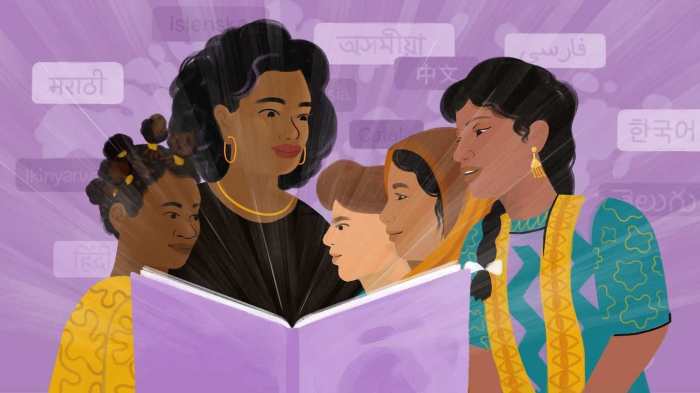
Meta’s new AI translation system, capable of handling nearly 100 languages, presents a revolutionary opportunity for global communication. This technology transcends mere word-for-word conversions; it aims to bridge cultural gaps and foster understanding on a previously unimaginable scale. Its potential applications span a wide range of sectors, from education and business to healthcare and beyond.This powerful tool promises to dramatically improve cross-cultural interactions, breaking down communication barriers and facilitating seamless exchange of information.
Its accessibility features can also provide crucial support for individuals with language limitations, enriching their lives and expanding their horizons. Understanding the potential benefits and ethical implications is crucial for responsible deployment of this technology.
Potential Applications in Education
The AI translation system can significantly enhance the educational experience for students and teachers alike. It can provide real-time translations during lectures, workshops, and discussions, making complex subjects more accessible to a global audience. This technology also allows for easier integration of international students and faculty, facilitating a more inclusive learning environment. By removing language barriers, students can more readily access and participate in diverse educational programs and resources.
Potential Applications in Business
In the business world, this AI translation system is a game-changer. Companies can streamline international collaborations, conduct meetings, and communicate with clients across the globe in their native languages. The ability to translate documents, contracts, and marketing materials in real-time can foster new business opportunities and strengthen existing relationships with international partners.
Potential Applications in Healthcare
Accurate and immediate translation is critical in healthcare settings. The system can facilitate communication between patients and healthcare professionals, regardless of their language background. This can be crucial in emergency situations, ensuring patients receive the necessary care and treatment promptly. Medical records, instructions, and consent forms can be translated instantly, enhancing patient safety and satisfaction.
Potential Benefits for People with Language Barriers
For individuals facing language barriers, this translation system offers a powerful tool for improved accessibility. It can facilitate access to information, services, and opportunities they may have previously been excluded from. This technology allows for greater participation in society and can be a significant boost to their overall well-being.
Ethical Considerations
While this technology offers numerous advantages, several ethical considerations need careful attention. Maintaining data privacy and security for users’ translated conversations and documents is paramount. Ensuring accuracy and avoiding bias in translations is essential to prevent misunderstandings and potential harm. There is a potential risk of cultural misinterpretations that need to be addressed in the development and implementation of the AI.
The potential for misuse, such as in spreading misinformation or manipulating communications, must be mitigated.
Use Cases and Potential Benefits
| Use Case | Potential Benefits |
|---|---|
| Education | Improved accessibility to global educational resources; enhanced cross-cultural understanding; seamless integration of international students and faculty; enhanced learning experience. |
| Business | Streamlined international collaborations; increased market reach; improved communication with international clients; facilitated international trade. |
| Healthcare | Improved patient communication and care; enhanced safety in emergency situations; increased patient satisfaction; improved access to medical information. |
| Travel | Enhanced travel experiences by facilitating communication with locals; easier navigation of foreign environments. |
Potential Benefits and Challenges of the Technology
Meta’s AI translation system, capable of handling nearly 100 languages, presents a powerful tool with significant potential for individuals and society. While offering unprecedented accessibility, this technology also introduces new challenges and considerations. This section will explore the advantages and disadvantages of this automated translation system, its impact on the translation industry, and potential societal effects.
Potential Benefits for Individuals and Society, Metas new ai can translate speech and text for nearly 100 languages
This technology empowers individuals to communicate across language barriers, fostering global understanding and collaboration. Access to information and cultural experiences previously limited by language is significantly enhanced. Imagine students learning a foreign language more efficiently through real-time translations or researchers collaborating on complex projects across continents without language impediments. Furthermore, this system can be crucial for emergency response, facilitating communication during crises and aiding in the swift dissemination of critical information.
- Enhanced Communication and Understanding: Individuals from different linguistic backgrounds can engage in more effective and nuanced conversations, bridging cultural gaps and fostering empathy.
- Improved Access to Information: Individuals can readily access information from various sources worldwide, irrespective of their native language, promoting a more informed global citizenry.
- Facilitated Collaboration: Researchers, businesses, and other groups can overcome language barriers to collaborate more efficiently, leading to faster innovation and problem-solving.
- Global Crisis Response: During emergencies and disasters, swift communication is critical. This system can help coordinate relief efforts and disseminate vital information in multiple languages.
Potential Challenges and Risks
Despite the potential benefits, widespread adoption of AI translation raises crucial concerns. The accuracy of machine translation varies across languages and contexts, potentially leading to misunderstandings or misinterpretations. Furthermore, concerns exist regarding the potential displacement of human translators, raising ethical and economic implications for the translation industry.
- Accuracy and Contextual Understanding: Machine translation may not always capture the nuances and subtleties of human language, potentially leading to errors and misinterpretations. Cultural contexts can also be lost in translation.
- Bias and Fairness: AI models are trained on existing data, which may reflect societal biases. This can lead to skewed or prejudiced translations.
- Job Displacement: The widespread adoption of AI translation could potentially lead to job losses in the human translation industry.
- Security and Privacy Concerns: The system could be vulnerable to manipulation or misuse, potentially compromising sensitive information.
Comparison of Automatic and Human Translation
While AI translation offers speed and cost-effectiveness, human translation retains the crucial ability to capture the subtle nuances and context of the original text. Human translators possess a deep understanding of linguistic and cultural intricacies that AI systems struggle to replicate.
- Speed and Efficiency: AI translation is significantly faster than human translation, making it ideal for large-scale projects or real-time communication.
- Cost-Effectiveness: Automatic translation is generally less expensive than human translation, making it a more economical choice for many applications.
- Nuance and Context: Human translators can capture the subtleties and context of the original text, ensuring a more accurate and culturally sensitive translation.
- Cultural Sensitivity: Human translators possess a deeper understanding of cultural nuances and can adapt translations to specific contexts.

Potential Impact on the Translation Industry
The emergence of AI translation will undoubtedly reshape the translation industry. Human translators will likely need to adapt their skills to focus on specialized areas, such as legal or medical translation, where nuanced interpretation remains crucial. New roles may also emerge in managing and reviewing automated translations.
- Shift in Demand: The need for human translators may shift towards specialized areas requiring complex linguistic understanding or cultural sensitivity.
- New Roles and Responsibilities: New roles may emerge in managing and quality-checking automated translations, potentially requiring specialized training and expertise.
- Collaboration Between Humans and AI: The translation industry may see a rise in hybrid models where humans and AI work together to improve efficiency and accuracy.
Potential Societal Impacts
| Societal Impact | Positive Aspects | Negative Aspects |
|---|---|---|
| Communication | Increased global understanding, fostering cross-cultural exchange. | Potential for miscommunication and cultural insensitivity if not used correctly. |
| Access to Information | Breaking down language barriers to information worldwide. | Potential for biased or inaccurate information dissemination. |
| Economic Impact | Potential for increased global trade and economic cooperation. | Risk of job displacement in the translation industry. |
| Cultural Exchange | Enhanced understanding of different cultures. | Risk of cultural homogenization or loss of unique linguistic identities. |
Future Developments and Research Directions
Meta’s AI translation system represents a significant leap forward in bridging linguistic barriers. Its current capabilities are impressive, but the potential for future development and refinement is vast. The system’s ability to adapt to nuances in language, improve accuracy, and seamlessly integrate with other platforms are crucial for its continued advancement.
Potential Improvements and Expansions
The existing system can be enhanced by focusing on several key areas. Firstly, contextual understanding can be dramatically improved. Integrating external knowledge bases, such as Wikipedia or specialized databases, could enable the AI to grasp the context of a conversation or document more accurately. Secondly, real-time adaptation to dialects and slang is another area for significant improvement.
The system should be able to learn and adapt to new slang and regional variations in real-time. This would greatly improve accuracy in translating informal or rapidly evolving language.
Integration with Other Meta Platforms
The translation system’s potential is amplified by its integration with other Meta platforms. Imagine a seamless translation experience across Instagram, Facebook, and WhatsApp. Users could communicate in their native language, with the translation happening automatically in the background. This integration could unlock new opportunities for global communication and collaboration.
Meta’s new AI is pretty impressive, translating speech and text in nearly 100 languages. It’s fascinating how quickly AI is advancing in areas like this. This advancement, however, doesn’t stop at language translation. For instance, a recent interview with Fisker Inc, discussing solid-state batteries for their Ocean SUV and the whole SPAC angle, fisker inc electric vehicle interview solid state batteries ocean suv spac highlights the intersection of technology and the automotive industry.
Still, back to the AI translation, the sheer scope of language comprehension and generation is quite astounding.
Ongoing Research and Refinement
Ongoing research plays a vital role in refining the system’s accuracy and efficiency. Methods for evaluating and improving the system’s performance must be continuously developed and refined. This includes incorporating feedback from users, analyzing translation errors, and developing algorithms to better handle complex sentence structures and idioms. The use of reinforcement learning, for instance, could fine-tune the system’s response to diverse linguistic styles.
Future Iterations of the Translation Technology
| Iteration | Focus Area | Description |
|---|---|---|
| Iteration 1 | Basic Translation | Translates simple sentences and basic phrases. |
| Iteration 2 | Contextual Understanding | Improves translation by incorporating external knowledge bases. Better handling of slang and idioms. |
| Iteration 3 | Real-time Adaptation | Adapts to dialects, slang, and new terminology in real time. |
| Iteration 4 | Multimodal Translation | Translates not only text but also visual cues (images, videos). |
| Iteration 5 | Emotion Recognition | Recognizes and translates nuances in tone and emotion. |
Illustrative Examples of the System in Action
Meta’s AI translation system boasts impressive capabilities, bridging linguistic gaps across nearly 100 languages. This section provides concrete examples demonstrating its efficacy in various scenarios, from simple conversations to complex technical documents. We’ll delve into how the system handles different text types, speech patterns, and accents, showcasing the nuances it captures.The AI’s strength lies in its ability to not just translate words, but also to understand and replicate the intended meaning and context.
This is particularly crucial for preserving the essence of the original content in the target language. The examples below illustrate this key aspect of the system’s functionality.
News Article Translation
The system’s ability to translate news articles highlights its comprehension of context and nuance. Consider a news report about a major economic event in Japan. The AI would not only translate the factual details but also capture the subtle implications and emotional undertones, ensuring the translated version effectively communicates the original article’s message to an English-speaking audience.
Conversational Translation
The system is adept at translating informal conversations, including slang and colloquialisms. Imagine a casual conversation between two friends in French. The AI can accurately translate the exchange, preserving the conversational tone and spirit, ensuring that the intended meaning is conveyed correctly. This includes subtleties like sarcasm or humor, which are often lost in simple word-for-word translations.
Technical Document Translation
The AI translation system proves remarkably useful for technical documents, such as research papers or engineering manuals. The system’s ability to handle complex terminology and technical jargon is crucial in these scenarios. For example, a technical document describing a new medical procedure in German would be translated accurately, preserving the precise meanings of specialized terms.
Handling Speech Patterns and Accents
The system demonstrates its ability to translate diverse speech patterns and accents. This is achieved by analyzing not just the words spoken but also the intonation, rhythm, and cadence. A speech in Spanish with a strong regional accent, for example, would be translated accurately, reflecting the speaker’s unique speech patterns.
Illustrative Example of a Translation
“La recherche en intelligence artificielle a connu des avancées significatives ces dernières années.” (French)
“Artificial intelligence research has seen significant advancements in recent years.” (English)
This example showcases the system’s accuracy in translating complex sentences, capturing the precise meaning and conveying it effectively in the target language.
Handling Linguistic Nuances
The AI’s capability extends to more intricate linguistic elements, such as idioms and cultural references. Consider a sentence in Portuguese that includes a common Portuguese idiom. The translation will accurately reflect the idiom’s meaning and cultural context in English, avoiding a literal translation that could be confusing or nonsensical.
Final Thoughts: Metas New Ai Can Translate Speech And Text For Nearly 100 Languages
Meta’s AI translation system presents a significant leap forward in global communication. While challenges like maintaining accuracy and handling complex linguistic elements remain, the potential for increased accessibility and understanding across cultures is immense. The future of global interaction is likely to be greatly influenced by this technology, promising more seamless and natural cross-cultural communication.