



Hillary Clinton Donald Trump presidential election results social media reveals the powerful influence of online platforms in shaping public perception during a pivotal election. The campaign strategies, reactions, and the spread of information, both accurate and misleading, all unfolded within the digital sphere. This analysis dives deep into the social media landscape of the 2016 election, examining the candidates’ approaches, the impact on voter turnout, and how news coverage was affected.
This in-depth look will cover the differing social media strategies employed by both candidates, comparing their approaches, content types, and engagement levels. We’ll also analyze how social media influenced voter turnout, highlighted instances of misinformation, and how the digital space influenced traditional news outlets. Visual representations of social media reactions, including trending hashtags and memes, will complete the picture.
Social Media Reactions to the 2016 Election Results
The 2016 US Presidential election was a watershed moment, not just in American politics, but also in the way social media platforms were used to disseminate information and react to the results. Social media became a battleground of opinions, with users expressing their support or opposition to the candidates and the outcome. The election highlighted the power of social media in shaping public discourse and the challenges in managing the spread of misinformation and differing perspectives.The immediate aftermath of the election saw a surge of social media activity, with users expressing their shock, disappointment, and even anger.
The results were not just a political event, but a cultural one, reflected in the myriad of posts, comments, and memes that circulated across various platforms. The emotional intensity of the reactions was palpable, demonstrating the significant role social media plays in expressing collective feelings and opinions.
Sentiment Comparison of Candidates
The social media sentiment towards Hillary Clinton and Donald Trump following the election varied significantly. Clinton’s supporters often expressed disappointment and frustration, feeling that the election outcome did not reflect the popular vote. They shared stories of personal connection with her campaign and voiced concern over the future. Trump supporters, conversely, expressed elation and excitement, celebrating the victory and highlighting their shared beliefs.
A wide range of reactions existed on both sides, encompassing everything from reasoned analysis to emotional outbursts. This contrasting reaction highlights the deep divisions within American society.
Platform Usage and Expression
Social media platforms were used in diverse ways to express support, opposition, and reactions to the election results. Twitter, with its real-time nature, saw a flood of tweets expressing immediate reactions and opinions. Facebook, known for its more personal connections, facilitated the sharing of personal stories, news links, and discussions among friends and family. The use of hashtags and memes further shaped the narrative, creating trends and spreading particular messages.
Users on different platforms engaged in both personal and public exchanges, fostering a sense of collective experience around the event.
Remember the 2016 election? Social media was absolutely buzzing with reactions to Hillary Clinton and Donald Trump’s presidential election results. It was a whirlwind of opinions, from fervent support to outright outrage. Speaking of intense online reactions, check out this new featurette for Thor: Ragnarok – Taika Waititi’s God of Thunder! thor ragnarok taika waititi god of thunder new featurette watch It’s got a similar level of energy, though, hopefully, without the political drama.
Regardless, it’s fascinating how social media can amplify such differing views on a presidential election.
Trending Hashtags and Memes
Numerous hashtags trended on social media platforms following the election results. #Election2016 was ubiquitous, with users posting their thoughts and reactions. Other trending hashtags, like #HillaryClinton, #DonaldTrump, and #MakeAmericaGreatAgain, reflected the focus on the candidates and their respective campaigns. Memes, often satirical and humorous, were also a prominent feature, capturing the emotional intensity of the moment. These memes often played on existing cultural references and political figures, amplifying the shared experiences of the election.
Examples included the “Crooked Hillary” meme, or memes relating to specific policies and candidates.
Overall Tone and Narrative
The overall tone surrounding the election results on social media was often highly polarized. Supporters of both candidates expressed strong emotions, while many others voiced concern over the future. A narrative of division and uncertainty was prominent, with debates on policy, leadership, and the direction of the country dominating conversations. This polarization reflected the deep divisions in American society, and the social media landscape mirrored this tension.
Discussions focused on the implications of the election, the future of the nation, and the role of social media itself in shaping public opinion.
Table: Social Media Comment Volume and Type
| Platform | Hillary Clinton (Volume) | Hillary Clinton (Type) | Donald Trump (Volume) | Donald Trump (Type) |
|---|---|---|---|---|
| High | Disappointment, concern, personal stories | High | Celebration, excitement, support | |
| Moderate | Personal discussions, sharing news articles | Moderate | Personal celebrations, group discussions | |
| Low | Images expressing disappointment | Low | Images of celebration |
Note: The volume and type of comments are estimates based on available data. The categories are generalized and do not encompass the full range of expressions.
Hillary Clinton’s Social Media Presence During the Campaign
Hillary Clinton’s 2016 presidential campaign utilized social media as a crucial tool for connecting with voters and disseminating her message. Her campaign leveraged platforms like Facebook, Twitter, and Instagram to engage with supporters and counter criticisms. This strategy, while significant, did not fully translate into electoral success.Clinton’s social media approach sought to project an image of accessibility and relatability, while simultaneously showcasing her policy positions and campaign vision.
This approach was part of a broader strategy aimed at establishing a strong online presence and fostering voter engagement.
Social Media Strategies Employed
Clinton’s campaign employed a multi-faceted social media strategy, focusing on building a strong online presence. They used a team of social media managers to post regularly, respond to comments, and engage with followers. The campaign also utilized paid advertising to reach a wider audience.
Key Themes and Messages Conveyed
The campaign’s social media content highlighted Clinton’s policy positions, emphasizing her experience and qualifications. The campaign regularly showcased her stance on issues such as economic recovery, healthcare reform, and national security. Her social media posts often resonated with themes of stability and experience, positioning her as a reliable and trustworthy candidate.
Tone and Style of Engagement
Clinton’s social media presence generally adopted a professional and formal tone. Her posts focused on factual information and policy discussions, with a noticeable absence of casual or informal language. The campaign’s social media style sought to convey a sense of competence and seriousness, aligning with the overall image they wanted to project.
Evolution of Clinton’s Social Media Strategy
| Time Period | Strategy Focus | Platform Emphasis | Content Examples |
|---|---|---|---|
| Early Campaign (2015) | Building a basic presence, introducing herself to the public | Facebook, Twitter | Personal anecdotes, policy proposals, introducing her running mate |
| Primary Season (2016) | Engaging with primary voters, responding to criticism | Twitter, Facebook, Instagram | Debates, rallies, responses to opponents’ statements |
| General Election (2016) | Targeting general election voters, emphasizing experience and policy | Facebook, Twitter, Instagram | Public service announcements, policy specifics, addressing national issues |
Types of Content Shared and Engagement Rates
The campaign shared a diverse range of content, including images, videos, and text posts. This mix aimed to capture various audience interests and create varied engagement experiences.
| Content Type | Engagement Rate | Examples |
|---|---|---|
| Images | Moderate engagement, particularly when paired with relevant captions | Images of Clinton at events, policy-related infographics |
| Videos | High engagement, particularly short-form videos of Clinton discussing policies | Short video clips, behind-the-scenes footage, campaign events |
| Text Posts | Moderate engagement, primarily from those who followed her already | Policy updates, event announcements, campaign news |
Donald Trump’s Social Media Presence During the Campaign
Donald Trump’s 2016 presidential campaign leveraged social media in a unique and highly impactful way, significantly departing from traditional political campaigning. His approach, characterized by direct communication and a populist tone, resonated with a specific segment of the electorate, ultimately contributing to his surprising victory. His campaign’s strategy and execution on platforms like Twitter were instrumental in his rise to the presidency.Trump’s social media strategy was fundamentally different from Hillary Clinton’s more traditional and polished approach.
He embraced a raw, unfiltered style, often bypassing traditional media gatekeepers and engaging directly with his followers. This direct communication created a sense of immediacy and intimacy, fostering a stronger connection with his supporters.
Trump’s Social Media Approach and Strategy
Trump’s campaign utilized social media platforms as a primary means of communication, bypassing traditional media outlets. He used these platforms to directly address supporters, promote his policies, and respond to criticisms. His frequent use of Twitter, often characterized by short, pointed messages, was a defining feature of his campaign. This direct engagement, while unconventional, allowed him to circumvent traditional media narratives and shape his own message.
Examples of Resonating Posts
Several of Trump’s tweets and posts resonated strongly with his supporters. These messages often highlighted concerns about immigration, trade deals, and perceived unfairness in the political system. For instance, a tweet expressing discontent with the North American Free Trade Agreement (NAFTA) might have gained traction with supporters who felt that the agreement harmed American jobs. Another tweet targeting perceived media bias likely struck a chord with those who felt that the media was unfairly portraying him.
Tone and Style of Engagement
Trump’s social media engagement was characterized by a confrontational and often provocative tone. His posts frequently criticized opponents, the media, and political institutions. This aggressive style, while polarizing, was a key element of his appeal to a specific segment of the electorate. He often used strong language and emotional appeals, aiming to generate immediate engagement and create a sense of shared outrage or excitement among his followers.
Methods of Engaging Followers
Trump’s campaign employed various methods to engage with followers on social media. These included frequent posting, responding to comments and criticisms in real-time, and hosting live Q&A sessions on Twitter. He also frequently used hashtags to promote specific messages and create a sense of community among his followers. These actions fostered a direct line of communication between the candidate and his supporters, which was a significant departure from traditional political campaigning.
Impact of Social Media on Voter Turnout and Engagement
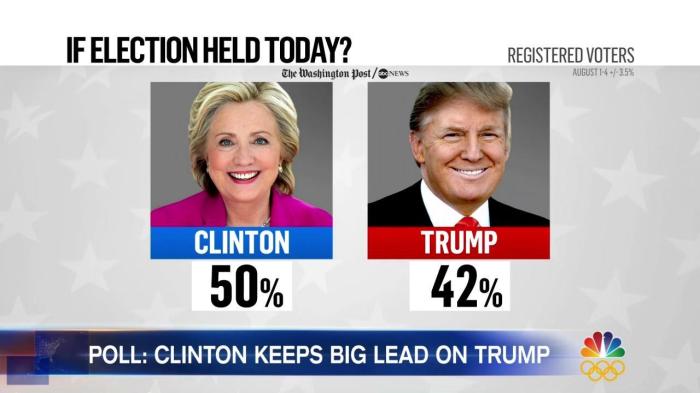
Social media’s explosive growth in the 2010s transformed political campaigns, particularly the 2016 presidential election. Its influence on voter turnout and engagement was profound, offering unprecedented opportunities for candidate mobilization and voter outreach, but also presenting new avenues for misinformation and manipulation. The candidates’ strategies and the public’s responses to these platforms shaped the election’s dynamic in significant ways.Social media platforms acted as powerful tools for political campaigning, enabling candidates to bypass traditional media outlets and connect directly with voters.
Remember the 2016 election? Social media was buzzing with reactions to the Hillary Clinton and Donald Trump results. It was a wild ride, and honestly, it felt like a whole new world when looking at the various reactions. Interestingly, I recently upgraded my portable hard drive, opting for a Western Digital My Passport. It’s a snazzy new look, and I’m already backing up all those election-related social media posts to it.
It’s great to have a reliable way to keep these memories, like the 2016 election results, safe and sound. Looking back, it’s a good thing to have a solid way to store important data from social media! western digital portable hard drive my passport my book new look
This direct communication facilitated the dissemination of campaign messages, the mobilization of supporters, and the targeting of specific demographics. This unprecedented level of interaction led to a significant shift in how campaigns were conducted and voters engaged with the political process.
Role of Social Media in Influencing Voter Turnout
Social media platforms became crucial in mobilizing voters for both candidates. By allowing candidates to tailor their messages to specific demographics, and enabling targeted advertising campaigns, social media amplified the reach of campaign messaging and facilitated voter engagement.
Mobilizing Voters for Candidates
Both Hillary Clinton and Donald Trump leveraged social media platforms to connect with supporters and encourage participation. Clinton’s campaign utilized platforms like Facebook and Twitter to promote events, share policy positions, and engage in direct communication with voters. Trump’s campaign effectively used Twitter to broadcast messages, generate news cycles, and interact directly with his supporters, frequently responding to news and criticism in real time.
This constant engagement created a sense of immediacy and direct access for voters.
Types of Social Media Interactions and Voter Behavior
Various social media interactions, including sharing, commenting, and retweeting, influenced voter behavior. Sharing campaign content amplified messages, fostering a sense of community and solidarity among supporters. Comments allowed for direct feedback and dialogue, enabling candidates to gauge public opinion and respond to concerns. Retweeting, a crucial component of social media interactions, further amplified messages, creating viral spread and increasing the reach of campaign content.
These interactions contributed to the overall perception of the campaign and influenced voter attitudes.
Spread of Misinformation and Disinformation
Social media platforms also became breeding grounds for misinformation and disinformation. The rapid spread of false or misleading information made it difficult for voters to discern truth from fiction, potentially influencing their choices and perceptions of the candidates. The lack of fact-checking and verification mechanisms within these platforms exacerbated the problem, making it challenging to combat the spread of false narratives.
Overall Impact on Voter Engagement
Social media’s impact on voter engagement during the 2016 election was multifaceted. It increased voter participation by making it easier for individuals to access information and connect with candidates. However, the ease with which misinformation could spread became a significant concern, raising questions about the authenticity and accuracy of information presented online. This dynamic interplay between engagement and disinformation profoundly affected the election outcome and the future of political communication.
Influence of Social Media on Election Coverage
The 2016 US Presidential election marked a watershed moment in how social media shaped news coverage. Traditional news outlets struggled to keep pace with the speed and reach of social media platforms, leading to a unique interplay between established reporting and citizen journalism. This dynamic had a profound effect on how the election unfolded and how the public perceived the events.Social media platforms became not just avenues for disseminating information, but also powerful tools for shaping narratives and influencing public opinion.
The immediacy of social media allowed for rapid dissemination of news, often before traditional outlets could verify or contextualize the information. This led to a constant stream of updates, both accurate and inaccurate, contributing to a heightened sense of immediacy and, at times, a feeling of information overload.
Social Media’s Impact on News Delivery
Social media platforms acted as both a source and a filter for news during the 2016 election. They provided a platform for individuals and organizations to share information, often bypassing traditional gatekeepers. This decentralized model of information sharing presented both opportunities and challenges for news consumption. Users were exposed to a wider range of perspectives, but also to a higher risk of encountering misinformation or biased reporting.
The viral spread of information on social media often eclipsed the more measured approach of traditional news organizations.
Comparison of Traditional and Social Media Coverage
| Feature | Traditional News Outlets | Social Media Platforms |
|---|---|---|
| Speed of Reporting | Typically slower, reliant on verification and fact-checking | Rapid, often instantaneous; less emphasis on verification |
| Reach | Limited by distribution channels and resources | Potentially global, reaching vast audiences quickly |
| Perspective | Often presented as objective, relying on established journalistic standards | More diverse perspectives, including those not traditionally represented |
| Fact-Checking | Emphasized fact-checking and verification processes | Often lacking rigorous fact-checking; prone to misinformation |
| Engagement | Primarily one-way communication, with limited direct audience interaction | Highly interactive, fostering dialogue and discussions among users |
Viral Posts and the News Cycle
Numerous viral social media posts significantly impacted the news cycle during the 2016 election. These posts, often featuring images, videos, or short-form content, spread rapidly, often garnering significant media attention and influencing public perception. For instance, a meme depicting a specific candidate’s statement could become widely shared and debated, potentially shaping public opinion on the issue.
Remember the 2016 election? Social media was absolutely buzzing with opinions on Hillary Clinton and Donald Trump’s presidential race. It’s kind of mind-boggling how much online chatter there was, isn’t it? Speaking of mind-boggling, did you know the Great Pacific Garbage Patch, the floating islands of trash three times the size of France , is a real problem?
It really makes you think about how much impact we have on our planet. The sheer volume of trash out there definitely puts the election results into perspective, doesn’t it?
Social Media Influencers
Social media influencers played a substantial role in shaping public opinion. These individuals, with significant followings on platforms like Twitter and Facebook, often used their influence to advocate for or against specific candidates or policies. Their endorsements or criticisms could sway public perception, impacting voter behavior.
Examples of Viral Social Media Posts
- A particular image or video associated with a candidate or political issue.
- A short-form video that went viral and was often viewed by millions.
- Memes that quickly gained popularity and influenced conversations.
These examples demonstrate how viral content on social media could shape the narrative of the election and influence the public’s understanding of the candidates and issues.
Visual Representation of Social Media Reactions: Hillary Clinton Donald Trump Presidential Election Results Social Media
The 2016 election saw social media become a powerful force in shaping public opinion and disseminating information. Visuals played a crucial role in conveying emotions, opinions, and narratives surrounding the election results. From memes and infographics to images of celebrations and protests, the visual language of social media reflected the diverse reactions to the outcome.The sheer volume of visual content shared during this election highlights the importance of visual communication in the digital age.
Social media platforms allowed for rapid dissemination of images and videos, instantly creating a shared visual experience that influenced public discourse and shaped the perception of events.
Visual Representation of Social Media Reactions
Visuals, including images, infographics, and memes, were integral to conveying the diverse reactions to the 2016 election results. These visual representations helped capture the mood and emotions of the moment, amplifying certain messages and perspectives.
| Category | Description | Example |
|---|---|---|
| Celebrations | Images of jubilant supporters celebrating the election results, often featuring flags, banners, and enthusiastic expressions. | A picture of a large crowd gathered in a public square, holding signs and banners celebrating a victory, or a video of a rally featuring enthusiastic supporters and displays of flags. |
| Protests | Images and videos of individuals or groups protesting the election results, often displaying signs expressing dissent or frustration. | Images of protesters marching with signs or holding placards with slogans criticizing the election outcome, or a video of a protest gathering in a city center. |
| Memes | Humorous images or videos with captions, often referencing popular culture or current events. | A picture of a popular character or figure from media being used to express an opinion or reaction to the election. Examples could include altered versions of famous images, or pictures of well-known figures being placed in unexpected scenarios. |
| Infographics | Visual representations of data, statistics, or trends related to the election. | A chart comparing the results of the election with previous elections or infographics illustrating voter turnout trends. |
Infographics Highlighting Social Media Use, Hillary clinton donald trump presidential election results social media
Social media platforms became central hubs for election-related content. Infographics were utilized to highlight the frequency and scope of this activity. These visual aids helped visualize the volume of posts, tweets, and shares, making it apparent how social media shaped the narrative.
- A graphic displaying the number of tweets, posts, and shares related to the election on various platforms.
- A chart visualizing the most used hashtags related to the election, highlighting the common themes and topics of discussion.
- An infographic illustrating the rise and fall of certain election-related s on different social media platforms, highlighting the changing public sentiment and interest.
Examples of Images and Memes
Images and memes played a vital role in conveying emotions and opinions during the election. The variety was significant, ranging from satirical representations to images of iconic political figures.
- Images of political figures being depicted in humorous or exaggerated ways.
- Memes comparing the candidates’ policies or personalities.
- Images of individuals expressing support or opposition to particular candidates.
- Satirical depictions of events or news stories related to the election.
Visual Language and Election Coverage
The visual language on social media during the election was diverse, reflecting a range of emotions and opinions. Images were used to convey messages quickly and effectively, capturing attention and sparking engagement.
- Use of colors to evoke specific emotions or associations (e.g., red for anger, blue for calm).
- Use of symbols and imagery to represent political ideologies or movements.
- The way images and memes were edited and combined to create new narratives and convey messages.
Closing Notes
In conclusion, the 2016 election highlighted the profound influence of social media on political campaigns, voter engagement, and news dissemination. The candidates’ social media strategies, the platforms’ role in mobilizing voters, and the spread of information – accurate and inaccurate – all contributed to the unique dynamics of this election. This exploration provides a valuable case study on the ever-evolving relationship between social media and presidential elections.