


Google translate could be getting ui overhaul pixel 6 phones – Google Translate could be getting a UI overhaul, specifically for Pixel 6 phones. This potential redesign promises significant improvements to the user experience, but also raises questions about the impact on translation accuracy and speed. Current Google Translate’s interface, while functional, might be outdated, hinting at a need for modernization. A fresh design could introduce more intuitive navigation and potentially better integration with the Pixel 6’s unique features.
This potential update looks promising, but the details are still scarce. We’ll dive into the potential benefits, drawbacks, and technical aspects, including possible new features and design elements, to get a clearer picture of what this overhaul might entail.
Introduction to Google Translate UI Overhaul
Google Translate is poised for a significant user interface (UI) overhaul, potentially impacting the user experience in profound ways. This update, likely targeting Pixel 6 devices initially, suggests a broader redesign is in the works. The new design aims to improve navigation, accessibility, and potentially integrate more sophisticated translation features.
Potential Changes to Google Translate’s UI, Google translate could be getting ui overhaul pixel 6 phones
The upcoming overhaul is anticipated to introduce a more streamlined and intuitive interface. Elements like the translation input field, output display, and menu options are expected to be reorganized for better accessibility and usability. Visual enhancements, such as improved color schemes and typography, are also anticipated to improve the overall aesthetic appeal and readability. These changes might include a more prominent display for contextually relevant translation suggestions, making the process more seamless and efficient for users.
Rumours are swirling about Google Translate getting a fresh look on Pixel 6 phones. While we wait for official announcements, it’s worth exploring how to use Slack for more than just text communication. Want to know how to initiate calls within private Slack messages? Check out this helpful guide on slack private messages make calls how to for a detailed walkthrough.
Hopefully, this new design for Google Translate will be just as intuitive as the best Slack features!
Anticipated Impact on User Experience
The redesign is expected to enhance user experience by providing a more intuitive and visually appealing interface. Users will likely find it easier to navigate between different translation modes and options. A more streamlined design should reduce cognitive load and increase the speed of the translation process. The use of modern design principles, such as clear visual hierarchies and responsive design, could further improve the overall user experience across various devices and screen sizes.
Reasons Behind the UI Overhaul
Google’s decision to overhaul the Google Translate UI likely stems from several factors. User feedback, highlighting areas of frustration with the current design, may have played a crucial role. Technological advancements in mobile device design, particularly the capabilities of newer phones, provide opportunities for significant UI improvements. Furthermore, competitive pressures in the translation technology market and a desire to stay ahead of the curve could also contribute to the redesign.
Competition from other translation apps and services may also be a motivating factor in this decision.
Current State of Google Translate’s UI and UX
The current Google Translate UI is generally functional but lacks a modern aesthetic. Navigation can be somewhat cumbersome, and the display of translation results could be improved. While the translation quality is high, the user interface could benefit from a more intuitive layout and visual appeal. The current design doesn’t fully leverage the capabilities of modern mobile devices, particularly in terms of display space and responsiveness.
Comparison of Current and Hypothetical New UI
| Feature | Current UI | Hypothetical New UI |
|---|---|---|
| Input Field | Standard text box; limited context suggestions | Enhanced text box with real-time context suggestions, potential for image/audio input |
| Output Display | Simple text display; limited formatting options | Formatted output with selectable language options; enhanced context display |
| Menu Options | Hidden menu; limited accessibility | Prominent, accessible menu with streamlined options; responsive design |
| Aesthetics | Functional but outdated; limited color palette | Modern, visually appealing design; optimized color scheme; clear visual hierarchy |
| Accessibility | Fairly functional but not optimized for all users | Improved accessibility features; optimized for users with visual or cognitive impairments |
Impact on Pixel 6 Users: Google Translate Could Be Getting Ui Overhaul Pixel 6 Phones
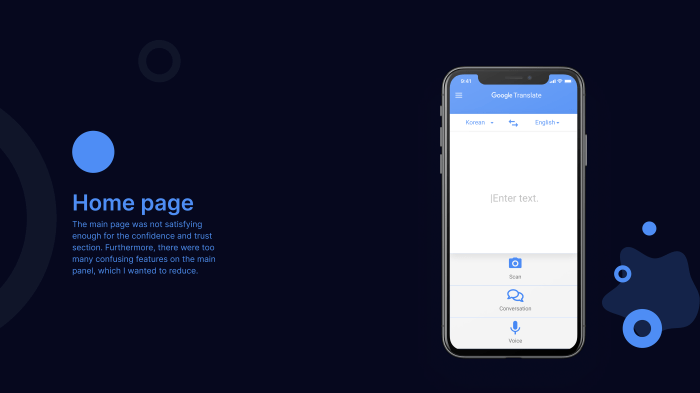
The Google Translate UI overhaul, poised to grace Pixel 6 phones, promises a significant shift in user experience. This update, likely incorporating modern design principles, aims to streamline interactions and improve accessibility. However, the transition may also introduce unforeseen challenges for existing users.
Potential Benefits for Pixel 6 Users
The overhaul is anticipated to offer enhanced visual appeal and intuitive navigation. Improvements in the layout and organization of the interface are expected to lead to a faster and more seamless user experience. For instance, a more streamlined design could enable users to access translation tools quicker, leading to increased productivity in real-time interactions. Dedicated sections for frequently used features like voice input and image translation could enhance usability, particularly for users who frequently rely on these tools.
Potential Drawbacks for Pixel 6 Users
While the overhaul seeks to improve the user experience, there’s always a risk of disrupting the existing workflow. Users accustomed to the current interface might find the new layout less familiar, potentially requiring an adjustment period. The new design could also result in a loss of functionality for some users, depending on the features being prioritized in the overhaul.
Potential complications in accessibility, particularly for users with disabilities, should be thoroughly assessed and addressed.
Impact on Translation Accuracy and Speed
The UI overhaul’s impact on translation accuracy and speed hinges on the underlying algorithms and implementation. If the overhaul involves significant changes to the core translation engine, potential performance changes might arise. However, a well-executed overhaul should not compromise the core functionality, and any modifications to translation speed and accuracy are expected to be minimal, potentially imperceptible to most users.
Maintaining or enhancing translation quality remains paramount.
Comparison Across Devices
The UI overhaul’s impact on translation performance may differ across devices. Pixel 6 phones, with their enhanced hardware, might experience a more noticeable improvement in translation speed compared to older devices with less powerful processors. Optimizing the UI for different hardware configurations is crucial to ensuring a consistent and responsive experience across the entire Google Translate ecosystem.
Rumours are swirling that Google Translate might be getting a fresh coat of paint, a complete UI overhaul, specifically for Pixel 6 phones. This potential redesign is exciting, but it makes me wonder about the broader implications of these updates. Meanwhile, there’s a whole lot happening in the social audio space, like Discord Stage Channel Discovery and Social Audio Threads, and even a new logo for Clyde.
You can explore more about that here: discord stage channel discovery social audio threads logo clyde. Regardless of the direction these trends take, it’s likely Google Translate will need to keep up with the visual evolution of mobile interfaces to maintain its user-friendliness on Pixel 6 devices.
Potential Improvements and Drawbacks
| Category | Potential Improvements | Potential Drawbacks |
|---|---|---|
| User Experience | Improved visual appeal, intuitive navigation, faster access to tools, dedicated sections for features. | Disruption of existing workflow, less familiar layout, potential loss of functionality for some users, potential accessibility issues. |
| Performance | Potential improvements in translation speed, potentially faster loading times. | Possible degradation in translation speed or accuracy if the underlying algorithms are not appropriately addressed, possible issues with hardware compatibility across different devices. |
| Accessibility | Improved design considerations for users with disabilities. | Potential issues in accessibility if the new design isn’t optimized for various accessibility needs, requiring specific adaptations. |
Potential Design Elements and Features
The Google Translate UI overhaul promises a significant leap forward in user experience, particularly for Pixel 6 users. This update likely aims to address current limitations and integrate new technologies for a more intuitive and powerful translation tool. The new design will undoubtedly impact user interaction and efficiency, potentially shifting how people approach language translation in the future.The design choices for the new Google Translate interface will significantly impact its usability and appeal.
Successful integration of new features, such as improved voice input and offline capabilities, will determine user satisfaction and adoption rate. Examining similar UI overhauls in other Google products can provide insights into potential design trends and successful implementation strategies.
Design Approaches for the New UI
Different design approaches can significantly influence user interaction with the translation tool. Material Design 3, with its emphasis on intuitive interactions and dynamic elements, presents a compelling choice. A minimalist approach, focusing on clarity and essential information, might also be effective, particularly for users prioritizing speed and accuracy. Consideration of user feedback and data from similar apps in the market will be key to achieving a successful outcome.
Adapting existing designs while introducing innovative features will likely strike a balance between familiarity and modernity.
Potential New Features
Google Translate’s evolution towards a more versatile and user-friendly tool is expected to include several enhancements. Improved voice input/output integration, allowing for natural speech translation, is a likely addition. This will enhance accessibility and speed up translation, especially in real-time situations. Image translation, enabling immediate translation of text from images, will add another layer of utility. Offline mode enhancements, with improved language pack sizes and download speeds, will provide a better user experience in areas with limited or no internet connectivity.
Examples of Similar UI Overhauls
Examining successful UI overhauls in other Google products can provide valuable insight. The shift from the older Google Maps interface to the current streamlined design is an excellent example of a successful UI evolution. The focus on intuitive navigation, enhanced functionality, and seamless integration with other Google services contributed to the app’s success. Similarly, the recent updates to Google Photos have refined user interaction, making the platform more user-friendly.
These examples demonstrate the potential for improved user experience through thoughtful design choices.
Rumours are swirling about a potential UI overhaul for Google Translate on Pixel 6 phones. It’s fascinating to see how tech companies are adapting to new hardware, like the Pixel 6. Speaking of innovative tech, have you checked out the new Catan Tilt Five AR Settlers board game augmented reality experience? catan tilt five ar settlers board game augmented reality It’s pretty cool, merging physical and digital play.
Hopefully, this translates into a smoother, more intuitive Google Translate interface on these phones, which could make language learning even easier.
Table of Potential New Features
| Functionality | Benefits | User Impact |
|---|---|---|
| Improved Voice Input/Output | Enhanced accessibility, speedier translation, natural language support | Increased usability, especially for real-time interactions |
| Image Translation | Improved efficiency, ability to translate text from images in real-time | Enhanced utility for quick translations of signs, menus, or documents |
| Offline Mode Enhancements | Improved offline experience, more robust language packs, faster downloads | Improved usability in areas with limited or no internet connectivity |
Layout Options and Visual Design Trends
The new design will likely incorporate a modern, intuitive layout. A streamlined interface, focusing on clarity and visual appeal, will enhance user experience. A responsive design, adapting to various screen sizes and orientations, is crucial for optimal usability across different devices. Visual design trends like using clean typography, vibrant colors, and subtle animations will create a visually engaging and user-friendly interface.
Emphasis on accessibility features for users with disabilities is expected.
User Interface and Accessibility Considerations
A revamped Google Translate interface, especially on the Pixel 6, needs to prioritize accessibility to ensure inclusivity. Users with diverse needs, from visual impairments to motor skill challenges, must be accommodated. A thoughtfully designed UI will not only enhance the user experience for all but also potentially unlock new markets and increase overall user satisfaction.Accessibility is no longer a niche consideration; it’s a fundamental design principle.
A seamless translation experience is paramount, and this translates directly into how the user interacts with the app. The overhaul must consider the full spectrum of user abilities, ensuring the app remains functional and intuitive for everyone.
Importance of Accessibility Features
Accessibility features are crucial in a UI overhaul because they ensure the product is usable by a wider range of users. These features create a more inclusive and equitable experience, removing barriers that might exclude individuals with disabilities. By designing for accessibility, Google Translate not only adheres to ethical considerations but also potentially reaches a larger, more diverse user base.
Potential Implications for Users with Disabilities
The overhaul has significant implications for users with disabilities. For example, users with visual impairments might benefit from larger font sizes, high contrast modes, and screen reader compatibility. Users with motor impairments may find alternative input methods like voice commands or on-screen keyboards more suitable. Careful consideration must be given to the specific needs of each disability category.
This can include features such as adjustable text sizes, color contrast options, and voice input. Additionally, incorporating screen reader compatibility ensures users can interact with the app using assistive technology.
Impact on Different User Groups
The UI overhaul should consider the diverse needs of various user groups, beyond those with disabilities. Different age groups may have varying levels of familiarity with technology, and the interface should be intuitive and easy to learn. Language learners, frequent users, and occasional users all have different needs, and the interface must cater to each. For example, the overhaul could include a simplified mode for beginners, alongside advanced features for power users.
Furthermore, clear visual cues and well-organized navigation will improve the experience for everyone.
Design Considerations for Screen Sizes and Input Methods
The new interface must be adaptable to various screen sizes and input methods. The design should be responsive, scaling seamlessly to accommodate smartphones, tablets, and desktop displays. Furthermore, the interface should support various input methods, including touchscreens, keyboards, and voice input. Users with dexterity issues will find voice input to be an important feature, allowing them to perform actions without the need for precise finger movements.
Accessibility Features and Their Benefits
| Accessibility Feature | Benefit |
|---|---|
| Adjustable Font Sizes | Provides flexibility for users with low vision or those preferring larger text. |
| High Contrast Modes | Enhances readability for users with visual impairments by increasing the difference between foreground and background colors. |
| Screen Reader Compatibility | Allows users with visual impairments to navigate and use the application using assistive technology. |
| Voice Input/Output | Provides alternative input and output methods for users with motor impairments or those who prefer voice interaction. |
| Keyboard Shortcuts | Enables faster navigation and task completion for users who prefer keyboard input. |
| On-Screen Keyboard | Provides an alternative input method for users with limited hand or finger dexterity. |
Technical Implementation and Development
The Google Translate UI overhaul for Pixel 6 phones requires a meticulous approach to technical implementation. This involves a range of considerations, from the initial design and development phases to testing and deployment. Successfully navigating these stages is crucial for a seamless user experience.The technical implementation of the UI overhaul will necessitate careful planning and execution. Key areas include updating the existing codebase, integrating new features, and ensuring compatibility with various hardware configurations.
This process will involve teams of developers working in parallel to ensure a swift and effective implementation.
Codebase Updates and Refactoring
Significant changes to the existing codebase will be required to accommodate the new design elements and features. This will involve refactoring existing code, rewriting portions to align with modern best practices, and integrating new components. This process ensures improved efficiency, maintainability, and long-term scalability. Example refactoring includes streamlining the translation engine’s integration with the new UI framework, optimizing loading times, and improving code readability.
New Feature Integration
The integration of new features, such as improved voice recognition, offline translation options, and enhanced accessibility features, will necessitate careful consideration and testing. The development process will involve careful planning to avoid conflicts between existing and new code. For example, if a new offline translation feature is being added, the code must integrate with the existing database of offline language packs.
Development Process Overview
The likely development process will follow an agile methodology, allowing for flexibility and responsiveness to changing requirements. This will involve iterative development cycles, with regular feedback from stakeholders and end-users. A phased approach will ensure that critical components are tested thoroughly before integrating them into the complete system. This includes testing of individual features, and then integrating them into the overall user interface.
Resource Requirements
Adequate resources are vital for the successful implementation of the overhaul. These resources include skilled developers with experience in Android development, UI/UX design, and translation technologies. Testing resources, including devices, and robust test data, are also crucial. Time allocation for each stage of development, from design to deployment, must be accurately estimated and managed.
Technical Challenges and Solutions
| Challenges | Proposed Solutions | Anticipated Outcomes |
|---|---|---|
| Compatibility issues between new features and existing components | Thorough testing and compatibility checks at each stage of development, and modular design of new components | Ensuring seamless integration of new features without disrupting existing functionalities. |
| Maintaining performance under various network conditions | Optimizing code for efficiency, implementing caching mechanisms, and utilizing background processes where appropriate. | Delivering a consistent and responsive user experience, regardless of network conditions. |
| Ensuring accessibility compliance | Following accessibility guidelines from the start of the design phase, and conducting thorough accessibility audits. | Developing a user interface that is usable by a diverse range of users, including those with disabilities. |
| Managing the complexity of integrating multiple languages and dialects | Employing robust data structures, implementing efficient algorithms for handling multilingual data, and utilizing external translation APIs | Enabling support for a wider range of languages and dialects with minimal performance degradation. |
Future Trends and Predictions
The evolution of translation technology is rapidly accelerating, driven by advancements in artificial intelligence (AI) and machine learning. Google Translate, as a leading player in this field, is poised to integrate these innovations, significantly impacting the user experience and the very nature of cross-cultural communication. This section explores potential future trends, UI developments, and the integration of AI advancements.
Potential Future Trends in Translation Technology
The future of translation technology is multifaceted, encompassing not just improved accuracy and speed but also expanded functionalities and user-centric design. Natural language processing (NLP) is crucial in this evolution, enabling machines to understand and generate human language with greater nuance. Furthermore, the integration of multimodal inputs, like images and video, will likely enhance the translation process, allowing for more comprehensive and context-rich interpretations.
Possible Directions for Future UI Developments in Translation Apps
The user interface of translation apps will likely shift towards more intuitive and personalized experiences. Expect a move away from static text-based interfaces towards dynamic, interactive elements. This might include real-time voice translation with improved speech recognition, augmented reality (AR) overlays for visual context, and personalized dictionaries tailored to individual needs. Furthermore, the UI will prioritize accessibility features, including customizable fonts, colors, and support for various screen readers.
Analysis of Potential Integration of AI Advancements
AI advancements will play a pivotal role in the future of Google Translate. Machine learning models will be refined to handle more complex linguistic structures and idiomatic expressions, leading to more accurate and contextually appropriate translations. The integration of deep learning models, for example, could lead to a more nuanced understanding of cultural contexts and nuances, resulting in better translations.
This might include the use of neural machine translation (NMT) models that analyze vast datasets to provide context-aware translations.
Table Demonstrating Possibilities for Future UI Developments
| Trend | Prediction | Impact |
|---|---|---|
| Real-time Voice Translation | Improved speech recognition and natural-sounding output | Enhanced communication, especially in dynamic settings |
| Multimodal Input Integration | Translation of images, video, and other visual cues | More accurate and contextual translations |
| Personalized Dictionaries | Customized dictionaries and learning resources | Enhanced learning and language acquisition |
| Augmented Reality Overlays | AR overlays providing visual context during translation | Improved understanding of visual cues and cultural context |
| Interactive Elements | Dynamic and interactive interfaces for enhanced user experience | Increased user engagement and satisfaction |
Potential Technological Advancements in the Google Translate UI
Several technological advancements could be integrated into the new Google Translate UI. One potential advancement is the incorporation of a “contextual understanding” feature. This feature could analyze the surrounding environment, using image recognition and potentially augmented reality (AR), to provide a more accurate and comprehensive translation. Furthermore, there’s potential for integrating advanced speech recognition capabilities for real-time, high-quality voice translations.
“The future of translation will be more dynamic, personalized, and intuitive, focusing on seamless and contextual communication.”
Another potential advancement is the implementation of a personalized learning system. This system could track user interactions and preferences to suggest relevant vocabulary and phrases tailored to their specific needs and learning style. This feature could also incorporate adaptive learning algorithms to personalize the user experience based on their progress and challenges.
Final Conclusion
The potential Google Translate UI overhaul for Pixel 6 phones could bring significant improvements, but also some challenges. The integration of AI advancements, new features like voice input/output and image translation, and improved accessibility will be key to its success. How the overhaul balances improved usability with maintaining accuracy and speed will be crucial to user satisfaction. Ultimately, this update could significantly impact how we use translation tools in the future, especially on Pixel 6 devices.