



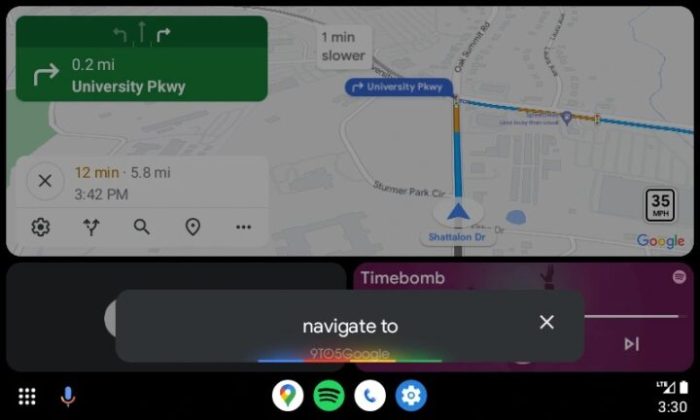
Google Assistant gets siri ous on Android Auto, marking a significant shift in how we interact with our vehicles. This integration promises a more seamless and feature-rich experience, potentially rivaling Siri’s capabilities. Currently, Google Assistant offers voice control for music, navigation, and calls within Android Auto. However, this new evolution suggests a broader functionality, bringing it closer to Siri’s extensive features.
We’ll delve into the details, examining the competitive landscape, potential improvements, and the overall impact on user experience.
This evolution of Google Assistant on Android Auto raises some intriguing questions. How does this new level of integration compare to other voice assistants, particularly Siri? What potential enhancements can we expect, and how will they improve user interaction? This article will explore these questions and more, presenting a comprehensive overview of this important development in automotive technology.
Introduction to Google Assistant Integration with Android Auto
Google Assistant’s integration with Android Auto has revolutionized the in-car experience, transforming how drivers interact with their vehicles and their digital world. It provides a seamless and intuitive way to control various aspects of their car and their mobile devices while keeping their focus on the road. This integration leverages voice commands to access information, manage tasks, and control apps, offering a hands-free and safer alternative to manual controls.The existing functionalities of Google Assistant within Android Auto encompass a broad range of tasks.
Drivers can utilize voice commands to make calls, send and receive messages, play music, set navigation destinations, and control their smart home devices. The Assistant’s capabilities are constantly expanding, and new features are frequently added to enhance the user experience.
Current Features Available in Android Auto
The features currently available to Android Auto users through Google Assistant are comprehensive and include:
- Navigation: Google Assistant in Android Auto enables users to set destinations using natural language, providing turn-by-turn directions. This capability is particularly useful for drivers who want to avoid distractions while navigating unfamiliar routes. Real-time traffic updates are also integrated, keeping drivers informed about potential delays and alternative routes.
- Communication: The Assistant facilitates communication through voice calls, message reading, and sending. Drivers can easily make calls, reply to messages, and dictate messages without taking their hands off the wheel.
- Music Playback: Users can control music playback with voice commands, switching between songs, playlists, or artists without needing to touch the infotainment screen.
- App Control: The Assistant offers control over various apps, such as calendar scheduling, setting reminders, and checking the weather.
Comparison with Other Voice Assistants
Google Assistant’s Android Auto experience stands out due to its seamless integration with the broader Google ecosystem. This includes integration with Google Maps for navigation, Google Play Music for music control, and various other Google services. A notable feature is the consistent experience across different Google products. For instance, the Assistant can seamlessly transition between managing tasks on your phone and controlling your car’s functionalities.When compared to Siri, Google Assistant in Android Auto provides a more comprehensive suite of functionalities, often incorporating real-time traffic information and broader app control capabilities.
While Siri can handle basic tasks like setting destinations or making calls, Google Assistant offers more in-depth integration with other Google services.
Key Advantages of Google Assistant over Siri in Android Auto
The key advantages of Google Assistant over Siri in Android Auto lie in its deeper integration with Google’s ecosystem. This integration allows for a more consistent user experience, a wider range of functionalities, and greater control over various aspects of the in-car experience. This seamless integration between Google services and Android Auto sets Google Assistant apart from other voice assistants.
Google Assistant’s Android Auto presence is getting a serious upgrade, which is great news. Switching to a different browser like Brave might be a good idea for those looking for alternatives to Chrome or Vivaldi, especially if you’re using Chromium-based browsers. Brave browser choice chrome vivaldi replacement chromium is a growing trend, but the improved Google Assistant integration in Android Auto is still a significant development for seamless hands-free control in the car.
Exploring the “Siri-ous” Aspect of the Integration
The integration of Google Assistant into Android Auto presents a compelling challenge and opportunity in the automotive voice assistant arena. Google’s ambition to rival, and potentially surpass, established players like Apple’s Siri in the in-car space is evident. This integration demands a careful examination of the competitive landscape, the potential impact on user experience, and the strengths and weaknesses of both platforms.This exploration delves into the specific implications of Google Assistant mimicking Siri-like functionalities within Android Auto, highlighting potential improvements and challenges in this competitive landscape.
The focus is on understanding how Google Assistant can leverage its strengths to enhance the user experience and potentially overcome any perceived shortcomings compared to Siri.
Competitive Landscape of Automotive Voice Assistants
The automotive voice assistant market is fiercely contested. Apple’s Siri, established in the car market, already enjoys a strong user base and brand recognition. Other competitors, like Amazon’s Alexa and Google’s Assistant, are aggressively seeking to expand their presence, particularly with the rise of in-car infotainment systems. This competition necessitates a deep understanding of the strengths and weaknesses of each assistant in the context of automotive integration.
The current market dynamics are characterized by a variety of features, from basic navigation and music control to more sophisticated functions like hands-free calling and smart home integration. Understanding how each assistant fits into this ecosystem is critical for assessing the impact of Google Assistant’s integration into Android Auto.
Implications of Google Assistant Emulating Siri-like Functionalities
Google Assistant’s emulation of Siri’s functionalities within Android Auto signifies a strategic move. By mirroring Siri’s features, Google aims to attract a broader user base accustomed to Siri’s commands and functionalities. This approach recognizes the importance of a familiar and intuitive interface in the automotive environment, where users expect seamless interaction. This emulation could lead to a more cohesive user experience across different platforms, but it also presents the challenge of maintaining Google Assistant’s unique strengths while adhering to the user expectations set by Siri.
The goal is not just to copy but to innovate.
Impact on User Experience in Android Auto
The integration of Google Assistant into Android Auto has the potential to significantly improve the user experience. A key aspect is the simplification of tasks. Users can potentially manage their daily routines and information requests with greater ease. The intuitive nature of voice commands, already a standard in many smartphones, is expected to translate well into the car environment.
This shift towards voice control can also improve safety by reducing the need for drivers to manually interact with the display or touch controls. The seamless transition from phone to car functionalities is crucial for a positive user experience.
Comparison of Google Assistant and Siri in Android Auto
A comparison reveals nuanced strengths and weaknesses for both assistants. Siri’s strength lies in its long-standing integration with Apple’s ecosystem, resulting in a refined and consistent experience. However, Google Assistant boasts a broader range of functionalities, potentially offering greater versatility. The strengths of Google Assistant lie in its access to a wider range of information and services, a significant advantage for users seeking comprehensive control.
Conversely, Siri’s integration with Apple’s products, like CarPlay, could potentially provide a more seamless and intuitive user experience for those accustomed to Apple devices.
Potential Improvements Google Assistant Can Offer Competitors
Google Assistant can improve upon its competitors by focusing on specific areas. One area for improvement involves enhancing its accuracy in understanding complex commands in dynamic driving environments. This requires a robust and adaptive voice recognition system that is less prone to misinterpretations, thus reducing the likelihood of errors. Furthermore, the seamless integration with existing Android Auto features can provide a more comprehensive and integrated user experience.
Google Assistant’s Android Auto integration is getting seriously impressive. It’s a compelling alternative to Siri, but if you’re looking at phones with similar capabilities, checking out the specs of the HTC One series might be worth your time. HTC One series specs often showcase comparable performance and features, giving you a good range of options for hands-free voice control.
Ultimately, Google Assistant’s strength in Android Auto remains undeniable.
The integration of smart home control with in-car features, mirroring Siri’s capabilities, could be a key differentiator and a substantial improvement for the user.
Potential Improvements and New Features
Google Assistant in Android Auto has shown promising potential, but there’s always room for enhancement. This section explores potential improvements to Google Assistant, focusing on design considerations for voice interaction and user customization within the Android Auto environment. The goal is to make the Assistant more intuitive, convenient, and integrated with the driving experience.
Improved Navigation Integration
Navigation is a crucial aspect of the Android Auto experience. Enhancements in navigation integration with Google Assistant can significantly improve the user experience. These enhancements should include more natural language processing for route modifications and real-time traffic updates. By leveraging voice commands, users can easily adjust their destinations or receive updates on changing traffic conditions without needing to look at the screen.
Google Assistant is finally getting serious on Android Auto, a welcome update. But if you’re looking for a reliable USB-C cable for your OnePlus 2, check out here are places you can buy USB-C cables for your OnePlus 2. Having the right cable is key for a smooth experience, especially with the new assistant features, so make sure you get a good one! Hopefully, this enhanced Assistant will bring more streamlined control to Android Auto.
For example, a user could say “Adjust my route to avoid the highway,” and the Assistant would instantly update the navigation app. This seamless integration would enhance the user’s safety and comfort.
Enhanced Media Control
A more comprehensive media control system for Google Assistant is essential. This feature allows users to control multiple music services with voice commands, offering a richer and more versatile audio experience. Users should be able to switch between different playlists, podcasts, or audiobooks directly through voice commands. Support for a wider range of media services will further enhance the user experience.
For instance, a user could say “Play my workout playlist on Spotify” or “Skip to the next song on Pandora.” The integration should be seamless, allowing users to seamlessly switch between different music services without having to manually interact with the application.
Enhanced Smart Home Control
The integration of smart home control within the Google Assistant in Android Auto presents an excellent opportunity for enhancing convenience and user experience. This integration should enable users to control their smart home devices hands-free, offering a more streamlined approach to managing their household. The Assistant can be trained to recognize common commands, enabling users to say things like “Turn on the living room lights” or “Set the thermostat to 72 degrees.” Voice responses should provide clear confirmation of the actions taken, ensuring the user is aware of the status of their smart home devices.
User Control and Customization, Google assistant gets siri ous on android auto
To maximize user satisfaction, Google Assistant in Android Auto needs customizable settings. This allows users to tailor the Assistant to their specific needs and preferences. The Assistant should allow users to modify voice commands, set preferred responses, and customize the Assistant’s behavior for different situations. For example, users could program the Assistant to respond differently during certain times of day or for specific destinations.
This level of control would improve user satisfaction and ensure a personalized experience.
Potential Updates Table
| Update | Functionality | User Benefit | Technical Considerations |
|---|---|---|---|
| Improved Navigation Integration | Enhanced navigation features and voice control; real-time traffic updates; route modifications | Faster, easier navigation, reduced distraction | Integration with existing navigation apps, accurate real-time traffic data |
| Enhanced Media Control | More comprehensive control over media playback across multiple music services; switching between playlists/podcasts/audiobooks | Better media management, hands-free control | Compatibility with various music services, robust voice recognition for different services |
| Enhanced Smart Home Control | Integration with smart home devices; hands-free control; clear confirmation of actions | Simplified home control, increased convenience | Security considerations for smart home device access; reliable communication protocols |
User Perspective and Feedback: Google Assistant Gets Siri Ous On Android Auto
Google Assistant’s integration with Android Auto has garnered a mixed bag of user feedback. While some users praise its convenience and efficiency, others express frustration with its limitations and occasional inaccuracies. Understanding these perspectives is crucial for Google to refine the integration and enhance the overall user experience.
User Feedback Examples
User feedback on Google Assistant’s performance in Android Auto often highlights both positive and negative aspects. Some praise its ability to easily control music playback, make calls, and send messages hands-free. However, many report issues with inaccurate voice recognition, especially in noisy environments. Other complaints center around the integration’s inability to seamlessly understand complex commands or follow through with multi-step requests.
This variability in experience emphasizes the importance of addressing specific user needs and pain points.
Pros and Cons of the Integration
The integration of Google Assistant in Android Auto presents several advantages and disadvantages from a user standpoint. Pros include hands-free control of various functionalities, seamless integration with other Google services, and the potential for improved productivity while driving. Cons include occasional voice recognition errors, limited functionality compared to dedicated in-car systems, and the potential for distraction due to complex interactions.
Understanding the trade-offs between convenience and safety is essential.
User Expectations
Users expect Google Assistant to be reliable and accurate, capable of understanding natural language commands in various scenarios, and smoothly integrating with their existing routines. They anticipate a user-friendly interface and a system that adapts to their individual preferences. Furthermore, they expect the integration to improve over time with ongoing updates and bug fixes. This highlights the ongoing need for continuous improvement and adaptation to user needs.
Current User Sentiment
Current user sentiment towards Google Assistant in Android Auto is a complex mix of satisfaction and frustration. While many appreciate the convenience of hands-free control, a significant portion of users are dissatisfied with the accuracy and reliability of voice recognition, particularly in real-world driving conditions. This illustrates the need to address user concerns about accuracy and consistency.
Areas for Improvement
Google Assistant can enhance its performance in Android Auto by improving voice recognition accuracy, especially in challenging environments such as noisy cars. Addressing limitations in understanding complex commands and multi-step requests is crucial. Furthermore, integrating more advanced features, such as real-time traffic updates and seamless navigation, could significantly improve the overall user experience. Finally, incorporating user feedback directly into the development process will be critical to achieving these improvements.
Future Implications and Predictions

The integration of Google Assistant into Android Auto marks a significant leap forward in how we interact with our vehicles. This evolution promises a future where in-car experiences are seamlessly interwoven with our digital lives, creating a more intuitive and personalized driving experience. Beyond the immediate benefits, the long-term implications for both the automotive industry and the user experience are profound.The future of voice assistant integration in Android Auto is likely to be characterized by increased sophistication and natural language understanding.
Imagine being able to not just control your vehicle’s functions, but also access information, manage your calendar, or even control smart home devices hands-free, all while maintaining focus on the road.
Future Development of Voice Assistant Integration
Voice commands will become even more nuanced and context-aware. This will allow for more complex requests, like scheduling a meeting while simultaneously adjusting the climate control or receiving real-time updates about traffic conditions while playing music from your preferred streaming service. The integration will also likely become more personalized, adapting to individual driver preferences and routines. This means the assistant could anticipate your needs and proactively offer relevant information or commands, significantly enhancing the overall driving experience.
Potential for Future Collaborations
Future collaborations between Google and automotive companies are crucial to expanding the reach and functionality of Android Auto. These partnerships will lead to deeper integration within the vehicle’s existing systems, potentially encompassing advanced features like seamless data sharing between the car and your personal devices. For example, a collaboration with a car manufacturer might enable the assistant to access and control the car’s navigation system, entertainment options, and safety features all through a single, unified interface.
This collaborative effort will ensure that the assistant can cater to the specific needs and functionalities of various car models, resulting in a more diverse and comprehensive experience.
Long-Term Impact on the Automotive Industry
The integration of voice assistants will undoubtedly reshape the automotive industry. Car manufacturers will need to adapt their systems and software to accommodate the new level of interaction and data flow. This will lead to the development of more sophisticated in-car infotainment systems, with an emphasis on seamless connectivity and intuitive user interfaces. The potential for revenue generation through new services and data usage will also reshape the market dynamics.
Reshaping Interactions with Vehicles
The integration will transform how people interact with their vehicles. Instead of separate systems for navigation, music, and climate control, drivers will be able to control virtually all aspects of their car through a single, unified interface. This simplification will not only enhance convenience but also improve safety by reducing driver distraction. The transition from physical buttons and knobs to voice commands is not only about convenience; it’s a step towards a future where vehicles are more integrated into our daily lives.
Future Directions from a Technical Perspective
The technical advancements required for the future of this integration will center around enhanced natural language processing, machine learning, and the development of more sophisticated voice interfaces. The voice assistant will need to understand not just individual commands, but also the context of the situation, anticipating needs and requests before they are articulated. This evolution demands constant improvement in algorithms and models that recognize subtle nuances in speech and context.
The integration will likely become more adaptive to the individual driver’s voice patterns, further enhancing its personalized and intuitive nature.
Conclusion
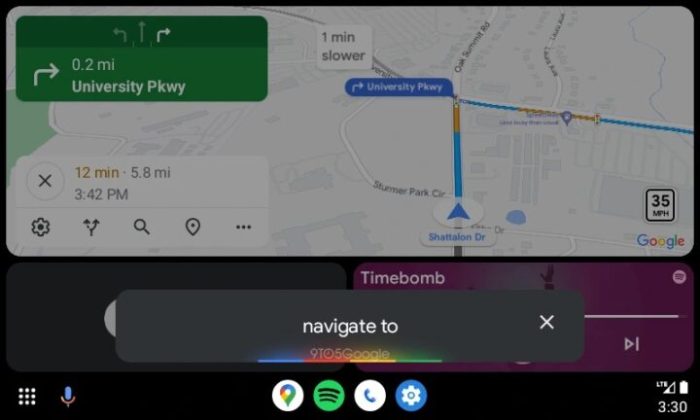
In conclusion, Google Assistant’s increased capabilities on Android Auto are a significant step towards a more advanced and user-friendly in-car experience. The potential for enhanced navigation, media control, and smart home integration is exciting, and the integration of Siri-like features suggests a new level of competition in the automotive voice assistant arena. The future of in-car technology looks promising, and this evolution in Android Auto is a crucial part of that future.