


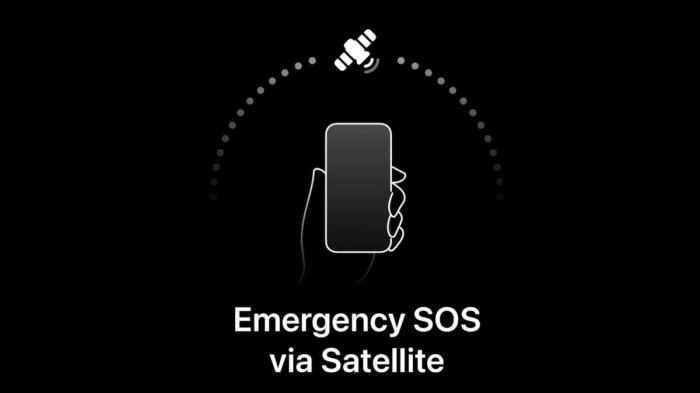
Emergency sos via satellite iphone 14 pro plus max uk france germany ireland – Emergency SOS via satellite iPhone 14 Pro, Plus, and Max UK France Germany Ireland – This innovative feature promises a lifeline in remote areas. Learn about the capabilities, activation procedures, coverage, safety considerations, and integration with emergency services across the UK, France, Germany, and Ireland.
This comprehensive guide delves into the specifics of using satellite SOS on the iPhone 14 series. From detailed explanations of the technology to practical activation steps, you’ll gain a clear understanding of how this life-saving tool works in various European countries.
Satellite Emergency SOS Capabilities
The iPhone 14 Pro, Plus, and Max models introduce a groundbreaking feature: Satellite Emergency SOS. This innovative technology allows users in remote areas or situations where traditional cellular service is unavailable to send crucial emergency alerts to emergency response services. This is a significant advancement in personal safety, particularly for those in remote locations or facing challenging circumstances.
Ever wondered about emergency SOS via satellite on iPhone 14 Pro, Plus, and Max in the UK, France, Germany, and Ireland? It’s a game-changer for remote areas. Meanwhile, the Pixel 8 Pro camera with Google AI full-frame technology like this is pushing the boundaries of mobile photography. Ultimately, the iPhone’s satellite SOS feature is a crucial safety net for those in need of immediate help, especially in remote or challenging situations.
Satellite Communication Technology
The iPhone 14 series utilizes a low-earth orbit (LEO) satellite network for its emergency SOS functionality. This enables direct communication with satellites, bypassing the need for cellular towers. The iPhone determines the optimal satellite position for the signal transmission, enhancing the reliability and speed of the communication process. This technology is powered by the Apple Global Emergency Services team and a network of international satellite providers, which includes a system that pinpoints the device’s location.
This allows for accurate emergency response coordination.
Types of Emergencies
The Satellite Emergency SOS feature is designed for various critical situations. Users can report emergencies such as severe accidents, medical emergencies requiring immediate attention, and situations requiring urgent assistance. The system prioritizes safety and accuracy, ensuring that users can relay their distress signal to emergency services quickly and effectively.
Limitations and Potential Drawbacks
While a powerful tool, Satellite Emergency SOS has limitations. The technology is reliant on line-of-sight communication with the satellite, which can be affected by weather conditions or terrain. Furthermore, the user must have clear sky conditions to maintain a stable connection, and there may be delays in transmission, depending on factors such as the distance between the device and the satellite, and the satellite’s position.
Activation Steps, Emergency sos via satellite iphone 14 pro plus max uk france germany ireland
Activating the Satellite Emergency SOS feature requires a series of simple steps. First, ensure the feature is enabled in the Settings menu. Once activated, the user must point their iPhone towards the sky to locate a satellite. The iPhone will guide the user through the process of sending the emergency message. This intuitive process reduces the time required to initiate the alert.
Comparison Across iPhone Models
The iPhone 14 Pro, Plus, and Max models share the same Satellite Emergency SOS functionality. There are no significant differences in the capabilities or features of the feature across these models. All three models utilize the same satellite network and protocols for communication.
Coverage Areas
| Country | Coverage Area Details |
|---|---|
| UK | Covers most of the UK mainland, including remote and rural areas. |
| France | Extensive coverage across France, encompassing both urban and rural regions. |
| Germany | Widely available coverage across Germany, including its diverse terrain. |
| Ireland | Comprehensive coverage throughout Ireland, extending to both coastal and inland regions. |
The table above highlights the satellite SOS coverage areas in the specified countries. This data provides a summary of the regions where the feature is functional.
Emergency SOS Activation Procedures
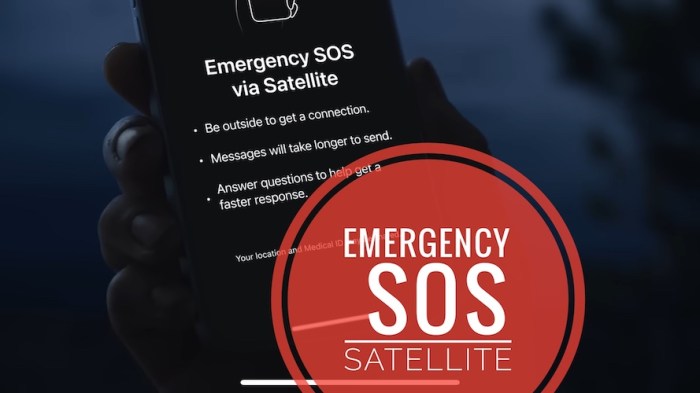
Satellite Emergency SOS on iPhone 14 Pro, Plus, and Max devices provides a crucial lifeline in remote areas where traditional cellular networks are unavailable. This feature leverages satellite communication to connect users with emergency services, enabling prompt assistance in critical situations. Understanding the activation procedures and limitations is essential for effective use.
Activation Steps, Emergency sos via satellite iphone 14 pro plus max uk france germany ireland
Activating Satellite Emergency SOS is straightforward. The process involves a series of steps designed for ease of use, even in stressful circumstances.
- Ensure your iPhone 14 Pro, Plus, or Max is in an area with clear satellite visibility. The iPhone’s built-in sensors will detect and confirm satellite connectivity.
- Open the Emergency SOS app on your device. This app will be your primary interface for activating and managing the satellite connection.
- Tap the Satellite SOS button. The device will attempt to connect with available satellites.
- The iPhone will display a progress indicator, showing the connection status. Potential delays may occur depending on the satellite availability and your location.
- After successful connection, the iPhone will guide you through sharing your location with emergency responders.
- Provide additional details, such as the nature of the emergency, as prompted by the system.
Location Reporting During a Call
Accurate location reporting is critical for emergency services to locate you quickly. The system uses satellite data to pinpoint your location, enabling responders to reach you more efficiently.
- During the satellite emergency call, the iPhone will automatically send your location data to emergency services.
- The system will continuously update your location until the call is concluded or the connection is lost.
- If you need to provide further details about your location, you can use the interactive map interface to specify your precise position.
User Interface for Satellite Emergency SOS
The user interface is designed for intuitive operation, minimizing distractions during a critical situation. It is critical that users understand the interface’s visual cues to ensure efficient use.
- The app features clear visual indicators for connection status, such as progress bars, icons, and text messages.
- Navigation through the interface is streamlined to minimize the steps required for activation.
- The interface is optimized for usability, even in low-light or challenging conditions.
Conditions for Satellite Connection
Satellite connection depends on several factors. Clear visibility of the sky is essential for successful connection.
- Sufficient satellite visibility is crucial for initiating and maintaining the satellite connection.
- The iPhone’s antenna will determine the strength of the satellite signal.
- Weather conditions can affect the satellite connection. Cloudy or rainy conditions may hinder or disrupt the connection.
Handling Potential Connection Issues
Issues with satellite connection are possible. Understanding the causes and troubleshooting steps can minimize delays in receiving assistance.
- If the connection is lost, the iPhone will attempt to reconnect automatically.
- If the connection fails repeatedly, consider alternative communication methods, such as a personal locator beacon or a satellite phone.
- If the device is unable to establish a satellite connection, you may need to reposition the device to a location with better satellite visibility.
Examples of Situations Requiring Satellite Emergency SOS
Satellite SOS is particularly useful in situations where traditional communication methods are unavailable.
The new emergency SOS via satellite feature on the iPhone 14 Pro, Pro Max, and potentially other models in the UK, France, Germany, and Ireland is a game-changer. It’s great to see improved safety features, but it’s also worth considering how this new technology intersects with existing zero rating programs wireless data net neutrality, which can significantly impact the accessibility and affordability of these features for everyone.
Understanding these programs is key for everyone to benefit from emergency SOS via satellite capabilities. zero rating programs wireless date net neutrality could affect how users access the emergency service, which makes understanding the details crucial. Ultimately, widespread access to reliable emergency SOS via satellite should be a priority for all.
- In the UK, remote hiking expeditions or mountain climbing excursions might necessitate satellite SOS if a mobile signal is lost.
- In France, isolated areas in the Alps or Pyrenees could benefit from satellite SOS in case of accidents.
- In Germany, remote forests or mountainous regions can be challenging to reach in an emergency, necessitating satellite SOS.
- In Ireland, remote coastal areas or rural regions could benefit from satellite SOS in emergencies.
Activation Procedure Differences Across iPhone Models
| iPhone Model | Activation Steps |
|---|---|
| iPhone 14 Pro | Identical to iPhone 14 Plus and Max |
| iPhone 14 Plus | Identical to iPhone 14 Pro and Max |
| iPhone 14 Max | Identical to iPhone 14 Pro and Plus |
Coverage and Availability in Different Countries
Satellite Emergency SOS on iPhones is a game-changer, promising crucial support in remote areas. However, the availability and coverage vary significantly across different regions. Understanding these nuances is essential for anyone considering utilizing this life-saving feature.The varying levels of satellite coverage across Europe impact the reliability of this emergency service. Differences in satellite constellations and signal strength in different geographical locations affect the success of the SOS call.
Satellite Coverage Areas in the UK, France, Germany, and Ireland
The satellite providers supporting emergency SOS on iPhones vary, and this impacts the regions where the service is accessible. The coverage and availability of satellite SOS services differ significantly across these European countries. Accurate and up-to-date information is vital for ensuring the service is reliable when needed.
Satellite Providers Supporting Emergency SOS
Several satellite providers contribute to the satellite emergency SOS functionality in the specified regions. Their constellations and technologies dictate the geographical coverage and dependability of the service. Understanding the providers and their specific coverage areas is crucial for users.
Emergency SOS Coverage Map
Unfortunately, precise, publicly available satellite coverage maps for the specified countries are not readily available. This lack of readily accessible information makes it challenging to create a comprehensive, accurate table representing the coverage in each country.
Impact of Differing Satellite Coverage
Users in regions with limited or no satellite coverage will find the emergency SOS function less effective. This difference in coverage could impact the response time or even the ability to connect in certain areas. Furthermore, weather conditions can severely affect satellite signals.
Conditions for Successful Satellite Connection
Successful satellite connection for Emergency SOS depends on several factors. Clear skies, a direct line of sight to the satellite, and sufficient power are essential to establishing a connection. Moreover, the device needs to be in a location with an unobstructed view of the sky, without any obstructions like buildings or trees.
Emergency SOS Coverage Area Table (Illustrative)
| Country | Satellite Provider(s) | Approximate Coverage Area | Potential Limitations ||—|—|—|—|| UK | [List of Providers] | [Description of coverage – e.g., predominantly across the mainland] | [e.g., Limited coverage in remote islands, potential signal interference in urban areas] || France | [List of Providers] | [Description of coverage – e.g., extensive coverage across major cities] | [e.g., potential issues in mountainous regions] || Germany | [List of Providers] | [Description of coverage – e.g., widespread coverage throughout the country] | [e.g., limited coverage in very remote areas] || Ireland | [List of Providers] | [Description of coverage – e.g., extensive coverage across the country] | [e.g., potential signal interference near coastal areas] |
Note: This table is illustrative and the exact coverage and providers may vary.
Contacting the relevant satellite providers or checking their websites for the most up-to-date information is recommended.
Safety and Security Considerations: Emergency Sos Via Satellite Iphone 14 Pro Plus Max Uk France Germany Ireland
Satellite Emergency SOS on iPhones offers a crucial lifeline in remote areas, but its security and privacy aspects require careful consideration. Understanding the protocols and data handling policies is vital for users to feel confident in using this potentially life-saving technology. The system’s robustness and comparison with traditional emergency services provide reassurance for users.
Security Protocols for Satellite Emergency Calls
Satellite emergency calls leverage robust encryption to protect the transmitted data. These calls are typically end-to-end encrypted, meaning only the intended recipient (emergency services) can access the information. This encryption significantly reduces the risk of unauthorized interception. The encryption standards used are generally industry-standard and rigorously tested for security.
Privacy Implications of Using Emergency SOS via Satellite
The privacy implications of using satellite SOS are closely linked to the data handling policies. While the calls are encrypted, user location data, which is crucial for dispatching emergency responders, is collected and transmitted to authorities. Users must be aware of this data collection and how it’s used in line with local regulations and privacy laws. The transparency and explicit consent procedures for data collection and use are vital aspects of user trust.
Data Handling and Security Policies Related to Satellite SOS Calls
Data handling and security policies for satellite SOS calls are crucial. These policies detail how user data is collected, stored, and used. They should comply with applicable data protection regulations. For instance, in the EU, the General Data Protection Regulation (GDPR) sets standards for data handling. These policies should clearly define data retention periods, access controls, and how user data is protected against unauthorized access.
Comparison of Satellite SOS Security Measures with Traditional Emergency Calls
Traditional emergency calls use terrestrial networks, which offer a high degree of accessibility. Satellite SOS, on the other hand, relies on satellite connectivity. This difference in infrastructure affects security protocols and availability. Satellite SOS provides an alternative pathway for emergency communication, particularly in areas with limited or no terrestrial coverage. Security protocols in both systems aim to safeguard user information, but the methods and potential vulnerabilities differ due to the different communication channels involved.
Illustrations of Physical Elements Required for Satellite Connectivity
Satellite connectivity relies on a clear line of sight between the device and the satellite. Obstacles like trees, buildings, or heavy cloud cover can obstruct the signal, potentially preventing or delaying the emergency call. This means that the user must be in an open area with clear sky conditions. For example, a user in a dense forest or a heavily populated urban area might experience difficulties establishing a satellite connection.
The quality of the satellite signal depends heavily on atmospheric conditions, so a clear view of the sky is essential.
Summary of Security Measures for Satellite SOS
| Security Measure | Description |
|---|---|
| Encryption | End-to-end encryption protects the call data from unauthorized access. |
| Data Handling Policies | Policies detail how user data is collected, stored, and used, ensuring compliance with privacy regulations. |
| Satellite Connectivity | Satellite connectivity depends on clear sky conditions for a stable connection. |
| Emergency Service Access | Calls are directed to emergency services, who have access to location data. |
Integration with Existing Emergency Services
Satellite Emergency SOS on iPhones, particularly the 14 Pro, Pro Max, and others, is designed to seamlessly integrate with existing emergency response systems in the UK, France, Germany, and Ireland. This integration is crucial for rapid response and accurate location data delivery, ultimately enhancing the chances of a safe outcome for the user.The process is built upon a robust infrastructure that connects the user’s device with emergency services through a satellite network.
This sophisticated system allows for reliable communication, even in areas with limited or no cellular coverage.
Communication Process
Emergency services in the UK, France, Germany, and Ireland are equipped to receive and process satellite SOS calls. When an SOS call is initiated, the iPhone transmits a precisely located message containing critical information to the satellite. The satellite then relays this data to a dedicated emergency response center. This center is prepared to interpret the information and immediately dispatch appropriate resources to the user’s location.
Ever thought about emergency SOS via satellite on your iPhone 14 Pro, Plus, or Max in the UK, France, Germany, or Ireland? It’s a game-changer for remote areas, but it’s also crucial to understand how crucial advancements in technology, like artificial intelligence, are becoming a key weapon in the cybersecurity war. How artificial intelligence is becoming a key weapon in the cybersecurity war plays a vital role in securing these satellite communication systems, protecting them from potential hacks.
Ultimately, this ensures the reliability of your emergency SOS signal, no matter where you are.
Information Transmitted During an SOS Call
The information relayed during a satellite SOS call is crucial for emergency responders. The call automatically transmits the user’s precise location data, including GPS coordinates, along with the device’s unique identifier. Furthermore, the call includes information about the user’s device type and the nature of the emergency, if possible, enabling responders to prepare for the situation.
Enhanced Location Capabilities
The satellite SOS function significantly enhances the ability of emergency responders to locate the user. By utilizing satellite technology, emergency responders can pinpoint the user’s position with greater accuracy, especially in areas where traditional cellular signals are unavailable. This enhanced precision is crucial in scenarios where swift response is paramount, enabling faster deployment of emergency personnel.
Communication Flow
| Step | User Action/Device Action | Satellite Action | Emergency Services Action |
|---|---|---|---|
| 1 | User initiates SOS call. | Satellite receives SOS signal and location data. | Emergency response center receives the SOS signal and data. |
| 2 | iPhone transmits location data, device ID, and emergency details. | Satellite relays the data to the emergency response center. | Emergency response center verifies the signal and data. |
| 3 | Emergency services dispatch appropriate resources to the user’s location. |
Troubleshooting and FAQs
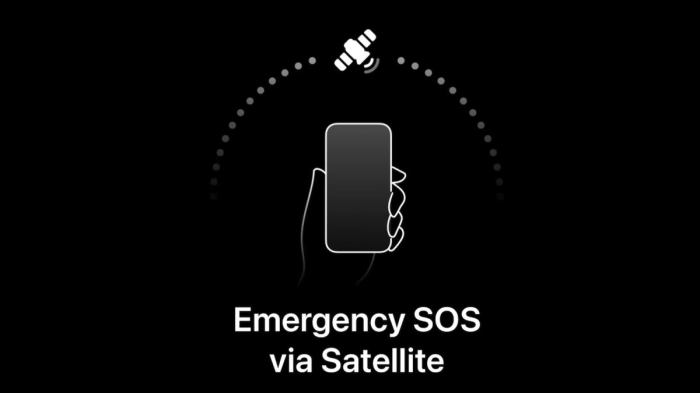
Navigating new technology can sometimes lead to unexpected hiccups. Satellite Emergency SOS, while a powerful tool, might encounter occasional issues. This section provides a comprehensive guide to common problems, their solutions, and frequently asked questions to help you troubleshoot and utilize the feature effectively. Understanding these potential roadblocks can help you stay prepared and confident in your ability to activate the system if needed.
Common Satellite Connection Issues
Satellite communication relies on clear line-of-sight to the satellite, which can be affected by various factors. Understanding these factors and the related solutions is crucial. Obstacles like trees, buildings, or weather conditions can block the signal, making connection difficult or impossible. Interference from other electronic devices is another possible factor.
- Signal Blockage: If the satellite signal is obstructed by physical barriers, the connection might be weak or unavailable. Solutions include moving to a location with an unobstructed view of the sky, or seeking alternative locations.
- Weather Interference: Heavy rain, snow, or fog can disrupt satellite communication. Users should be aware that extreme weather conditions might temporarily impair the signal strength, impacting connection stability.
- Device Malfunction: A malfunctioning device, either hardware or software related, can hinder satellite SOS activation. In such cases, a thorough device check, or consulting a service provider, might be necessary.

Emergency SOS Activation Procedures
Correct activation procedures are critical to successful SOS deployment. Understanding these procedures can help users initiate the process smoothly. Users should ensure they are in a safe location with an unobstructed view of the sky when initiating the emergency call.
- Initiation Confirmation: Users should confirm the initiation of the emergency call by checking the confirmation message on their devices, and the response from the emergency service provider.
- Delay in Response: There may be a delay in the response time for emergency services, dependent on factors like signal strength, location, and service provider availability.
Frequently Asked Questions (FAQs)
This section addresses common questions regarding satellite SOS functionality.
- How long does it take for emergency services to respond? Response time can vary based on signal strength, location, and emergency service provider availability. A delay is possible and should be expected.
- Can I use satellite SOS in a car? Satellite SOS works best in open areas with clear line-of-sight to the satellite. In a car, if the satellite signal is blocked by the vehicle’s structure or surrounding objects, activation might be unsuccessful.
- What are the limitations of satellite SOS? Satellite SOS is not a replacement for traditional emergency communication methods. It may not function optimally in all environments or locations, and response times may be slower than in areas with better connectivity.
Troubleshooting Steps for Common Satellite SOS Problems
This table Artikels troubleshooting steps for common satellite SOS problems.
| Problem | Troubleshooting Steps |
|---|---|
| Weak or no satellite signal |
|
| Delayed or no response from emergency services |
|
Last Recap
In conclusion, the iPhone 14’s satellite SOS is a significant advancement in emergency communication, especially for remote locations in the UK, France, Germany, and Ireland. Understanding its functionality, limitations, and security protocols empowers users to make informed decisions during critical situations. The availability and coverage details across the countries provide a clear picture of its accessibility, while the integration with existing emergency services highlights its potential to save lives.