


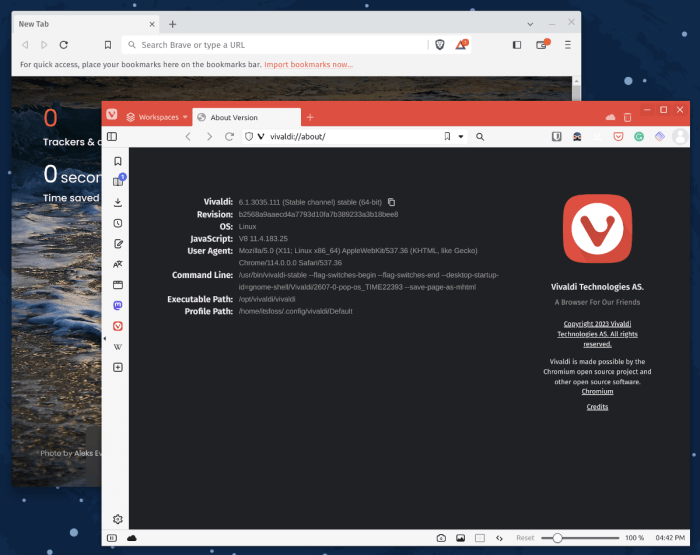
Brave browser choice chrome vivaldi replacement chromium is a hot topic for anyone looking beyond the ubiquitous Chrome browser. With the rise of privacy concerns and a desire for more customized experiences, users are actively exploring alternatives. This in-depth look dives into the world of Chromium-based browsers, comparing and contrasting Brave and Vivaldi with a focus on their strengths, weaknesses, and unique approaches to security, privacy, and features.
We’ll also explore the broader context of Chromium and its impact on the browser landscape.
The browser market is evolving rapidly. Beyond the well-known names, there are a plethora of options catering to diverse user needs. This exploration will help you understand the factors influencing your browser choice and decide if a switch from Chrome is right for you.
Introduction to Alternatives
The web browser landscape is dominated by a few key players, with Google Chrome holding a significant market share. However, the rise of privacy concerns and evolving user needs has spurred the development and adoption of alternative browsers. Users are increasingly seeking out browsers that offer greater control over their data, enhanced security features, or tailored functionality beyond the standard offerings.
This shift in the market is driven by the desire for more personalized experiences and a greater level of customization.The motivations for switching browsers are diverse. Users often seek alternatives due to concerns about data privacy and tracking. Some users may be dissatisfied with the default features or limitations of Chrome and seek a browser that better suits their specific needs.
Others prioritize specific features, such as enhanced security or a unique user interface. Ultimately, the decision to switch browsers often comes down to a careful consideration of speed, security, and the array of available features.
Key Factors in Browser Choice
Users carefully evaluate various aspects when choosing a browser. Speed is crucial for a smooth browsing experience. Security is paramount in today’s digital landscape, and users look for robust protection against malware and phishing attempts. Features such as extensions, customization options, and integration with other services are also key considerations. Users often look for compatibility with existing software and services, ensuring a seamless transition.
Comparison of Alternative Browsers
Choosing a browser alternative often involves comparing features and evaluating the trade-offs. The following table provides a concise overview of some popular alternatives to Chrome, focusing on key features and their associated pros and cons.
Switching from Chrome to a more privacy-focused browser like Brave or Vivaldi is a smart move, and a great way to improve your online experience. If you’re looking to take your digital creativity to the next level, check out these incredible one-day deals on 3D printers and accessories! unleash your creative side with these one day deals on 3d printers and accessories They’re perfect for crafting those awesome 3D models, and, hey, maybe you’ll need a new browser to keep up with your digital creations! So, if you’re in the market for a Chromium-based browser alternative, these deals might just give you the extra push you need to make the switch to Brave.
| Browser Name | Key Features | Pros | Cons |
|---|---|---|---|
| Firefox | Privacy-focused, vast extension library, customizable interface, robust security features. | Strong privacy controls, extensive add-on support, well-established user base, customizable user experience. | Can be resource-intensive, occasional performance issues on older hardware, interface might not be as intuitive for some users. |
| Vivaldi | Customizable interface, speed optimization, built-in features for productivity and note-taking, multiple tabs management. | Highly customizable interface, speed improvements, enhanced productivity features, intuitive tab management. | Smaller user base compared to Chrome, less extensive extension library, potential learning curve for new users. |
| Brave | Focus on privacy and speed, built-in ad blocking, integrated crypto wallet, sync capabilities. | Strong privacy features, built-in ad blocking, improved browsing speed, enhanced security features. | Limited extension support compared to Firefox, some users find the interface less intuitive. |
| Opera | Built-in VPN, speed optimization, support for various platforms, integrated messaging features. | Built-in VPN, speed optimization, availability on various platforms, integrated messaging. | Limited customization compared to other options, potentially less feature-rich compared to alternatives, smaller extension library. |
Comparing Brave and Vivaldi: Brave Browser Choice Chrome Vivaldi Replacement Chromium
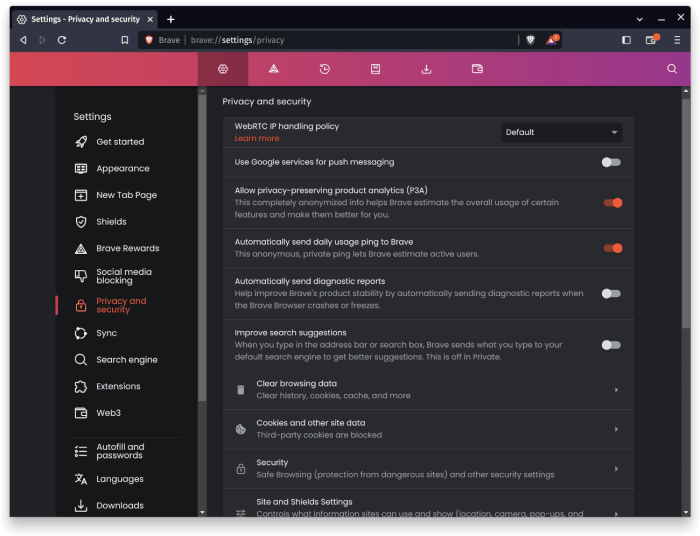
Brave and Vivaldi, both Chromium-based browsers, offer compelling alternatives to Chrome, appealing to users seeking privacy-focused features and unique user experiences. This comparison delves into their core functionalities, exploring their approaches to privacy and security, and examining their strengths and weaknesses in terms of user experience. By understanding their distinct characteristics, users can make informed decisions about which browser best suits their needs.Both Brave and Vivaldi aim to provide an enhanced browsing experience beyond the standard Chromium foundation.
They differ in their design philosophies, feature sets, and priorities, resulting in unique browser implementations that cater to diverse user preferences. This comparison highlights these differences and clarifies how each browser addresses the evolving needs of online users.
Core Feature Comparison
Brave and Vivaldi both offer a range of features beyond the standard Chromium experience, with differing emphases. Brave prioritizes privacy and security features, while Vivaldi focuses on customization and productivity tools. Their distinct approaches are reflected in their feature sets.
- Brave prioritizes privacy features like built-in ad blocking and a cryptocurrency integration through its own browser tokens. Vivaldi offers a wider array of customization options, such as custom keyboard shortcuts and themes, aimed at improving workflow efficiency.
- Brave’s focus on privacy is exemplified by its inherent ad blocking, which minimizes tracking and improves performance. Vivaldi’s customization options, while extensive, are less focused on privacy. Vivaldi’s unique approach provides users with more granular control over their browsing experience, including aspects like keyboard shortcuts.
Privacy and Security
Both browsers address privacy and security, but their methods differ significantly. Brave’s approach is more focused on user data protection, while Vivaldi offers a broader range of customization options for managing privacy settings.
- Brave’s privacy features include built-in ad blocking and a focus on user data minimization. Brave’s browser tokens, which users can receive in exchange for viewing ads, further incentivize data protection.
- Vivaldi offers a robust suite of privacy settings, allowing users to control various aspects of data collection and usage. However, its focus is less on the complete minimization of data collection compared to Brave.
Data Handling
Brave and Vivaldi’s data handling differs significantly. Brave aims to reduce data collection and usage, while Vivaldi provides more granular control. The difference is rooted in their core design philosophies.
- Brave’s built-in ad blocker and the use of browser tokens for viewing ads reduce the amount of data collected from users. Brave emphasizes transparency and user control over their data.
- Vivaldi provides more granular control over various data collection aspects. Users can selectively opt-out of certain data collection practices, which is a feature not present in the same way in Brave.
Performance, Security, and User Interface Comparison
The table below summarizes the key differences between Brave and Vivaldi across performance, security, and user interface.
| Feature | Brave | Vivaldi |
|---|---|---|
| Performance | Generally good, optimized for ad blocking and data minimization. | Generally good, customizable settings might impact performance. |
| Security | Strong emphasis on privacy and data minimization, built-in ad blocking, and browser tokens. | Strong security features, with granular privacy settings, but less emphasis on complete data minimization compared to Brave. |
| User Interface | Simple, clean interface, prioritizing privacy-related features. | More customizable and feature-rich, with extensive customization options. |
Vivaldi as a Chrome Replacement
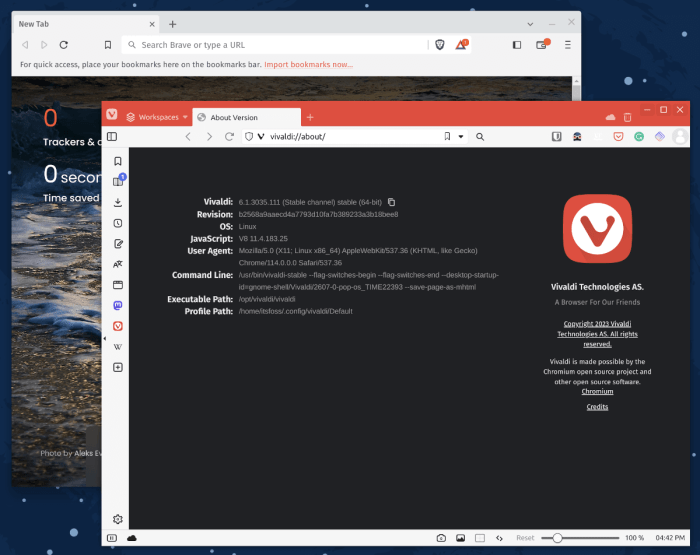
Vivaldi, a browser built on the Chromium engine, positions itself as a compelling alternative to Google Chrome. It distinguishes itself through a design philosophy focused on user customization and a feature set that addresses some of Chrome’s perceived drawbacks. This detailed analysis delves into Vivaldi’s approach to replacing Chrome, examining its key features, and comparing them directly to Chrome’s equivalent offerings.Vivaldi aims to provide a more personalized and efficient browsing experience by allowing users to tailor various aspects of the browser to their specific needs.
It seeks to improve on Chrome’s sometimes overwhelming default settings and offer more granular control over functionality. This approach, while potentially overwhelming for some, aims to provide a more sophisticated and adaptable browsing environment for power users.
Vivaldi’s Design Philosophy
Vivaldi’s design philosophy emphasizes customization and efficiency. It offers a wide range of configurable options for tab management, keyboard shortcuts, and even the appearance of the browser. This contrasts with Chrome’s often more standardized and streamlined approach, which some users find limiting.
Specific Features Appealing to Chrome Alternatives
Vivaldi boasts a number of features designed to appeal to users seeking a more personalized browser experience than Chrome. These include:
- Advanced Tab Management: Vivaldi’s tab management system goes beyond Chrome’s basic tab organization. Users can create and organize tabs into groups, assign custom colors to them, and even switch between tabs using a unique keyboard shortcut system. This offers a more sophisticated approach to handling multiple tabs compared to Chrome’s more straightforward method.
- Customizable Interface: Vivaldi offers a more extensive range of customization options for the browser’s appearance. Users can personalize the theme, font size, and layout, creating a more visually appealing and comfortable experience tailored to their preferences. This stands in contrast to Chrome’s more limited customization options.
- Built-in Productivity Tools: Vivaldi includes integrated productivity tools like note-taking and task management features, which are absent from Chrome’s core functionality. These features can be beneficial for users who want a browser that integrates more directly with their workflow.

Feature Comparison: Vivaldi vs. Chrome, Brave browser choice chrome vivaldi replacement chromium
The following table directly compares key features of Vivaldi and Chrome, highlighting the differences in functionality and capabilities.
| Feature | Vivaldi | Chrome |
|---|---|---|
| Tab Management | Advanced tab grouping, custom colors, keyboard shortcuts | Basic tab organization, limited customization |
| Interface Customization | Extensive theme, font, and layout options | Limited theme and font options |
| Built-in Productivity Tools | Note-taking, task management | No built-in productivity tools |
| Speed Dial | Personalized homepage with quick access to frequently visited sites | Standard homepage with search bar |
| Password Manager | Integrated password manager with robust security features | Integrated password manager, potentially less robust |
User Interface Comparison
Vivaldi’s interface, while similar in core functionality to Chrome, features a more distinct visual design. Vivaldi offers a cleaner, more customizable layout that allows for greater control over the arrangement of elements like the toolbar and sidebar. Chrome, by contrast, presents a more streamlined interface that prioritizes simplicity over extensive customization.
Brave as a Chrome Replacement
Brave Browser, a relatively recent contender in the browser market, presents a compelling alternative to Google Chrome. It positions itself as a privacy-focused browser, aiming to address user concerns about data collection and tracking often associated with Chrome. This approach makes it an intriguing choice for users seeking a more secure and private browsing experience.Brave’s design is driven by a strong emphasis on user privacy and security.
It prioritizes a lighter footprint than Chrome, offering a faster and more responsive browsing experience. This lighter footprint is achieved through its unique features and approaches to data handling, creating a noticeable difference in performance.
Brave’s Approach to Security and Privacy
Brave employs a multi-pronged strategy to enhance user security and privacy. It integrates a built-in ad blocker, significantly reducing the exposure to potentially malicious or tracking advertisements. This inherent ad-blocking feature distinguishes Brave from Chrome, which often displays ads, thereby potentially exposing users to various security risks. Furthermore, Brave uses a unique approach to managing user data, minimizing the collection of personal information.
Unique Features Differentiating Brave from Chrome
Brave’s unique features set it apart from other browsers, including Chrome. These features include:
- Built-in ad blocker: Brave’s integrated ad blocker actively filters out advertisements, significantly reducing the risk of exposure to malicious content and unwanted tracking. This feature contrasts sharply with Chrome’s approach, which often displays ads, potentially exposing users to security vulnerabilities and tracking mechanisms.
- Cryptocurrency-based rewards system: Brave rewards users for viewing ads, offering a small amount of cryptocurrency. This feature further distinguishes it from Chrome, which does not incorporate such a reward system. The reward system encourages users to interact with ads, potentially offering an alternative to traditional ad revenue models.
- Built-in privacy tools: Brave provides tools to enhance user privacy, including enhanced HTTPS enforcement, which encrypts all web connections by default. This is a significant difference from Chrome, which might not always automatically enforce HTTPS.
Addressing User Concerns About Chrome’s Privacy Policies
Brave addresses potential user concerns about Chrome’s privacy policies by providing an alternative that prioritizes user data protection. The built-in ad blocker and privacy tools minimize the collection and use of personal information. Brave’s unique approach to ad revenue generation, including the reward system, reduces the reliance on tracking user activity for targeted advertising. This contrasts sharply with Chrome’s model, which often uses user data for targeted advertising.
Switching from Chrome to a browser like Vivaldi or Brave is a smart move for a faster, more private browsing experience. Finding the best Marvel games for your PS4 is also a great way to spend your free time, especially when exploring titles like the ones listed in this helpful article about marvelous marvel best marvel games ps4.
Ultimately, choosing a browser like Brave can significantly enhance your online experience, offering more control and privacy compared to other options.
How Brave’s Features Differ from Chrome’s
Brave’s approach to security and privacy differs significantly from Chrome’s. Chrome’s design often prioritizes functionality and speed over user privacy. Brave, on the other hand, explicitly prioritizes user privacy by blocking ads, enforcing HTTPS, and offering cryptocurrency rewards for viewing ads. This difference in priorities is a core distinction between the two browsers.
Comparison of Performance, Security, and Privacy Features
| Feature | Brave | Chrome |
|---|---|---|
| Ad Blocking | Built-in, actively filters ads | Limited ad blocking, often displays ads |
| Privacy Tools | Enhanced HTTPS enforcement, built-in privacy controls | Limited privacy controls, may not always enforce HTTPS |
| Data Collection | Minimizes collection of user data | Collects user data for targeted advertising |
| Security | Stronger security measures, built-in ad blocker | Generally secure, but ad exposure can pose security risks |
| Performance | Generally faster and more responsive due to ad blocking and light footprint | Potentially slower due to reliance on external data and resources |
Chromium-based Browsers
Chromium is an open-source project that provides the core engine for many popular web browsers. This engine handles the rendering of web pages, managing tabs, and providing a framework for extensions and add-ons. Understanding Chromium’s role is crucial for evaluating alternative browsers, as they all build upon this shared foundation.This open-source approach allows for flexibility and customization. Developers can build upon Chromium’s features and modify them to suit specific needs, resulting in a variety of browsers tailored for different user preferences and use cases.
This approach also fosters competition, allowing users to explore alternatives that might better suit their specific needs compared to the often-default options.
What is Chromium?
Chromium is an open-source project that forms the core rendering engine and underlying framework for many modern web browsers. It handles tasks such as rendering web pages, managing tabs, and providing a platform for extensions. This open-source nature allows for modification and customization by developers. This is why you see many browsers sharing similar functionalities despite different branding and user interfaces.
Advantages of Chromium-based Browsers
Chromium-based browsers benefit from a robust and well-tested foundation, leading to generally high performance and stability. Their open-source nature fosters innovation, enabling rapid development and the incorporation of new features. Extensive extensions and add-ons are readily available, offering a high degree of customization and functionality. The widespread adoption of Chromium-based browsers makes finding compatible software and extensions easier, enhancing user experience.
Disadvantages of Chromium-based Browsers
While Chromium offers advantages, there are some potential drawbacks. The open-source nature, while beneficial in many ways, also means the security of a browser can sometimes be dependent on the specific implementation by a particular browser. The widespread use of Chromium can sometimes lead to vulnerabilities if security patches are not promptly implemented by the developers.
List of Chromium-based Browsers (excluding Chrome)
This list includes popular browsers built on the Chromium engine, providing alternatives to the often-default Chrome browser.
Switching from Chrome to a browser like Vivaldi or Brave is a great way to boost privacy and performance, especially if you’re looking for a Chromium-based alternative. Meanwhile, a massive leak regarding the Samsung Galaxy S20 FE, detailed in this article, massive Samsung Galaxy S20 FE leak leaves nothing to the imagination , highlights the tech world’s constant evolution.
Ultimately, the best browser choice depends on individual needs, but Brave offers a solid, privacy-focused option for those seeking a Chromium alternative.
- Vivaldi
- Brave
- Opera
- Microsoft Edge (Chromium-based)
- Yandex Browser
- Epic Privacy Browser
- Comodo Dragon
Comparing Chromium-based Browsers
The following table highlights key differences between the listed Chromium-based browsers, focusing on core features and unique aspects that differentiate them from Google Chrome.
| Browser Name | Core Features | Notable Differences from Chrome |
|---|---|---|
| Vivaldi | Customizable interface, tab management, built-in tools | Unique tab management features, extensive customization options, integrated tools |
| Brave | Privacy focus, built-in ad blocking, cryptocurrency support | Strong privacy features, built-in ad blocker, integrated cryptocurrency wallet |
| Opera | Built-in VPN, integrated tools, speed optimization | VPN support, built-in tools, optimized for speed and efficiency |
| Microsoft Edge (Chromium) | Integration with Windows ecosystem, security features | Integration with Microsoft services, enhanced security features, focus on compatibility |
| Yandex Browser | Personalized search, Russian-centric features | Personalized search experience, integrated with Yandex services, focus on a Russian user base |
| Epic Privacy Browser | Strong privacy and security, ad blocking | Robust privacy and security features, extensive ad blocking, focus on user anonymity |
| Comodo Dragon | Security-focused browser, enhanced protection | Enhanced security features, focused on protection against malware and phishing |
User Preferences and Choices
Choosing a web browser is a deeply personal decision, often driven by a complex interplay of user preferences. Factors like speed, security, and the availability of desired extensions heavily influence the selection process. Privacy concerns are increasingly prominent, and users actively seek browsers that prioritize their digital well-being. Understanding these user preferences is crucial for developers and companies striving to build and maintain user loyalty.User preferences are the bedrock of browser selection.
Different users value different aspects, and these values frequently align with their online habits and priorities. A user heavily reliant on productivity tools might prioritize speed and efficient extension management, while a user prioritizing online privacy might seek out a browser known for robust security protocols.
Key Aspects of User Preferences
User preferences often hinge on tangible aspects such as speed and security. A fast browser with a responsive interface enhances the overall user experience. Users expect a browser to load pages quickly and handle multiple tabs efficiently. Security features, including strong encryption and privacy protections, are becoming increasingly important in today’s digital landscape. Users are becoming more aware of potential risks and seek out browsers that effectively mitigate these risks.
Extensions are also a significant factor. The availability of a wide array of extensions directly impacts the user’s productivity and personalization options. Browsers that offer a large and reliable extension ecosystem provide greater customization possibilities.
Impact of Privacy Concerns
Privacy concerns have become a significant driver in browser selection. Users are increasingly aware of the data collection practices of various browsers and the potential for misuse of personal information. This heightened awareness is prompting a shift towards privacy-focused browsers that offer strong privacy features and user control over data collection. The increasing prevalence of online threats and data breaches contributes to this concern.
Users are increasingly concerned about the potential for their personal information to be compromised.
Assessing Privacy and Security
Users can assess a browser’s privacy and security features through various avenues. Reading independent reviews from reputable sources is crucial. Checking the browser’s privacy policy and security protocols is another important step. These policies often detail how the browser handles user data, and examining them allows users to gauge the level of protection offered. Furthermore, understanding the browser’s underlying technology and the specific security mechanisms it employs can provide insight into its robustness.
Looking at the security certifications and audit reports can give a comprehensive picture.
Role of User Reviews and Ratings
User reviews and ratings play a substantial role in shaping browser adoption. Positive reviews and high ratings build trust and credibility. These assessments offer valuable insights into the user experience with a particular browser, allowing potential users to gain a sense of its strengths and weaknesses. Users often rely on the experiences of others to make informed decisions.
This reliance on community feedback can influence choices, particularly when facing multiple options.
Summary of User Preferences (Fictional Survey)
| Feature | Brave | Vivaldi | Chrome |
|---|---|---|---|
| Speed | 7/10 | 8/10 | 9/10 |
| Security | 8/10 | 7/10 | 6/10 |
| Extension Ecosystem | 7/10 | 9/10 | 10/10 |
| Privacy Features | 9/10 | 8/10 | 5/10 |
| Ease of Use | 7/10 | 8/10 | 9/10 |
Note: This table represents a fictional user survey and the scores are illustrative examples. Real-world user experiences may vary.
Future Trends
The browser landscape is constantly evolving, driven by advancements in technology and changing user expectations. This dynamic environment necessitates a forward-thinking approach to understanding the potential developments in browser technology and their impact on user choices. Predicting the future is inherently challenging, but analyzing current trends and emerging technologies offers valuable insights into potential future browser features.
Potential Developments in Browser Technology
Current trends in web development, such as the rise of WebAssembly and progressive web apps (PWAs), point towards a future where browsers are more efficient and capable of handling complex tasks. The demand for seamless cross-platform compatibility, faster loading times, and enhanced security is driving innovation. As a result, future browsers are likely to prioritize performance and security enhancements.
These developments will likely impact not only the core functionality of browsers but also their integration with other technologies, like operating systems and devices.
Emerging Trends in the Browser Market
The browser market is witnessing a shift towards greater customization and personalization. Users are increasingly demanding more control over their browsing experience, leading to browsers that adapt to individual preferences and needs. The rise of privacy-focused browsers further underscores this trend, as users seek greater control over their data. Integration with other services, such as cloud storage and productivity suites, is also expected to become more prevalent.
These trends indicate a future where browsers are less about just displaying web pages and more about providing a holistic digital experience.
Potential Features of Future Browsers
Future browsers may incorporate features that address specific user needs and capitalize on emerging technologies. For instance, enhanced AI-powered tools for content summarization and filtering could improve user efficiency. Furthermore, advancements in virtual reality (VR) and augmented reality (AR) could lead to immersive browsing experiences.
How Emerging Technologies Shape Future Browser Development
Emerging technologies, such as artificial intelligence (AI) and machine learning (ML), are poised to significantly impact browser development. AI can be utilized to personalize user experiences, suggest relevant content, and even predict user needs. ML can optimize browser performance by analyzing user behavior and adapting to their preferences. The integration of these technologies will likely result in more intelligent and user-friendly browsing experiences.
Potential Future Features and Their Impact
| Potential Feature | Expected Impact on Browser Landscape |
|---|---|
| AI-powered content summarization and filtering | Improved user efficiency and reduced information overload. |
| Enhanced VR/AR integration | Creation of immersive and interactive browsing experiences. |
| Personalized recommendations and predictions | Increased user engagement and improved content discovery. |
| Advanced security measures (e.g., built-in privacy controls) | Enhanced user trust and protection against cyber threats. |
| Seamless integration with other services (e.g., cloud storage, productivity tools) | Creation of a more comprehensive digital ecosystem, streamlining user workflow. |
Last Recap
In conclusion, choosing a browser beyond Chrome is a personal decision. Brave and Vivaldi, both Chromium-based, offer compelling alternatives, addressing different user needs and priorities. Ultimately, the best browser for you will depend on your specific requirements, from security and privacy to speed and features. This analysis provides a framework for evaluating your options and making an informed choice.