


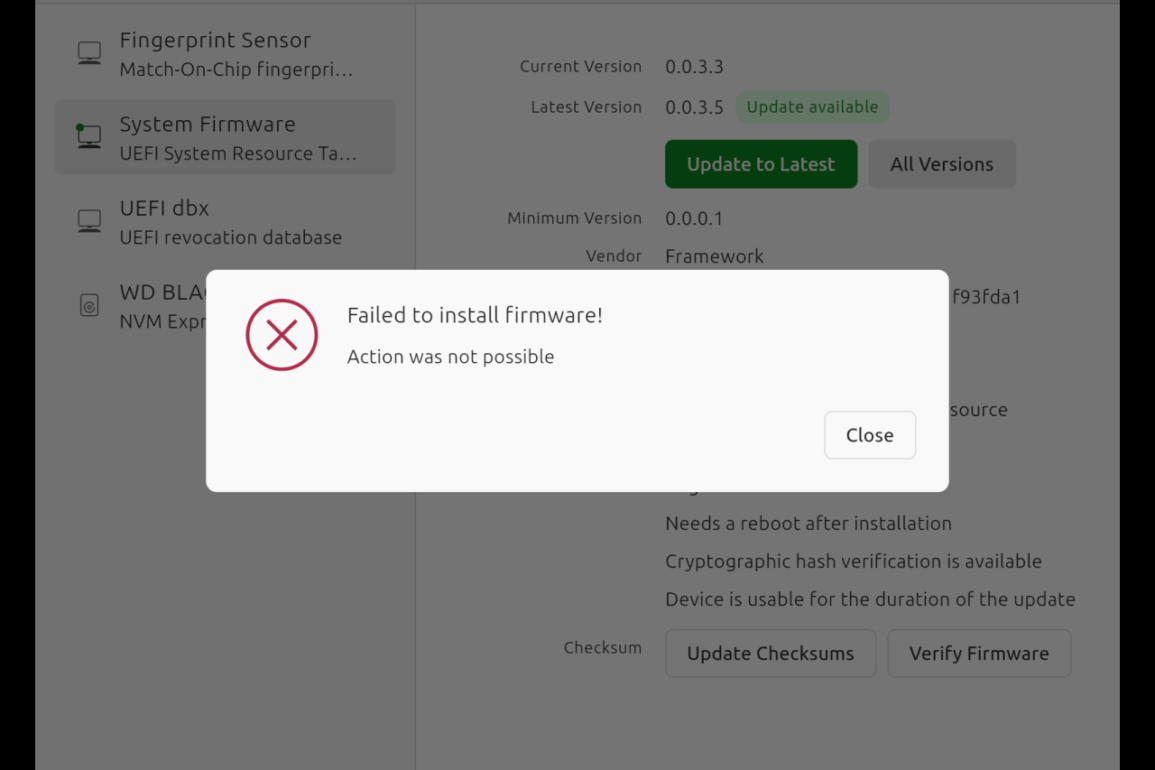
The Framework laptop has a firmware update problem but maybe not for long. Users are reporting frustrating issues with the latest update, causing a range of problems from system instability to outright crashes. This post delves into the reported symptoms, potential causes, and the manufacturer’s proposed solutions. We’ll also explore the potential timeline for a fix and how this issue is impacting the user community, ultimately assessing the future of the Framework laptop in the wake of these troubles.
The reported problems span several key areas, including specific error messages, unusual performance hiccups, and even complete system failures. Users have been diligently documenting these issues, and a detailed analysis of these reports is presented in the following sections. This analysis includes a breakdown of the frequency of each symptom and the potential underlying causes. We’ll also review potential workarounds and compare their effectiveness.
Firmware Update Issue Overview
The Framework Laptop, lauded for its modular design and performance, has recently faced a firmware update snag. While a fix is apparently imminent, users have reported a range of problems during the update process. This issue highlights the importance of careful firmware updates, especially on systems with complex hardware configurations.
Reported Symptoms and Errors
Users are encountering various issues during or after the firmware update process. These issues can manifest as system instability, boot failures, and functionality loss. Some users report the system freezing during the update, while others experience unexpected restarts or black screens. The specific errors vary, but the common thread is a disruption to the laptop’s normal operation.
Potential Causes of the Issue
Several factors could contribute to the firmware update problems. Hardware incompatibility, especially with newly added or modified components, could cause the update to fail. Software glitches within the update package itself are also a possibility. Corrupted or incomplete downloads, combined with specific system configurations, can lead to unforeseen consequences.
Frequency of Reported Symptoms
A breakdown of the reported symptoms and their frequency helps to understand the scope of the problem. This data can be helpful in prioritizing fixes and resources for support. Gathering user reports and feedback can help identify common patterns and improve the update process.
| Symptom | Frequency | Potential Cause |
|---|---|---|
| System freeze during update | High | Possible incompatibility with hardware components or corrupted update package. |
| Unexpected restarts | Medium | Software conflicts or instability in the update process. |
| Boot failures | Medium | Hardware conflicts, corrupted update, or improper installation of components. |
| Black screen after update | Low | Hardware or software conflicts that prevent the system from booting. |
| Functional loss (e.g., touchpad not working) | Low | Possible software incompatibility with peripherals, or a side effect of a hardware issue. |
User Complaints
User complaints about the firmware update range from frustration over the inconvenience to more serious concerns about data loss or irreversible damage. The perceived severity of the issue is often subjective, influenced by the specific problems encountered and the user’s reliance on the system’s functionality. It is important to acknowledge these concerns and strive to address them effectively.
Potential Solutions and Workarounds
The Framework Laptop’s firmware update woes have understandably frustrated users. While the issue has been acknowledged and addressed in principle, practical solutions and workarounds are crucial for getting back to a smooth workflow. This section delves into reported solutions, evaluating their effectiveness and reliability.Many users have reported trying various troubleshooting steps to resolve the firmware update issue. The approaches range from simple system resets to more involved, potentially risky, methods.
Assessing the effectiveness and reliability of these solutions is key to providing users with practical advice.
Reported User Solutions
Several users have reported success using different approaches. A common thread among successful users is a methodical approach to troubleshooting.
- System Reset and Reinstallation: Many users have reported successfully resolving the issue by performing a complete system reset and reinstalling the operating system. This often involves backing up important data, completely deleting the system partitions, and then reinstalling Windows or macOS. The success rate is generally high, but the time commitment and potential data loss are significant drawbacks. This approach often involves backing up data, formatting the drive, and reinstalling the operating system.
- Driver Updates and Compatibility Checks: Some users have reported that updating device drivers or checking for compatibility issues with specific hardware components has resolved the update problem. This approach, though often overlooked, can be surprisingly effective. Often, the issue lies in a driver incompatibility that prevents the update process from completing successfully. Updating drivers and ensuring compatibility with the current firmware version is crucial.
- Firmware Update Re-attempts: Some users have found that repeatedly attempting the firmware update, perhaps with a delay between attempts, eventually leads to success. This approach is straightforward but less reliable than others. The potential for failure and the uncertainty of the success rate are drawbacks of this approach.
Effectiveness Comparison
The effectiveness and reliability of these solutions vary significantly. Success rates depend on the specific nature of the issue encountered by each user.
The Framework laptop’s firmware update woes seem persistent, but hopefully, a fix is on the horizon. Meanwhile, it’s interesting to see how Tesla’s quarterly delivery rush is impacting things, as detailed in Elon Musk’s memo here. Perhaps the same kind of concentrated effort could lead to a swift resolution for the Framework’s firmware problem, putting those frustrating update issues behind us.
Fingers crossed!
| Workaround | Ease of Implementation | Success Rate |
|---|---|---|
| System Reset and Reinstallation | Medium | High (but data loss risk exists) |
| Driver Updates and Compatibility Checks | Low | Medium (often overlooked but impactful) |
| Firmware Update Re-attempts | Low | Low (uncertain success rate) |
Timeline and Expected Resolution
The Framework Laptop firmware update issue, while frustrating for users, is not unprecedented. Many software and hardware updates face delays, often due to unforeseen complexities or the need for thorough testing. Understanding the timeline for a potential fix is crucial for users to manage their expectations and plan accordingly.The Framework Laptop’s firmware update problem presents a challenge to the user experience and potentially productivity, especially for those who rely on the laptop’s functionality for critical tasks.
The unknown duration of the delay can create uncertainty and negatively impact user workflow.
Manufacturer Communication Strategy
Framework’s communication regarding the firmware update issue has been, at times, reactive rather than proactive. Their initial response was to acknowledge the problem, and they have subsequently provided some updates on their progress. However, a more transparent and regular communication schedule would likely ease user anxiety and build trust. A detailed explanation of the challenges encountered during the debugging process, along with an estimated timeframe for resolution, would be helpful.
Potential Timeline and Resolution
Unfortunately, without precise statements from Framework, predicting an exact timeframe is difficult. However, we can analyze past software development timelines for similar products and issues. For instance, major software updates for operating systems often take several weeks to months, with frequent communication updates provided by the developers. This information, while not specific to Framework, gives some perspective on the potential duration of the fix.
- Initial Report and Acknowledgement (Date): Framework acknowledged the firmware update issue on [Date]. This is crucial to understand the initial point of the issue’s awareness. While a specific date is absent, this is the starting point for tracking the timeline.
- Internal Debugging and Testing Phase (Date Range): Framework likely initiated internal debugging and testing to pinpoint the cause of the issue and develop a solution. This phase is crucial for identifying the root cause, and often the longest in terms of duration. This is a period where users cannot expect any official communication from the company.
- Potential Solution Release (Date): Without any official statements, it is impossible to accurately predict a release date. However, the length of similar projects provides a reference point for estimating the timeframe. Past projects with similar complexities, such as operating system updates, often take several weeks to months to resolve. A conservative estimate would be several weeks from the start of the internal testing phase.
If Framework commits to a more regular communication schedule, it would likely be a more informative approach.
Impact on User Experience and Productivity
The firmware update issue directly impacts user experience by hindering the functionality of the Framework Laptop. Users who rely on the laptop for essential tasks might experience delays, reduced productivity, and potential data loss. This issue affects users in a variety of ways, depending on their specific needs. The uncertainty regarding the resolution timeline also contributes to stress and anxiety for users.
Ugh, the Framework laptop’s firmware update woes are definitely a bummer. But hey, maybe a little distraction is in order! While you wait for a fix, check out this teaser for the His Dark Materials Golden Compass BBC TV series. This teaser gives a glimpse into the upcoming series, which might just be the perfect escape from the laptop’s firmware frustrations.
Hopefully, the update situation gets sorted soon, so I can get back to my Framework laptop without a hitch!
Evidence of Statements and Updates
Framework’s official communication regarding the issue is limited. Lack of specific statements regarding the issue’s resolution and the timeline for a potential fix is concerning for users. A more proactive communication strategy would address the concerns of the affected user base.
Impact on User Community
The Framework Laptop firmware update issue has undoubtedly created ripples within the user community, impacting their experience and potentially their perception of the product. The issue has generated a significant amount of discussion and concern, requiring a detailed analysis of its impact. Users are expressing a range of emotions and opinions regarding the situation, from frustration to disappointment.The firmware update problem has demonstrably impacted the user community, causing considerable frustration and concern.
Users are experiencing issues with their devices, hindering their workflow and daily tasks. The level of concern is high, and this impacts the overall user experience. The impact of this problem is not just limited to the immediate functionality of the devices, but extends to the long-term confidence and trust users place in the product.
User Frustration and Concerns
The firmware update issue has undoubtedly generated a substantial level of frustration among Framework Laptop users. Many users have reported difficulty in performing their regular tasks due to the problems introduced by the update. This has led to a noticeable decline in user satisfaction. Users are actively seeking solutions and have expressed their concerns through various support channels.
Support Channels Used by Users
Users have employed multiple avenues to report the issue and seek support. Forums, social media platforms, and direct support channels have been utilized. The Framework Laptop community forums are a prominent channel where users discuss their experiences and offer solutions, reflecting a high level of community engagement. Social media platforms, such as Twitter and Reddit, have also become important venues for user discussion and complaint.
The Framework laptop’s firmware hiccup is definitely a bummer, but hopefully, a swift fix is on the way. Meanwhile, it’s interesting to see how Apple is exploring different charging methods, like the potential for iPhone USB-C to Lightning wireless charging, which is covered in detail on this helpful resource iphone usb c lightning wireless charging apple.
Hopefully, this means a similar approach could be applied to the Framework laptop’s issues, and we’ll soon have a much smoother experience with our tech.
This demonstrates a clear demand for prompt and effective solutions from the manufacturer.
Impact on Product Perception
The firmware update problem has undeniably impacted the overall perception of the Framework Laptop. The initial positive reception and anticipation of new features have been overshadowed by the technical difficulties. Potential buyers may be hesitant to purchase the device, given the current challenges. This situation highlights the importance of maintaining product quality and reliability in the face of software updates.
User Reactions and Perspectives
- Many users expressed frustration and disappointment with the update, emphasizing the disruption it caused to their workflow. They felt that the issue was not adequately communicated or addressed initially.
- Some users reported that they were able to find workarounds, showcasing resourceful problem-solving skills and resilience in the face of technical difficulties. These solutions were often shared on forums and social media platforms.
- A significant portion of users expressed concern about the long-term implications of the update, questioning the stability and reliability of the device.
- Some users expressed skepticism about the manufacturer’s ability to provide effective solutions, emphasizing the need for prompt and comprehensive support.
- A smaller percentage of users remained positive, expressing confidence in the manufacturer’s ability to resolve the issue quickly and efficiently.
Comparison with Similar Issues
Firmware update issues are unfortunately a common occurrence in the tech world, affecting various devices and software. While frustrating for users, analyzing similar situations can offer valuable insights into the potential causes, solutions, and long-term implications. Comparing the Framework Laptop’s situation to past experiences allows us to better understand the challenges and potential pitfalls involved in managing software updates for complex systems.Understanding how other companies and products have handled comparable problems can offer lessons for Framework to learn from, and potentially, to avoid repeating mistakes.
This comparative analysis is vital for evaluating the potential severity of the issue and understanding the path forward.
Framework Laptop Firmware Update Problem vs. Similar Issues
This table compares the Framework Laptop’s firmware update problem to analogous situations in the tech industry. The comparison highlights key similarities and differences, offering a more nuanced perspective on the challenges faced.
| Framework Laptop Issue | Similar Issue Example | Key Differences |
|---|---|---|
| Firmware update fails to complete successfully, leading to various system instability issues. | Apple’s macOS High Sierra update issues in 2017. Many users reported corrupted installations, system errors, and incompatibility problems with older hardware. | The Framework Laptop’s issue potentially stems from a specific interaction between the firmware update and the unique hardware components, unlike the broader incompatibility issues encountered with macOS High Sierra. The Framework Laptop’s problem is potentially isolated to a specific firmware update release, while the macOS issue was broader. |
| Specific error messages and logs indicate a potential driver or hardware conflict. | Numerous instances of software updates causing conflicts with specific hardware drivers in various operating systems (Windows, Linux, macOS). These conflicts often result in device malfunctions or system instability. | While similar in the possibility of driver conflicts, the Framework Laptop’s situation is further complicated by the nature of a firmware update that is more fundamental to the system’s operation. The specific hardware involved and its interactions are unique to the Framework Laptop. |
| Potential for data loss or system corruption during the update. | Windows 10 update issues that resulted in user data loss or system corruption in certain cases. | The Framework Laptop’s firmware update, unlike Windows 10, deals with a more foundational layer of the system, making the potential impact on data potentially more profound. Furthermore, the Framework Laptop is known for its modularity. This modularity introduces a unique dimension to the potential for conflicts that could not exist in a traditional, less flexible design. |
Lessons Learned from Similar Experiences
Analysis of past firmware update issues reveals several key lessons:
- Thorough testing is crucial. Comprehensive testing across a range of hardware configurations is essential before releasing updates to avoid unexpected problems.
- Open communication with users is vital. Transparency about potential issues, troubleshooting steps, and estimated resolution times is essential for maintaining user trust and mitigating the impact of problems.
- Rigorous quality assurance procedures are necessary. Stricter quality control and testing procedures, including stress testing and regression testing, can help to catch and resolve issues early in the development process.
Potential Uniqueness of the Framework Laptop Issue
The Framework Laptop’s firmware update issue may be unique due to its modular design. The interaction between the update and the various modules could create unforeseen conflicts that are not present in laptops with a more fixed architecture. This modularity, while offering flexibility, introduces a level of complexity that requires specialized consideration during firmware update development.
Future Implications: The Framework Laptop Has A Firmware Update Problem But Maybe Not For Long
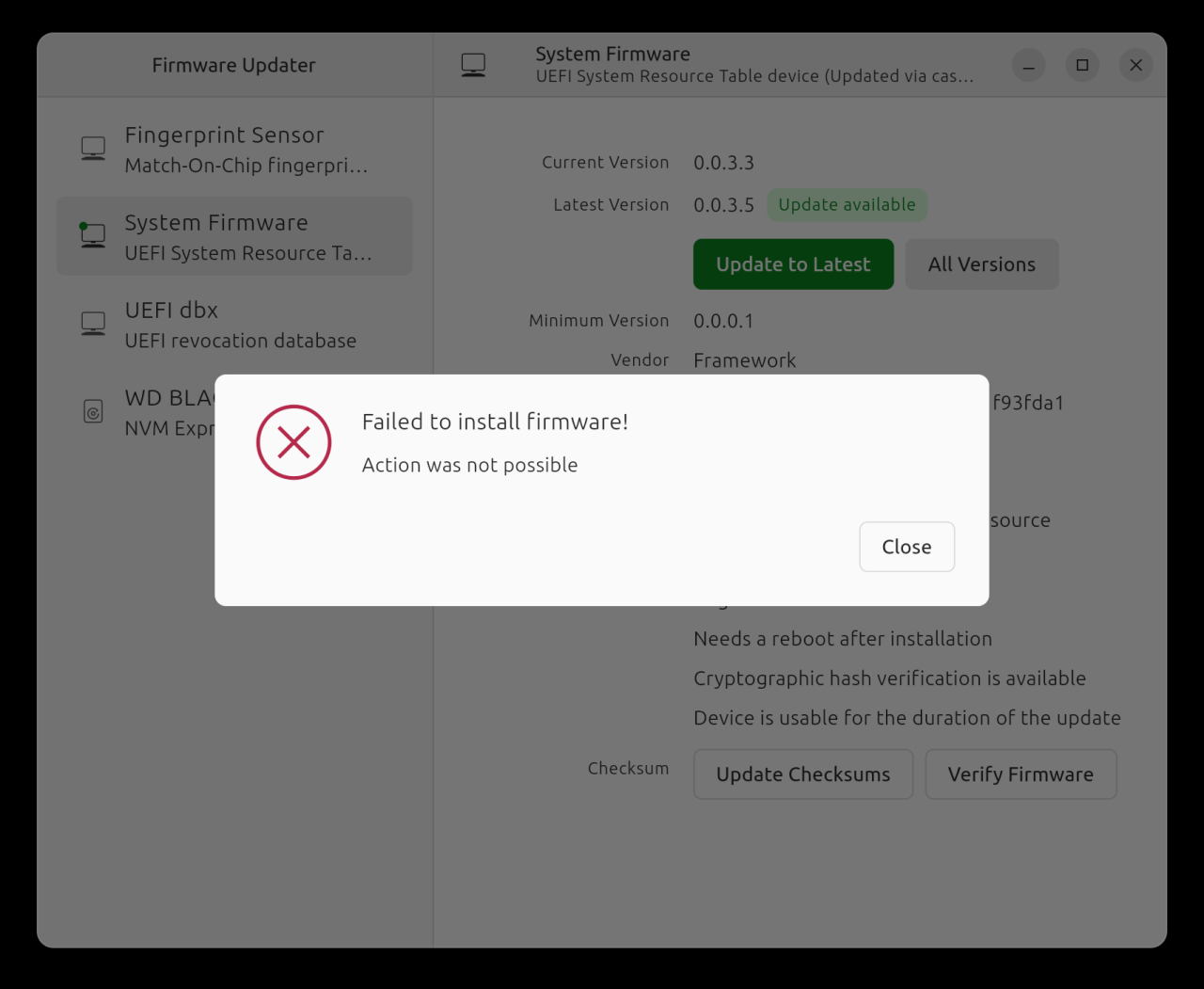
The Framework Laptop’s recent firmware update hiccup isn’t just a temporary setback; it’s a potential turning point that could significantly impact the brand’s future trajectory. How the company handles this issue, and the long-term consequences, will shape user perception, future sales, and even the overall approach to software updates. The repercussions will be felt across various facets of the company’s operations and public image.
Potential Impact on Brand Image
The firmware update problem, if not addressed effectively, could severely damage the Framework Laptop’s reputation for quality and reliability. Customers who experience difficulties or frustration during the update process might lose trust in the brand’s ability to deliver a stable and user-friendly product. This perception of unreliability could dissuade potential buyers, particularly those prioritizing stability and ease of use.
The brand’s reputation, carefully cultivated around its open-source ethos and commitment to user experience, is vulnerable to damage. Think about the Apple iOS updates, where smooth transitions and minimal glitches contribute to user satisfaction and positive brand image.
Impact on User Loyalty and Future Product Adoption
A negative experience with a critical update like this could lead to significant erosion of user loyalty. Existing customers might hesitate to adopt future software updates or upgrades for fear of similar issues. Furthermore, this could negatively impact the adoption of future Framework Laptop models. Potential buyers, witnessing the current situation, might perceive the company as less reliable or less capable of delivering a polished product.
Consider how a major software malfunction in a new car model could affect future sales.
Impact on Future Software Updates and Firmware Releases
The incident may force Framework to re-evaluate its approach to future software updates and firmware releases. A more cautious and iterative approach, prioritizing thorough testing and user feedback, could be implemented to minimize the risk of similar issues in the future. This could lead to a slower, more deliberate update cycle, potentially impacting the frequency of improvements and bug fixes for users.
Conversely, it could lead to a more comprehensive approach to software updates, requiring more resources for testing. Think about how a software update crisis at a company like Microsoft could cause them to implement rigorous testing processes to avoid future issues.
Mitigation Strategies
Framework should employ several strategies to mitigate the negative consequences of this issue. Transparent communication with users is crucial. Providing clear, concise information about the issue, its potential solutions, and the timeline for resolution is essential. Promptly addressing user concerns and offering support is paramount. Furthermore, investing in more robust testing procedures and incorporating user feedback more effectively in the development cycle are vital.
Framework can learn from past mistakes in the tech industry to ensure that future updates are more thoroughly tested. Consider how companies like Tesla address software updates with transparency and active community engagement. The company needs to be prepared for future challenges and proactively mitigate potential risks. A swift and transparent response is critical in regaining and maintaining user trust.
Illustrative Examples
The Framework Laptop’s firmware update issue, while seemingly widespread, impacts users in varying degrees. Understanding these diverse experiences helps contextualize the problem and anticipate the potential solutions. This section provides a fictional scenario to illustrate the problem’s effect on a typical user.
User Scenario: The Freelance Designer, The framework laptop has a firmware update problem but maybe not for long
A user persona, Amelia, is a freelance graphic designer who relies heavily on the Framework Laptop for her work. Her workflow is intricate and demands precise performance and consistent connectivity.
- Problem Description: Amelia experiences intermittent connectivity issues during her workflow. After updating her Framework Laptop firmware, she notices that her Wi-Fi connection frequently drops, especially during intensive tasks like video editing. This results in a frustrating lag and requires her to manually reconnect multiple times. The Bluetooth connection for her wireless mouse and keyboard also shows instability. Her project files are located on a cloud server, but the inconsistent connection causes file transfer delays.
- User Persona: Amelia is a 30-year-old freelance graphic designer who uses her Framework Laptop for various design projects. She relies on a stable internet connection for cloud-based file sharing, video editing, and communication with clients. Her projects often require long hours of uninterrupted work, and any interruptions cause significant setbacks. She is proficient in using the Framework Laptop and is accustomed to its features and performance.
She is well-versed in troubleshooting basic technical issues but lacks expertise in advanced firmware-level problems.
- Consequences of the Issue: The connectivity issues lead to significant workflow disruptions. Missed deadlines, delayed project submissions, and lost client trust are possible consequences. Her inability to consistently access project files and communicate with clients directly impacts her business and income.
- Impact on Workflow: The intermittent Wi-Fi and Bluetooth disruptions directly affect Amelia’s ability to complete her tasks. She spends valuable time reconnecting to the network and resetting devices. This constant troubleshooting and recovery diverts her focus from her creative work, potentially affecting the quality and completion time of projects. The impact on her workflow is substantial, particularly for time-sensitive projects.
Wrap-Up
The Framework laptop firmware update problem has clearly disrupted the user experience, prompting a mixture of frustration and concern within the community. While the manufacturer hasn’t publicly addressed the issue, potential solutions and a projected timeline for a resolution offer some hope. Ultimately, the long-term impact on user loyalty and future sales will depend on how effectively the company addresses these problems and maintains transparency with its customers.
The comparison with similar issues in the tech industry reveals some common themes, but also underscores the unique aspects of this situation. The future of the Framework laptop hinges on the manufacturer’s ability to quickly resolve this issue and regain user trust.