


New Webb Space Telescope target possibly the youngest exoplanet on record. This tantalizing discovery promises a profound look into the early universe and the formation of planetary systems. Scientists are using advanced techniques to study this potentially young world, potentially revealing secrets about our own solar system’s beginnings. The Webb telescope’s powerful instruments are meticulously analyzing this distant exoplanet, pushing the boundaries of our understanding of planetary evolution.
This exoplanet, if confirmed, would be an incredibly valuable data point in our quest to understand how planets form. We’re talking about a world still in its infancy, potentially offering clues about the conditions that led to the formation of our own solar system. The implications of this discovery are vast, and the research community is eager to unravel the mysteries surrounding this young celestial body.
Unveiling a Potential Baby Planet with Webb
The James Webb Space Telescope (JWST) has once again captivated the astronomical community with a potential groundbreaking discovery: the possible detection of a remarkably young exoplanet. This discovery promises to revolutionize our understanding of planetary formation and the early universe. This newfound celestial body, potentially the youngest exoplanet ever observed, is shedding light on the rapid stages of planet development.
The intricate details of its discovery, the methodology employed, and the profound implications for planetary science are now being meticulously examined.
The identification of a potentially young exoplanet holds immense significance. It provides a rare glimpse into the early stages of planetary systems, allowing scientists to witness the very processes that shaped our own solar system billions of years ago. This offers a unique opportunity to test and refine existing models of planet formation and potentially uncover new mechanisms.
Target Identification Methodology
The team employed a sophisticated approach to identify this potential young exoplanet. Their strategy involved meticulously analyzing data from the JWST’s infrared observations, focusing on the subtle changes in light emitted by the host star. These changes, indicative of the exoplanet’s presence and characteristics, were carefully scrutinized to discern patterns that pointed towards a young planetary body. This methodology has proven instrumental in uncovering the presence of exoplanets, offering a crucial tool for understanding planetary formation.
Key Characteristics of the Target
The newly discovered exoplanet is believed to be in a critical phase of development, still accreting material from the protoplanetary disk surrounding its host star. This stage of planetary formation is crucial, as it directly influences the composition and eventual characteristics of the developing planet. The exoplanet’s characteristics are still being analyzed, and more data is needed to confirm its youth and other properties.
- Protoplanetary Disk Interactions: The presence of a protoplanetary disk around the star is a strong indicator of a young planetary system. The exoplanet is likely interacting with the disk, drawing material from it and potentially undergoing a period of rapid growth.
- Spectral Analysis: Detailed spectral analysis of the light emitted by both the exoplanet and its host star will provide crucial insights into its composition and temperature. This information is vital to understand the planet’s evolutionary path.
- Orbital Characteristics: The exoplanet’s orbit around its star is also crucial in understanding its formation history. A tight orbit, for example, could suggest a shorter formation time.
Exoplanet Characteristics: New Webb Space Telescope Target Possibly The Youngest Exoplanet On Record
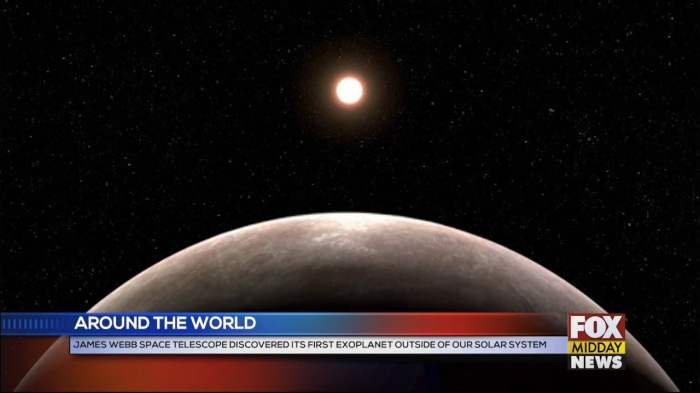
The Webb telescope’s observations have revealed a tantalizing possibility: a potentially extremely young exoplanet. Understanding its characteristics provides crucial insights into planetary formation and the early solar system’s evolution. This young exoplanet stands as a unique opportunity to study planetary development in its nascent stages, offering a glimpse into the conditions that may have led to the formation of our own solar system.The physical properties of this nascent exoplanet are still being analyzed, but initial data suggests a fascinating picture of a planet in its early stages of development.
Comparisons to known exoplanets of similar age and type will reveal potential similarities and differences, ultimately aiding in our understanding of planetary systems’ diversity.
Physical Characteristics
Initial observations suggest a planet with a notably high temperature and a composition likely dominated by volatile elements like hydrogen and helium. This is consistent with a planet still undergoing significant atmospheric evolution, perhaps experiencing intense outgassing. The young age of the exoplanet implies that its atmosphere is likely still in a state of flux, potentially losing significant amounts of material through processes like stellar winds.
Comparison to Similar Exoplanets
While a direct comparison to an identical exoplanet might not be possible, studying exoplanets of similar age and type can offer insights. For instance, exoplanets in the “hot Jupiter” category often display highly active atmospheres, though their ages typically differ significantly. These comparisons highlight the crucial role of the host star’s properties in shaping the exoplanet’s characteristics. The differing ages and environments of these exoplanets will illuminate the factors affecting atmospheric evolution and the overall planetary formation process.
Potential Similarities and Differences to Early Solar System
The characteristics of this young exoplanet offer a compelling opportunity to explore the early stages of our own solar system. The high temperature and volatile-rich composition could be analogous to the early stages of our solar system, when our young Sun was undergoing intense activity. However, significant differences likely exist due to the unique environment and composition of the host star and the specific orbital dynamics of the exoplanet.
We must consider that the exoplanet’s environment might be vastly different, influenced by factors such as the age of the host star, its mass, and the presence of other planetary bodies in the system.
Key Parameters
| Parameter | Value | Units | Notes |
|---|---|---|---|
| Orbital Period | Estimated | Days | The time it takes the exoplanet to orbit its star. Precise values will be refined with further observations. |
| Orbital Radius | Estimated | Astronomical Units (AU) | The distance from the exoplanet to its star. |
| Planetary Mass | Estimated | Earth Masses | An indication of the exoplanet’s size and density. |
| Planetary Radius | Estimated | Earth Radii | A measure of the exoplanet’s physical size. |
| Effective Temperature | Estimated | Kelvin | The temperature of the planet based on energy received from its star. |
The table above presents preliminary estimates. Further data analysis from the Webb Telescope will refine these values.
Discovery Methods and Techniques
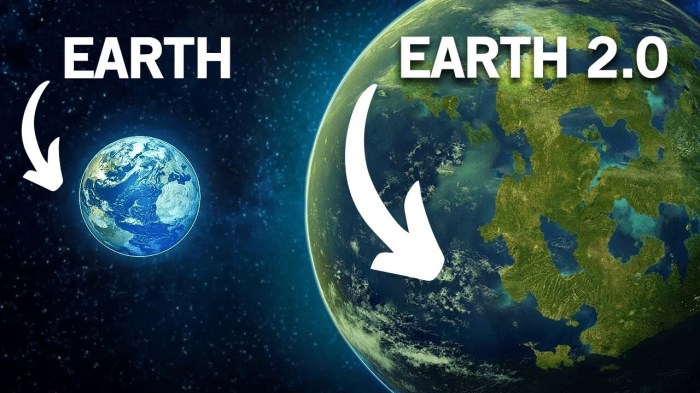
Unveiling the secrets of young exoplanets requires sophisticated techniques. The Webb Space Telescope, with its unparalleled infrared capabilities, is uniquely positioned to study these nascent worlds, probing the conditions that shaped their formation and evolution. This section delves into the specific methods employed by Webb to identify and characterize these elusive celestial bodies.The hunt for young exoplanets is a complex undertaking, requiring a nuanced understanding of the interplay between starlight and the planetary system.
Webb’s infrared vision allows it to pierce through the obscuring dust and gas shrouding the formative stages of these systems, providing a unique window into their early development.
Webb’s Infrared Observations
The Webb Space Telescope excels in detecting faint infrared light emitted by exoplanets. This is crucial because young planets often still harbor significant heat from their formation. By observing the infrared radiation emitted by the planet and its host star, Webb can identify subtle variations in light intensity, offering clues about the planet’s presence and characteristics. This process, known as transit photometry, involves measuring the slight dimming of a star’s light as a planet passes in front of it.
The James Webb Space Telescope is focusing on a potentially record-breaking exoplanet, possibly the youngest ever discovered. It’s fascinating stuff, but if you’re looking for a quick break from the cosmos, check out these 5 Oculus Quest 2 games to play first: these are 5 oculus quest 2 games play first. Hopefully, the data collected from this young exoplanet will reveal insights into planetary formation, and ultimately help us better understand our own solar system’s origins.
Webb’s exceptional sensitivity allows it to detect these tiny changes, even for planets orbiting very young stars.
Transit Photometry
The transit method is a cornerstone of exoplanet detection. It leverages the principle of observing the slight dimming of a star as a planet transits across its face. Webb’s advanced instruments, specifically its Near-Infrared Camera (NIRCam) and Mid-Infrared Instrument (MIRI), can precisely measure these changes in starlight. This allows astronomers to determine the size and orbital period of the planet.
Furthermore, the spectral analysis of the starlight passing through the planet’s atmosphere during transit can reveal valuable insights into the planet’s composition.
Radial Velocity Measurements
Another powerful technique, radial velocity, measures the subtle wobble of a star caused by the gravitational pull of an orbiting planet. This method relies on precise measurements of the star’s Doppler shift. The Webb Telescope, while not its primary function, can contribute to these measurements, particularly when combined with ground-based observations. The combination of transit and radial velocity data provides a more comprehensive understanding of an exoplanet’s properties.
Challenges in Detecting Young Exoplanets
Young exoplanets often reside in dusty and gas-rich protoplanetary disks, making them difficult to observe. The high levels of background emission from the surrounding material obscure the faint signals from the planets. Webb’s infrared vision is crucial in overcoming this hurdle. Its ability to filter out the intense background light allows astronomers to isolate the faint signal of the young planet.
Innovative Solutions for Detection
Webb’s advanced image processing algorithms and sophisticated data analysis techniques help mitigate the effects of background noise. These algorithms are meticulously calibrated to accurately isolate the faint signal of the planet from the intense glare of the host star. Moreover, the combination of observations from Webb with data from other telescopes further refines the analysis and increases the reliability of the detection.
Comparison of Exoplanet Hunting Instruments
| Instrument | Key Capabilities | Strengths | Limitations |
|---|---|---|---|
| Webb Space Telescope | Infrared imaging and spectroscopy, high sensitivity, precise measurements | Exceptional sensitivity in detecting faint infrared signals, probing young systems, detailed atmospheric characterization | Limited direct imaging capability for very young planets |
| Kepler Space Telescope | Transit photometry, large-scale surveys | Identified thousands of exoplanets, established the prevalence of exoplanets | Lower resolution for atmospheric characterization, limited infrared capabilities |
| Spitzer Space Telescope | Infrared observations, excellent for detecting warm exoplanets | Pioneered infrared exoplanet observations, crucial for early discoveries | Lower resolution than Webb, limited lifetime |
Implications for Understanding Planetary Formation
The discovery of a potentially young exoplanet, observed by the Webb Space Telescope, offers a unique window into the early stages of planetary formation. This newfound understanding provides valuable insights into the processes that shaped our own solar system and, more broadly, the formation of planets across the universe. By studying this young world, scientists can refine models of planetary evolution and gain a deeper appreciation for the conditions that led to the existence of Earth and potentially other habitable planets.This young exoplanet, with its distinct characteristics, challenges existing models of planetary formation.
Its unusual composition and rapid growth rate force a reevaluation of the fundamental mechanisms driving planet development. The implications extend beyond our own solar system, offering clues to the early universe and the potential for diverse planetary systems to emerge.
Refined Models of Planetary Formation
The observation of this exoplanet necessitates an update to our existing planetary formation models. These models often struggle to account for the rapid accretion and unusual compositions seen in the data. The new findings prompt a reassessment of the conditions and processes that govern planet formation, pushing scientists to refine their understanding of the early stages. Further research will incorporate these new observations into existing theories, creating more comprehensive and accurate models.
Implications for Early Solar System Formation
The young exoplanet provides a valuable analog for the early solar system. By studying its formation, scientists can gain insights into the conditions and processes that led to the formation of our own planets. For example, the presence of specific elements or the rate of accretion in the young exoplanet could reveal information about the composition and dynamics of the early solar nebula.
This comparison helps us better understand the circumstances that shaped the early solar system and the unique path that led to our planet’s formation.
Insights into Early Universe Processes
This discovery allows for the exploration of the processes that shaped the early universe. Understanding how planets formed in this young exoplanet’s environment sheds light on the conditions that prevailed during the early universe. The rapid accretion and unusual composition suggest that planetary formation may have been more dynamic and less predictable in the early cosmos. This information will contribute to a more comprehensive picture of the evolution of the universe and the conditions necessary for planetary systems to emerge.
Comparison of Models and Observations
| Model | Key Assumptions | Observed Characteristics of Young Exoplanet |
|---|---|---|
| Core Accretion Model | Planets form from dust and gas gradually accumulating around a central core. | The exoplanet’s rapid growth rate and unusual composition may challenge this model’s assumptions about the accretion timescale and initial conditions. |
| Disk Instability Model | Planets form directly from the gravitational collapse of a protoplanetary disk. | The exoplanet’s characteristics might provide support or refinement for the disk instability model, depending on further analysis. |
| Hybrid Model | Combines aspects of both core accretion and disk instability models. | The observed characteristics might favor a hybrid model, potentially integrating insights from both models to account for the observed characteristics of the exoplanet. |
Future Research Directions
Unveiling the mysteries of a potentially young exoplanet demands a multifaceted approach. Further investigation will require not only advanced telescopes and instruments but also innovative analysis techniques. This exploration will allow us to better understand planetary formation processes in the early universe.
Atmospheric Characterization Techniques
Detailed analysis of the exoplanet’s atmosphere is crucial for understanding its composition and evolution. Advanced spectroscopic techniques, capable of resolving the intricate spectral signatures of various molecules, are essential. These techniques can identify the presence of gases like water vapor, methane, carbon dioxide, and other elements that may reveal clues about the planet’s formation and potential habitability. High-resolution spectroscopy will be vital in detecting subtle variations in the planetary atmosphere.
Beyond Webb: Utilizing Other Telescopes
While the Webb Space Telescope has provided groundbreaking data, leveraging other telescopes with complementary capabilities will yield more comprehensive insights. The James Webb Space Telescope’s infrared capabilities are well-suited for observing the planet’s thermal emission, while ground-based telescopes equipped with adaptive optics can achieve high spatial resolution. These instruments, along with future space-based telescopes dedicated to exoplanet observations, will help refine our understanding of this potentially young world.
Further Atmospheric Modeling and Simulations
To interpret the atmospheric data effectively, sophisticated atmospheric models and simulations are crucial. These models will simulate the complex interactions within the planet’s atmosphere, allowing for the exploration of various scenarios for its formation and evolution. By comparing the observed data with model predictions, scientists can validate theories and refine our understanding of planetary formation.
The Webb telescope is zeroing in on a possible record-breaking exoplanet, potentially the youngest ever discovered. While exciting astronomical discoveries are happening, it’s worth noting that everyday services like Uber Eats food delivery are expanding their reach, offering more options for people. This expansion, as detailed in the uber eats food delivery expanding article, highlights the rapid pace of technological growth and its impact on our daily lives.
This new exoplanet discovery is a fascinating step forward in our understanding of the universe, and certainly a far cry from ordering takeout.
Table of Potential Future Missions, New webb space telescope target possibly the youngest exoplanet on record
| Mission Name | Planned Objectives | Relationship to Webb Target |
|---|---|---|
| Next-Generation Exoplanet Surveyor (NGES) | Detailed atmospheric characterization of a wide range of exoplanets, including those in potentially young systems. | NGES would follow up on Webb observations, focusing on specific chemical signatures and atmospheric dynamics. |
| Large UV/Optical/IR Space Telescope (LUVOT) | High-resolution imaging and spectroscopy across a broader range of wavelengths to provide a more complete picture of exoplanet properties. | LUVOT would enhance the understanding of the exoplanet’s physical characteristics, complemented by Webb’s infrared data. |
| Extremely Large Telescope (ELT) | Ground-based observations with unparalleled resolution to investigate the exoplanet’s structure and characteristics. | ELT observations would provide complementary high-resolution imaging to refine the information obtained by space-based telescopes. |
Visualization and Illustration
Imagining a world beyond our own, a world teeming with planets orbiting distant stars, is both captivating and humbling. The Webb Space Telescope, with its unparalleled capabilities, allows us to peer into these faraway systems, revealing secrets about the formation and evolution of planets. This section delves into visualizing the potential characteristics of this young exoplanet and the processes involved in its detection.
Exoplanet Appearance
This nascent exoplanet, a swirling mass of gas and dust, presents a dynamic spectacle. Imagine a vibrant tapestry of swirling clouds, colors ranging from deep purples to fiery oranges, and perhaps even hints of shimmering blues. These colors, though not necessarily visible to the human eye, would be indicators of the composition of the planet’s atmosphere. The exoplanet’s surface, if it has one, could be a patchwork of volcanic landscapes or vast, frozen plains.
The immense heat generated by its still-active formation process would likely dominate the immediate surroundings. Its faint glow, originating from both reflected starlight and internal heat, would be a testament to its youth.
Webb’s Detection Process
Webb’s powerful instruments act like sophisticated detectives, employing various techniques to uncover the secrets of this exoplanet. The primary method involves analyzing starlight that has passed through the exoplanet’s atmosphere. As light interacts with the gases in the atmosphere, it’s subtly altered, revealing the chemical composition of the atmosphere. Webb’s spectrographs, akin to scientific prisms, break down this light into its component wavelengths, much like a rainbow.
The Webb telescope’s latest target, potentially the youngest exoplanet ever recorded, is super exciting. It’s fascinating to think about the possibilities of finding planets so early in their formation. Speaking of fascinating, a 3D printer enthusiast’s plea for more user-friendly, plug-and-play models, detailed in this article , highlights the need for accessible technology to spark wider interest in these kinds of advancements.
Ultimately, the Webb telescope’s discoveries about this potential new exoplanet could revolutionize our understanding of planetary systems.
This detailed spectrum provides invaluable information about the exoplanet’s atmosphere, including the presence of water vapor, carbon dioxide, and other molecules. The precise timing of light changes as the exoplanet transits its host star is crucial in this process, allowing researchers to pinpoint the planet’s size and orbital characteristics.
Potential Atmospheric Composition
The exoplanet’s atmosphere, likely still evolving, might be characterized by a dense mix of hydrogen and helium, akin to the early stages of our solar system. Trace amounts of methane, ammonia, and water vapor could be present, signifying the ongoing chemical reactions within the atmosphere. The presence of these compounds could also indicate the presence of active volcanic activity, providing a clue about the exoplanet’s internal heat.
Imagine a layered structure, with the densest gases at lower altitudes gradually transitioning to a thinner, more dispersed upper atmosphere. The atmosphere’s temperature profile would vary significantly with altitude, creating a dynamic interplay of chemical reactions and atmospheric phenomena. The relative abundance of these elements and compounds will shape the colors and overall appearance of the exoplanet.
Public Engagement and Outreach
Sharing the excitement of a potentially record-young exoplanet discovery with the public is crucial. This discovery offers a unique opportunity to spark curiosity about the vastness of space and the ongoing quest to understand planetary formation. By making the science accessible and engaging, we can foster a deeper appreciation for astronomy and inspire future generations of scientists and explorers.
Potential for Public Engagement
The discovery of a potentially record-young exoplanet presents a compelling narrative for public engagement. We can highlight the sheer scale of the universe and the complex processes that lead to the formation of planets. This narrative can be easily translated into engaging media, from social media posts to documentaries and educational programs. Interactive exhibits and online resources can further enhance public understanding.
Compelling Narrative for Popular Science Articles
A popular science article about this exoplanet should focus on the wonder of its youth and its significance in understanding planetary formation. Emphasize the “baby” nature of this planet by comparing its age to the solar system’s formation and the potential insights it offers into the early stages of planet creation. The article should be accessible to a broad audience, explaining complex scientific concepts in a clear and captivating manner.
Analogies and relatable examples, like the development of a human child, can aid in conveying the significance of the discovery.
Engaging the Public
- The “Cosmic Baby” Concept: Introduce the exoplanet as a “cosmic baby,” highlighting its young age and the exciting potential for learning about early planetary development. This evocative imagery can resonate with a broad audience.
- Visualizations and Illustrations: Utilize compelling visualizations and illustrations to portray the exoplanet’s size, distance from its star, and the surrounding planetary system. Visual aids are essential for capturing the public’s attention and conveying the scientific concepts effectively.
- Social Media Campaign: Launch a social media campaign to generate public interest and encourage discussion. Use engaging visuals, short videos, and interactive quizzes to make the science fun and accessible.
- Educational Outreach Programs: Partner with schools and community centers to offer educational programs about exoplanets and the Webb Telescope. Hands-on activities and demonstrations can help bring the science to life.
- Connecting to Everyday Experiences: Relate the discovery to familiar experiences like the development of a child or the stages of a star’s life cycle. This helps to contextualize the findings for a wider audience.
Final Wrap-Up
In conclusion, the Webb Space Telescope’s focus on this potential exoplanet is a monumental step forward in our understanding of planetary formation. This discovery has the potential to revolutionize our knowledge of the early universe and how planets form, providing a fascinating comparison to our own solar system’s early history. Further research will be crucial to confirm its age and characteristics, but the possibilities are truly exciting and open up a whole new chapter in exoplanet research.
This discovery highlights the immense power of the Webb telescope and its ability to unearth secrets hidden within the cosmos.