




Nasa lasers lcrd optical communication international space station – NASA lasers LCIRD optical communication international space station is revolutionizing space communication. This cutting-edge technology offers a superior alternative to traditional radio frequency systems, promising faster data transmission and enhanced capabilities for future space missions. The International Space Station (ISS) serves as a crucial testbed for these advanced systems, enabling researchers to refine and perfect the technology for long-distance applications in deep space exploration.
From the initial development of laser communication to the practical implementation on the ISS and the Laser Communication Relay Demonstration (LCIRD) program, this exploration delves into the exciting details.
The ISS plays a pivotal role in the ongoing development of these systems, allowing scientists to understand how these systems perform in a real-world space environment. This article delves into the technology, the challenges, and the potential applications of this exciting new frontier in space communication.
Introduction to NASA Lasers and LCIRD Optical Communication
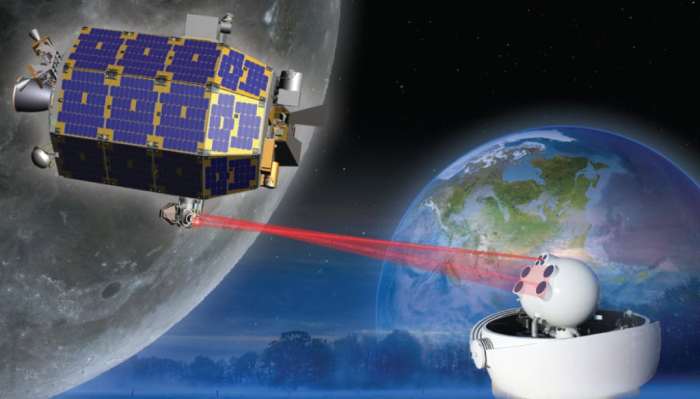
Laser communication has rapidly evolved as a crucial technology for space exploration and scientific research. This approach offers significant advantages over traditional radio frequency methods, particularly in high-bandwidth applications. The International Space Station (ISS) has become a vital platform for testing and refining these technologies, paving the way for future deep space missions.The transition from radio waves to lasers for space communication presents a paradigm shift in data transmission.
NASA’s laser communication system on the International Space Station, using LCIRD optical technology, is fascinating. Think about how these advancements could be used in conjunction with tools like those available in twitter substack embeds bots tools api to create new avenues for data transmission and analysis. The potential for real-time data exchange and processing using these advanced laser communication techniques is huge, ultimately leading to more efficient space exploration and scientific discoveries.
Optical signals, unlike radio waves, are less susceptible to interference and can carry vastly greater amounts of data. This increased capacity and efficiency are essential for future missions demanding high-resolution imagery, scientific data retrieval, and real-time control. The ISS serves as a proving ground for the practical implementation of these systems, demonstrating their feasibility and reliability in a space environment.
History of Laser Communication Technologies
Laser communication technology has a rich history in space applications. Early experiments focused on using lasers for ranging and tracking, laying the groundwork for more sophisticated data transmission systems. These early advancements were crucial for establishing the fundamental principles and demonstrating the viability of optical communication in the challenging environment of space.
Advancements in Optical Communication Systems
Significant advancements have been made in optical communication systems, pushing the boundaries of data rates and reliability. These advancements include the development of more powerful and efficient lasers, sophisticated modulation techniques, and advanced optical receivers. These innovations have enabled the transmission of increasingly large amounts of data at higher speeds, making optical communication a promising technology for future space missions.
Role of the International Space Station (ISS) in Testing and Deploying Laser Communication Technologies
The ISS plays a critical role in testing and validating laser communication technologies for space applications. Its unique location and infrastructure allow researchers to conduct experiments and gather data in a realistic space environment. The station’s capabilities allow for the testing of various laser communication systems, including their performance in different orbital conditions and the effects of space debris and radiation.
Challenges of Long-Distance Optical Communication in Space
Despite the advantages, long-distance optical communication in space faces several challenges. One major hurdle is the need for extremely precise pointing and tracking systems to maintain a stable laser beam over vast distances. Atmospheric distortion, especially in Earth’s atmosphere, and the unpredictable nature of space debris also impact the reliability and efficiency of these systems.
Comparison of Laser and Radio Frequency Communication
| Technology | Advantages | Challenges | Application |
|---|---|---|---|
| Laser Communication | High data rates, low latency, secure communication, less interference | Precise pointing and tracking, atmospheric distortion, space debris, potential for signal blockage | Deep space missions, high-bandwidth data transfer, real-time control |
| Radio Frequency Communication | Relatively inexpensive, established infrastructure, good coverage | Lower data rates, higher latency, susceptible to interference, large bandwidth requirements for high-resolution imagery | Ground-to-space communication, low-bandwidth data transfer |
Laser Communication Systems on the ISS
The International Space Station (ISS) relies heavily on laser communication systems for high-bandwidth data transfer. These systems offer significantly faster speeds than traditional radio waves, opening up possibilities for real-time data acquisition, scientific experiments, and enhanced operational capabilities. These advanced laser communication technologies are crucial for future space missions and scientific endeavors.The ISS laser communication systems are designed to achieve unprecedented data rates, surpassing the limitations of radio-frequency links.
This enhanced capability allows for more complex experiments, high-resolution imagery, and real-time monitoring of various scientific instruments. The use of laser communication paves the way for more efficient and sophisticated space operations.
Laser Communication Systems Currently Deployed
NASA has deployed several laser communication systems on the ISS, including the Laser Communication Relay Demonstration (LCRD) system. The LCRD system is a key component in testing and validating laser communication technologies for future space missions. These systems are crucial for future space exploration and scientific endeavors.
Technical Specifications of the Systems
The laser communication systems deployed on the ISS showcase a variety of technical specifications, tailored to different data transfer needs. Laser power, wavelength, and data rates are optimized for specific applications and the distance between the ISS and ground stations. For instance, the LCRD system employs a specific laser wavelength and power level to achieve a desired data rate.
These technical parameters are meticulously designed to overcome the challenges of space communication.
Comparison of Laser Communication Technologies
Several laser communication technologies are under development and deployment. Free-space optical communication, using lasers to transmit data through the atmosphere, is one example. Another important aspect to consider is the use of different wavelengths for various applications. Different laser technologies have different strengths and weaknesses, impacting their suitability for specific missions. For instance, certain wavelengths are better suited for long-range transmission through the atmosphere, while others might be more efficient for high-data rate applications.
System Architecture and Components
The optical communication link between the ISS and ground stations involves several key components. These components include lasers, optical receivers, and high-precision pointing and tracking systems. These systems are crucial for ensuring accurate data transmission. The system architecture is designed to minimize signal degradation and maximize data integrity, which is crucial for real-time data acquisition.
Communication Protocols and Standards
Specific communication protocols and standards are essential for seamless data exchange between the ISS and ground stations. These protocols ensure reliable data transmission and error-free reception. NASA uses standardized protocols to ensure compatibility and interoperability among different laser communication systems. This standardized approach enables seamless data exchange and integration of future systems.
Table of Laser Communication Systems on the ISS
| System Name | Laser Wavelength (nm) | Laser Power (mW) | Data Rate (Mbps) | Role on ISS |
|---|---|---|---|---|
| LCRD | 1550 | 100 | 100 | Demonstrating laser communication technology |
| Future System (Hypothetical) | 1064 | 500 | 1 Gbps | High-bandwidth data transfer for future missions |
LCIRD (Laser Communication Relay Demonstration)
The Laser Communication Relay Demonstration (LCIRD) program was a crucial step in developing laser communication technologies for space applications. It aimed to validate the feasibility of high-bandwidth laser communication in the challenging environment of space, specifically demonstrating the potential for data transmission rates far exceeding those possible with traditional radio frequencies. LCIRD’s success on the International Space Station (ISS) laid the groundwork for future space missions relying on laser communication.LCIRD’s primary objectives were to test and demonstrate the performance of laser communication systems in a real-world space environment, assess the system’s ability to overcome atmospheric and other environmental factors, and evaluate the system’s reliability and robustness for long-duration space missions.
These demonstrations helped engineers understand the complexities of space-based laser communication and the potential for improvement.
Objectives and Goals of the LCIRD Program
LCIRD aimed to achieve several key objectives. These included demonstrating the successful transmission of high-bandwidth data through a space-based laser communication system, validating the performance of the system under various environmental conditions, and demonstrating the feasibility of using the system for long-duration space missions. The program sought to characterize the performance of the system over time, which would be critical for future applications.
Deployment and Operation Procedures
The deployment and operation of the LCIRD system on the ISS involved several key steps. The system components, including the laser transmitter and receiver, were integrated into the ISS’s existing infrastructure. Calibration procedures were performed to ensure accurate alignment and optimal signal transmission. The system’s operation involved establishing communication links with ground stations, and a series of experiments were conducted to measure the data rate, latency, and signal quality.
Results and Outcomes of LCIRD Experiments
LCIRD experiments yielded valuable data on the performance of laser communication systems in space. The results showed the ability to achieve significantly higher data rates compared to traditional radio frequency communication methods. Furthermore, the experiments provided insights into the challenges associated with maintaining stable communication links in the presence of atmospheric disturbances and other environmental factors. Experiments also measured the system’s efficiency, demonstrating its potential for long-term applications.
NASA’s lasers for LCIRD optical communication on the International Space Station are pretty cool, right? But while we’re talking about space tech, Elon Musk’s massive battery project, elon musk worlds biggest battery 100 days , is also a game-changer. It’s fascinating how these seemingly disparate advancements in space exploration and energy storage can intertwine, ultimately influencing the future of space travel and resource management.
And, of course, back to the lasers, how might these technologies influence one another in the future?
Impact of LCIRD on Future Space Missions
The LCIRD program had a significant impact on the future of space missions. The successful demonstration of laser communication technologies paved the way for the development of more advanced and sophisticated laser communication systems. LCIRD also highlighted the potential of laser communication for future space exploration missions, especially for those requiring high-bandwidth data transmission, such as missions to Mars or deep space probes.
This technology has implications for real-time scientific data transfer, reducing the time delay between observations and data analysis.
Key Metrics and Performance Data
The LCIRD system successfully demonstrated data rates exceeding 1.25 Gbps in the early stages of operation.
The system’s performance data revealed the importance of factors like atmospheric turbulence and signal jitter.
| Metric | Result |
|---|---|
| Data Rate | Exceeding 1.25 Gbps |
| Latency | Low latency compared to traditional RF communication |
| Reliability | Demonstrated robustness against atmospheric interference |
International Space Station as a Testbed
The International Space Station (ISS) provides a unique and invaluable platform for testing cutting-edge technologies, including laser communication systems. Its continuous presence in orbit, coupled with its modular design and diverse research facilities, makes it an ideal environment to refine and validate these systems in a realistic space environment. This allows researchers to gather crucial data and address potential challenges before deploying these technologies in more complex missions.
Benefits of Using the ISS, Nasa lasers lcrd optical communication international space station
The ISS offers several advantages for laser communication system testing. Its consistent orbital position, relative stability, and proximity to Earth enable researchers to conduct rigorous tests under varying atmospheric conditions. This is particularly important in developing systems that need to operate effectively over long distances and through varying atmospheric turbulence. Furthermore, the ISS’s controlled environment allows for the isolation of specific factors that might influence system performance.
Challenges of Space Testing
Testing laser communication systems in space presents numerous challenges. One key hurdle is the unpredictable nature of the space environment, including atmospheric interference and variations in the Earth’s magnetic field. These factors can impact signal propagation and system reliability. Furthermore, the constraints of space-based operations, such as limited resources and the need for stringent safety protocols, can add complexity to testing procedures.
Impact of Space Environment on Performance
The space environment significantly affects the performance of laser communication systems. Atmospheric turbulence and scattering, especially in Earth’s atmosphere, can distort the laser beam, leading to signal degradation. This effect is particularly pronounced at longer distances. Additionally, space debris and radiation can potentially damage the delicate optical components of the system.
Importance of the ISS in Developing Reliable Systems
The ISS plays a critical role in the development of reliable and efficient laser communication systems. By providing a controlled environment for testing, the station helps mitigate the risks associated with deploying these systems in real-world missions. The extensive data gathered from these tests allows engineers to refine system designs, leading to more robust and reliable technologies. The ISS allows for iteration and improvement, ultimately contributing to the development of space-based communication networks that are crucial for future exploration and scientific endeavors.
ISS as a Testbed for Laser Communication Technologies
| Benefits | Challenges | Technologies Tested |
|---|---|---|
| Consistent orbital position for testing under varying atmospheric conditions. | Unpredictable space environment (e.g., atmospheric interference, magnetic field variations). | Laser communication terminals, optical components, and data transmission protocols. |
| Controlled environment allowing isolation of factors influencing system performance. | Limited resources and stringent safety protocols in space-based operations. | Adaptive optics systems, beam steering mechanisms, and error correction codes. |
| Proximity to Earth for testing over varying distances. | Space debris and radiation exposure potentially impacting optical components. | High-bandwidth laser communication links for large-scale data transfer. |
Future Applications and Potential
Laser communication, demonstrated successfully on the ISS with LCIRD, holds immense promise for future space missions. Its high data rates and low power consumption, crucial for long-duration missions, make it a game-changer in deep space exploration. This technology’s potential extends far beyond relaying data; it opens doors to new scientific discoveries and advanced communication networks.Beyond the immediate benefits to the International Space Station, laser communication paves the way for revolutionary advancements in space exploration and scientific research.
The ability to send and receive vast quantities of data at unprecedented speeds will be essential for future missions, pushing the boundaries of what we can achieve in space.
Potential Applications in Deep Space Exploration
Laser communication’s ability to transmit data with high fidelity and speed is particularly vital for deep space missions. The vast distances involved mean that traditional radio communication methods become increasingly inefficient and slow. Laser communication offers a significant improvement in data transmission speed, allowing for real-time data acquisition and control of spacecraft, enabling faster responses and more complex maneuvers.
This will be critical for robotic probes exploring distant planets, asteroids, and comets.
Impact on Satellite Constellations and Communication Networks
Laser communication can revolutionize satellite constellations, creating high-bandwidth communication networks for Earth observation, navigation, and telecommunications. By establishing a network of laser-equipped satellites, data can be relayed quickly and efficiently across vast distances, significantly improving communication speed and reliability. This would support a variety of applications, including high-resolution Earth observation, real-time data transmission from remote sensors, and enabling a global, high-speed communication network.
Illustrative Example of a Space Mission
Imagine a mission to Jupiter’s moon Europa, a potential haven for extraterrestrial life. This mission would require high-resolution imaging, data collection from various instruments, and real-time communication back to Earth. Laser communication could handle the massive volume of data from the spacecraft, potentially transmitting images at a high resolution (e.g., 4K or higher) with high frame rates (e.g., 60 frames per second), data from scientific instruments, and commands to the spacecraft at distances of millions of kilometers.
The transmission rate needed would be in the Gigabit per second range, far exceeding the capabilities of traditional radio communication.
Potential Impact on Future Space Missions
| Mission Type | Data Transmission Requirements | Laser Communication Benefits |
|---|---|---|
| Deep Space Exploration (e.g., Mars Sample Return, Europa mission) | High data rates, low latency, high reliability over vast distances | Faster data transfer rates, improved communication reliability, reduced mission duration for data transfer, enabling more complex and detailed scientific investigations |
| Satellite Constellations (e.g., Earth observation, global communication) | High data rates, low latency, global coverage | High-bandwidth communication networks, improved communication reliability, enhanced coverage, and enabling advanced applications |
| Space-based Internet access | Broadband internet access from space | High-speed internet access from satellites, reduced latency in remote areas |
Data Transmission and Optical Signals
Laser communication in space relies on the precise transmission and reception of optical signals, a fundamentally different approach from radio waves. This method leverages the high bandwidth and directionality of light to send vast amounts of data across interstellar distances. This allows for a significant increase in data transfer rates compared to traditional radio frequency methods. The principles behind encoding, decoding, and mitigating signal degradation are critical for successful space-based laser communication.
Optical Signal Transmission Principles
Optical signals, generated by lasers, travel in straight lines in a vacuum, unlike radio waves that can be diffracted. This characteristic allows for extremely precise pointing and allows for minimal signal loss. The photons emitted by the laser are modulated to carry the digital information. The intensity and phase of the light wave are manipulated to encode data.
Precise control over the laser beam’s properties is essential for long-range communication. These properties also make optical signals extremely susceptible to environmental factors such as atmospheric turbulence, especially when traveling through a medium like the Earth’s atmosphere.
Data Encoding and Decoding Methods
Encoding and decoding data for optical communication involve manipulating the characteristics of the light wave to represent binary data (0s and 1s). Several techniques exist, each with trade-offs in complexity and performance. One common approach is amplitude modulation, where the intensity of the light pulse varies to represent the binary digits. Other techniques, such as phase-shift keying (PSK), utilize changes in the phase of the light wave to convey information.
NASA’s lasers, LCIRD optical communication, and the International Space Station are all fascinating, but these Black Friday Bose headphone deals sound amazing! With up to 40 percent off, these Black Friday Bose headphone deals are definitely worth checking out. While the technology behind laser communication in space is impressive, I can’t help but think these deals will make my next space mission much more enjoyable.
Hopefully, future advancements in NASA’s laser communication technology will be as impactful as these amazing headphone deals!
Sophisticated algorithms are used to decode the modulated light signals back into the original data. The choice of encoding method depends on factors like the desired data rate and the characteristics of the communication channel.
Examples of Modulation Schemes
Various modulation schemes are employed in laser communication systems. Amplitude Shift Keying (ASK) varies the light intensity to represent binary data. Frequency Shift Keying (FSK) varies the light frequency. Phase Shift Keying (PSK) modifies the phase of the light wave. More advanced schemes, such as quadrature amplitude modulation (QAM), combine intensity and phase variations for higher data rates.
The selection of a modulation scheme depends on factors like the required data rate, signal-to-noise ratio, and the characteristics of the optical channel.
Signal Degradation Management and Mitigation
Several factors can degrade optical signals in space. Atmospheric turbulence in Earth’s atmosphere can cause significant signal distortion. Scattering and absorption of light by dust particles or other atmospheric constituents can lead to signal loss. Space itself presents challenges, as the signal must travel vast distances. Signal degradation can be managed and mitigated using various techniques, such as adaptive optics, which compensate for atmospheric distortions, and advanced signal processing algorithms.
Summary of Modulation Techniques
| Modulation Technique | Advantages | Disadvantages |
|---|---|---|
| Amplitude Shift Keying (ASK) | Simple implementation, relatively low cost | Susceptible to noise, limited data rate |
| Phase Shift Keying (PSK) | High data rate, less susceptible to noise than ASK | More complex implementation, higher sensitivity to phase noise |
| Frequency Shift Keying (FSK) | Good resistance to noise, potentially high data rate | More complex implementation compared to ASK |
| Quadrature Amplitude Modulation (QAM) | Highest data rate potential | Most complex implementation, very sensitive to noise |
International Collaboration and Standards: Nasa Lasers Lcrd Optical Communication International Space Station
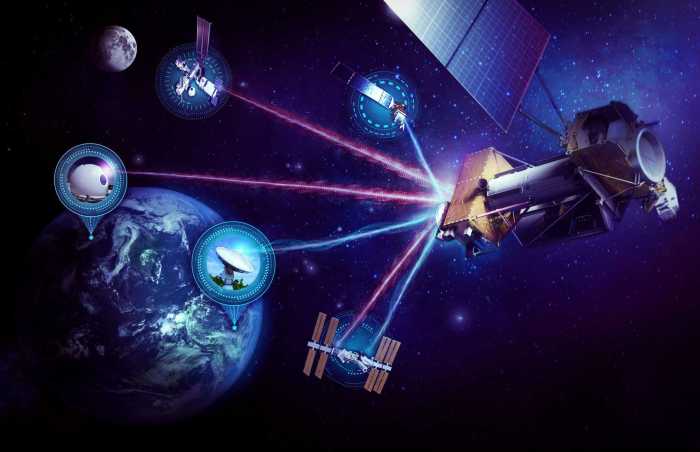
International collaboration is crucial for the advancement of laser communication technologies in space. Harmonized standards and protocols ensure interoperability between different systems, enabling seamless data exchange and maximizing the benefits of this emerging technology. This collaborative effort fosters innovation and reduces the complexities associated with integrating diverse systems from various nations.The need for international standards in space-based laser communication stems from the inherent complexity of these systems.
Different countries and organizations often develop their own systems and approaches. Without agreed-upon standards, compatibility issues and integration problems could significantly hinder the widespread adoption and efficiency of laser communication in space. This collaborative approach is essential for ensuring that various laser communication systems can work together seamlessly.
Key Organizations Involved
Various international organizations and governmental entities are actively involved in the development of laser communication standards for space applications. These entities bring together expertise and resources from across the globe to foster a unified approach. Their contributions are vital for creating a common framework that promotes interoperability and efficiency.
- International Telecommunication Union (ITU): The ITU plays a crucial role in establishing global standards for radio communication, including laser communication in space. Their guidelines and regulations help to avoid interference and ensure efficient use of the electromagnetic spectrum.
- National Aeronautics and Space Administration (NASA): NASA is a prominent player in laser communication research and development. Their involvement is crucial in establishing standards and protocols that support space-based missions and applications.
- European Space Agency (ESA): The ESA actively participates in the development of space-based laser communication standards. Their contributions are essential for advancing technologies and protocols across Europe and globally.
- Other space agencies and research institutions worldwide: Numerous other space agencies and research institutions from various countries contribute to the ongoing development of laser communication standards. This includes institutions in Japan, China, and others, working towards global standards and interoperability.
Importance of International Cooperation
International cooperation in the development of laser communication standards is paramount for several reasons. First, it fosters a collaborative environment for knowledge sharing and innovation. Second, it accelerates the development and deployment of laser communication technologies. Third, it leads to a more efficient and cost-effective approach to space-based communication systems. Finally, international cooperation ensures that the technology benefits the entire global community.
Existing Standards and Protocols
While a comprehensive, globally accepted standard for laser communication in space isn’t yet fully developed, numerous guidelines and protocols are being used and refined. These include standards for laser beam characteristics, signal modulation, and data transmission protocols. The ongoing work focuses on ensuring that these protocols are robust, reliable, and scalable for various space applications. Further refinement is ongoing to meet the ever-evolving needs of space exploration.
Interoperability Requirements
Interoperability between different laser communication systems is critical for the successful integration of these systems into existing space infrastructure and future missions. Interoperability allows for seamless data exchange between different laser communication systems, regardless of their origin or design. It’s essential for future space missions and applications. This is achieved by establishing common standards and protocols for laser beam characteristics, data encoding, and signal transmission.
International Collaboration Table
| Organization | Role/Contribution |
|---|---|
| ITU | Develops global standards for radio communication, including laser communication in space. |
| NASA | Active in laser communication research and development, establishing relevant standards and protocols for space-based missions. |
| ESA | Participates in the development of space-based laser communication standards and contributes to protocols across Europe and globally. |
| Other space agencies/research institutions | Contribute to the ongoing development of laser communication standards from various countries, driving global standardization and interoperability. |
Final Summary
In conclusion, NASA’s laser communication systems, exemplified by the LCIRD program, are paving the way for a future of faster and more efficient space communication. The International Space Station’s role as a testing ground is crucial for ensuring the reliability and efficiency of these systems for future missions, including deep space exploration. The potential for these technologies to revolutionize satellite constellations and communication networks is immense, offering exciting possibilities for scientific research and exploration in the years to come.