




Gaussian splats 3d scanning scaniverse niantic – Gaussian splats 3D scanning, Scaniverse, and Niantic – these buzzwords are all intertwined in a fascinating new approach to capturing and analyzing the world around us. This deep dive explores how Gaussian splats are revolutionizing 3D scanning, particularly within Niantic’s Scaniverse platform. We’ll uncover the technical details, compare it to other methods, and look at potential future applications, all while keeping a focus on Niantic’s specific implementation.
The core concept revolves around using Gaussian functions to represent 3D point clouds, which then allows for efficient data processing and analysis. This method is particularly interesting because it offers a potential balance between speed, accuracy, and the complexity of the environment being scanned, which is crucial in large-scale projects like Scaniverse. We’ll also delve into the specific algorithms Niantic might be using, and explore the potential of this technique for augmented reality applications.
Introduction to Gaussian Splats 3D Scanning
Gaussian splats are a powerful technique used in 3D scanning, particularly within the Scaniverse platform. They represent a sophisticated approach to point cloud processing, enabling accurate and efficient reconstruction of 3D models from captured data. This method leverages the mathematical properties of Gaussian functions to represent and aggregate point data, providing a smooth and continuous representation of the scanned object’s surface.Gaussian splats effectively handle the inherent noise and inconsistencies often present in real-world 3D scanning data.
By averaging nearby points with varying weights, the method creates a more robust and accurate representation of the object’s shape. This approach is particularly valuable in complex scenes with overlapping or cluttered data points, allowing for clearer visualization and more reliable 3D models.
Definition and Role in 3D Scanning
Gaussian splats are a method of representing point clouds in 3D scanning. They use a Gaussian function to distribute the density of points around a central location, allowing for a smooth and continuous representation of the surface. This process effectively reduces noise and enhances the accuracy of 3D reconstructions.
Fundamental Principles of Gaussian Splatting
The core principle of Gaussian splats lies in the use of Gaussian functions to model the distribution of points. A Gaussian function describes a bell-shaped curve, with the highest density at the center and decreasing density as you move away from the center. In the context of 3D scanning, each point in the point cloud is associated with a Gaussian function, whose parameters (e.g., center, standard deviation) are calculated based on the point’s location and its relationship to other points.
The overlapping Gaussian functions, weighted by their proximity, effectively smooth out the data and create a continuous surface representation.
Advantages and Disadvantages
- Advantages: Gaussian splats excel at reducing noise and inconsistencies in 3D scanning data, leading to more accurate and detailed 3D models. They also handle complex scenes and overlapping data points more effectively than simpler methods. The continuous nature of the representation simplifies subsequent processing steps like surface extraction and mesh generation.
- Disadvantages: Gaussian splats can be computationally intensive, particularly when dealing with large datasets. The selection of appropriate parameters (e.g., standard deviation) for the Gaussian functions can significantly impact the quality of the resulting model. Improper parameter selection can lead to either over-smoothing or under-smoothing, potentially distorting the original shape of the object.
Relationship with Scaniverse
Gaussian splats are a key component of the Scaniverse platform. They form the basis for the platform’s ability to process and reconstruct 3D models from various sources, including multiple scans. The Scaniverse architecture leverages the smoothing and averaging capabilities of Gaussian splats to enhance the quality and consistency of the final 3D representation, allowing for seamless integration of data from diverse scanning techniques.
Technical Overview
The technical aspects of Gaussian splats involve several steps:
- Data Acquisition: Capturing 3D point cloud data from the object using various scanning techniques (e.g., structured light, time-of-flight).
- Gaussian Function Application: Assigning each data point in the point cloud to a Gaussian function, where the center and standard deviation are determined based on the point’s spatial relationship to its neighbors.
- Aggregation: Combining the weighted Gaussian functions, where the weights are influenced by the distance and density of the points. This creates a smooth and continuous representation of the object’s surface.
- Surface Reconstruction: Generating a 3D surface model from the aggregated Gaussian splats, often using algorithms like mesh generation.
Gaussian Splats and 3D Scanning in Niantic’s Scaniverse
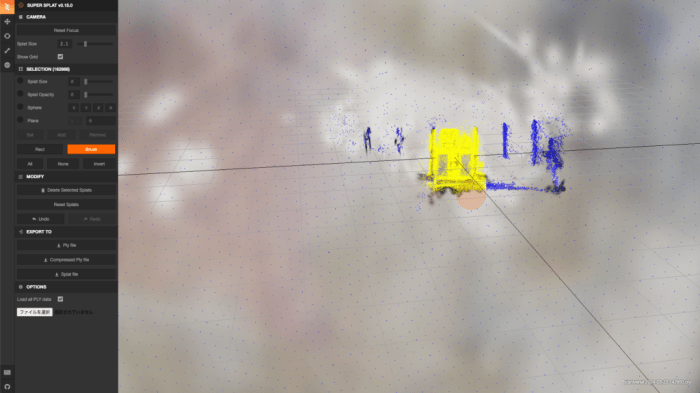
Niantic’s Scaniverse, a platform for augmented reality experiences, leverages sophisticated 3D scanning techniques to create detailed and accurate models of real-world environments. A key component of this technology is the use of Gaussian Splats, a powerful approach that allows for efficient and high-quality 3D reconstruction. This exploration delves into how Niantic employs Gaussian Splats within the Scaniverse, examining the algorithms, applications, and comparative analysis of different scanning methods.Gaussian Splats, in the context of 3D scanning, represent a significant advancement in capturing and processing 3D data.
By modeling the point cloud data with a Gaussian distribution, these techniques offer a more robust and efficient method for 3D reconstruction, particularly in complex scenes. This approach allows for greater precision and detail compared to traditional methods.
Gaussian Splats in Scaniverse
Niantic’s Scaniverse utilizes Gaussian Splats to efficiently capture and represent 3D information from real-world locations. The system likely employs algorithms that combine sensor data from multiple sources, such as camera images and depth maps, to generate a point cloud. This point cloud is then processed using Gaussian Splats, effectively smoothing and filtering the data to create a more accurate and consistent 3D model.
Specific Algorithms and Techniques
Detailed specifics regarding the exact algorithms employed by Niantic for Gaussian Splats in Scaniverse are not publicly available. However, general techniques in this field often involve a combination of:
- Data Acquisition: Gathering data from various sensors, including cameras and depth sensors, to construct a comprehensive point cloud.
- Gaussian Filtering: Applying Gaussian functions to smooth the point cloud, reducing noise and creating a more accurate representation of the underlying geometry. This is crucial for capturing subtle features in a real-world environment.
- Data Structure Optimization: Representing the data using a splatting system that efficiently stores and retrieves information, facilitating fast processing and manipulation of the 3D model.
- Reconstruction and Refinement: Utilizing advanced algorithms to reconstruct the 3D model based on the Gaussian Splats, ensuring that the resulting model is accurate and consistent with the captured data. This includes processes like mesh generation and texture mapping.

These techniques allow for the creation of high-quality 3D models with reduced noise and enhanced accuracy, suitable for augmented reality applications.
Gaussian splats, 3D scanning, and Niantic’s Scansverse are fascinating tech advancements. Learning how to use cool features like the Google Assistant on your Pixel Watch, for example, how to use google assistant on pixel watch , can unlock a whole new level of hands-free interaction. Ultimately, these technologies all blend together to create exciting new possibilities for augmented reality and 3D modeling, which makes exploring Scansverse even more compelling.
Applications in Scaniverse
Gaussian Splats enable a wide range of applications within Niantic’s Scaniverse, including:
- Creating detailed 3D models of real-world environments: This allows for a more immersive and accurate augmented reality experience.
- Real-time 3D rendering: The optimized data structure allows for rapid processing and rendering of the models, which is crucial for real-time AR applications.
- Integration with other AR features: This technology allows the creation of detailed 3D environments for use in augmented reality applications like placing virtual objects within a real-world scene.
- Precise localization and mapping: Accurate 3D models aid in creating highly precise maps for use in AR games and navigation systems.
Comparison of 3D Scanning Approaches
| Method | Description | Strengths | Weaknesses |
|---|---|---|---|
| Traditional Mesh-Based Scanning | Creates a 3D mesh directly from point cloud data. | Relatively straightforward implementation. | Can be computationally expensive and prone to noise accumulation. |
| Point Cloud-Based Scanning | Directly represents the environment using a set of points. | Efficient for large datasets. | Requires sophisticated processing for reconstruction and noise reduction. |
| Gaussian Splats | Represents the point cloud using a Gaussian distribution. | High accuracy, efficient for complex scenes, and robust against noise. | Requires specialized algorithms for processing and rendering. |
| Scaniverse (Gaussian Splat-Based) | Advanced Gaussian splatting for real-time AR. | High accuracy, real-time rendering, and optimized for complex environments. | Proprietary details not publicly available. |
Performance Characteristics
| Technique | Accuracy | Speed | Complexity |
|---|---|---|---|
| Traditional Mesh-Based | Moderate | Slow | Low |
| Point Cloud-Based | High | Medium | Medium |
| Gaussian Splats | High | High | High |
| Scaniverse | High (estimated) | High (estimated) | High (estimated) |
Comparison with Alternative 3D Scanning Methods
Gaussian splats represent a novel approach to 3D scanning, but how does it stack up against established techniques? This section delves into a comparative analysis of Gaussian splats with other popular 3D scanning methods, highlighting their respective strengths and weaknesses. We’ll examine the trade-offs in accuracy, speed, and cost, and discuss the implications for data density and resolution.The landscape of 3D scanning technologies is diverse, with each method possessing unique characteristics.
Understanding these differences is crucial for selecting the optimal approach for specific applications. From the intricate details of structured light to the rapid acquisition of time-of-flight systems, the various techniques each offer a unique blend of advantages and limitations.
Accuracy Comparison
Different 3D scanning methods exhibit varying levels of accuracy. Structured light systems, relying on projected patterns, are generally precise but can be affected by surface reflectivity and texture. Time-of-flight systems, leveraging the time it takes for light to travel, often offer high accuracy but are sensitive to environmental factors like ambient light. Gaussian splats, with their probabilistic nature, introduce a different approach to accuracy.
While potentially less precise than structured light in some scenarios, they excel in capturing complex and dynamic scenes. The accuracy of Gaussian splats is often tied to the quality and density of the splat distribution, which is in turn influenced by the scanning parameters.
Speed and Cost Analysis
Speed and cost are significant factors in choosing a 3D scanning method. Time-of-flight systems often boast rapid acquisition times, but their hardware can be expensive. Structured light systems, often relying on less complex hardware, can be more affordable but can take longer to scan large objects. Gaussian splats, leveraging computational processing, offer the potential for fast data processing, particularly when utilizing optimized algorithms.
The cost of Gaussian splat 3D scanning is largely dependent on the computational resources required, which can vary based on the complexity of the scene and the desired level of detail.
Gaussian splats, 3D scanning, Scaniverse, and Niantic are all buzzing in the tech world right now. While exploring these advancements in 3D mapping, I stumbled across some fascinating news about mobile plans. Boost Mobile’s new 12-month unlimited data plan for just $25 per month ( boost mobile introduces new 12 month unlimited data plan for 25 per month ) is certainly an interesting development.
This could significantly impact how these 3D scanning apps are used and developed in the future, making the process more accessible to everyone. Back to the exciting world of 3D scanning – these advancements are truly shaping the future.
Data Density and Resolution
The density and resolution of the scanned data are critical aspects of 3D scanning. Structured light often yields high resolution, but the scanning area is usually limited. Time-of-flight systems, due to their fast acquisition, can capture larger areas but might offer lower resolution. Gaussian splats, capable of handling complex geometries, allow for flexible data density. The choice of resolution and density directly impacts the complexity of subsequent processing and the level of detail that can be extracted from the 3D model.
Gaussian splats can adapt to varying levels of detail, capturing detailed features or broader, more generalized shapes depending on the needs of the application.
Comparison Table
| Method | Accuracy | Speed | Cost | Data Density | Resolution | Complexity |
|---|---|---|---|---|---|---|
| Structured Light | High | Medium | Medium | High | High | Medium |
| Time-of-Flight | High | High | High | Medium | Medium | Medium |
| Gaussian Splats | Variable (Dependent on parameters) | High (Potential) | Variable (Dependent on computational resources) | High (Adaptable) | Variable (Adaptable) | High (Computational) |
The table above summarizes the comparative strengths and weaknesses of different 3D scanning methods. It’s crucial to weigh the factors of accuracy, speed, cost, and complexity when selecting the most appropriate approach for a particular application.
Data Processing and Analysis with Gaussian Splats
Gaussian splats, a core component of Niantic’s Scaniverse 3D scanning technology, offer a unique approach to capturing and processing 3D data. This method, unlike traditional point cloud techniques, leverages a probabilistic representation, enabling more robust and efficient analysis of complex environments. The inherent flexibility of Gaussian splats allows for versatile data manipulation and facilitates extraction of meaningful information, crucial for applications like augmented reality and 3D modeling.The processing pipeline for Gaussian splat data in Scaniverse involves several key steps, each designed to optimize the data for subsequent analysis and 3D model generation.
Crucially, the data’s preparation mirrors the Scaniverse’s focus on real-world accuracy and efficiency, enabling quick and precise rendering of the captured environment. This approach directly impacts the fidelity of the resulting 3D models.
Data Preparation for Scaniverse
The initial step involves pre-processing the raw splat data. This involves filtering out erroneous or extraneous data points that may arise from various sources, such as sensor noise or occlusions. The objective is to create a clean dataset suitable for downstream analysis. This refined dataset is then aligned and registered with other scans to form a comprehensive 3D representation of the environment.
This registration process is crucial for creating a seamless, consistent 3D model.
Gaussian splats are fascinating in 3D scanning, especially within the Scaniverse platform used by Niantic. It’s all about creating incredibly detailed 3D models, but I’ve been digging into how these tech advancements might relate to Android 14 beta 1 on the Nothing Phone 1. Android 14 beta 1 nothing phone 1 performance on this particular phone might reveal some intriguing insights into future augmented reality applications.
Ultimately, this all circles back to how Gaussian splats and 3D scanning can enhance the future of mobile gaming and virtual experiences, and how Niantic will continue to push the boundaries of interactive environments.
Data Filtering and Cleaning
Effective filtering is vital for accurate results. A critical aspect of this process involves identifying and removing outliers and inconsistencies in the splat data. This is achieved through statistical analysis and comparison with expected values for the specific environment. For instance, unusually high or low density splats might be identified and removed, thereby preventing distortions in the final 3D model.
Data cleaning procedures may also involve techniques like smoothing or interpolation to address imperfections or missing data.
Extracting Meaningful Information
Gaussian splat data, representing probabilistic density functions, allows for the extraction of various metrics. For example, density maps can be derived, providing insights into the spatial distribution of objects and surfaces. These density maps can be further processed to highlight regions of interest, such as identifying high-density areas that correspond to structural features or the edges of objects.
Other analyses, such as surface normal estimations, are also possible, enabling the calculation of surface orientation and curvature for more detailed 3D models.
Generating 3D Models, Gaussian splats 3d scanning scaniverse niantic
Creating 3D models from Gaussian splat data involves several steps. First, the data is typically converted into a point cloud representation, allowing for the visualization and manipulation of the data. Sophisticated algorithms then employ this point cloud data to construct a mesh representation of the environment, defining the surfaces and boundaries of the scanned objects. A range of algorithms, including those based on triangulation or surface reconstruction, are used depending on the complexity of the scanned scene.
Finally, the 3D model is often optimized for rendering and display, ensuring its visual quality and efficiency.
Future Trends and Implications: Gaussian Splats 3d Scanning Scaniverse Niantic
Gaussian splats, a revolutionary 3D scanning technique, are poised to reshape the field, particularly within Niantic’s Scaniverse. Their efficiency and adaptability promise significant advancements, impacting not only scanning procedures but also integration with other emerging technologies. The potential for real-time scanning and highly detailed 3D models is substantial, paving the way for unprecedented possibilities in augmented reality and virtual reality applications.The core strengths of Gaussian splats, such as their speed and ability to capture intricate details, provide a solid foundation for future developments.
Their integration with other technologies, like AI-powered data processing and machine learning algorithms, could lead to even more sophisticated and accurate 3D models. This integration promises to unlock new functionalities in areas like object recognition and environmental reconstruction.
Potential Future Developments in Gaussian Splat Technology
Gaussian splats are likely to see improvements in speed and resolution. Advancements in algorithms and hardware could allow for real-time 3D scanning, opening up new possibilities in dynamic environments. Furthermore, the development of more sophisticated splat distributions could potentially capture more nuanced surface details, enhancing the realism of the resulting 3D models. Integration of sensor fusion techniques with Gaussian splats will further refine the accuracy and detail of the resulting models, especially in challenging environments.
Integration with Emerging Technologies
The flexibility of Gaussian splats allows for seamless integration with other emerging technologies. For instance, their compatibility with AI-powered object recognition algorithms will allow for automated classification and labeling of scanned objects. This automation could dramatically increase the efficiency of data processing and analysis, crucial for large-scale scanning projects. Furthermore, the integration of Gaussian splats with cloud-based platforms could enable real-time collaborative 3D model creation and sharing, empowering researchers and designers globally.
This will also enhance the processing power available for complex data sets.
Impact on the Future of 3D Scanning in Niantic’s Scaniverse
In Niantic’s Scaniverse, Gaussian splats could revolutionize the way virtual environments are constructed and maintained. Real-time scanning capabilities would enable the dynamic updating of virtual spaces, ensuring accuracy and relevance. This constant updating will create a more responsive and engaging experience for users, enabling dynamic interactions with the virtual environment. This could lead to more immersive and interactive augmented reality (AR) and virtual reality (VR) experiences, transforming the way users interact with the digital world.
Challenges and Opportunities for the Field
While the future of Gaussian splats looks bright, several challenges remain. One major hurdle is the development of robust algorithms for handling complex scenes with diverse lighting conditions and object orientations. Furthermore, the development of efficient data processing pipelines for large-scale scanning projects is essential. However, the potential opportunities are equally significant. Gaussian splats could unlock the ability to scan and model intricate environments in real-time, fostering innovation in fields ranging from architecture and engineering to archaeology and cultural preservation.
Possible Future Applications of Gaussian Splats
| Application Area | Potential Integration with AR/VR | Description |
|---|---|---|
| Architecture & Engineering | Real-time model updates for AR design tools. | Rapidly generate and update 3D models of buildings and structures for architectural visualization and engineering design. |
| Archaeology & Cultural Preservation | Interactive VR tours of historical sites. | Capture detailed 3D models of archaeological sites and artifacts for preservation and educational purposes, allowing for interactive virtual tours. |
| Gaming & Entertainment | Dynamic environments for real-time gaming. | Enable the creation of realistic and dynamic environments for video games and interactive entertainment, allowing for continuous model updates. |
| Manufacturing & Industry | Interactive AR guides for assembly and maintenance. | Create accurate 3D models of machinery and products for manufacturing processes, facilitating AR-based assembly and maintenance guides. |
Illustrative Examples and Visualizations
Gaussian Splats, a powerful technique in 3D scanning, offers compelling visualizations and detailed insights into the scanned environment. Its application extends beyond simple 3D models, enabling a deeper understanding of the scanned object’s geometry and surface characteristics. The ability to process and visualize data efficiently is crucial for various fields, including architecture, engineering, and even augmented reality applications.
Real-World Application: Archaeological Site Scanning
Gaussian splats excel at capturing intricate details in complex environments, making them ideal for archaeological site scanning. Imagine a team meticulously documenting a recently excavated site. Traditional 3D scanning methods might struggle to capture the subtle variations in texture and the precise positioning of artifacts within the surrounding debris. Gaussian splats, however, provide a high-resolution, accurate representation of the entire site.
This allows researchers to meticulously analyze the spatial relationships between artifacts and the surrounding environment, potentially revealing insights into ancient human behavior and cultural practices.
Gaussian Splats in a Complex Environment
Consider a dense forest scene, a challenging environment for traditional 3D scanning. Gaussian splats’ ability to handle large amounts of data effectively allows for the precise reconstruction of trees, foliage, and even individual leaves. The high density of data points allows for the generation of highly accurate and detailed 3D models, which are vital for understanding forest dynamics and ecological interactions.
The process involves capturing numerous scattered data points, which Gaussian splats process and integrate to form a cohesive, high-resolution 3D model of the scene.
Gaussian Splats in Augmented Reality
Gaussian splats contribute significantly to the accuracy and efficiency of augmented reality (AR) applications. In an AR game, for example, the precise 3D models of virtual objects need to seamlessly integrate with the real-world environment. Gaussian splats enable the creation of incredibly detailed 3D models of the user’s surroundings, including complex objects and subtle textures. This detailed data translates to more accurate and immersive AR experiences, where virtual objects appear seamlessly integrated within the real-world environment.
The system efficiently maps the scanned environment to a virtual overlay.
Accuracy and Efficiency in 3D Modeling
Gaussian splats contribute to the accuracy and efficiency of 3D models in various applications. The ability to capture highly detailed data and rapidly process it allows for the generation of precise 3D models. This precision is particularly valuable in applications like medical imaging, where accurate representations of anatomical structures are critical for diagnosis and treatment planning. In the context of industrial design, the technique allows engineers to precisely visualize and analyze complex geometries, facilitating more effective design iterations.
Visualization Steps
Generating visualizations from processed Gaussian splat data involves several key steps. First, the raw data points, representing the captured surface information, are processed and filtered to remove noise. Second, the data is organized into a structured format, enabling the creation of a 3D model. Third, appropriate rendering techniques are employed to visualize the 3D model, creating a clear and detailed representation of the scanned object or environment.
This process is iterative, often involving adjustments to lighting, shading, and viewpoint to achieve the desired visual effect. The outcome is a highly accurate and visually compelling 3D representation of the scanned subject.
Ending Remarks

In conclusion, Gaussian splats 3D scanning within Niantic’s Scaniverse presents a compelling approach to 3D modeling and analysis. The advantages in terms of speed and efficiency are notable, but it’s crucial to evaluate its limitations in comparison to other methods. As the technology evolves, we can anticipate more innovative applications and integrations with other emerging technologies. The future of 3D scanning seems to be heading in exciting directions with Gaussian splats taking center stage.